This guide looks at group conversation as a communication access issue, not as a test of charm or personality. It is educational background, not a social skills prescription, diagnosis, behavior plan, school recommendation, or substitute for a licensed speech-language pathologist, mental health professional, physician, school team, or other qualified professional. See Social Communication Disorder for the professional reference behind this topic.
Group talk can be difficult for many reasons. Speech sound clarity, stuttering, hearing access, AAC timing, language processing, word finding, cognitive-communication, anxiety, culture, autism, fatigue, and unfamiliar social expectations can all change what participation feels like. A person may communicate well one-on-one and still struggle when several voices, fast topic shifts, jokes, interruptions, and hidden rules arrive together.
What this can look like in real life
A child may answer an adult’s direct question but disappear during a group project because classmates interrupt and change plans quickly. A teenager who stutters may know the answer but avoid entering the discussion because the opening passes before the words come. An autistic adult may understand the topic but feel exhausted by indirect hints, overlapping speech, and expectations to perform interest in a certain way. A person with aphasia may follow the first speaker but lose the thread when relatives talk over one another. An AAC user may prepare a message, only to have the group move on before the device speaks.
None of these scenes can be solved by telling the person to “just join in.” Group conversation is a layered task. The person has to track the topic, identify a possible entry point, formulate a message, time the turn, handle repair, manage listener reactions, and decide whether the social cost is worth it. When speech, language, hearing, motor access, or processing demands add friction, the task can become too expensive.
Participation is not the same as performance
Some group goals are weak because they measure how comfortable other people feel while ignoring the communicator’s experience. A goal that demands constant eye contact, forced small talk, fast answers, or a scripted “expected” response may not improve communication. It may simply train the person to mask discomfort. Better goals ask what participation the person wants and what barriers make that participation harder.
The Social Communication and Pragmatics Basics guide explains that pragmatic communication includes how language is used with other people, but it should not turn every difference into a disorder. The Autistic Communication Support guide is especially relevant when support risks becoming compliance training rather than access. Group conversation support should help the person share ideas, repair misunderstandings, ask for clarification, set boundaries, join chosen activities, and be understood without erasing identity.
Participation may look different across settings. In a classroom, it might mean contributing one prepared idea during science. At work, it might mean using an agenda to enter a meeting. At home, it might mean relatives pausing long enough for an adult with dysarthria to finish a story. In a peer group, it might mean having a signal for “I want a turn” that others respect. Not every person wants to be the loudest voice. Access means the option to participate in a way that fits.
Observing group barriers carefully
Good observation names the group demand. Is the problem timing, topic tracking, background noise, fast language, unfamiliar vocabulary, teasing, interruption, motor access, word finding, speech clarity, or anxiety after repeated breakdowns? Does the person do better with one familiar partner, written topics, quieter rooms, predictable turns, smaller groups, visual supports, or extra wait time? Does the group respond well when the person repairs a message, or do partners rush, guess, laugh, or move on?
A useful note might say that a student shares detailed ideas with one friend but stops talking when four classmates negotiate roles at once. Another might say that an adult with aphasia follows dinner conversation until side conversations begin. Another might say that an AAC user has strong opinions during planning but needs the group to pause long enough for message construction. Those notes help a clinician or team design support around the actual barrier.
The person should be part of this interpretation whenever possible. A child may say that group work is hard because classmates ignore their AAC. A teen may say the problem is not knowing the answer, but being laughed at after a block. An adult may say meetings are easier when agendas arrive beforehand. Self-report matters because outsiders often misread silence as lack of interest.
Partner behavior changes the group
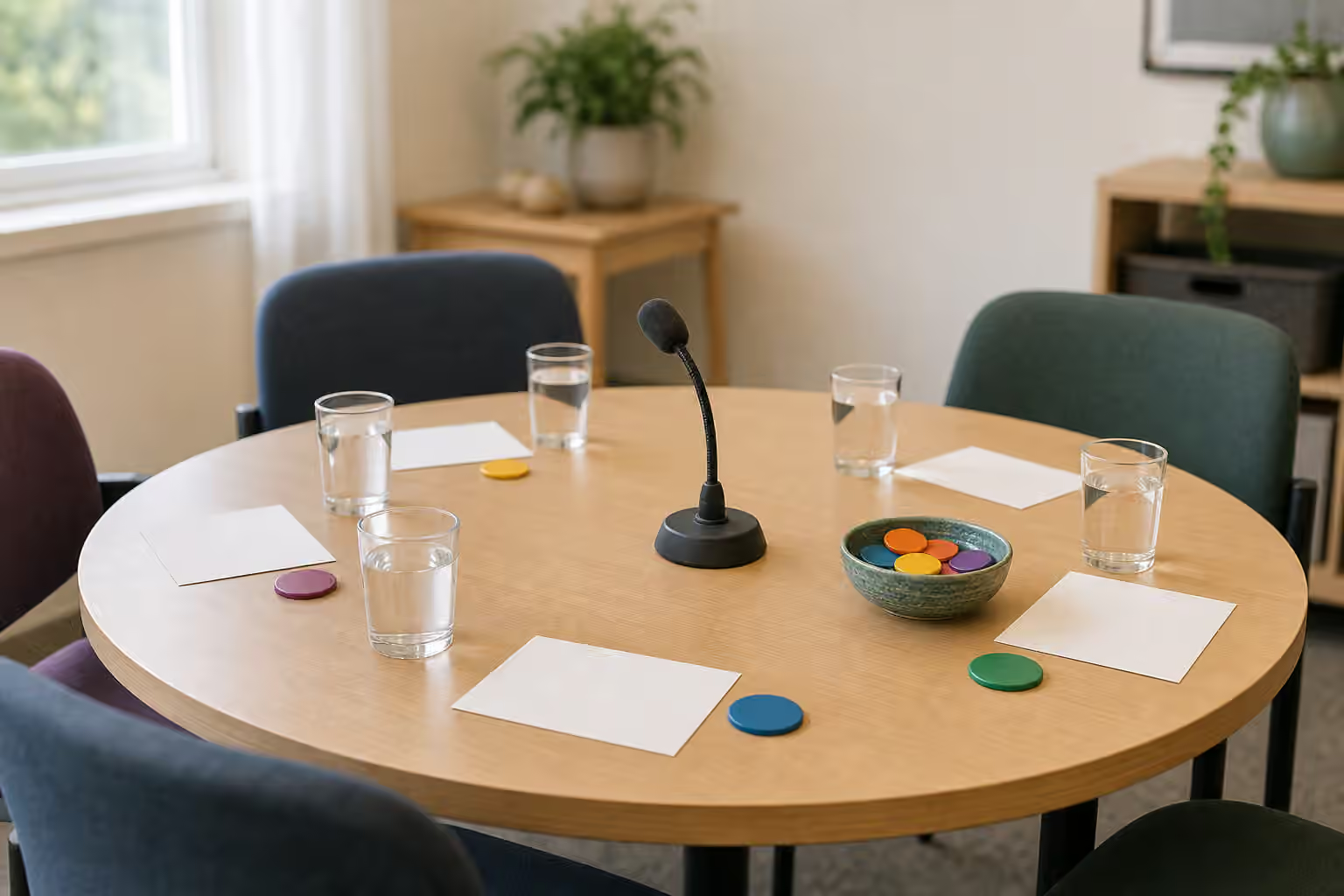
Group communication is shared. Partners can make participation easier by slowing turn shifts, reducing side conversations during important moments, naming topic changes, accepting multimodal communication, giving people time to enter, and responding to the content of the message rather than the speed or form. A teacher can assign roles in a way that does not trap a student in public performance every time. A meeting leader can pause before moving topics. A family can agree not to answer for the person unless asked.
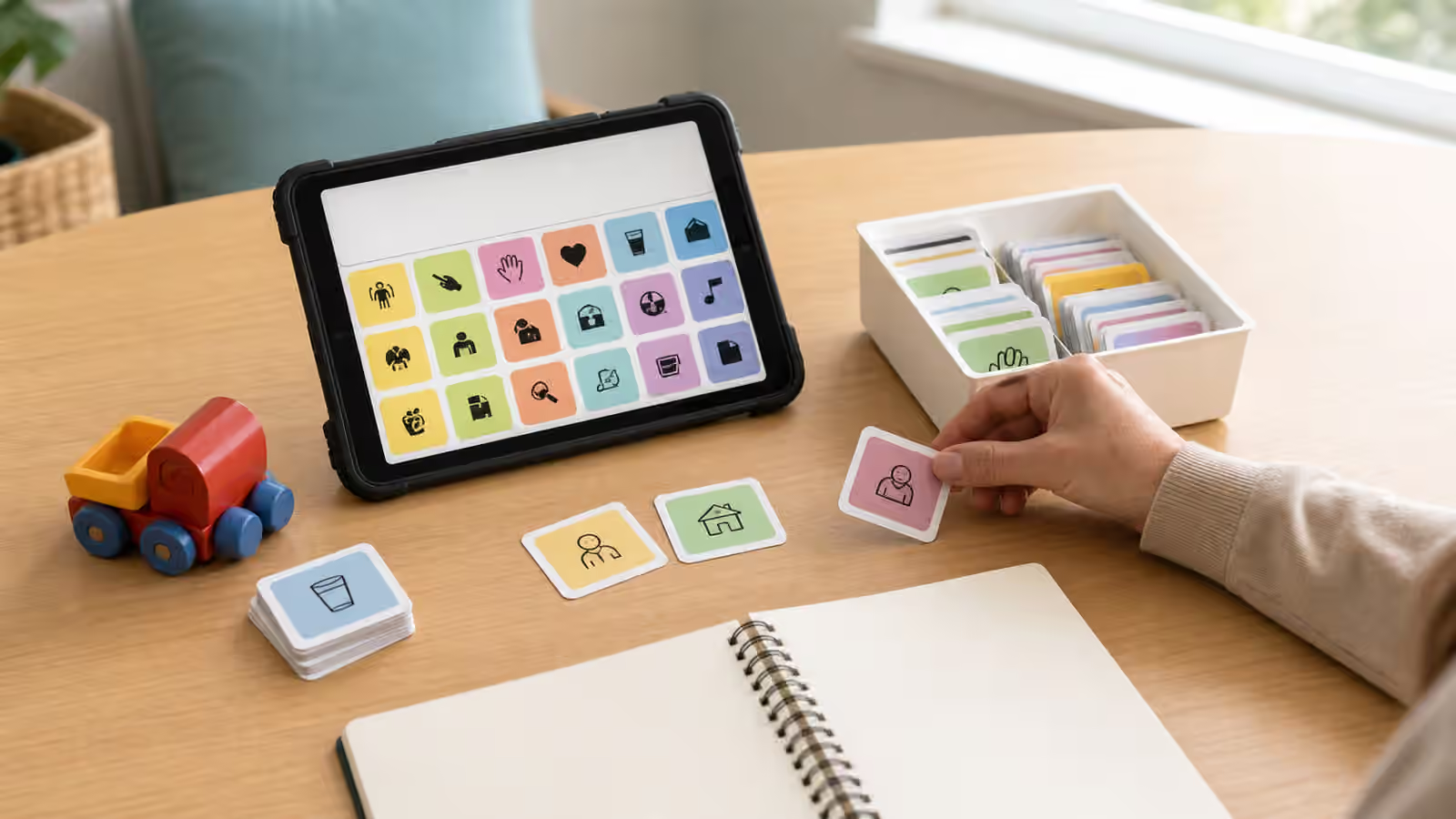
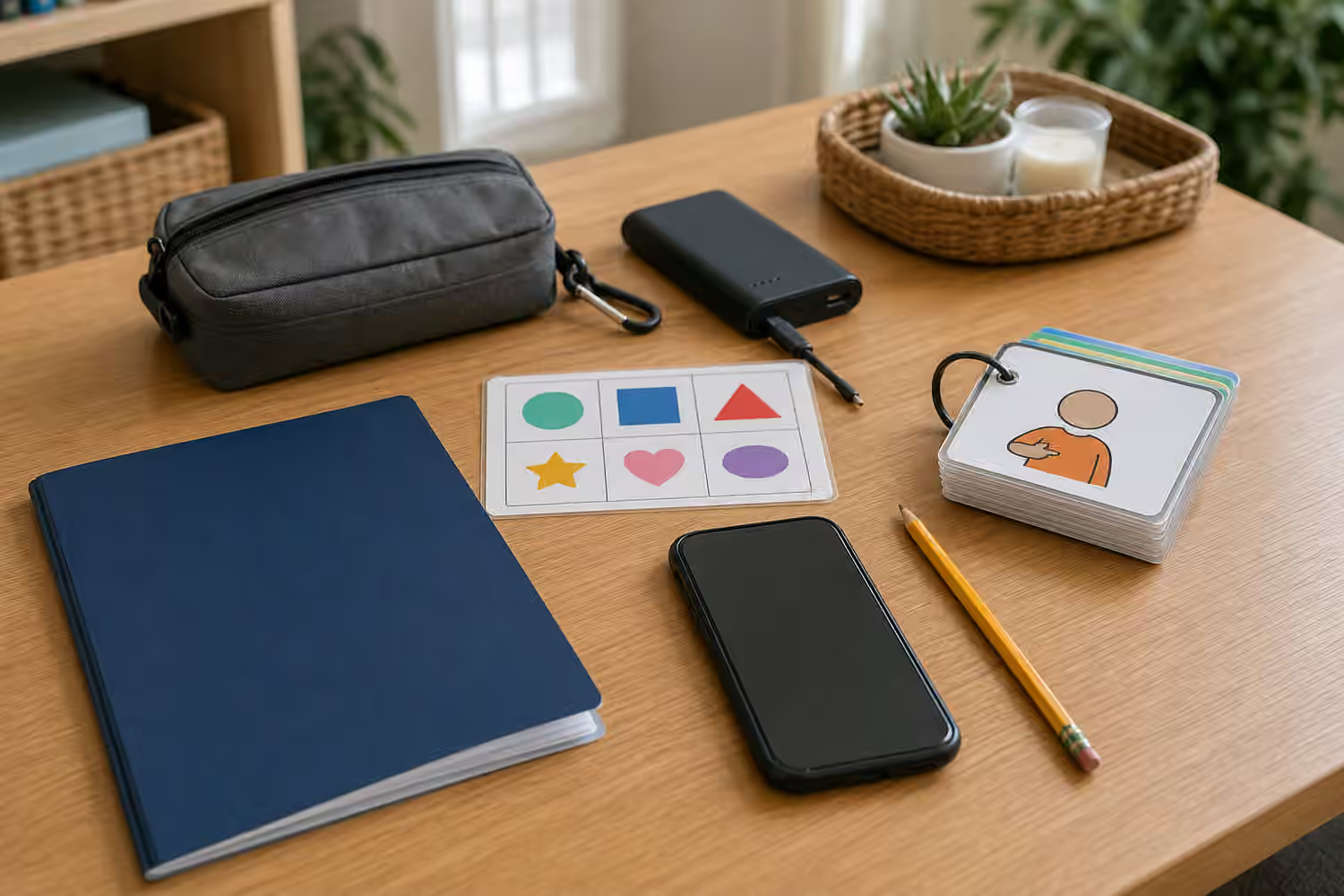
Repair norms are especially important. When a message is unclear, partners can say what they understood and invite another route. They can offer a written keyword, yes-or-no confirmation, topic cue, gesture, or AAC option without taking control. The Communication Repair and Self-Advocacy guide is useful when breakdowns happen often and the person needs reliable ways to keep the conversation from collapsing.
For stuttering, group support may focus on reducing time pressure, interruption, and shame. The Stuttering Support at School and Work page explains why participation can matter more than surface fluency. For speech clarity or motor speech changes, group support may include topic cues, amplification, pacing, shorter turns, or backup communication. For hearing access, visual seating, quieter spaces, and one speaker at a time can change the whole interaction.
Practice should not become a social obstacle course
Speech-language therapy can help a person rehearse entry phrases, topic shifts, repair strategies, story summaries, or meeting scripts. Practice can also help partners learn how to wait, cue, and include. The risk is turning group conversation into an artificial performance where the person is corrected for every pause, missed cue, or unexpected response. Real groups are messy. The point of practice is not perfect conversation; it is more usable participation.
For children, this may mean practicing with meaningful peer activities rather than generic “conversation cards.” For teens, it may mean planning how to contribute in clubs, group projects, presentations, gaming, or lunch conversations that matter to them. For adults, it may mean preparing for work meetings, family decisions, medical appointments, support groups, or community activities. The topic has to matter, because participation is harder to practice when the content is empty.
Progress shows up when groups make room
Progress may be a student staying in group work longer because peers understand the repair signal. It may be an AAC user getting enough wait time to make a joke. It may be an adult with aphasia telling part of a family story without being rescued. It may be a teen who stutters choosing to introduce themself because the setting no longer punishes every pause. These changes may look small from the outside, but they can shift whether a person feels welcome.
Bring group conversation concerns to an SLP or school team when they affect learning, friendships, work, safety, confidence, self-advocacy, or daily participation. Ask the team to look at the communication environment as well as the person’s skills. A group that never pauses, never repairs respectfully, and never accepts different communication modes is not neutral. It is part of the communication problem.
Pair this page with Communication Partner Training and Visual Supports for Communication Access when the next step is not more pressure on the communicator, but better behavior from the people around them.