This guide explains how language and executive function can overlap in everyday planning, school routines, work tasks, and communication. It is educational background, not a diagnosis, neuropsychological evaluation, treatment plan, school recommendation, medical advice, or substitute for a licensed speech-language pathologist, psychologist, physician, occupational therapist, qualified school team, or other local professional. See Executive Function Deficits for the professional reference behind this topic.
People often talk about executive function as if it lives apart from language. Planning, starting, sequencing, shifting, remembering, and checking work are real cognitive demands. But many of those demands are carried by words, stories, directions, categories, time concepts, self-talk, and explanations. When the language layer is heavy, a person may look disorganized even when the real problem is partly that the task was never made clear enough to hold.
Planning has a language layer
Planning sounds practical, but it often begins with comprehension. A student has to understand what the assignment asks, which materials belong, what “before,” “after,” “unless,” or “compare” means, and how much detail is expected. An adult returning to work after a brain injury may have to understand a meeting agenda, remember who asked for what, decide which email needs action, and explain the plan to someone else. A child getting ready for school may need to process time words, sequence words, object names, categories, and spoken reminders while the room is noisy.
When language is fragile, planning can fail before motivation enters the picture. A child may hear “Put your notebook in your backpack after you finish the worksheet, then bring me the folder that goes home” and lose the middle of the sentence. A teenager may know the science content but misunderstand the prompt and write the wrong kind of answer. An adult may remember the general goal of an errand but lose the steps when the route changes. These moments can be mistaken for carelessness, refusal, or laziness when the person may be working hard with a task that is verbally overloaded.
The Receptive Language guide is a useful companion because understanding is not only answering questions. It includes holding language long enough to act on it. The Classroom Listening and Following Directions guide looks at the same issue in noisy rooms where directions arrive quickly and disappear.
Directions are memory, meaning, and timing
Multistep directions are a classic place where executive function and language meet. The person must understand each word, remember the order, ignore distractions, know what counts as finished, and adjust if something unexpected happens. A direction like “Before you line up, put the blue math folder under your chair and turn in yesterday’s page” is not just a memory test. It contains sequence, category, color, location, ownership, time, and social timing.
Some people compensate by watching others. That can work until the task is private, new, fast, or different from what peers are doing. Others start quickly but miss a condition. They put the folder away before finishing the page, answer only the first part of a question, or bring the right item to the wrong person. The visible behavior may be incomplete follow-through. The hidden issue may be that the direction was too long, too abstract, too fast, or too dependent on implied knowledge.
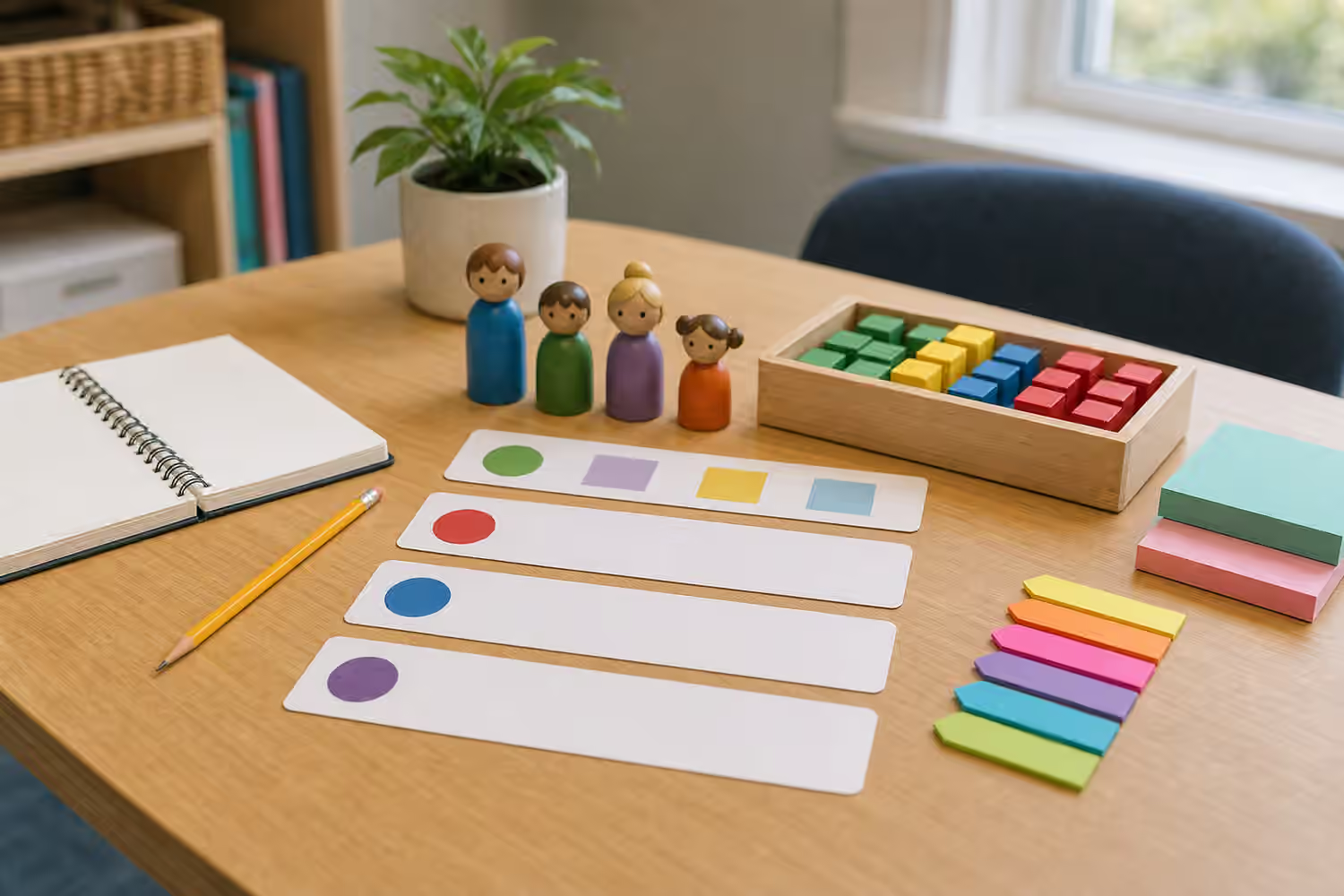
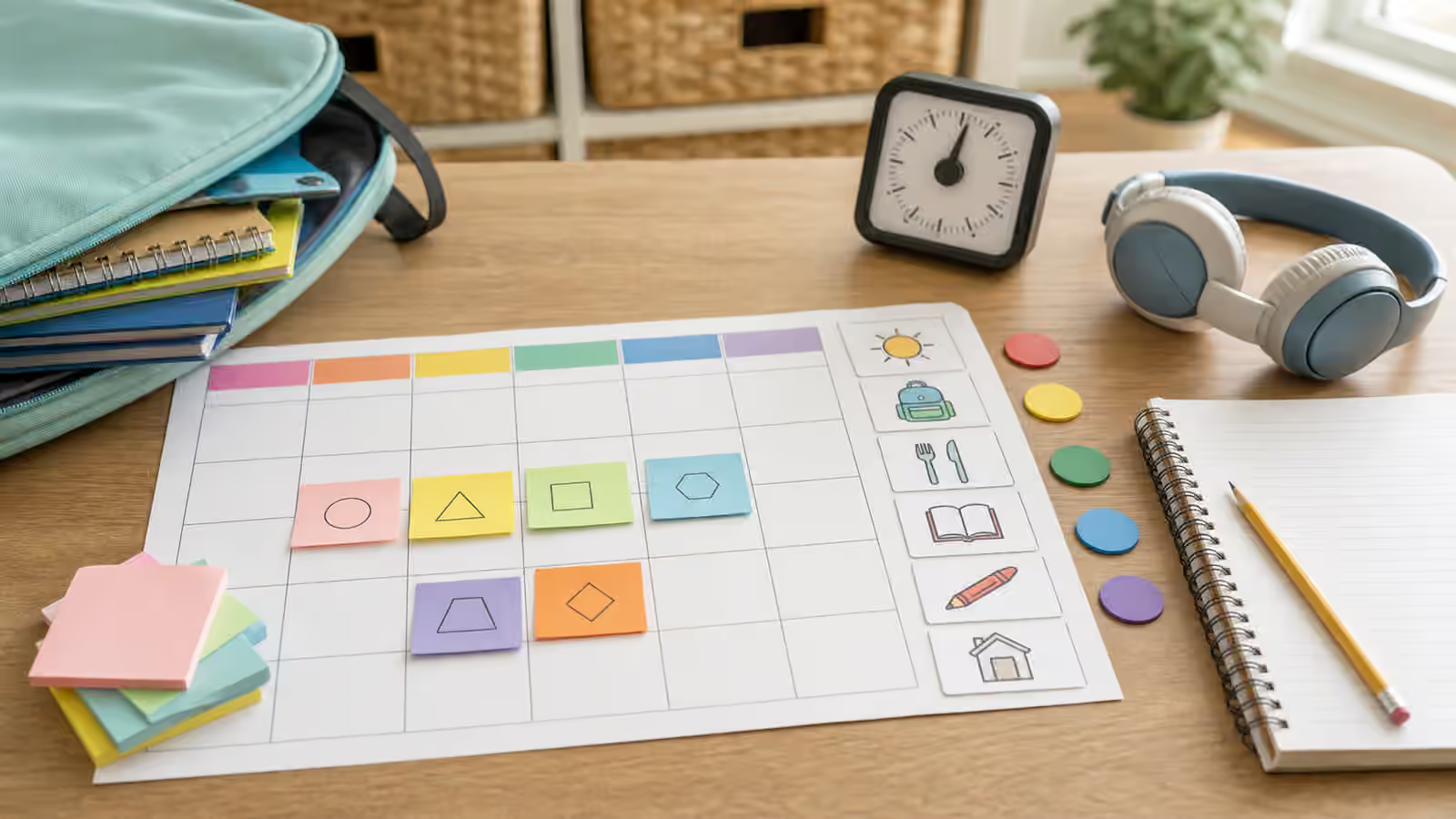
A helpful response is not always to repeat louder. Repetition can help when the person missed the words. It may not help when the words were understood separately but not organized into an action plan. A written keyword, quick sketch, gesture, model, pause between steps, or chance to restate the plan can reduce the language load without doing the task for the person. The Visual Supports for Communication Access guide explains why making information visible can support independence rather than replace it.
Stories teach organization
Narrative language is planning practice in disguise. A story needs a setting, people, a problem, attempts, feelings, causes, consequences, and an ending that makes sense. Those same pieces help a person explain what happened at recess, describe a medical symptom, report a workplace problem, write an essay, or tell a teacher why homework is missing. When stories are jumbled, the issue may not be imagination. It may be organization, sequencing, word retrieval, perspective taking, or knowing what the listener needs.
Children who struggle with narrative language may give reports that sound scattered. They may begin in the middle, skip the cause, use vague words like “thing” and “stuff,” or assume the listener already knows the important parts. Teens may understand a book chapter but struggle to summarize it in an order that proves comprehension. Adults with cognitive-communication changes may know an event occurred but have trouble selecting the main point and arranging details for a listener.
The Narrative Language and Story Retell guide explains why stories matter beyond literacy. In executive-function terms, a story is a structure for selecting, sequencing, monitoring, and revising information. When a person learns to ask, “Who was involved, what was the problem, what happened next, and what changed?” they are also learning a planning routine that can travel into school, work, and self-advocacy.
Support should protect participation
Planning support can become controlling if adults use it only to make compliance easier. A visual schedule, written plan, timer, or checklist should help the person understand and participate, not simply move faster through someone else’s agenda. The difference is visible in how the support is introduced. A respectful support says, “Here is the plan so you can see what is happening and tell us what needs to change.” A controlling support says, “Follow this because adults said so.”
Good language support often begins with shared meaning. For a younger child, that may mean using simple, stable words for routines and showing the next step. For a student, it may mean previewing assignment language, writing key terms, or teaching how to ask for a repeat. For an adult, it may mean using a notebook, phone reminder, partner confirmation, or written summary after an appointment. The tool matters less than whether it makes communication and action more available.
Self-talk can also be part of the picture. Many people plan by talking themselves through a task, silently or aloud. A person with language weakness may not have efficient inner language for planning. They may need models that sound natural: “First I need the folder. Then I check the due date. If I do not understand, I ask.” The goal is not to script every thought. It is to give the person language that can support action when the environment becomes less predictable.
When the pattern deserves a closer look
Professional input may be useful when planning problems affect safety, school access, work, relationships, daily routines, confidence, or independence. It is especially worth asking for support when the person understands better with written or visual information than spoken directions, loses track during stories or explanations, struggles across settings, has a history of language delay, hearing differences, ADHD, autism, brain injury, concussion, stroke, dementia, or medical changes that affect communication. Sudden changes in thinking, speech, language, or swallowing belong with qualified medical care.
For adults and teens after concussion or brain injury, the Cognitive-Communication After Concussion and Brain Injury guide explains why attention, memory, fatigue, and language can interact. For younger students, the question may start with school: what directions are missed, what assignments break down, what supports already help, and whether communication demands are being mistaken for behavior.
Useful observations are concrete. Note what kind of directions are hard, whether the person does better with pictures or written keywords, how noise changes performance, whether they can explain the plan back, and where the same skill appears successfully. A person who cannot follow a long spoken direction may still manage a visual routine. A student who writes scattered essays may tell a stronger story with picture support. Those strengths are not exceptions to ignore. They are clues for building support that respects both language and planning.
The practical goal is not to turn every day into a therapy worksheet. It is to make the hidden language inside planning easier to see. When the words, sequence, time, and purpose become clearer, people often have more room to show what they know, ask for help, and finish tasks with less strain.