This guide explains communication repair and self-advocacy across speech-language needs. It is educational background, not a diagnosis, therapy plan, legal or school advice, workplace accommodation advice, or substitute for a licensed speech-language pathologist, school team, physician, audiologist, psychologist, vocational specialist, or other qualified professional. See Social Communication Disorder for the professional reference behind this topic.
Communication breaks down for everyone. A word is misheard, a direction is too fast, a listener guesses wrong, a speaker loses a thought, a device is out of reach, background noise swallows the message, or a person freezes because the stakes feel high. Repair is the work of getting meaning back on track. Self-advocacy is the work of asking for the conditions that make repair possible.
Repair is not failure
Many people treat communication repair as an embarrassing interruption. A child may be told to “use your words” after already trying. An adult with aphasia may watch a listener change the topic instead of waiting. A person who stutters may be interrupted with a guessed word. An AAC user may be rushed before finishing a message. A student with language difficulties may be marked wrong because they could not explain what they knew quickly enough.
Repair should be expected, not treated as a sign that communication is broken beyond use. Strong communicators repair all the time. They rephrase, point, write, gesture, ask for repetition, slow down, check understanding, use examples, move to quieter spaces, or say that they need a moment. The goal is not flawless first attempts. The goal is having enough tools and enough partner respect to keep meaning available.
The Speech Pathology Quickstart guide frames speech-language support around participation. Repair fits that frame because participation often depends less on perfect speech and more on what happens after the first misunderstanding.
The partner has a job too
Repair should not rest only on the person with the communication difference. Listeners can make breakdowns easier or harder. A respectful listener admits what they understood, asks for the missing piece, gives time, watches for nonverbal signals, offers choices when appropriate, and avoids pretending to understand when the topic matters. Pretending may seem polite, but it can be dangerous or isolating. It tells the speaker that their exact message is not worth the effort.
A partner might say, “I heard that it happened at school, but I missed who was there.” That response is better than “What?” because it shows the speaker where to repair. A partner might say, “Do you want to show me, write it, or try again?” That gives options without taking over. With AAC, the partner may need to wait, check whether the device is accessible, or ask if the person wants help navigating. With dysarthria, the partner may need to reduce noise and face the speaker. With hearing differences, the partner may need to improve visibility, lighting, or written support.
These partner habits connect to Dysarthria and Motor Speech Clarity , Aphasia Communication Support , and AAC Basics . In each area, the environment and the listener can either open or close access.
Self-advocacy can be small and concrete
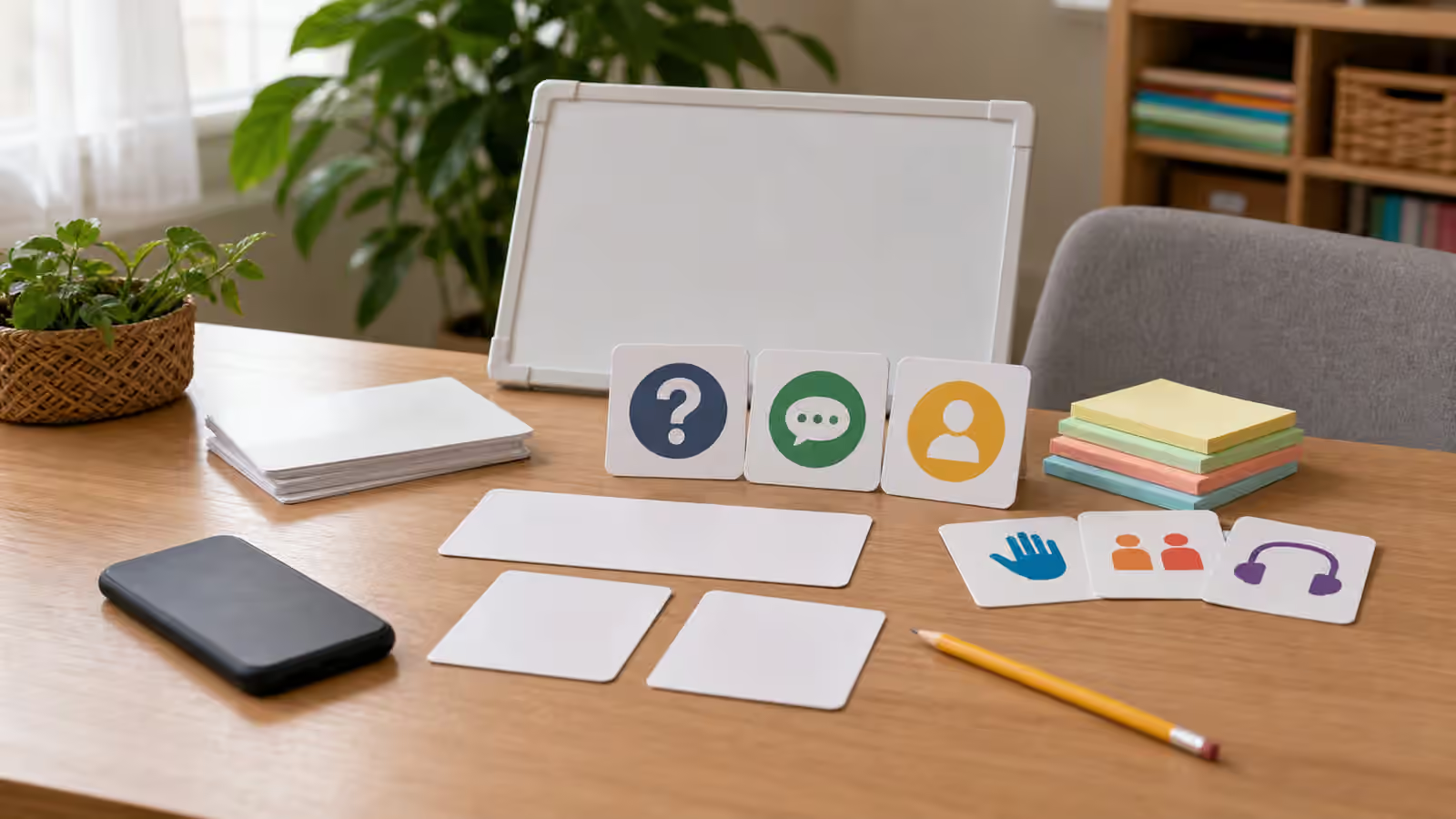
Self-advocacy does not have to begin with a formal speech. It may be a gesture toward a device, a card that says the person needs more time, a practiced phrase for asking someone to repeat, a written note for medical visits, a signal to pause, or a plan for moving to a quieter space. For a child, it may be telling a teacher, “Please say it again slower,” or showing a help card. For an adult, it may be saying, “I understand better if you write the appointment time,” or “Please do not finish my sentences.”
The best self-advocacy tools match the person. A young child may use a visual card before they can explain the whole need. A student may practice one sentence for group work. A person with aphasia may carry a communication wallet or phone note. An autistic person may use written scripts for sensory or processing needs. A person who stutters may decide when they want support and when they simply want listeners to wait.
Self-advocacy should not become another burden placed on the person while everyone else stays the same. A child should not have to request every access support from scratch. A worker should not have to educate every colleague alone. A patient should not have to fight for basic communication access during a stressful appointment. Partner training, classroom routines, workplace procedures, and medical communication supports all matter.
Repair strategies should be practiced before crisis
Repair is hardest when the moment is already emotional. A child who is misunderstood during a playground conflict may not be able to calmly choose a strategy. An adult who loses a word during a medical appointment may not think to open a notes app. A student who misses a direction in a noisy room may pretend to understand because asking again feels public. Practice works best when it happens in low-pressure routines before the strategy is needed.
The practice can be simple. During a game, an adult can intentionally misunderstand a silly message and model how to repair. During homework, a student can practice asking for the first step again. During therapy, a speaker can try saying the message another way, writing a keyword, pointing to a picture, or asking the listener to move closer. During family conversation, partners can practice confirming without taking over.
Repair practice should include success, not just breakdowns. If every practice moment begins with the person being misunderstood, the routine may become discouraging. Partners can also model their own repair: “I explained that badly. Let me say it another way.” That teaches that repair is normal for everyone.
Access differs by setting
A repair strategy that works at home may fail in a classroom, job site, restaurant, clinic, or group chat. Noise, time pressure, power dynamics, privacy, fatigue, and unfamiliar partners all change the task. A child may ask a parent for help but not a substitute teacher. An adult may repair well with family but struggle with a receptionist behind glass. A student may understand written directions but not rapid spoken instructions during a transition.
Planning should name the setting. What support is available there? Who needs to know? What can be prepared ahead of time? Is there a private way to signal confusion? Is writing easier than speech? Does the person need a phone script, a visual card, a backup AAC page, or a partner who knows how to wait? For school-specific questions, School Speech Services, IEPs, and Parent Questions can help families ask how communication supports connect to educational access.
Work and medical settings require similar clarity, though the rules and options vary by location and circumstance. Keep the guide’s role modest: it can help organize questions, but local professionals should guide formal accommodation, medical privacy, and legal processes.
What to bring to a professional
A useful observation might say: “In quiet conversation, Luis repairs by repeating the word and pointing. On the phone, he gets stuck and says never mind. At school, he does not ask for repetition when directions are fast. He is willing to use a small card if the teacher introduces it privately.” That note gives the SLP a practical starting point: settings, existing strengths, breakdowns, and acceptable supports.
An SLP may help identify which repair strategies fit the person’s communication profile. Therapy might include partner training, AAC vocabulary, written supports, scripts, auditory strategies, speech clarity work, language organization, fluency self-advocacy, or classroom collaboration. The right plan depends on the person and the setting.
Repair and self-advocacy are not side issues. They are often the difference between a skill that works only in practice and communication that survives real life. When people know how to pause, clarify, write, point, wait, repeat, rephrase, ask, and respect boundaries, misunderstandings become less final. The message has a way back.