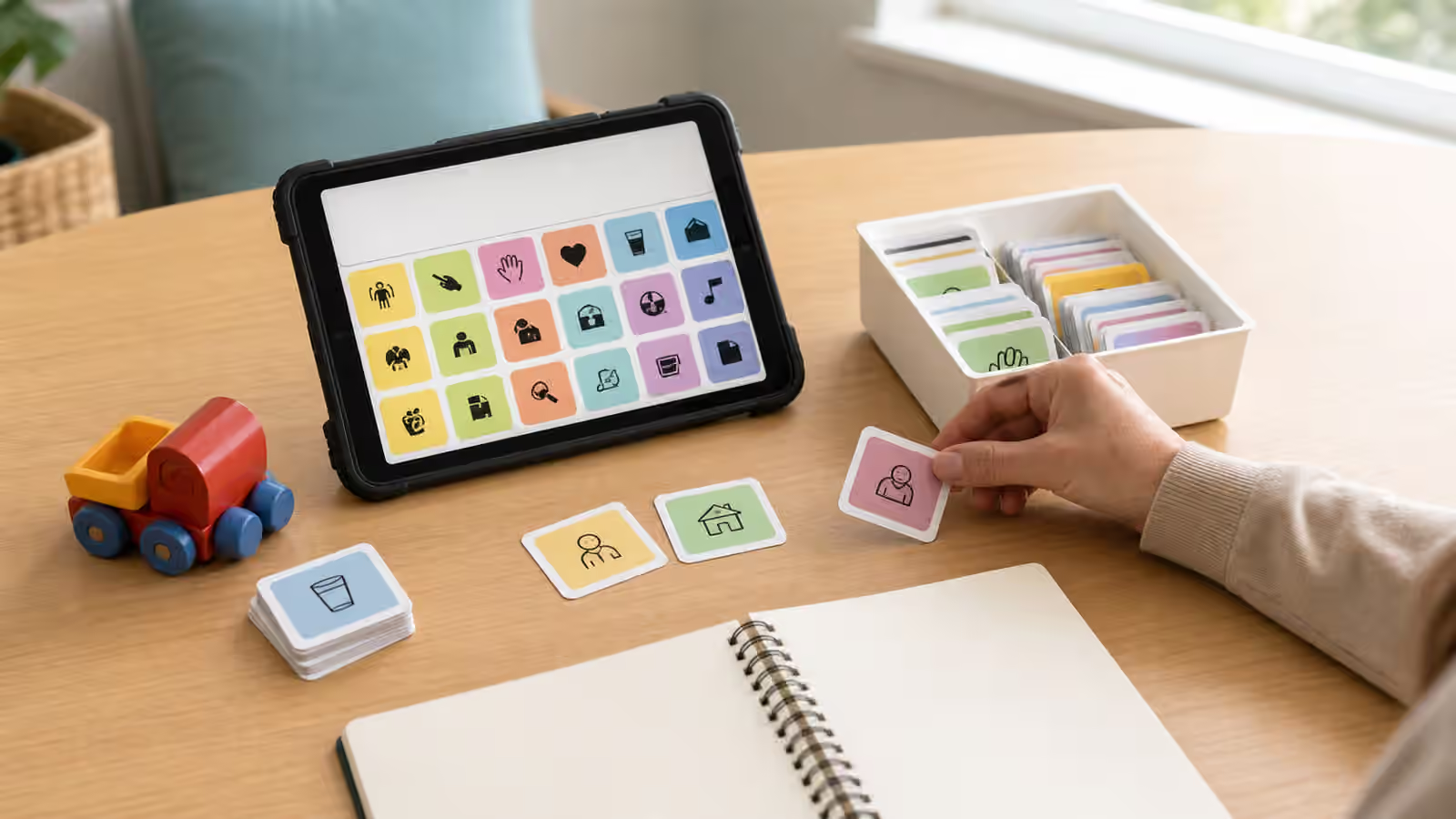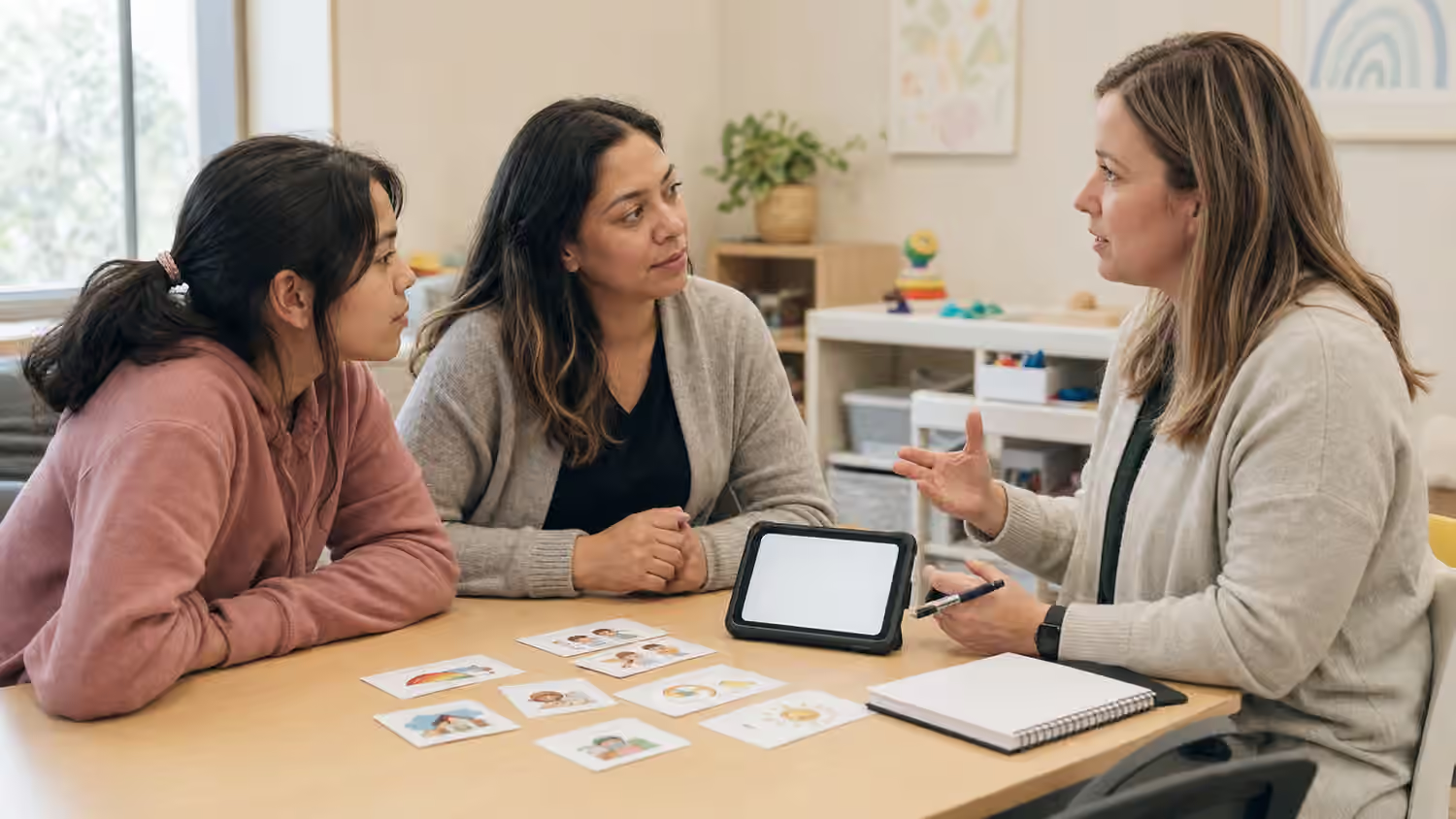
This guide explains communication partner training: the work of helping listeners, caregivers, teachers, clinicians, coworkers, and family members communicate in ways that support the person with a speech, language, fluency, voice, cognitive-communication, or AAC need. It is educational background, not a treatment plan, legal or school advice, diagnosis, supervision, or substitute for a licensed speech-language pathologist, qualified school team, physician, audiologist, psychologist, or local professional. See Augmentative and Alternative Communication for the professional reference behind this topic.
Speech-language support is often described as if all change must happen inside the person receiving services. The speaker should produce the sound. The child should answer. The adult with aphasia should find the word. The AAC user should select the message. Those goals may matter, but communication is never one-sided. A listener can make a message easier to send, easier to repair, and easier to trust.
The listener is part of the system
A communication breakdown is often blamed on the person with the visible difficulty. They stuttered, spoke softly, used the wrong word, selected the wrong symbol, forgot the story detail, or did not answer quickly enough. A trained partner looks at the whole exchange. Was the room noisy? Was the question too fast? Did the partner interrupt? Was the AAC system within reach? Did the person have time to process? Did the listener accept gesture, writing, drawing, pointing, facial expression, or partial speech as part of the message?
This broader view does not excuse every misunderstanding. It makes problem solving more honest. A child practicing speech sounds may be clearer when an adult slows the conversation and chooses one target moment instead of correcting every sentence. A person who stutters may speak more freely when the listener keeps normal eye contact and does not finish words. A person with aphasia may share more when the partner writes keywords and confirms meaning. A person using AAC may communicate more when the device is charged, visible, respected, and available outside practice.
The Communication Repair and Self-Advocacy guide focuses on the person using repair strategies. Partner training is the other side of that same bridge. Repair works best when the listener knows how to stay with the exchange instead of turning the moment into correction, pity, or a race.
Waiting is an active skill
Wait time sounds simple until a conversation becomes uncomfortable. Many partners ask a question, pause for a second, repeat it, rephrase it, answer it, and move on before the other person has had enough time to process. This can happen with children, AAC users, people with aphasia, adults after brain injury, people with dementia, and people who need extra time because of anxiety, motor planning, sensory load, fatigue, or language complexity.
Good waiting is not a cold silence. It is a visible invitation. The partner stays present, keeps the pace calm, and gives the person room to use speech, gesture, AAC, writing, drawing, facial expression, or another mode. If the person looks stuck, the partner can offer a repair without taking over. That might mean narrowing choices, writing a key word, pointing to a relevant page, reducing background noise, or saying, “Take your time. I am listening.”
Partners often worry that waiting will feel awkward. It may at first. But rushed help can quietly teach that the person will not be given a full turn. In AAC, this can mean the device is present but not truly usable. In aphasia, it can mean the partner owns the conversation. In stuttering, it can mean the listener’s discomfort becomes louder than the speaker’s message. The AAC in Daily Routines guide describes how access and modeling depend on partner behavior during ordinary moments, not only formal practice.
Repair should protect dignity
Misunderstandings will happen. The goal is not to avoid every breakdown. The goal is to repair without making the person feel small. A partner can say, “I missed that,” rather than “You said it wrong.” They can ask whether a guess is correct instead of pretending to understand. They can use written choices, drawings, objects, gestures, or photos when appropriate. They can slow the topic down and confirm one piece at a time.
For a person with aphasia, supported conversation may include written keywords, yes-or-no confirmation, topic cues, and enough time for the person to show competence even when words are hard. The Aphasia Communication Support guide explains why identity and participation matter after language changes. Partner training keeps that principle alive in the room. The person should not disappear behind the impairment.
For dementia and progressive communication changes, partner behavior may need to change as needs change. A familiar routine, calm tone, visual cue, or preserved personal interest can support participation even when memory and language are less reliable. The Dementia and Progressive Communication Support guide offers a broader map. Partner training helps families avoid turning every conversation into a correction of facts when the more meaningful goal may be connection, choice, comfort, or safety.
Repair also matters for children. If a child’s speech is unclear, adults may ask for repetition again and again until the child gives up. A better partner response may combine one respectful request with context: “I heard that you want the red one, but I missed the next part.” The adult shows effort, not judgment. Over time, the child learns that repair is a normal part of communication, not proof that they failed.
Support changes by setting
Partner training looks different at home, school, work, and in clinical care. At home, it may mean making a conversation slower and less crowded. During meals, it may mean giving a person time to choose, refuse, or comment without every turn becoming a lesson. During play, it may mean following the child’s lead and adding language that belongs to the moment. During medical visits, it may mean writing key points, checking understanding, and making sure the person has a way to ask questions.
At school, partner training may involve teachers, aides, peers, bus staff, and related service providers. A student who uses AAC needs more than a device goal. They need partners who know where the device is, how to wait, how to respond to messages, and how to include the student during lunch, recess, group work, and classroom discussion. A student with language comprehension needs directions that are clear enough to follow without public embarrassment. A student who stutters needs adults who do not turn every speaking moment into fluency performance. The School Speech Services, IEPs, and Parent Questions guide can help families ask how communication supports travel beyond the therapy room.
At work or in the community, partner training may be less formal but still powerful. A coworker can ask whether written notes help. A family member can reduce background noise before an important call. A receptionist can give an adult with dysarthria time to finish rather than repeatedly interrupting. These changes are small only if the listener is not the one struggling to be understood.
Partner training is not control
Good partner training does not give listeners permission to manage every word. It should not become constant prompting, public correction, forced eye contact, device policing, or pressure to communicate in the listener’s preferred way. Respectful support begins with the person’s goals, preferences, culture, language, privacy, and consent as much as possible. Some people want help repairing messages. Some want more independence. Some want partners to stop finishing sentences. Some want AAC available without being told to use it every time they gesture.
This is especially important for autistic communication support, AAC, fluency, and gender-affirming voice work. A partner may think they are helping while actually pushing performance, masking, or compliance. The Autistic Communication Support guide is relevant because access and respect are not the same as making communication look typical. The Stuttering and Fluency Basics guide is relevant because fluent-sounding speech is not the only measure of a successful exchange.
The listener’s job is to make communication more possible, not more controlled. That includes honoring refusals, accepting multimodal messages, protecting private information, and noticing when the person is tired. It also means asking clinicians for guidance when strategies are not working, when communication changes suddenly, when safety is involved, or when a partner’s well-meant habits may be adding pressure.
Real progress is shared participation
A communication partner may not be the person listed on the therapy goal, but their behavior can decide whether a skill survives real life. A child may use a new sound more often when correction is brief and warm. An AAC user may comment more when the system is always within reach. A person with aphasia may tell a fuller story when the partner writes key words and waits. A speaker with dysarthria may be understood better when the listener confirms topic and gives time. A person with dementia may participate longer when the partner follows meaning instead of arguing over every detail.
The Home Practice Without Pressure guide offers a useful rule for families: practice should make communication easier, not make the day feel like an exam. Partner training follows the same rule. The best partner is not the one who knows the most techniques. It is the one who helps the person stay present, respected, and understood enough to keep communicating.