This guide explains cognitive-communication support after concussion and brain injury in plain language. It is educational background, not a diagnostic assessment, treatment plan, return-to-play plan, workplace accommodation plan, or substitute for a licensed speech-language pathologist, physician, neuropsychologist, rehabilitation team, school team, or other qualified professional. See Traumatic Brain Injury (Adult) for the professional reference behind this topic.
Speech recognition tools and home observations can be useful notes, but they can also be wrong, especially when attention, processing speed, fatigue, headache, pain, sleep disruption, hearing, vision, mood, medication effects, or background noise are part of the picture.
What cognitive-communication means
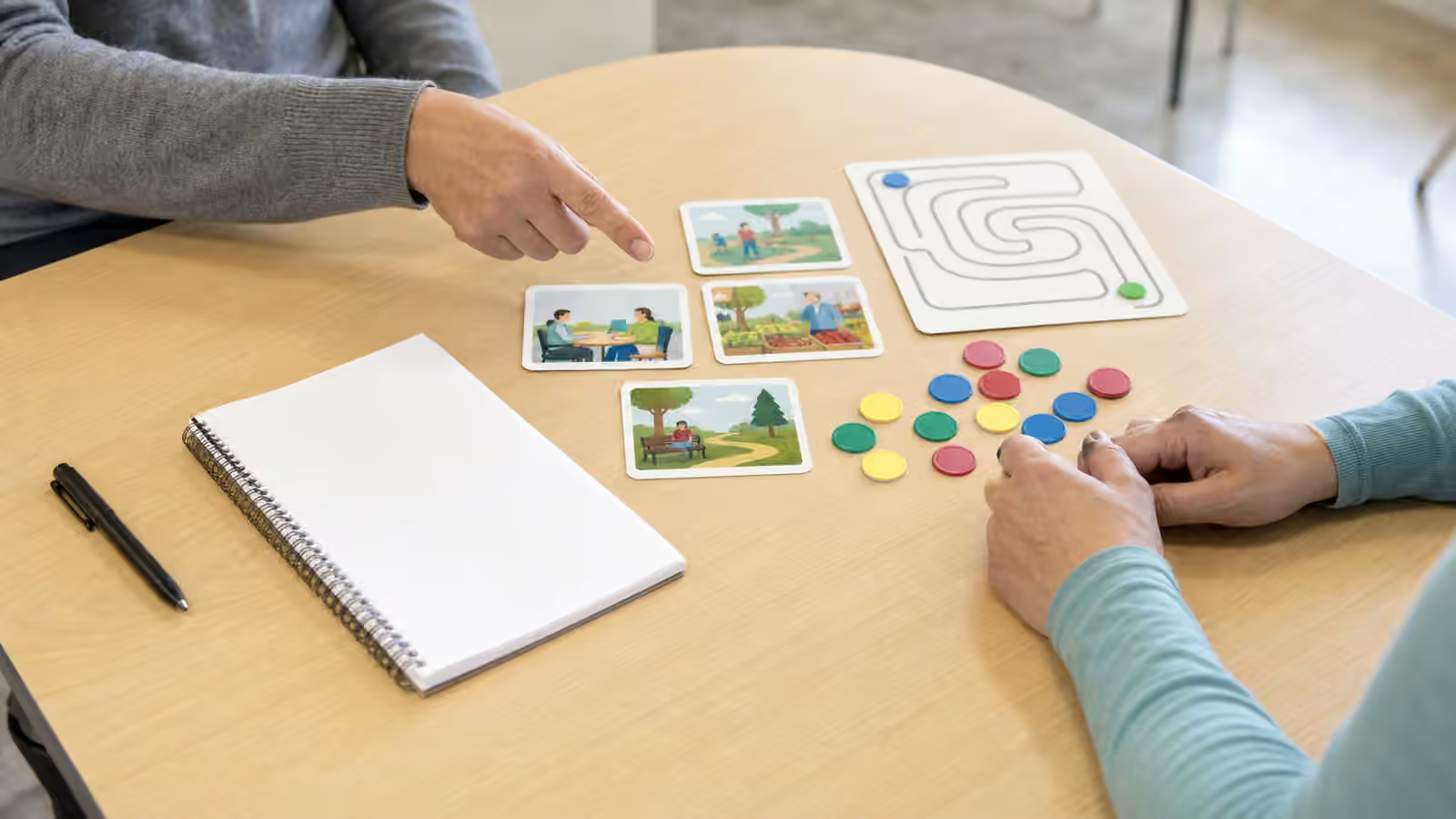
Cognitive-communication is the meeting place between thinking skills and communication. It includes attention, memory, organization, planning, problem solving, processing speed, self-monitoring, conversation tracking, social judgment, word retrieval under load, and the ability to use language while doing something else. After concussion or traumatic brain injury, a person may sound like themselves in a quiet room but feel overwhelmed by a normal day. That gap is confusing for families, employers, teachers, and the injured person.
The difficulty may not look dramatic. Someone can answer questions accurately during an appointment and still lose the thread during a noisy dinner. They can write one clear email and then become exhausted by the next three. They can remember a familiar routine but miss a new instruction because the brain is already managing light sensitivity, headache, worry, and fatigue. Cognitive-communication concerns often show up where real life is layered: a meeting with side comments, a classroom with transitions, a shopping trip with choices, a phone call during dinner, or a workday with interruptions.
The invisible load of ordinary conversation
Conversation looks simple from the outside. In reality, the listener must hear the words, filter noise, hold earlier details in memory, read tone and facial expression, choose what matters, plan a response, and adjust when the topic shifts. After brain injury, those steps may take more effort. The person may ask for repeats, respond late, miss jokes, interrupt by accident, talk too much because self-monitoring is harder, or withdraw because keeping up is exhausting.
These changes can be mistaken for laziness, rudeness, anxiety, or lack of motivation. Sometimes mood and communication truly interact, and emotional support may be part of care. Still, it is important not to moralize cognitive load. A person who needs a written reminder is not failing to care. A person who leaves a gathering early may be protecting the rest of the day. A student who performs well in the morning and falls apart after lunch may be showing fatigue, not inconsistency for its own sake.
Pacing is a communication tool
Pacing is often discussed as rest, but it also belongs to communication. A person may need shorter conversations, fewer competing demands, more written support, planned breaks before hard discussions, or a quiet place to review information. Pacing is not avoidance when it is used to preserve participation. It is a way to spend limited attention on what matters most.
A practical pacing routine starts with noticing when communication breaks down. Does the person lose track after twenty minutes? Does noise make word finding harder? Are phone calls worse than face-to-face conversation? Does reading become less accurate when the screen is bright? Do group chats, notifications, and open office conversations drain the person faster than one planned meeting? These patterns can guide support without turning the day into a medical chart.
The Adult Speech-Language Support After Stroke or Brain Injury guide explains how communication, swallowing, speech, and cognition may overlap after neurological injury. This page narrows in on the thinking-and-language load that can remain even when speech sounds clear.
Supports should look like real life
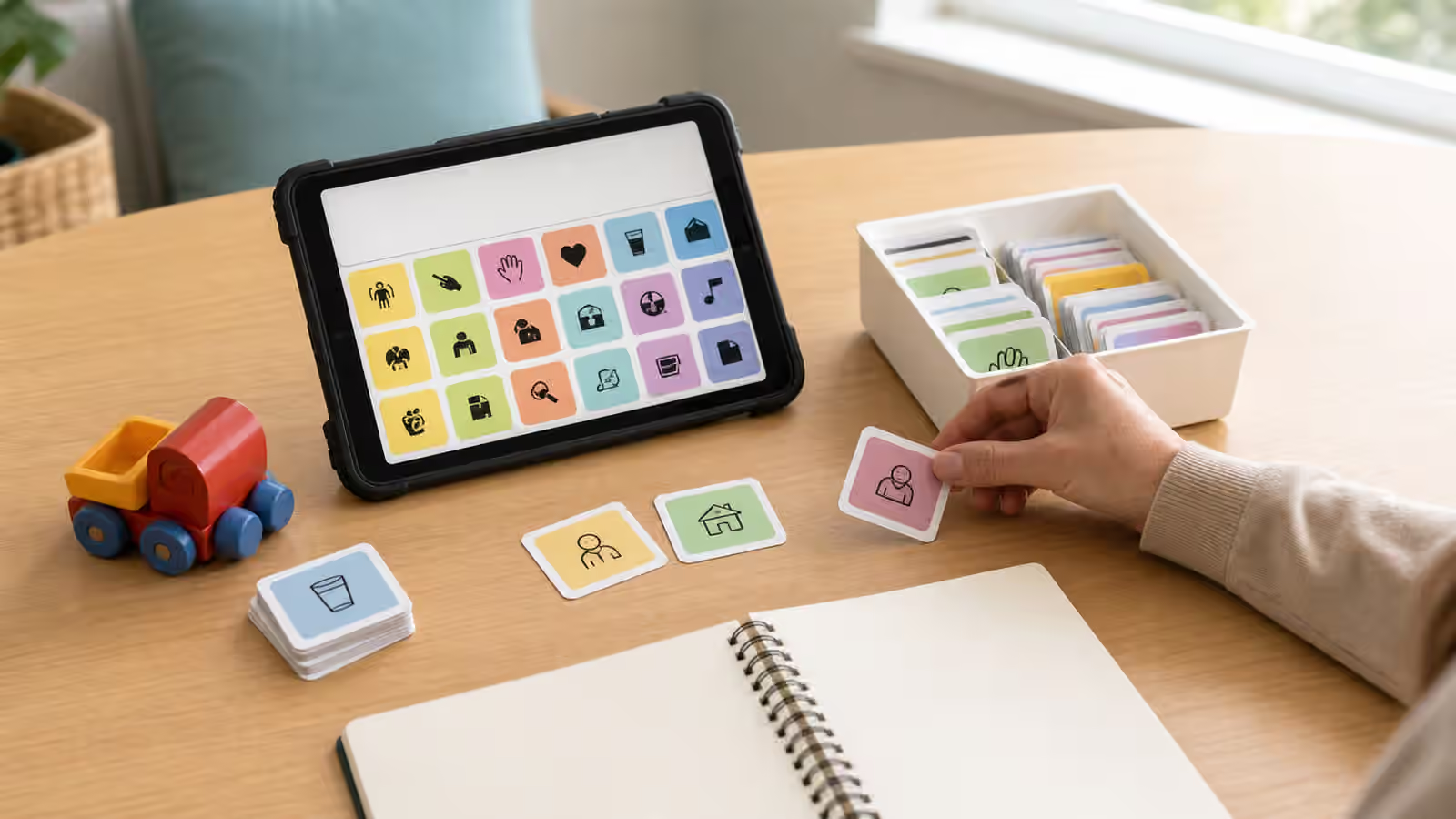
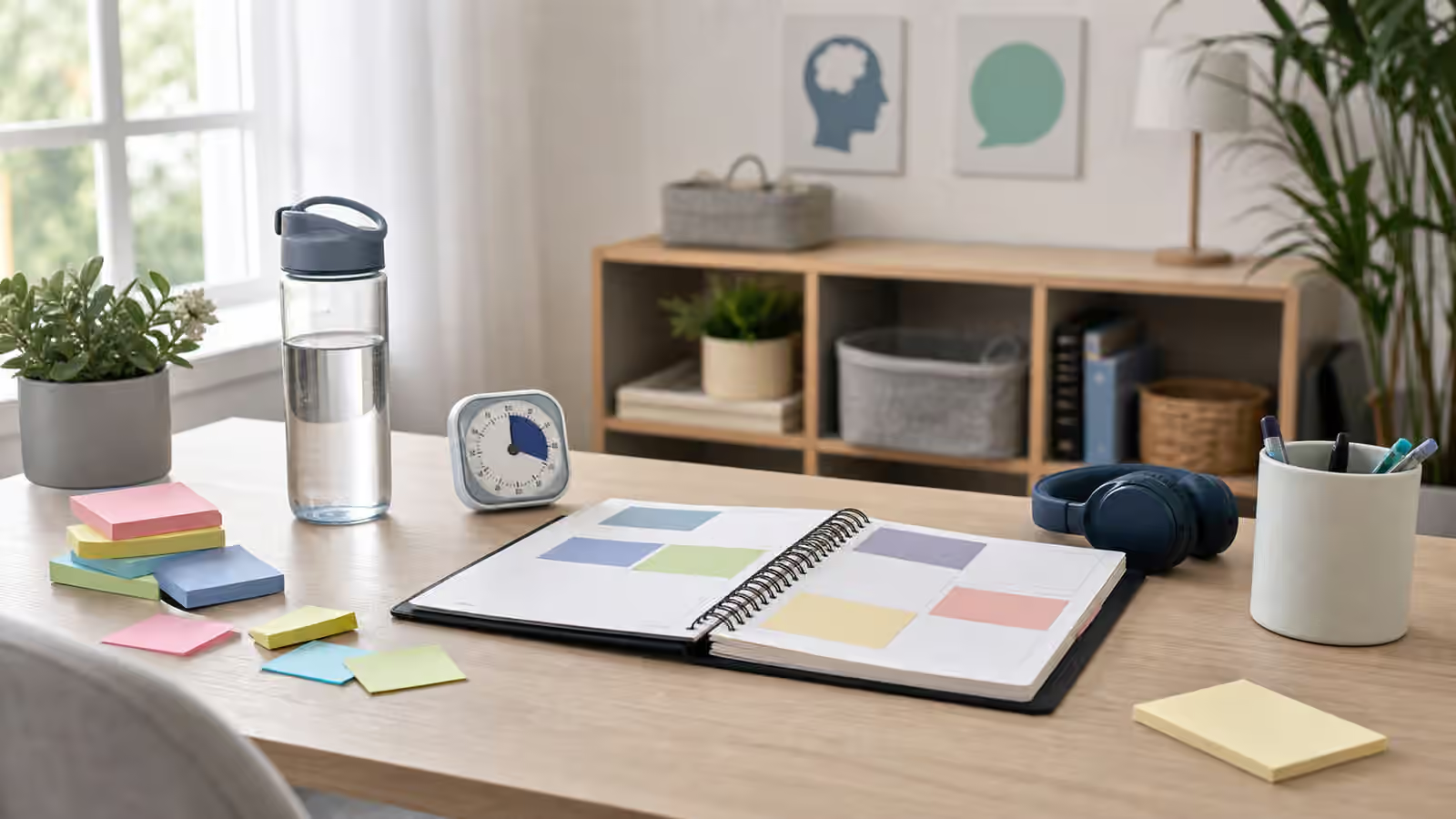
Useful supports often look ordinary. A planner with realistic time blocks can reduce the need to keep everything in memory. A written agenda can make a meeting easier to follow. A quiet desk can make a phone call possible. A shared note after a medical visit can keep the person from relying on memory during a stressful moment. A timer can protect a break before fatigue becomes a crash. Headphones, dimmer lighting, or fewer open tabs can reduce load when sensory input competes with language.
The key is fit. A beautiful planner that no one uses is decoration. A reminder system that interrupts every five minutes may become another burden. A family member who repeats instructions loudly may add pressure instead of clarity. Cognitive-communication support should reduce effort, preserve dignity, and make the next action easier to find. Sometimes one simple support used consistently is better than five new systems introduced at once.
For students, support may involve shorter instructions, written summaries, planned breaks, reduced multitasking, or a way to check understanding privately. For workers, it may involve meeting notes, agenda order, interruption management, flexible scheduling, or a quieter communication channel for complex tasks. These are not promises of eligibility or legal advice. They are examples of why professional evaluation and local rules matter when support needs to enter school or workplace systems.
Self-monitoring can be fragile
After brain injury, a person may not always notice when communication is becoming less accurate. They may keep talking after fatigue has changed clarity. They may miss that a listener is confused. They may underestimate how much time a task will take, or they may overestimate recovery because one strong day felt like proof. This can be hard for families because reminders can sound controlling even when they are meant kindly.
A better approach is to agree on signals and scripts before the hard moment. Instead of correcting in public, a partner might use a quiet phrase that means “Let’s pause,” or “Do you want the written note?” The person might choose a break card, a phone reminder, or a private signal. The goal is not to supervise adulthood. The goal is to protect participation when the brain is overloaded and self-monitoring is less reliable.
Professional support can help make these strategies more collaborative. An SLP may work on conversation repair, attention to main ideas, written supports, planning routines, or scripts for high-stakes settings. A neuropsychologist, physician, occupational therapist, counselor, educator, or vocational specialist may also be involved depending on the pattern. Brain injury care is rarely one-discipline work.
Communication recovery is not a straight line
People often expect steady improvement: Monday better than Sunday, next month better than this month. Recovery can be messier. Sleep, pain, stress, screen time, medication changes, sensory load, and emotional strain can all affect communication. A person may handle a family visit well but struggle with a grocery store because lights, choices, noise, and navigation are stacked together. They may be able to write a thoughtful message but not manage a fast phone call. The setting changes the demand.
This is why observation should describe context. A useful note might say, in plain language, that the person follows a one-on-one conversation in a quiet room but loses details when three people talk at once. It might say that calendar mistakes happen after long errands, or that word finding is worse after a headache begins. Such notes are more useful than a single label like “forgetful” or “not paying attention.”
If sudden confusion, new weakness, severe headache, seizure, loss of consciousness, worsening neurological symptoms, or other urgent medical concerns appear, that belongs with emergency or qualified medical care. A guidebook should never be used to decide that a serious change can wait.
Connecting support to participation
Cognitive-communication goals should point toward ordinary participation. The target may be following class discussion, completing a work meeting with notes, making safe household decisions, managing appointments, texting without losing meaning, joining family meals, or returning to a hobby group without a crash afterward. These goals are concrete enough to plan around and meaningful enough to matter.
Home practice can help when it is tied to the clinician’s plan and kept humane. The Home Practice Without Pressure guide is a useful companion because fatigue-sensitive practice should not become a second job. Ten careful minutes with a real calendar may be better than an hour of disconnected worksheets. A quiet conversation with a written summary may be more useful than pushing through a group discussion that leaves the person unable to function afterward.
The best support respects both recovery and identity. The person is not a set of deficits, and they are not required to perform normalcy to deserve patience. Cognitive-communication care works best when it makes real settings clearer, lighter, and more navigable.