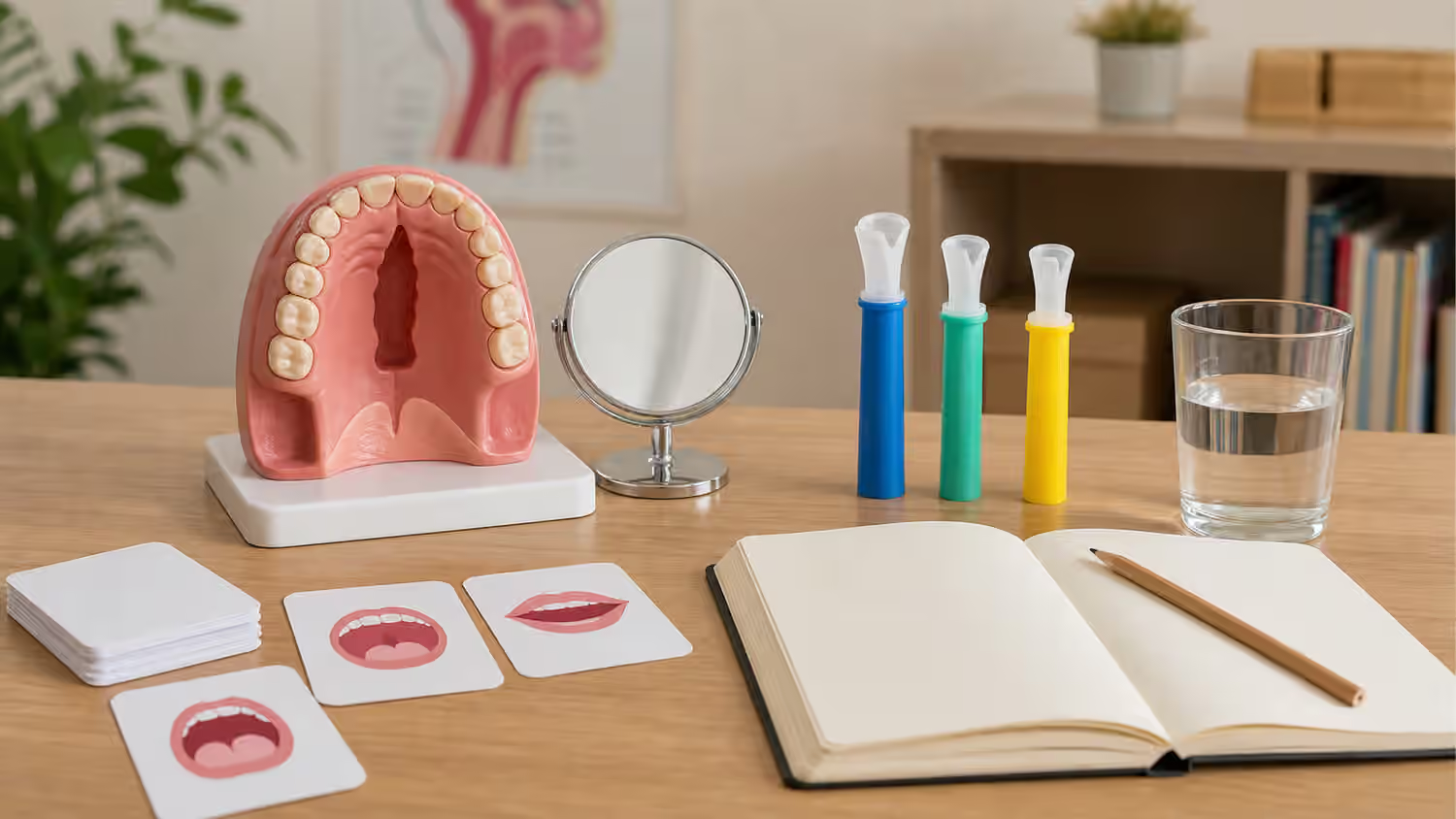
This guide explains cleft palate and resonance questions as speech-language topics that usually belong with a specialized medical and therapy team. It is educational background, not a diagnosis, surgical opinion, therapy plan, orthodontic plan, feeding recommendation, or substitute for a craniofacial team, physician, surgeon, dentist, orthodontist, audiologist, licensed speech-language pathologist, or qualified local professional. See Cleft Lip and Palate for the professional reference behind this topic.
Cleft palate can affect speech, resonance, hearing, feeding, dental development, and family routines in ways that change over time. Some children and adults have a visible cleft history. Others have a submucous cleft, velopharyngeal dysfunction, or resonance pattern that needs careful evaluation. Home listening can help families describe concerns, but it cannot determine anatomy or choose treatment.
Why resonance belongs in the speech map
Speech uses a coordinated system. Air comes from the lungs, the voice source vibrates, the throat and mouth shape sound, and the lips, tongue, jaw, palate, and nose help create speech sounds. For many consonants, the soft palate and throat structures need to close off the nose so oral pressure can build. Sounds like p, b, t, d, k, g, s, sh, f, and ch depend on pressure and direction of airflow. If too much air escapes through the nose, speech may sound hypernasal, weak, nasalized, or hard to understand.
Resonance differences can be confusing because people use everyday words loosely. A listener may say speech sounds nasal, stuffy, muffled, airy, unclear, or like the person is talking through the nose. Those descriptions are useful starting points, but they do not identify the cause. A cold can make someone sound hyponasal because the nose is blocked. Velopharyngeal differences can make speech sound hypernasal because air is escaping into the nose during sounds that need oral pressure. Learned speech patterns can continue even after anatomy changes. Hearing differences can shape speech sound learning. Several factors can overlap.
The broader Voice, Resonance, and When Voice Changes Need Attention guide introduces resonance as part of voice and speech. Cleft-related resonance deserves its own guide because the decision-making often involves specialized imaging, medical history, speech sampling, hearing care, dental development, and team timing.
Pressure sounds tell a story
Families may first notice that some sounds seem weak or missing. A child may use a glottal stop in the throat instead of a pressure sound in the mouth. A word like “puppy” may lose its crisp pressure, or “cookie” may sound like a different pattern. Some children learn compensatory productions because the usual oral pressure was hard to build earlier in development. Those patterns are not stubbornness. They are learned solutions to a difficult speech system, and they usually need skilled speech therapy rather than simple reminders to try harder.
Not every sound error in a child with a cleft history is cleft-related. A child can also have common developmental speech sound patterns, articulation errors, phonological patterns, childhood apraxia of speech, hearing-related speech differences, language concerns, or dialect differences. The Articulation and Speech Sounds and Phonological Patterns Without Panic guides explain the broader speech sound landscape. The cleft question is whether structure, airflow, resonance, or learned compensatory placement is shaping the pattern.
That distinction matters because treatment choices differ. Speech therapy can teach many learned speech patterns, but therapy cannot exercise away a structural gap that prevents adequate closure. Medical or surgical teams may need to evaluate anatomy when resonance or nasal air emission suggests a structural concern. At the same time, surgery alone may not erase learned compensatory sounds. A person may need both the right medical question and the right speech therapy target.
Hearing and middle ear history matter
Children with cleft palate histories often have middle ear concerns that can affect hearing access. Fluctuating hearing can make speech sound learning harder because the child may miss parts of speech during important developmental periods. A child might hear better some weeks than others. Adults may not notice because the child responds in quiet rooms but struggles in noise, misses soft speech sounds, or seems inconsistent.
This does not mean every speech concern is caused by hearing. It means hearing should stay in the conversation. The Hearing, Listening, and Speech-Language Development guide helps families think about observations such as asking for repeats, watching faces closely, misunderstanding in noise, or responding inconsistently. For cleft-related care, audiology, ENT, and speech-language services often need to communicate because speech sound development depends on access to sound as well as oral structure.
Families can bring practical notes to appointments. Describe which sounds are hard to understand, whether speech changes during colds, whether nasal air escape is audible, whether the person becomes frustrated when repeating, and whether unfamiliar listeners understand less than family members do. Recordings may be useful if a clinician requests them, but privacy matters, especially for children. A written note about patterns is often enough to start.
Feeding history and speech history are connected but different
Cleft palate can affect infant feeding, early medical care, and family stress long before speech is the main concern. As children grow, families may carry memories of bottles, weight checks, surgeries, appointments, dental visits, and worry. Speech support should respect that history. A parent who asks many questions may not be overreacting. They may have spent years coordinating care.
Feeding and swallowing questions still require their own caution. The Feeding and Swallowing guide explains why coughing, choking, texture restriction, and swallowing concerns belong with qualified care rather than home trials. In cleft-related speech work, it is important not to blur boundaries. A speech sound practice page cannot tell a family how to manage feeding. A resonance observation cannot replace a medical feeding plan. Team care exists because the body systems overlap without being identical.
Older children and adults may also care about how speech affects identity. They may be tired of being asked to repeat, embarrassed by nasal air emission, proud of progress, or wary of more procedures. A respectful SLP listens to the person’s own goals, not only to adult intelligibility ratings. Clearer speech can matter, but so can confidence, participation, privacy, and control over how much history is shared.
What professional evaluation may look at
A cleft or resonance speech evaluation may include a speech sample, pressure consonants, resonance ratings, nasal air emission, articulation placement, oral exam, hearing history, stimulability for new sounds, and conversation intelligibility. Some teams may use instrumental assessment to view velopharyngeal function. The exact tools depend on age, cooperation, medical history, and local practice. The family does not need to know which instrument is needed before asking for help.
The most useful mindset is collaborative. Ask what sounds are learned patterns, what signs suggest structure or airflow, whether hearing should be checked, which targets belong in therapy, and how progress will show up outside the clinic. Ask what not to practice at home if the target depends on professional setup. Well-intended home drills can accidentally strengthen the wrong placement if the child practices a throat sound or nasalized pattern over and over.
Home support can stay relationship-centered. Repeat what the child says to confirm meaning. Reduce background noise when conversation is hard. Give time without making every sentence a correction. If a clinician assigns a specific target, keep practice brief and accurate rather than long and frustrating. The Speech Sound Carryover guide is helpful once targets are clear, but carryover should not begin before the team knows which sounds and placements are appropriate.
A steadier way to listen
Listening for cleft-related speech concerns is not about blaming the speaker or the family. It is about noticing patterns that deserve the right kind of help. Does air seem to escape through the nose on pressure sounds? Does speech sound more nasal than expected even without a cold? Are some consonants replaced with sounds made farther back in the throat? Do unfamiliar listeners struggle more than familiar partners? Has hearing changed? Did speech change after surgery, illness, growth, or orthodontic work?
Those observations can guide the next appointment, but they should not become a home diagnosis. Cleft palate and velopharyngeal differences sit at the meeting point of anatomy, hearing, development, speech learning, medical care, and identity. The best support takes that complexity seriously without turning every conversation into an examination. The person still needs ordinary talk, jokes, stories, school participation, work participation, and family life. Speech care should help those moments become easier to access, not make the person feel like a set of sounds under constant inspection.