This guide helps families and educators think about classroom listening and following directions without assuming that every difficulty is defiance, inattention, or a simple hearing problem. It is educational background, not a school evaluation, hearing assessment, diagnosis, treatment plan, legal advice, or substitute for a licensed speech-language pathologist, audiologist, teacher, psychologist, physician, or qualified local team. See Classroom Acoustics for the professional reference behind this topic.
Classrooms are demanding listening environments. Children and students may need to hear speech in noise, understand long sentences, remember steps, shift attention, interpret social cues, and act quickly while other activity continues around them. A guidebook cannot explain one student’s pattern, but it can help adults ask better questions.
Following directions is not one skill
“Doesn’t follow directions” sounds simple until adults watch closely. One student may not hear the direction. Another may hear it but miss small words that change the meaning. Another may understand each word but lose the sequence. Another may know what to do but freeze when the room is loud. Another may follow directions from a familiar teacher but not from a substitute. Another may understand spoken directions during a calm lesson and fall apart during transitions because the language, noise, movement, and time pressure all rise at once.
Speech-language pathologists often look at the language side of this pattern. Directions can include vocabulary, grammar, concepts, sequencing, memory, inferencing, and social expectations. “Before you put your folder away, underline the title and bring me the paper you started yesterday” is not just a command. It contains order words, object names, a memory link to yesterday, a motor plan, and a classroom routine. If a student misses one piece, the adult may see noncompliance when the real issue is access.
The Language Development guide is a useful companion because receptive language is not passive. Understanding spoken language requires attention, hearing access, vocabulary, grammar, memory, and context. A student can be bright and still struggle when language is fast, dense, or unsupported.
Noise changes the task
Classrooms are full of chairs moving, HVAC systems, hallway sounds, side conversations, pencils dropping, pages turning, and peers whispering. A student who hears well in a quiet room may miss key details in noise. A child with fluctuating hearing, a history of ear issues, auditory fatigue, language difficulty, attention differences, or sensory overload may work especially hard. The effort may not be visible until the student guesses, copies peers, shuts down, acts silly, or avoids the task.
Hearing questions should not be reduced to whether the child seems to hear at home. A child may respond to loud familiar sounds and still miss speech contrasts, soft endings, or teacher comments from across the room. If listening concerns are persistent, inconsistent, or worse in noise, families can ask whether hearing should be checked and whether the classroom environment should be considered. The Hearing, Listening, and Speech-Language Development guide offers a broader path for those questions.
Noise also affects students without hearing loss. When the room is loud, working memory gets used up just holding the words. A direction that seemed easy at the teacher’s desk may become difficult during group work. Adults should notice where listening breaks down instead of only asking whether the student can repeat the direction once in a quiet corner.
Visual support is not cheating
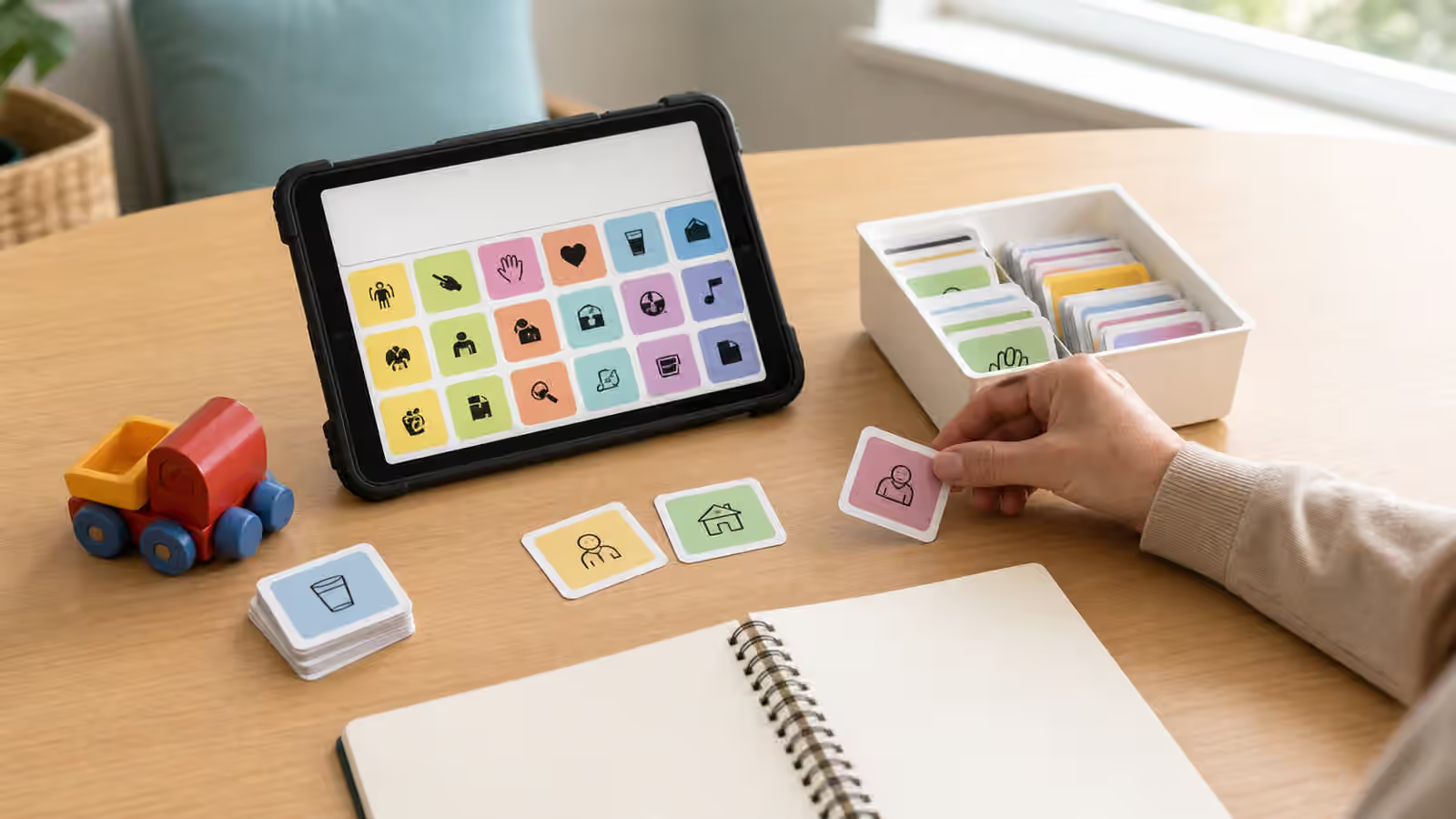
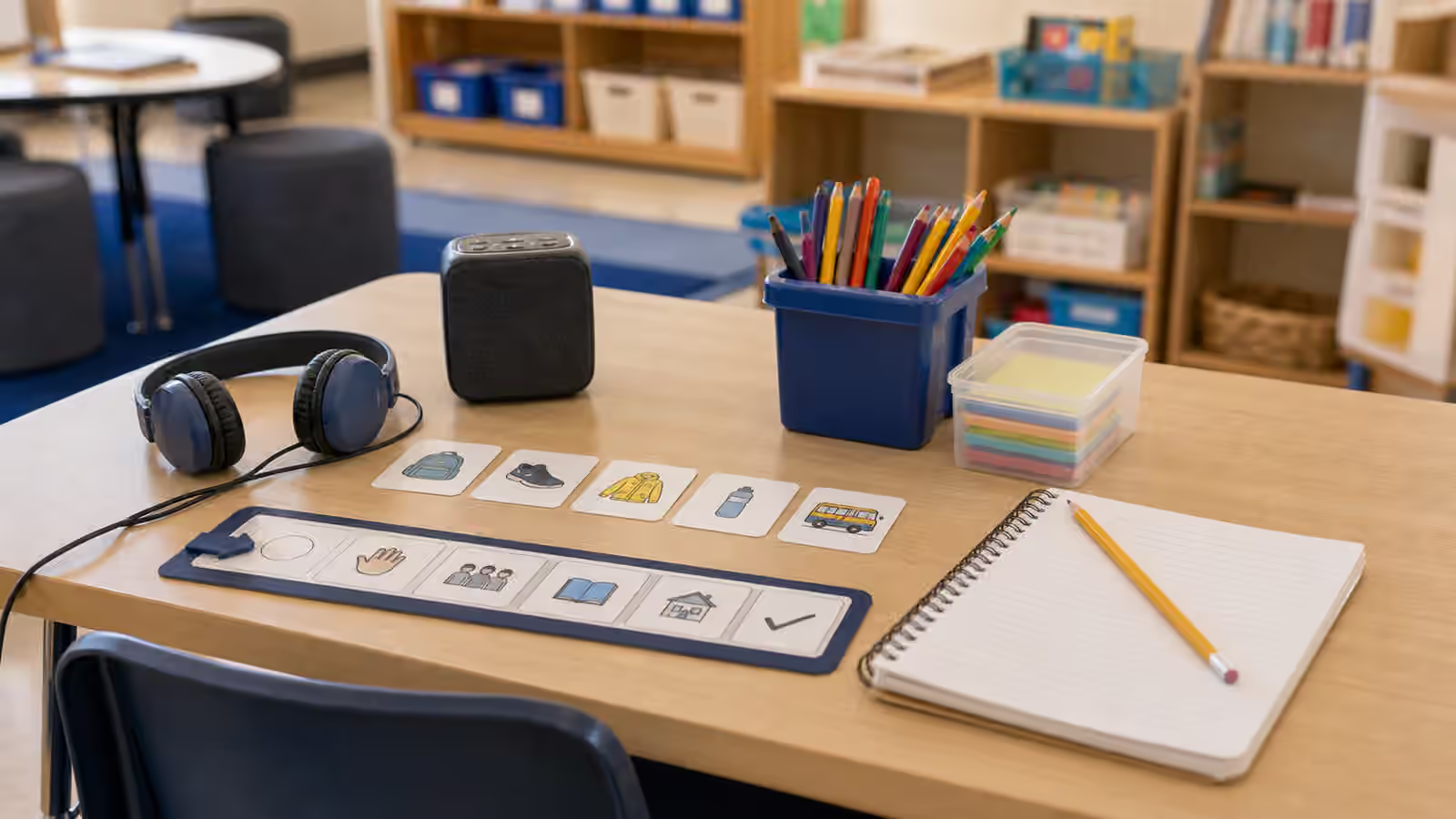
Many students follow directions better when spoken language is paired with visual support. That might mean a picture sequence, written keywords, a gesture, a model, an object cue, a consistent routine, or a check for understanding that does not embarrass the student. Visual support does not mean the student is not listening. It reduces the load so the student can use listening more successfully.
A visual schedule can help because it makes time visible. A picture or written keyword can help because it lets the student return to the direction after the spoken words disappear. A model can help because some classroom tasks are easier to understand when seen. A gesture can help because it anchors attention without adding more language. These supports can be faded or adjusted when they are no longer needed, but removing them too early may make the student’s performance look worse for reasons that have little to do with motivation.
The goal is not to make every classroom silent or every direction tiny. Students need access to real classroom language. The question is which supports allow them to participate while skills develop. A student who understands the science concept but misses the three-step direction still needs a way into the task.
Observe the pattern in real routines
Good observation names the setting. Does the student struggle during whole-group lessons, small groups, transitions, specials, lunch, recess, assemblies, tests, or independent work? Does the problem happen with long directions, unfamiliar vocabulary, time words, location words, multi-step tasks, or directions given from across the room? Does the student watch peers before acting? Does the student ask for repeats, answer a different question, start the wrong task, or avoid beginning? Does written or picture support help?
Those details matter more than a general complaint. A useful note might say that the student follows one-step directions during morning routine but loses multi-step oral directions during noisy transitions. Another note might say that the student repeats the last few words but misses the first action. Another might say that the student understands when the teacher gestures toward materials but not when directions are given while the class is packing up. These examples help a speech-language pathologist, teacher, audiologist, or school team decide where to look.
For children and minors, avoid storing names, school names, recordings, diagnoses, or identifying classroom examples in casual tools. Keep private notes brief and focused on patterns. The purpose is to support a better conversation, not to build a public record of a child’s difficult moments.
School teams need shared language
Classroom listening concerns often sit between systems. A teacher may see task completion. A family may see exhaustion after school. An audiologist may look at hearing access. An SLP may look at language processing and classroom communication. A psychologist may consider attention, learning, anxiety, or executive functioning. No single guidebook can sort those apart. The team needs shared examples and a willingness to consider more than one explanation.
The School Speech Services, IEPs, and Parent Questions guide can help families ask how communication affects educational participation. A student does not need to fail every subject before listening and language access matter. At the same time, a speech-language concern should not be assumed without evaluation. The team can ask what data is needed, what supports are already helping, and whether hearing, language, attention, instruction, environment, or emotional load should be considered.
When classroom directions are part of a therapy plan, progress should show up outside isolated drills. A student might ask for clarification more appropriately, use a visual support independently, follow directions during a real transition, or explain what part was confusing. The Therapy Goals and Progress Notes guide is useful when adults need to connect goals to participation rather than only to test-like tasks.
Keep support respectful
Students notice when support makes them look singled out. A teacher can protect dignity by using classwide supports when possible, placing visual cues where everyone can use them, checking understanding privately, and avoiding public comments that frame the student as not listening. A family can protect dignity by asking what helps the student feel competent, not only what makes the adult’s day easier.
Following directions is not a measure of character. It is a complex classroom act that depends on hearing, language, memory, attention, environment, relationships, and task design. When adults get curious about the pattern, they often find changes that help many students: clearer keywords, slower pacing during transitions, visual anchors, reduced background noise when possible, explicit vocabulary teaching, and permission to ask for repetition. Those changes do not replace evaluation when a concern is significant. They make the classroom easier to enter while the team figures out what the student needs.
Speech Genie and the pages in this section cannot determine whether a student has a hearing concern, language disorder, attention difference, learning disability, anxiety, or school eligibility need. They can help adults describe what happens. That description is often the first step toward support that treats listening as access, not obedience.