This guide explains autistic communication support from a speech-language perspective that values access and dignity. It is educational background, not an autism diagnosis, therapy plan, school eligibility decision, behavior plan, medical advice, or substitute for a licensed speech-language pathologist, psychologist, physician, school team, occupational therapist, audiologist, or other qualified professional. See Autism Spectrum Disorder for the professional reference behind this topic.
Autistic communication is often misunderstood because observers focus on whether it looks typical. A person may avoid eye contact, use scripts, communicate directly, speak at length about a focused interest, need written support, miss implied meaning, use AAC, prefer parallel play, become quiet under pressure, or communicate more clearly when the sensory environment is kind. None of those details automatically means the person is not communicating. They mean listeners need to understand the person’s communication profile more carefully.
Support is not the same as making someone look less autistic
Speech-language support should not be a training program for hiding. Teaching a person to suppress natural movement, force eye contact, imitate social scripts they do not understand, or endure overwhelming settings may make other people more comfortable while making communication less honest. A respectful plan asks what the person needs for access: clearer understanding, better repair strategies, AAC, sensory-aware settings, self-advocacy language, partner training, safer social interpretation, or support for school and work demands.
This does not mean every communication difficulty should be ignored. An autistic person may genuinely want help explaining ideas, managing conversation breakdowns, understanding figurative language, using AAC, asking for accommodations, telling a story, joining a group, or navigating a medical appointment. The difference is whose comfort drives the goal. If the goal exists mainly so observers see fewer autistic traits, it deserves scrutiny. If the goal helps the person communicate needs, preferences, boundaries, humor, knowledge, pain, disagreement, and identity, it is more likely to be worth the work.
The existing guide on Social Communication and Pragmatics is closely related. Pragmatic support should expand choices, not replace a person’s communication style with a single approved performance.
Communication modes should stay available
Some autistic people speak fluently in some settings and lose speech in others. Some use speech and AAC together. Some use typing, signs, gestures, scripts, pictures, written notes, facial expression, body movement, or partner-supported routines. Some need time before responding. A person who speaks part of the day may still need AAC when tired, overloaded, ill, anxious, or facing a high-stakes conversation.
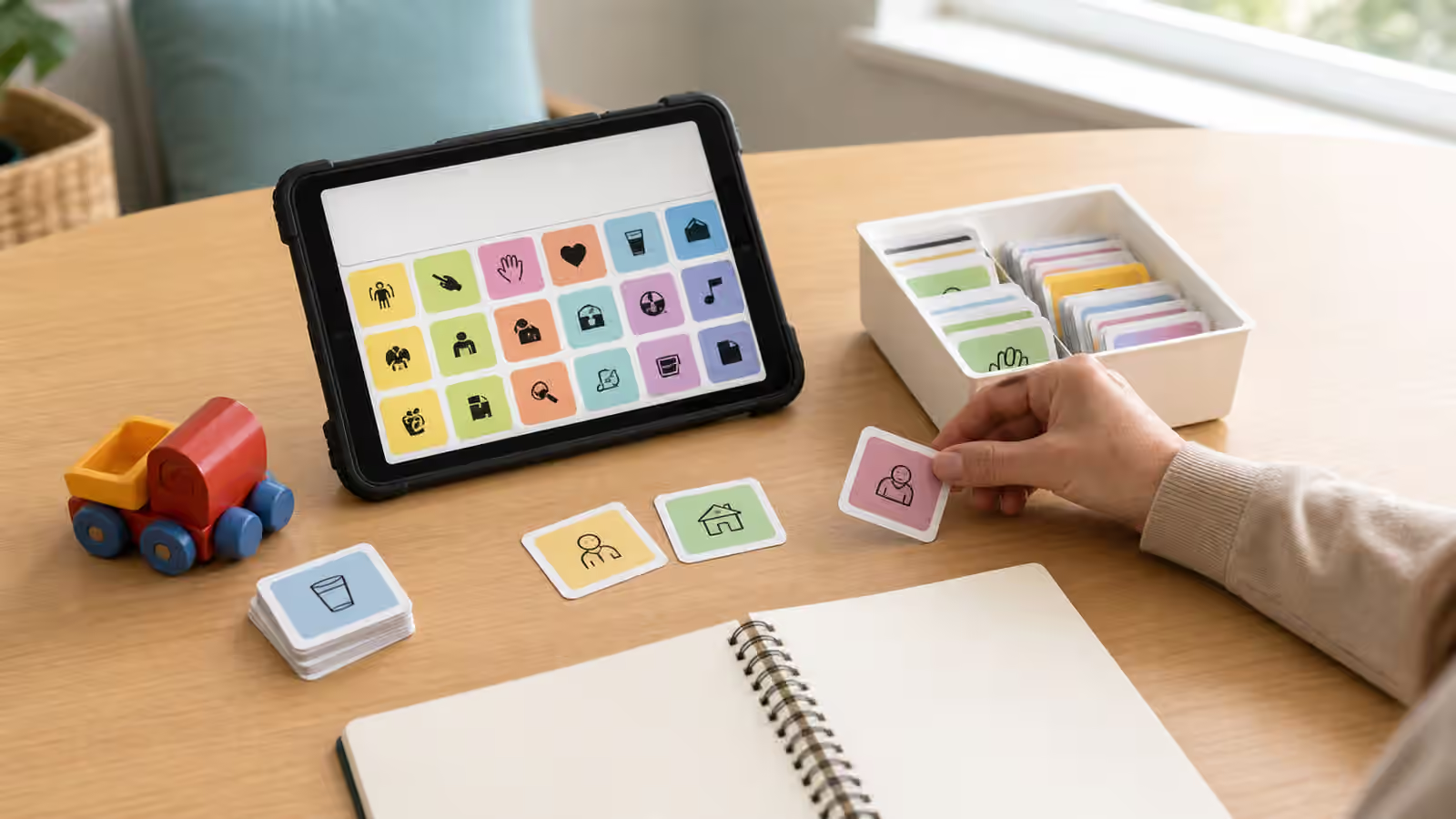
Communication partners sometimes treat AAC as unnecessary if speech appears. That can leave the person without access exactly when speech becomes hardest. A better plan keeps supports available without drama. The tablet, board, notebook, gesture system, or written choice does not have to be a symbol of failure. It is part of the communication environment, like lighting, seating, hearing access, and time to answer.
The AAC in Daily Routines guide explains why AAC should be used for more than requesting. Autistic AAC users need ways to comment, refuse, complain, ask, joke, explain, repair, share interests, and say that a situation is too much. A device or board that only offers adult-approved choices is not full communication.
Sensory and language demands interact
A person may understand language well in a quiet room and struggle in a noisy cafeteria. They may answer literal questions but miss implied demands. They may tell detailed facts about a favorite subject but have trouble summarizing a day at school. They may use complex vocabulary while struggling to ask for help. They may appear oppositional when the real problem is overload, unclear language, unexpected change, pain, or too many spoken instructions.
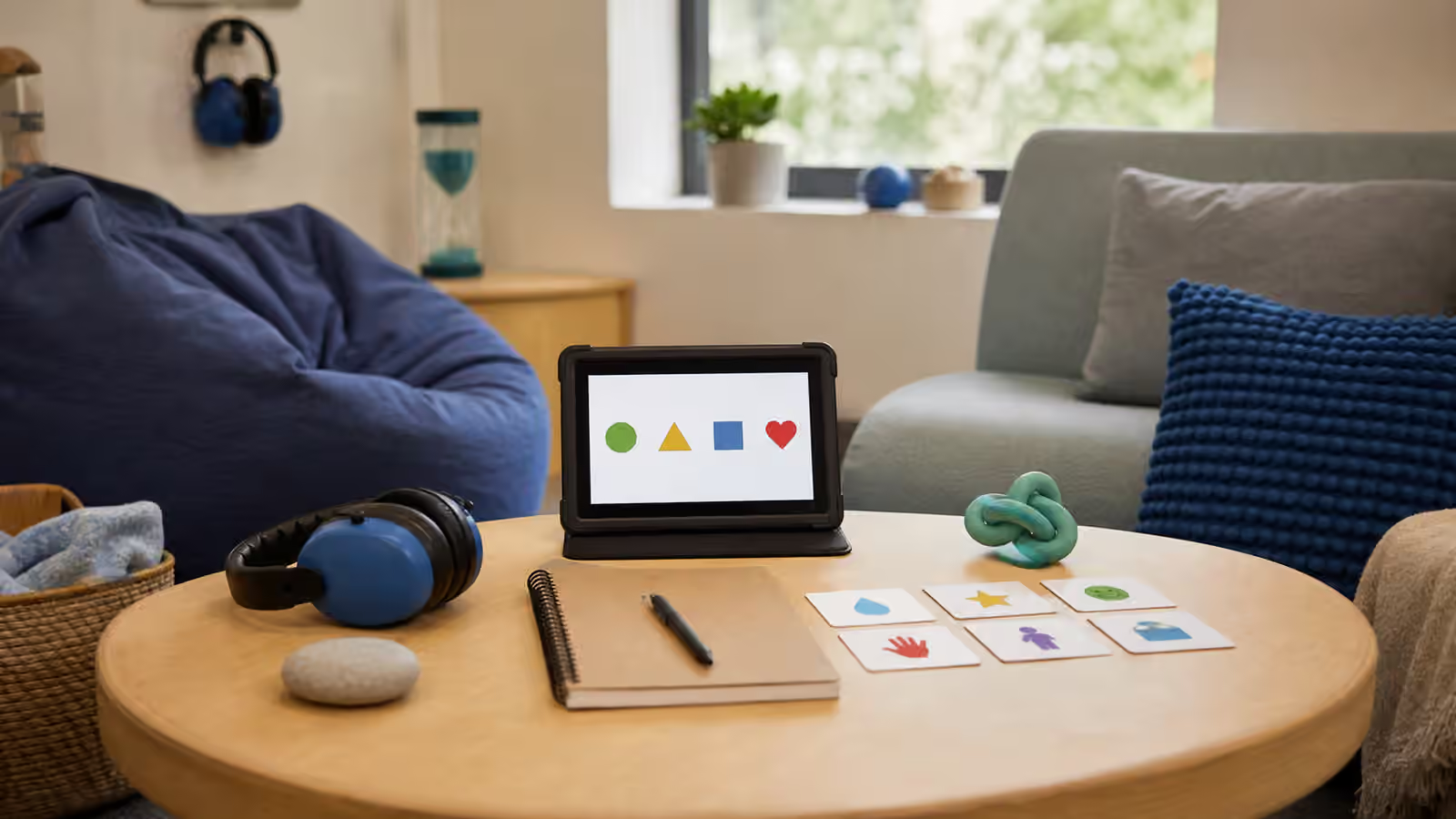
Speech-language observation should look at context. What happens when the room is quieter? What changes when instructions are written? Does the person respond better to direct language than hints? Does extra processing time help? Are visual schedules useful or irritating? Does the person communicate more during parallel activity than face-to-face questioning? Which partners get better communication, and what are they doing differently?
These questions keep support practical. Instead of saying “He does not listen,” a note might say, “He follows the morning routine with the visual schedule and one spoken reminder, but during cleanup after a loud activity he covers his ears and repeats the last instruction.” That note points to environment, timing, language load, and possible sensory stress. It gives the team something to adjust.
Scripts, interests, and directness can be strengths
Focused interests can be powerful communication bridges. A child who talks mainly about trains may be showing memory, categorization, humor, emotion, and a wish to connect. An adult who speaks directly may be communicating efficiently, not rudely. A repeated phrase may carry a specific meaning. A long explanation may be an attempt to be precise. Support can build flexibility without treating the person’s style as a defect.
Partners can join before redirecting. If a child brings up the same topic often, an adult can acknowledge it, add language, connect it to another idea, or set a clear boundary when needed. “I want to hear one more train fact, then we are going to pack your bag,” is different from “Stop talking about trains.” For older students and adults, support may include explicit negotiation: how to tell when someone is interested, how to ask before sharing a long explanation, and how to protect the right to enjoy deep interests.
The guide on Echolalia and Gestalt Language Processing may help when scripts are part of the profile. The first task is to understand what the language is doing. Only then can partners decide what additional language or access might help.
Professional care should include the person’s goals
An SLP may assess receptive language, expressive language, narrative skills, speech sound clarity, AAC access, social communication, executive communication demands, literacy, voice, fluency, and communication repair. Other professionals may assess development, learning, hearing, sensory processing, motor needs, mental health, or medical questions. The team should avoid assuming that every difficulty is autism and every support need is social skills.
Good goals are specific and respectful. They might involve using a repair phrase during group work, adding written support for multi-step directions, expanding AAC vocabulary for emotions and refusal, identifying communication breakdowns, telling a personal narrative with visual support, preparing for medical visits, or teaching partners to wait and respond to AAC. A weak goal might demand eye contact without explaining how it improves the person’s communication. Another weak goal might ask a child to make small talk with no regard for sensory load, anxiety, or actual interest.
Families and autistic adults can ask why a target matters. What will be easier if the goal is met? Who benefits? Does the plan allow refusal, privacy, rest, and authentic communication? Does it support access in real settings? Those questions keep therapy connected to participation rather than appearance.
A respectful starting note
A useful observation might say: “Maya explains animal facts in long, detailed sentences at home. At school she answers less when the room is noisy and sometimes uses a phrase from a video during transitions. She uses the tablet to request breaks but does not yet have easy messages for confusion, pain, disagreement, or jokes. She communicates most when adults give written choices and do not require eye contact.” That note honors strengths and names access needs.
For children and minors, avoid storing names, birth dates, school names, diagnoses, recordings, or identifiable details in casual tools. For autistic adults, treat communication preferences and support needs as private unless the person chooses to share them.
Autistic communication support is strongest when it expands the person’s choices. More ways to understand, answer, refuse, repair, rest, explain, and connect are worth pursuing. A more polished performance for other people’s comfort is not enough.