This guide helps you decide how to describe sound clarity questions without treating every difference from mainstream English as a problem. It is educational background, not a diagnostic assessment, treatment plan, or substitute for a licensed speech-language pathologist, physician, audiologist, school evaluation team, or other qualified professional. See Speech Sound Disorders: Articulation and Phonology for the professional reference behind this topic.
What this can look like in real life
Speech sounds are easy to hear and easy to over-interpret. A child may say “tat” for “cat,” leave off endings, or use a sound that makes sense in one dialect or language background but sounds unfamiliar to another listener. An adult may have speech changes after injury, dental work, hearing change, or a neurological event. The question is not whether one sound is imperfect. The question is whether speech is understandable enough for the person, age, language background, and daily setting.
How to observe without over-reading
Good listening separates pattern from panic. Write down actual examples instead of labels: which word was attempted, who understood it, what the context was, and whether the same sound changes across words. A child who is understood by family but not by teachers has a different communication problem from a child who cannot be understood even with context. A speaker who is clear when rested but hard to understand when tired needs a different conversation than someone with a stable developmental sound pattern.
A gentler support routine
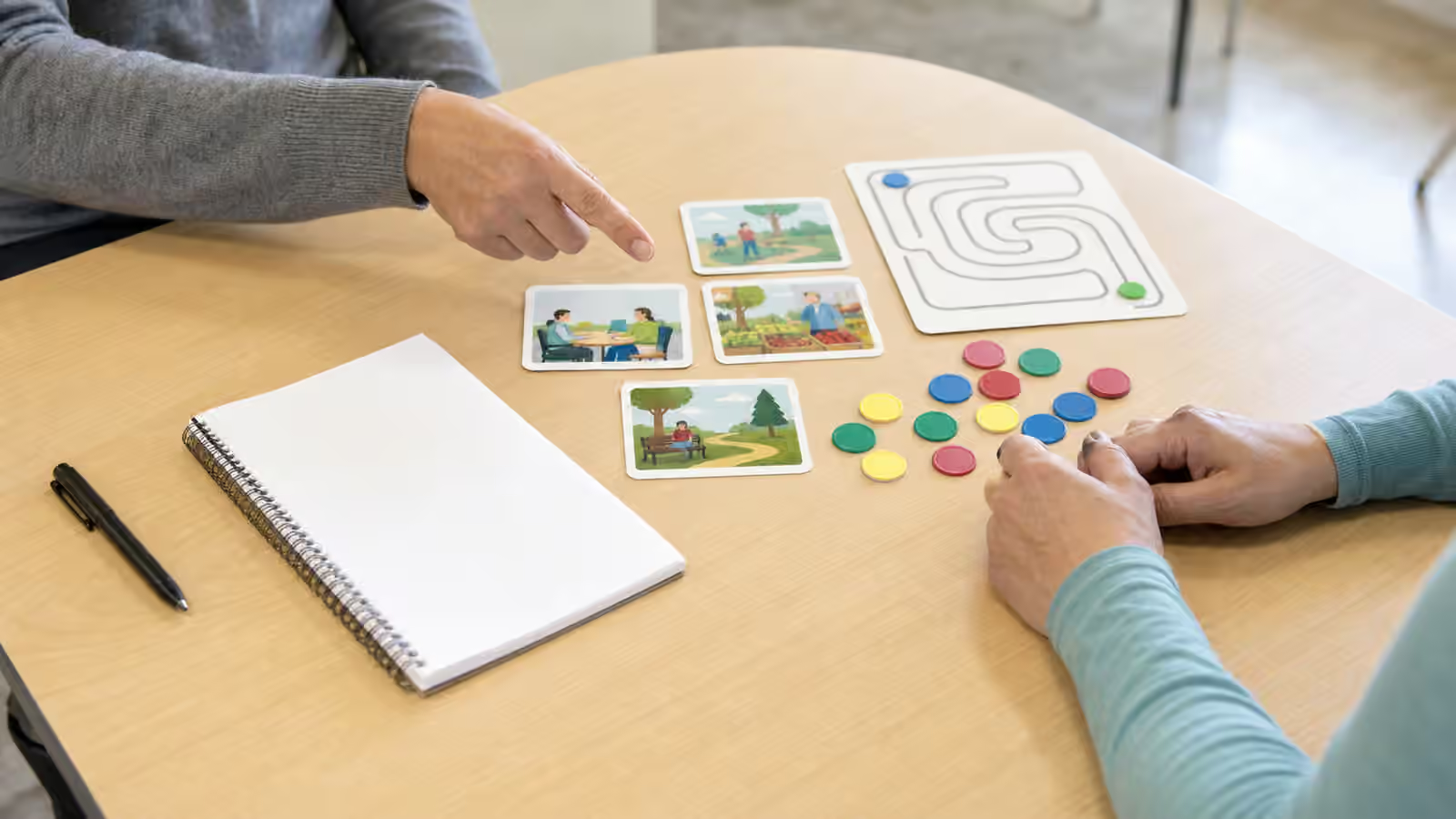
Home support should feel like communication, not a correction booth. You can repeat the word back clearly in a natural sentence, offer a short playful model, and keep the conversation moving. If practice is part of a professional plan, keep it brief and successful: a few minutes, one target, lots of wins, and no public pressure. Children learn sounds inside relationships. Adults recovering speech need respect and time as much as technique.
Where professional care fits
An SLP can decide whether a pattern is developmentally expected, dialect-related, language-influenced, motor-based, structural, hearing-related, or part of a broader communication profile. That distinction matters because the wrong kind of practice can frustrate everyone. Bring examples, not recordings full of personal details. The most useful professional question is often, “Which pattern should we address first, and what should we stop correcting for now?”
Plain-language map
- Articulation describes how individual speech sounds are made with the lips, tongue, jaw, palate, breath, and voice.
- Speech sound development varies by age, language, dialect, hearing, and motor needs.
- Speech recognition software is a poor judge of whether a sound is clinically accurate.
Common misconceptions
- Every sound should be perfect by the same age in every language.
- Accent, dialect, or multilingual transfer is a speech disorder.
- The best practice is repeating a hard sound many times even when the target is not known.
What to observe or document
- Which sounds or word positions are hard: beginning, middle, end, clusters, long words, or conversation.
- Who understands the speaker: family, teachers, peers, unfamiliar listeners, phone listeners, or speech recognition.
- Whether the person hears the contrast, can imitate a model, or becomes frustrated.
A useful note might say: “Grandparents understand Lily at home, but the soccer coach asks for repeats. She says final sounds in short practiced words but drops them when telling a story.” That is more helpful than “bad articulation” because it shows intelligibility, context, and whether the sound pattern changes with language load. It also keeps the child’s message at the center.
For children and minors, avoid storing names, birth dates, school names, diagnoses, recordings, or sensitive personal details in casual tools.
Keep the goal visible
Keep Articulation and Speech Sounds: A Beginner Guide grounded in the person’s own priorities. The most important outcome may be being understood at breakfast, joining a classroom, managing a phone call, refusing safely, telling a story, or asking for help; the measure should follow that lived purpose.
Questions to ask an SLP, school, or clinician
- Is this pattern expected for age and language background?
- Should hearing be checked before working on sound clarity?
- What exact sound, position, and practice level should home practice use?
Limits and professional care
Speech Genie and the pages in this section cannot determine whether someone has a disorder, cannot rule out hearing or medical concerns, and cannot replace a professional evaluation. For concerns about speech, language, voice, fluency, swallowing, development, hearing, regression, sudden change, choking, or safety, bring the concern to qualified local services.
For Articulation and Speech Sounds: A Beginner Guide, use the Speech Therapy hub and Home Practice Without Pressure as next steps; treat Speech Genie transcript differences as practice notes, not clinical findings.