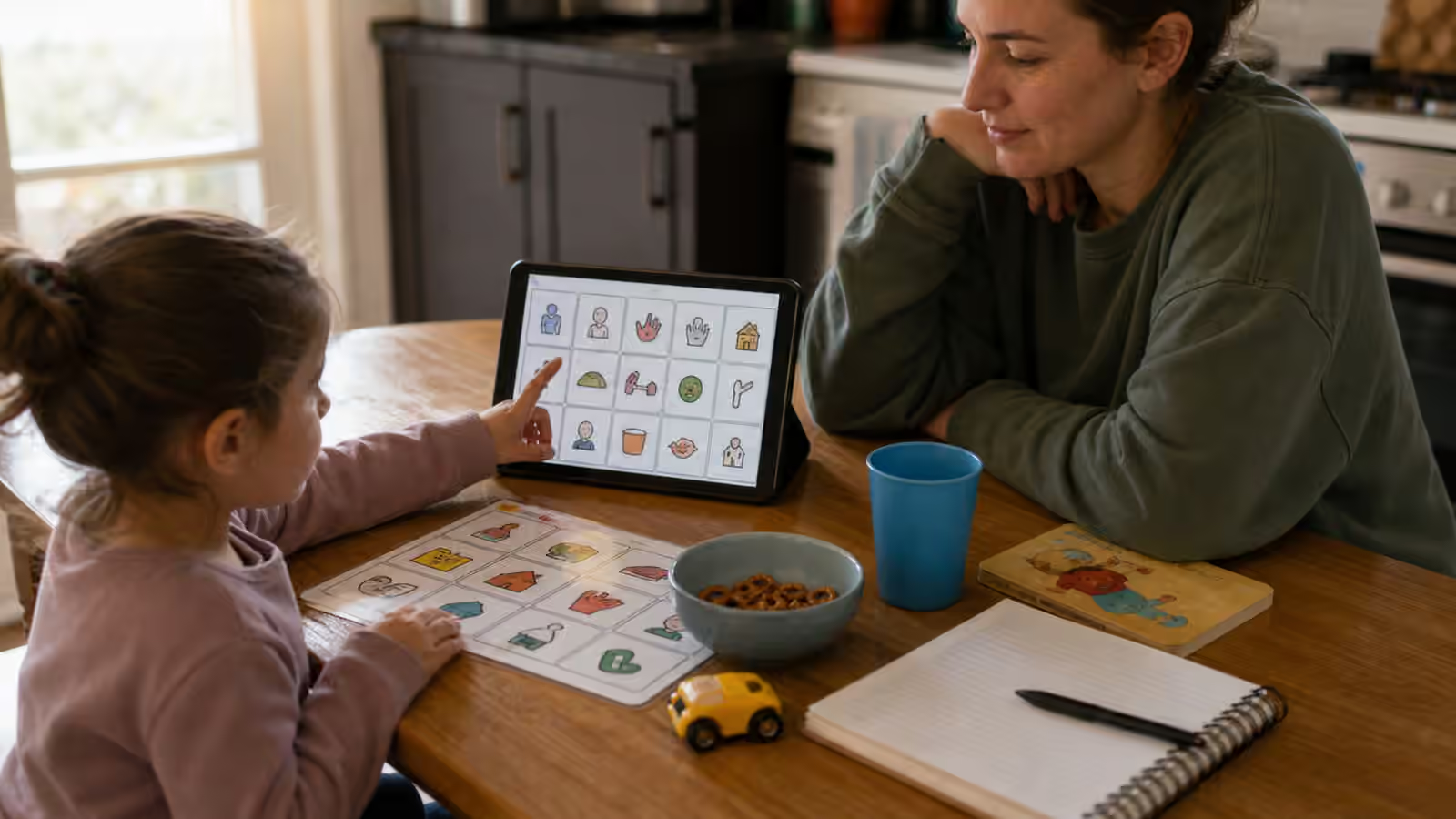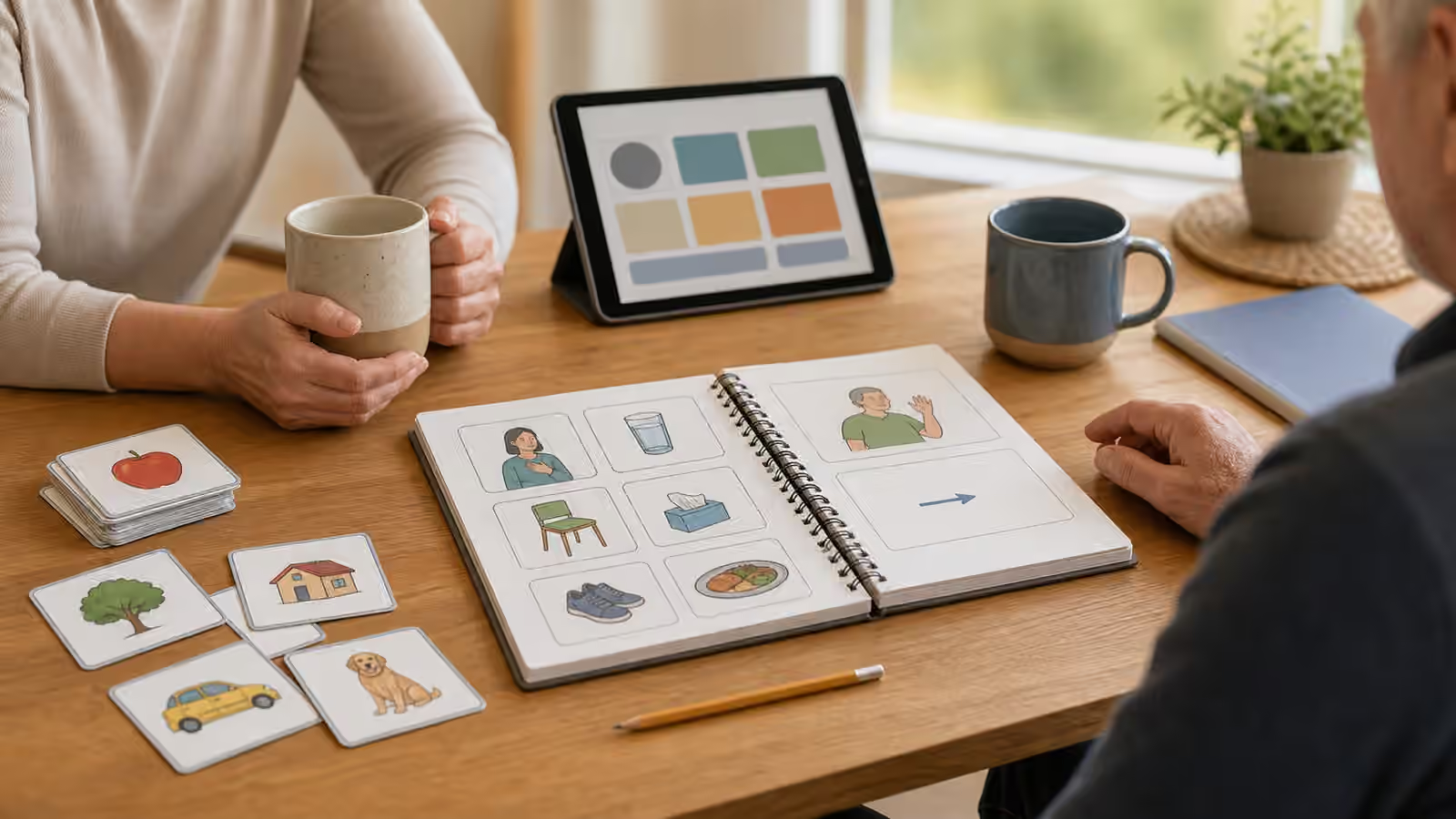
This guide explains aphasia as a language access change, not a loss of intelligence, personality, or adulthood. It is educational background, not a diagnostic assessment, treatment plan, or substitute for a licensed speech-language pathologist, physician, neuropsychologist, rehabilitation team, school team, or other qualified professional. See Aphasia for the professional reference behind this topic.
Speech recognition tools and home observations can be useful notes, but they can also be wrong, especially with aphasia, dysarthria, apraxia of speech, hearing differences, fatigue, pain, medication effects, background noise, and unfamiliar conversation partners.
What aphasia changes
Aphasia usually begins after injury to language networks in the brain, often after stroke or another neurological event. It can affect how a person understands spoken language, finds words, builds sentences, reads, writes, gestures, repeats, names objects, follows conversation, or uses numbers and calendars. The pattern is not the same for every person. Someone may speak in short phrases but understand much more than they can say. Another person may speak fluently but use words that do not match the intended message. A third person may have strong everyday conversation but struggle when forms, medication instructions, or fast group talk enter the scene.
The most important shift for family and friends is this: aphasia changes access to language, not the person’s value or right to be included. Adults with aphasia still have opinions, histories, humor, privacy, preferences, and relationships. They may need more time, visual support, written choices, or a quieter setting, but those supports are bridges into participation. They are not permission to talk over the person or make every decision for them.
The communication partner matters
Aphasia can make familiar conversations feel unfamiliar. A spouse may ask a simple question and receive a pause, a gesture, a word that sounds close but is not quite right, or frustration because the answer is present but unreachable. A friend may talk faster to fill the silence. A medical form may become harder than the appointment itself. The problem is rarely one person’s effort. Communication is shared work, and partners can either lower the load or make it heavier.
Good partner support begins with a slower pace and a clearer signal. Ask one idea at a time. Give the person time to answer without rushing to rescue the sentence. Write down key words if reading is useful for that person. Offer real choices when open-ended questions are too hard, but avoid making the choices childish. Pointing to “coffee,” “tea,” or “water” can support dignity when the choices are ordinary adult choices. A notebook with photos, names, routines, maps, and personally meaningful topics can give conversation somewhere to land when words are hard to pull up.
These supports should be negotiated whenever possible. Some people want a partner to guess and confirm. Others find guessing intrusive. Some want written key words. Others find writing confusing. Some are comfortable using a tablet or picture board in public, while others need time before they feel ready. The respectful question is not “What tool fixes aphasia?” It is “What helps this person say, understand, decide, and participate in this setting?”
Speaking and understanding are not one skill
Aphasia often gets mistaken for a speaking problem because word-finding is visible. Understanding can be affected too, and it may change with speed, noise, emotional stress, length of sentence, fatigue, or the number of people talking. A person may follow a familiar routine but miss a new instruction. They may nod because they are being polite, because they understood part of the message, or because they want the conversation to move on. That does not mean they are careless. It means the partner needs to check understanding in a way that protects dignity.
Checking understanding should sound natural. Instead of quizzing someone, a partner can say, “I want to make sure I explained that clearly,” and then write or point to the two main choices. In medical or financial conversations, it may help to pause after each idea and invite the person to indicate yes, no, not sure, or say it another way. Complex decisions deserve accessible communication. If the stakes are high, the right response is not to simplify the person’s role out of the process. It is to bring in proper professional, legal, medical, or family support so communication access is taken seriously.
Reading, writing, and daily paperwork
Aphasia can make written language uneven. A person may recognize a familiar sign but struggle with a letter from an insurance company. They may write their name but not a message. They may read single words more easily than paragraphs, or they may understand a text better when someone reads it aloud while pointing to key words. Because written language is everywhere, aphasia can affect medication schedules, calendars, banking, recipes, transportation, phone contacts, appointment reminders, and voting or consent processes.
Families often discover this after the acute medical crisis has passed. The person comes home, and daily paperwork becomes a second injury. A useful home setup might include a large calendar with simple appointment entries, labeled folders, photos paired with names, and one place where important phone numbers live. The setup should not bury the person in childish worksheets. It should make adult life easier to manage. The best supports look ordinary enough to stay in use: a planner, a phone contact photo, a kitchen note, a communication wallet, a shared whiteboard, or a carefully chosen AAC option.
For broader recovery after neurological injury, the Adult Speech-Language Support After Stroke or Brain Injury guide gives a map of related domains. Aphasia may overlap with Dysarthria and Motor Speech Clarity or motor planning differences, but they are not the same thing. One affects language access; another affects speech movement, strength, coordination, breath, or clarity.
Participation is a therapy target
Aphasia support is sometimes framed too narrowly as naming cards or repeating sentences. Those tasks can have a place inside therapy, but the reason to work on language is participation. The person may want to tell a grandchild a story, order at a cafe, manage a doctor’s visit, return to a hobby group, argue about a household choice, read a prayer, send a text, or make a joke at dinner. These are not decorative extras after “real” language improves. They are where communication lives.
A careful SLP may ask about the person’s roles before aphasia: worker, parent, partner, friend, community member, musician, cook, organizer, reader, traveler, neighbor. Those roles help choose therapy materials and partner strategies. A retired carpenter may care deeply about tool names and project plans. A parent may need school messages and bedtime routines. A person who loved wordplay may want humor back, even if the first jokes come through gestures, drawings, or a communication book. Identity should shape the plan.
Progress may be uneven. Good days and hard days can sit next to each other. Fatigue can make language harder late in the day. Noise can make comprehension worse. Emotional topics can tighten the whole system. A partner who understands this will not treat every hard moment as defiance or every strong moment as proof that support is no longer needed. Aphasia support often requires stamina from the circle around the person, not only effort from the person with aphasia.
When to ask for professional help
Any new or sudden language change belongs in urgent medical care. Once the person is medically stable, speech-language evaluation can help describe the aphasia pattern, identify strengths, consider AAC and partner supports, and connect therapy to daily goals. The evaluation may include spoken language, listening, reading, writing, gestures, communication participation, and partner needs. It may also point toward other professionals when hearing, vision, cognition, mood, swallowing, or mobility changes affect communication.
Families can prepare for a visit by bringing real examples. Instead of saying only “speech is better” or “speech is worse,” describe what happens in ordinary settings. The person might follow conversation with one visitor but lose track at Sunday dinner. They might name objects during therapy but struggle to call a friend. They might read headlines but not bills. These details help a clinician plan beyond a clinic table.
If home practice is part of the plan, keep it humane and brief. The Home Practice Without Pressure guide is useful because aphasia practice should not turn every meal, visit, or quiet moment into correction. Practice should protect relationships. The person deserves time when family is simply family.
A better first response
A better first response to aphasia is not pity, baby talk, or pretending nothing changed. It is patient access. Slow down the exchange. Reduce noise. Use adult choices. Write key words if they help. Confirm without humiliating. Include the person in the room, especially when others start discussing them. Ask what support feels useful. Keep communication tied to real life.
The goal is not perfect language before participation. The goal is more participation while language is changing. That difference matters. It keeps therapy grounded in the person, not only the impairment, and it gives families a practical way to help without taking over the conversation.