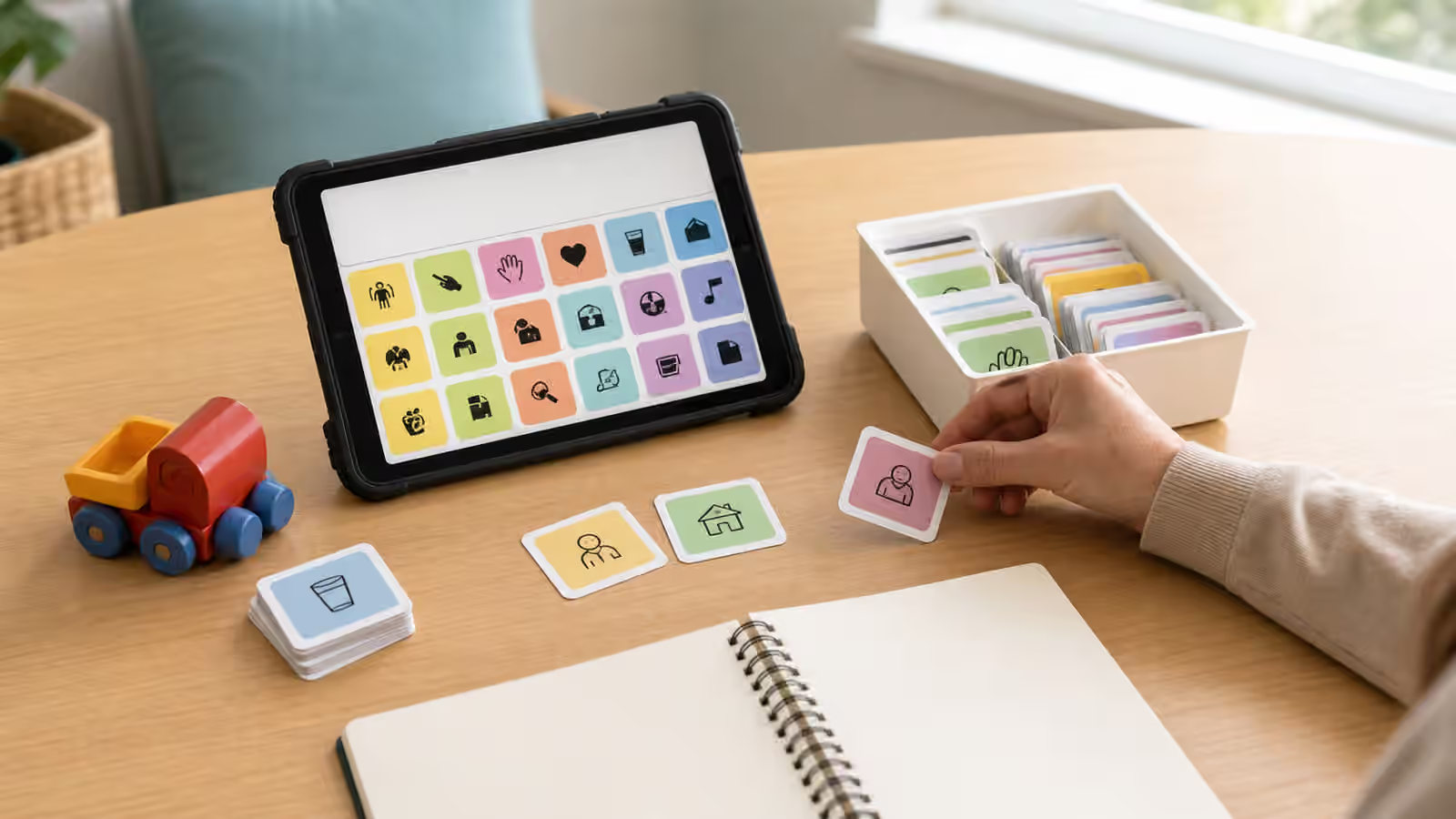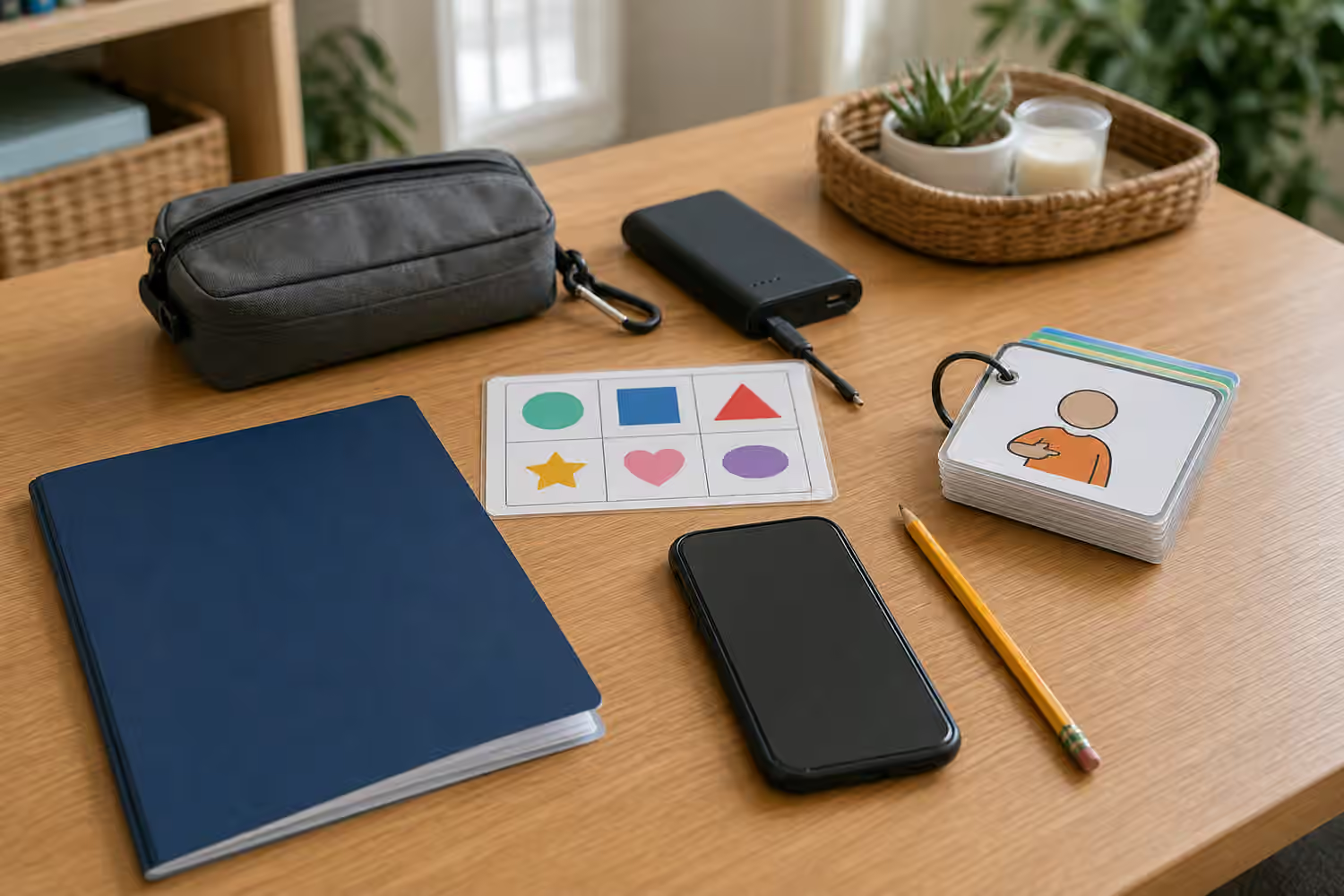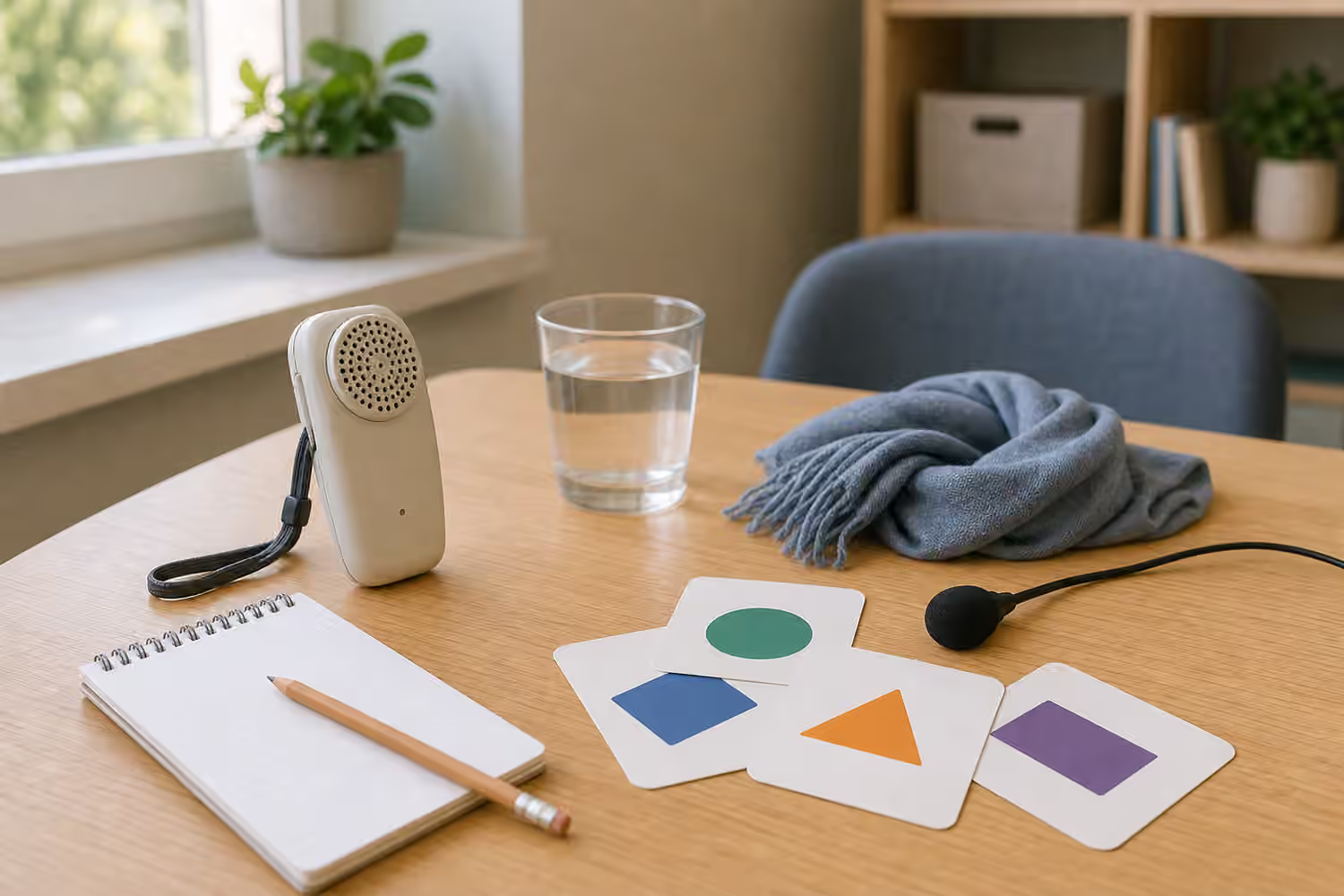
This guide explains how augmentative and alternative communication, often called AAC, can become part of ordinary routines instead of staying trapped at a therapy table. It is educational background, not an AAC evaluation, device recommendation, treatment plan, school decision, or substitute for a licensed speech-language pathologist, occupational therapist, teacher, physician, audiologist, assistive technology team, or qualified local professional. See Augmentative and Alternative Communication for the professional reference behind this topic.
AAC can include gestures, signs, pictures, communication books, partner-assisted scanning, writing, speech-generating devices, tablets, and other supports. The right system depends on the person, the setting, motor access, vision, hearing, language, cognition, partners, culture, and goals. A guidebook cannot choose that system, but it can help partners think about how AAC lives in a real day.
AAC should not become a quiz
Many AAC routines go wrong for understandable reasons. An adult wants to help, points to the device, and asks the person to name a picture. The person taps the expected button, or refuses, or leaves. Everyone feels stuck. The tool has become a test instead of a way to communicate. Real communication is broader. It includes asking, refusing, commenting, greeting, joking, protesting, repairing, choosing, telling, wondering, and saying nothing for a moment while still being respected.
The AAC Basics guide explains why AAC does not prevent speech and why communication support can include many forms. This page starts after that first permission. If AAC belongs in the person’s life, then partners need to make room for it during ordinary routines. A system that appears only when someone says “Use your words” or “Show me on your device” will feel like an assignment. A system that is available when something funny, annoying, confusing, or important happens has a better chance of becoming communication.
Start with real reasons to communicate
Daily routines already contain reasons to communicate. During breakfast, a person might want more, a different food, help opening something, a break, a joke, or a way to say that the noise is too much. During play, the person might direct the action, reject a boring idea, ask for a turn, describe what happened, or invite someone back. During errands, the person might greet a familiar worker, choose between two items, ask for the bathroom, or repair a misunderstanding. During school, the person may need to answer, ask, comment, request help, participate with peers, and show knowledge without being limited to yes or no.
A practical AAC routine begins by noticing those moments. The partner does not have to force a message into every second. The partner can choose a few high-value moments where communication already matters and make the system available. If the device is across the room, the picture board is in a backpack, or the partner forgets to wait, the person may lose the chance before it begins. Access is not an extra feature. It is the foundation.
Partners can also model without demanding. If a child reaches for bubbles, the adult might say “more bubbles” while touching the AAC symbols, then blow bubbles without requiring imitation every time. If an adult with a communication disability looks frustrated during a phone call, a partner might point to choices for “slow down,” “write it,” or “call back” and wait. The model says, “This is a way messages can happen here.” It does not say, “Perform this correctly before I respond to you.”
More than requesting
Early AAC work often centers on requesting because requests are easy to see and respond to. That can be useful, but a system that only teaches requests can make a person sound narrower than they are. People need to comment, refuse, ask questions, greet, complain, tell stories, make choices, share interests, and repair breakdowns. A child who can only request snacks may not have a way to say that a story was funny. An adult who can only answer yes or no may not have a way to say that the conversation topic matters.
A balanced routine gives different kinds of messages a reason to appear. During book time, the partner might model “funny,” “scary,” “turn page,” “again,” or “stop.” During a game, the partner might model “my turn,” “your turn,” “not that,” “I win,” or “try again,” depending on the person’s system and goals. During a care routine, the partner might model comfort, pain, privacy, finished, help, or wait. These examples are not scripts to copy blindly. They show that AAC should serve the person’s life, not only the adult’s lesson plan.
The Social Communication and Pragmatics guide is useful here because communication is shaped by context, relationship, sensory load, and partner behavior. AAC users should not be judged only by how quickly they answer adult questions. They also need partners who notice attempts, accept multimodal messages, and give enough time.
Partner behavior matters
AAC progress is often described as if all responsibility belongs to the user. In reality, partner behavior can open or close the door. Partners choose whether the system is charged, visible, reachable, respected, and updated. They choose whether to wait long enough. They choose whether to respond to a message even when it comes slowly or imperfectly. They choose whether to honor refusal. They choose whether to keep talking over the person or create a turn.
Waiting is harder than it sounds. Many AAC users need extra time to process language, locate a message, move their body, handle mistakes, and decide whether the partner is truly listening. A partner who asks a question and then answers it two seconds later may accidentally teach that AAC is unnecessary or impossible. A better wait is warm and expectant, not silent pressure. The partner stays present, gives the system time, and responds to any clear communication attempt, including gesture, facial expression, speech, sign, or device use.
Breakdowns also need a plan. If the message is unclear, the partner can admit the breakdown without blaming the user. “I am not sure I understood. Can we try again?” is different from “No, that’s wrong.” Partners can offer choices, write keywords, move to a quieter space, check the device page, or ask a familiar person how the user usually repairs messages. Repair is part of communication. It should not be treated as failure.
School, home, and community need to talk
AAC becomes fragile when each setting invents a separate routine. A school team may use one set of symbols, a family may use another, and a clinic may practice a third activity that never appears elsewhere. Some variation is normal because settings differ. Still, the person should not have to relearn communication from scratch every time the room changes. Teams need shared language about access, modeling, vocabulary, motor access, privacy, and what success looks like.
The School Speech Services, IEPs, and Parent Questions guide can help families ask who is responsible for programming, charging, transporting, protecting, and training partners on an AAC system. Those practical details are not minor. A beautifully chosen system that is unavailable during recess, lunch, transportation, or group work is not truly supporting school participation.
Home routines should be realistic. A family does not need to become a therapy clinic. One short, reliable routine may be better than an ambitious plan that collapses after two days. The Home Practice Without Pressure guide applies strongly to AAC because partner consistency matters more than dramatic practice sessions. A few respectful models during real routines can do more good than a long quiz that leaves everyone exhausted.
Respect privacy and identity
AAC systems can contain personal vocabulary, family names, places, medical words, feelings, jokes, and private needs. Partners should treat that content with respect. They should not browse a device out of curiosity, share screenshots casually, record messages without permission, or remove words because the message is inconvenient. Safety limits may be necessary in some settings, but the starting assumption should be that communication belongs to the person using it.
AAC is not a last resort and not a symbol of giving up on speech. It is communication access. Some people use AAC temporarily, some use it alongside speech, and some rely on it as a primary mode. The practical question is not whether AAC looks impressive. It is whether the person has more ways to be understood, make choices, repair breakdowns, participate, and show who they are.
Speech Genie and the pages in this section cannot choose an AAC system, program a device, determine eligibility, or replace professional support. They can help partners notice whether communication is available in ordinary routines. If AAC appears only during adult-directed practice, the next humane question is simple: where in this person’s real day does the system need to be within reach?