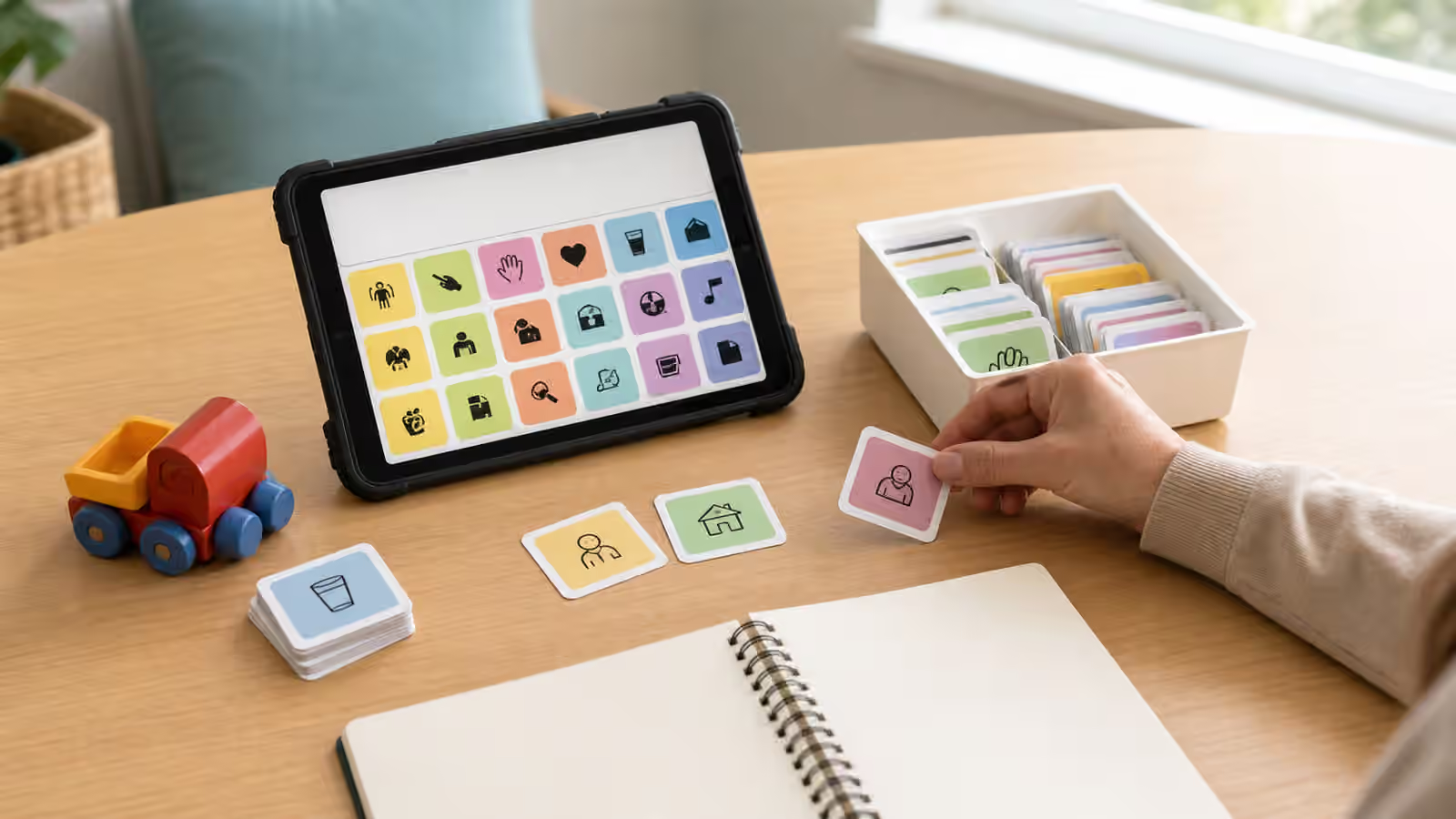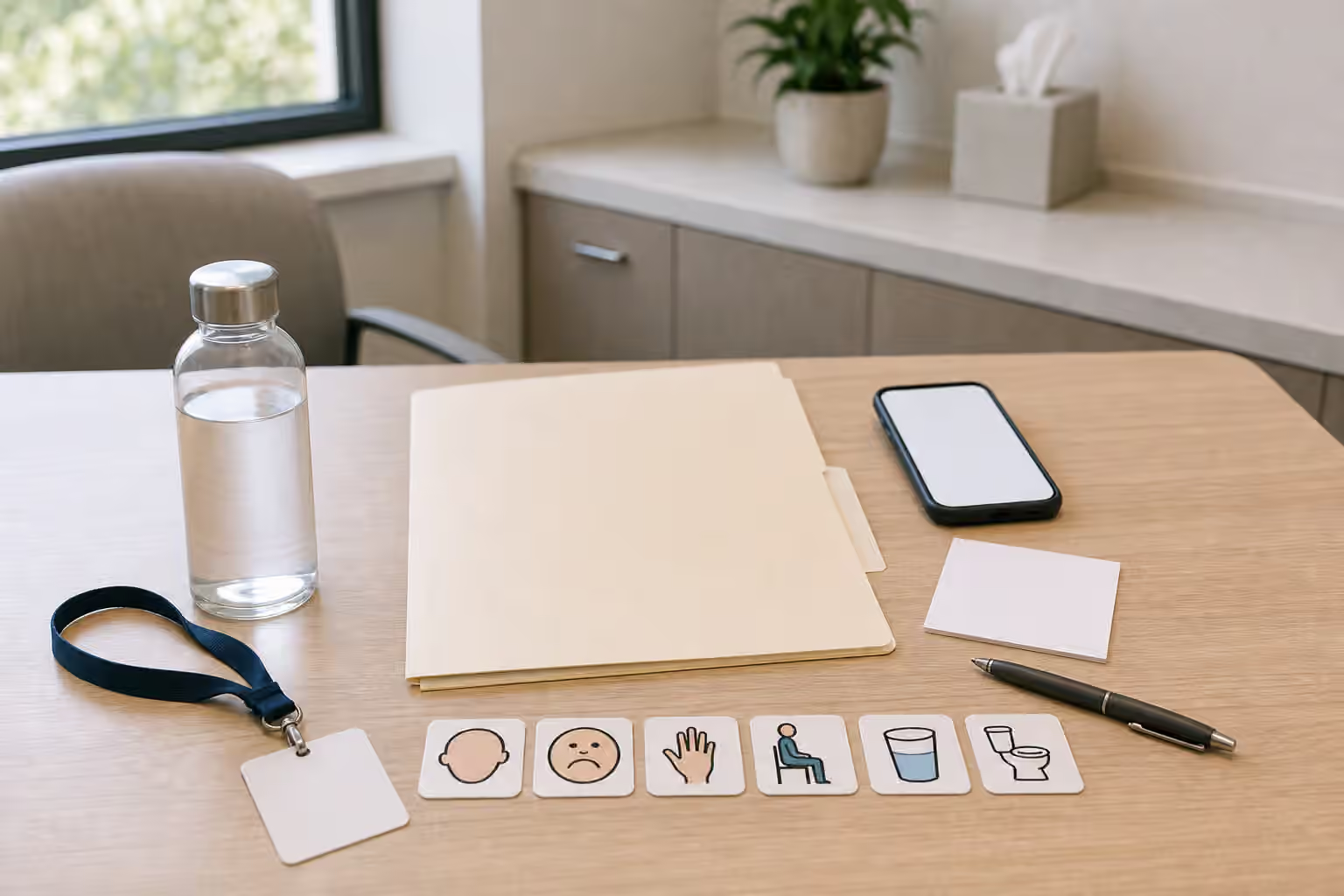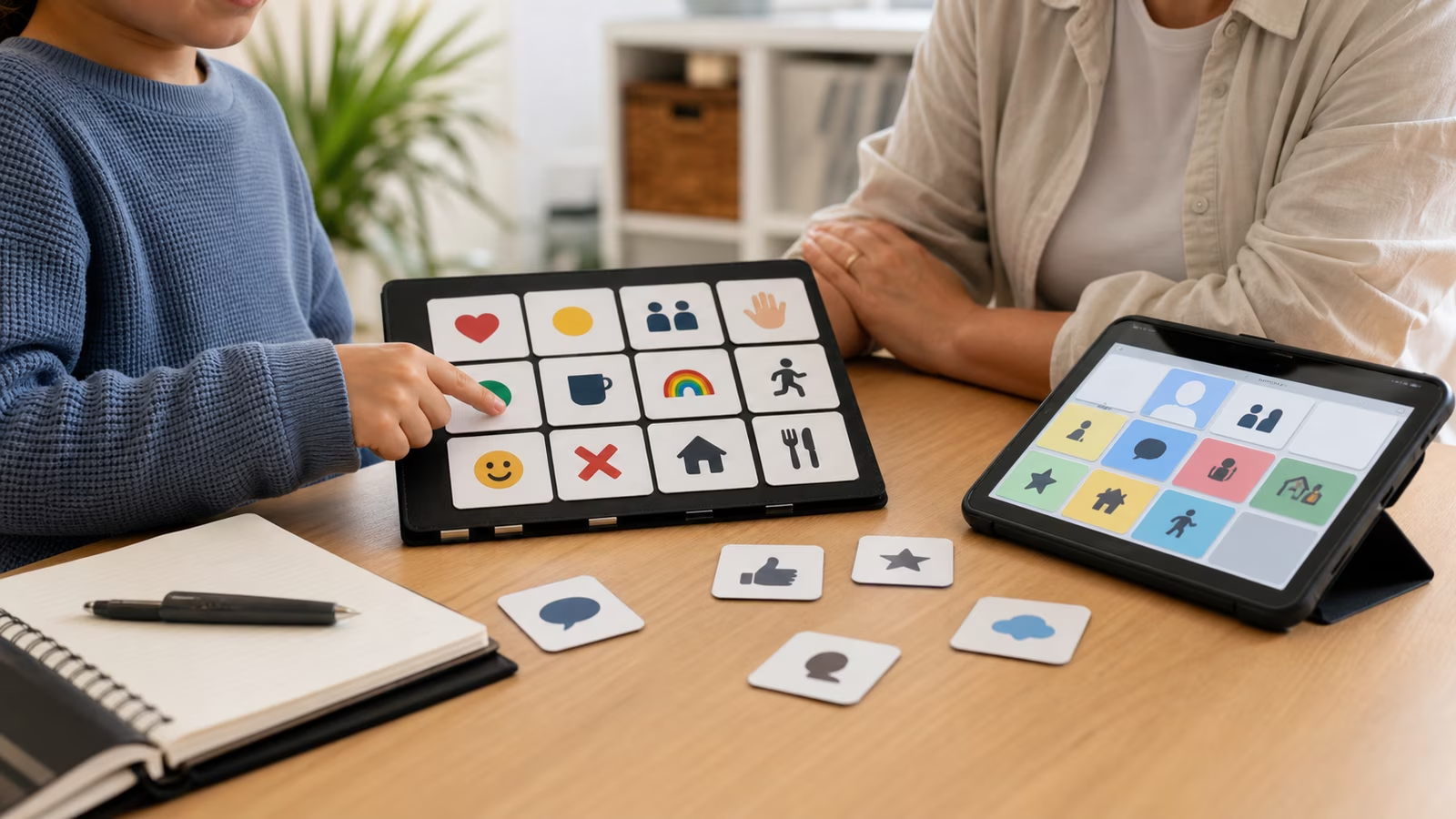
This guide helps you decide how to think about AAC as communication access rather than a last resort. It is educational background, not a diagnostic assessment, treatment plan, or substitute for a licensed speech-language pathologist, physician, audiologist, school evaluation team, or other qualified professional. See Augmentative and Alternative Communication for the professional reference behind this topic.
What this can look like in real life
AAC often enters the conversation after months or years of people guessing, waiting, or speaking for someone who has more to say than their current tools allow. The person may already be communicating clearly through gaze, reaching, facial expression, sound, a few words, scripts, typing, signs, or routines that familiar partners understand. The problem is not absence of communication. The problem is that the system around the person may be too narrow to catch it, honor it, and make it available in more places.
How to observe without over-reading
A useful AAC note does not start with device brands. It starts with functions. Can the person refuse, ask for help, choose, protest, greet, tell a story, repair a misunderstanding, joke, ask a question, comment, or say that something hurts? A board with only snacks and bathroom words may technically offer choices while still leaving most of a person outside the conversation. Better AAC planning asks what the person needs to say when life is ordinary, not only what adults want them to answer during practice.
A gentler support routine
At home or school, the most respectful first step is to make communication available without demanding a performance. Keep the board, book, writing surface, gesture routine, or device within reach during real moments: meals, play, transitions, homework, errands, medical visits, and downtime. Model use casually. Point to a word while you say it. Offer time. Accept speech, gesture, pointing, typing, and silence as part of the same communication ecology instead of treating one mode as the only valid one.
Where professional care fits
Professional AAC support is especially valuable when access is complicated by motor control, vision, hearing, language, literacy, fatigue, behavior, or multiple communication partners. The goal is not to choose the fanciest tool. The goal is to build a durable communication path that people around the user actually respect. A good plan includes partner training, repair strategies, vocabulary growth, charging and backup routines, and a way for the AAC user to shape the system over time.
Plain-language map
- AAC means augmentative and alternative communication: ways to communicate besides or in addition to speech.
- AAC can include gestures, signs, writing, picture boards, communication books, apps, tablets, and speech-generating devices.
- Many people use several communication modes depending on the situation.
Common misconceptions
- AAC prevents speech.
- A person must prove readiness before trying AAC.
- High-tech AAC is automatically better than low-tech support.
What to observe or document
- What the person already communicates through movement, facial expression, sounds, speech, pointing, writing, or partner routines.
- Where communication breaks down: needs, choices, stories, feelings, schoolwork, work, medical care, or social connection.
- Motor, vision, hearing, language, literacy, access, and partner-training needs.
A useful AAC note might say: “At breakfast, Maya pointed to the cereal, pushed away the cup, and smiled when her brother guessed the song she wanted. At school pickup, she cried when no one understood that her stomach hurt.” That kind of note shows communication functions, partners, and missed opportunities. It also protects dignity because it treats the person as communicative already, not as a puzzle waiting for a device.
For children and minors, avoid storing names, birth dates, school names, diagnoses, recordings, or sensitive personal details in casual tools.
Keep the goal visible
Keep AAC Basics: Communication Support Beyond Speech grounded in the person’s own priorities. The most important outcome may be being understood at breakfast, joining a classroom, managing a phone call, refusing safely, telling a story, or asking for help; the measure should follow that lived purpose.
Questions to ask an SLP, school, or clinician
- What communication functions are missing or hard right now?
- Which AAC options can be available all day, not only during practice?
- Who needs training so the system is respected?
Limits and professional care
Speech Genie and the pages in this section cannot determine whether someone has a disorder, cannot rule out hearing or medical concerns, and cannot replace a professional evaluation. For concerns about speech, language, voice, fluency, swallowing, development, hearing, regression, sudden change, choking, or safety, bring the concern to qualified local services.
For AAC Basics: Communication Support Beyond Speech, use the Speech Therapy hub and Home Practice Without Pressure as next steps; treat Speech Genie transcript differences as practice notes, not clinical findings.