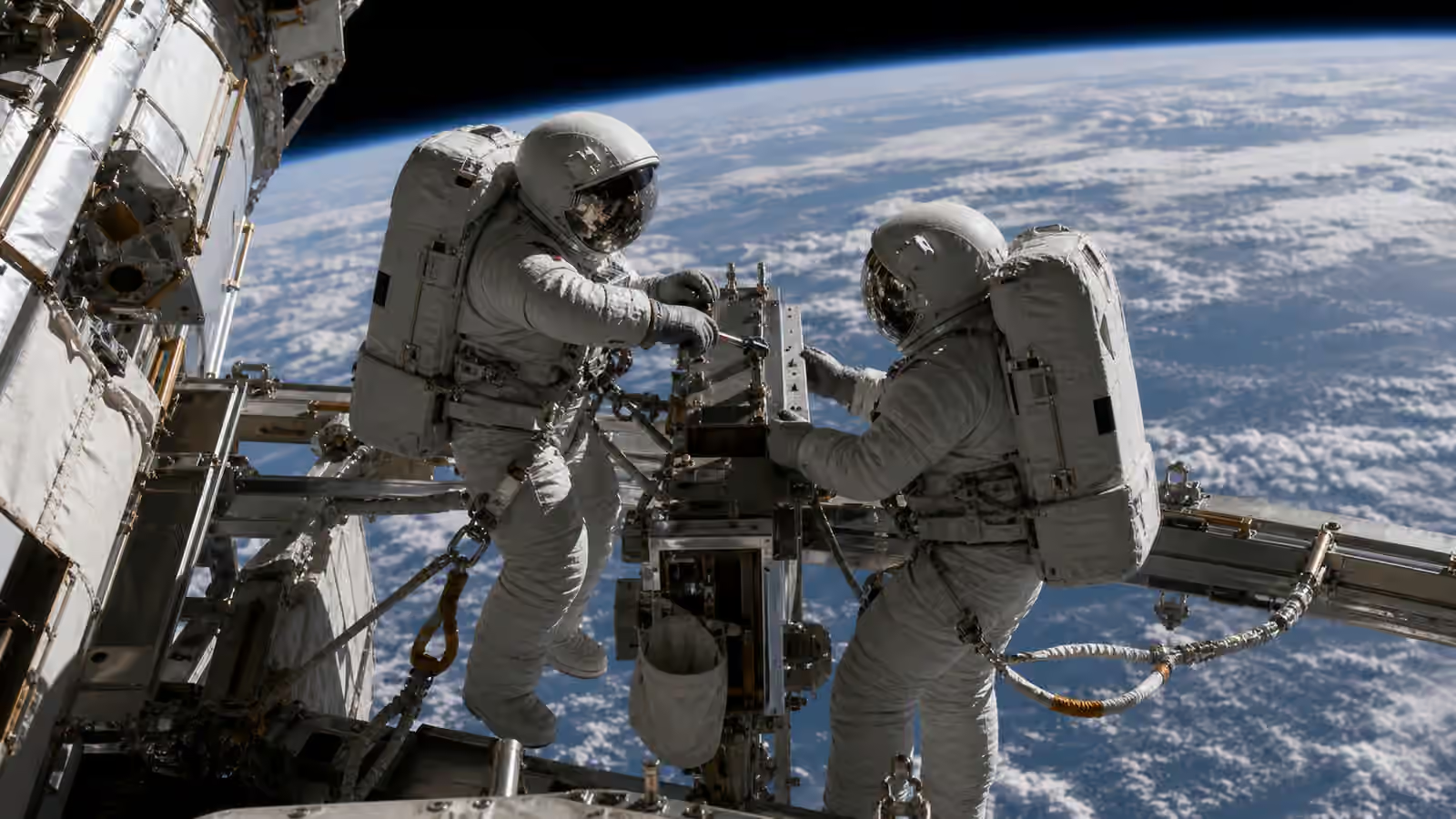
A spacesuit is often treated as clothing because a person wears it. That is the least useful way to understand it. A working EVA suit is a small spacecraft shaped around a human body. It holds pressure, supplies oxygen, removes carbon dioxide, controls temperature, carries communications, protects against micrometeoroids and thermal extremes, supports visibility, and lets a crew member use tools in a place where a dropped bolt can become orbital debris or a lost repair opportunity.
Space Habitats and Life Support explains how living systems make human spaceflight possible inside a vehicle. Spacesuits move a portion of that life-support problem outside the hatch. An extravehicular activity, usually called an EVA, is not simply a person stepping out. It is a planned operation where suit design, crew training, tools, tethers, robotics, airlock procedures, communications, and ground support all have to work as one system.
Pressure makes movement hard
Human bodies need pressure. Vacuum does not provide it, so a suit must. The moment a suit holds pressure, movement becomes harder. Bending an inflated glove or joint takes effort. The suit resists the astronaut, and the astronaut spends energy just changing posture. Engineers use bearings, soft goods, joint patterns, restraint layers, sizing, and careful pressure choices to make work possible, but the basic conflict remains. The suit must be stiff enough to protect and flexible enough to use.
Gloves are a famous example because hands do the work. A crew member may need to turn fasteners, connect cables, handle samples, install covers, cut tape, inspect surfaces, or operate small latches while wearing pressurized gloves. Finger fatigue, limited touch, cold, heat, and tool fit all matter. A simple task on Earth can become slow outside a spacecraft because the suit changes the body into a protected but less sensitive tool.
This is why EVA planning is so detailed. The procedure is not written for an ideal human hand in a shirt sleeve. It is written for a suited crew member with limited reach, limited time, tether constraints, changing lighting, communication delays with ground support, and a body working inside pressure.
Life support is carried on the back
The suit’s backpack, often called the portable life-support system in general terms, turns EVA into a time-limited operation. It manages breathing gas, carbon dioxide removal, cooling, ventilation, pressure, power, telemetry, and sometimes water. It has to be reliable, inspectable, and understandable because the crew member cannot step into ordinary air if it fails.
Cooling is especially important. Space can be cold in shadow and hot in sunlight, but a working astronaut also produces heat. A suit must remove that heat without freezing the person or wasting consumables. The thermal problem changes as the crew member moves between sun and shade, works hard, pauses, touches structure, or enters a dusty surface environment. Satellite Thermal Control describes heat management for spacecraft. A suit is a spacecraft where the payload is alive and sweating.
Consumables shape the work timeline. Oxygen, carbon dioxide scrubbing, battery capacity, cooling water, and reserve margins decide how long the EVA can last and how much contingency time remains. The schedule is therefore a safety object. A task that runs long is not just inconvenient. It consumes the resources needed to return through the airlock calmly.
EVA work is choreography with tools
An EVA worksite is designed before anyone arrives. Handrails, foot restraints, tether points, tool boards, covers, labels, connectors, and clearances all determine whether a task can be done safely. In orbit, a crew member cannot lean on the ground. Every force pushes back. Turning a stubborn bolt can rotate the body unless the feet or tethers provide restraint. A tool that escapes the hand can drift away. A cover that is removed without a plan can become debris.
Rendezvous, Proximity Operations, and Docking discusses close-approach discipline between spacecraft. EVA has a smaller version of the same respect for motion. Crew members move carefully near structure, arrays, radiators, antennas, sensors, and visiting vehicles because contact can damage hardware or suits. Tethers, translation paths, and no-touch zones are part of the work.
Robotic arms often extend what a suited crew can do. A crew member may ride an arm, receive hardware from it, or work near a payload it has positioned. That creates coordination between suit operations, robotics, ground control, and the vehicle’s attitude and power state. The EVA may look like two people outside, but the real team includes the suit engineers, flight controllers, robotics operators, procedure writers, and crew inside the vehicle.
Training makes the suit less surprising
EVA tasks are rehearsed because improvisation outside the hatch is expensive. Underwater training, virtual environments, mockups, neutral buoyancy facilities, tool fit checks, procedure reviews, and suited practice all help crews build muscle memory. None of these perfectly reproduces space. Water adds drag. Gravity affects the body on Earth. Mockups simplify the vehicle. But training reveals reach problems, tool conflicts, sequence confusion, fatigue points, and places where a procedure assumes a hand or viewpoint the crew will not have.
Mission Simulation and Digital Twins explains why rehearsal is infrastructure. EVA is one of the clearest examples. A good rehearsal can find a missing tether point, an awkward bag layout, a connector that cannot be seen from the working posture, or a step that leaves the crew member with no free hand. Finding that on Earth is dull success. Finding it outside the hatch is an avoidable problem.
Communication is part of that training. Crew members narrate actions, confirm steps, report suit status, and coordinate with ground and vehicle teams. The words matter because visual context can be limited. A controller may not see exactly what the crew sees. A crew member may need to describe a damaged surface, unexpected motion, or tool fit issue precisely enough for the team to reason with them.
Surface suits add dust and walking
Orbital EVA suits and surface suits share the need for pressure and life support, but the Moon or another surface adds different burdens. A surface suit must support walking, kneeling, climbing, carrying, sampling, falling, recovering, and working around dust. Boots, hips, knees, waist mobility, suit bearings, visibility, and balance matter differently when there is a ground underfoot.
Lunar Surface Mobility and Rovers depends on suits because crew mobility does not end at the rover hatch. Astronauts may need to inspect wheels, attach cargo, collect samples, repair equipment, clean dust, deploy cables, or walk back from a disabled vehicle. The suit has to work with rover seats, suit ports, tool racks, airlocks, and surface procedures.
Dust makes everything harder. It can abrade fabrics, foul seals, cling to visors, obscure markings, and enter habitats if procedures fail. A surface EVA system is therefore also a contamination-control system. Spacecraft Materials and Contamination Control usually describes hardware cleanliness, but the same thinking applies to suits that move between dusty terrain and life-support spaces.
Maintenance is part of EVA design
Spacesuits are not disposable costumes. They need inspection, drying, cleaning, sizing, seal checks, battery care, filter changes, leak tests, software or configuration control where applicable, and records of wear. A suit that supports many EVAs becomes part of the station or surface base maintenance system. Its reliability depends on spares, tools, crew time, and the ability to notice degradation before it becomes dangerous.
This maintenance burden shapes future infrastructure. A commercial station, lunar base, or long-duration surface campaign cannot treat EVA as a rare heroic exception. If crews regularly work outside, suits must become serviceable assets with clear logistics. Gloves wear out. Bearings age. seals need care. Portable life-support components need inspection. The airlock must support cleaning and checkout without consuming all crew time.
EVA is how infrastructure reaches awkward places
Robots can do many jobs, and good design should avoid sending people outside when a simpler method exists. Still, EVA remains valuable because space hardware fails in physical ways. A cable sticks. A cover binds. A bolt resists. A sensor needs inspection from a strange angle. A sample has to be judged by a trained eye. A repair needs hands that can adapt within a procedure.
The useful way to see spacesuits is as enabling infrastructure. They let human judgment reach places the habitat, station, rover, or robot cannot fully handle. They are also limiting infrastructure because every EVA consumes time, risk margin, consumables, and maintenance attention. The best space systems do not romanticize that trade. They make outside work possible, then design so crews only need to use it when the value is worth the cost.