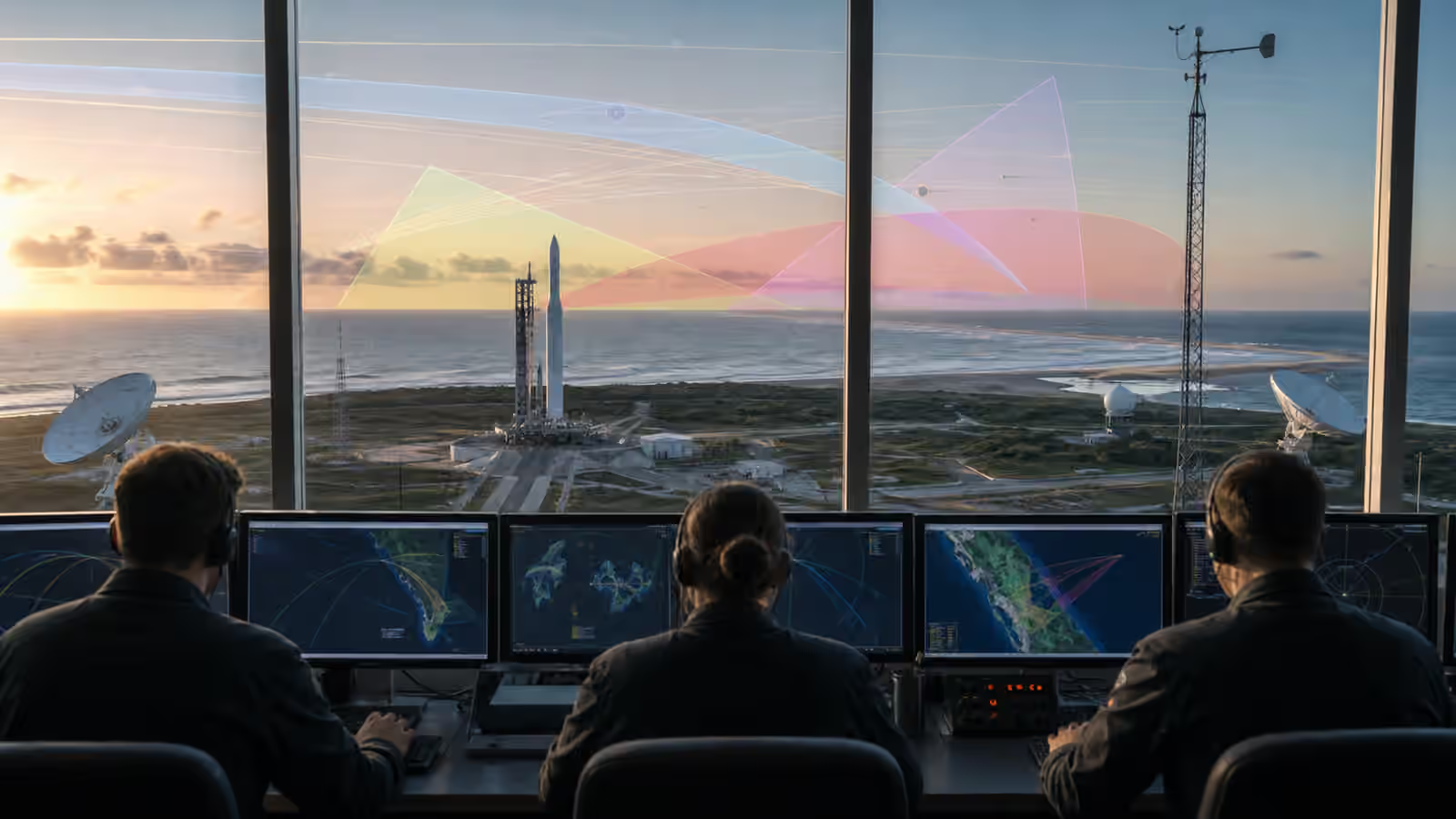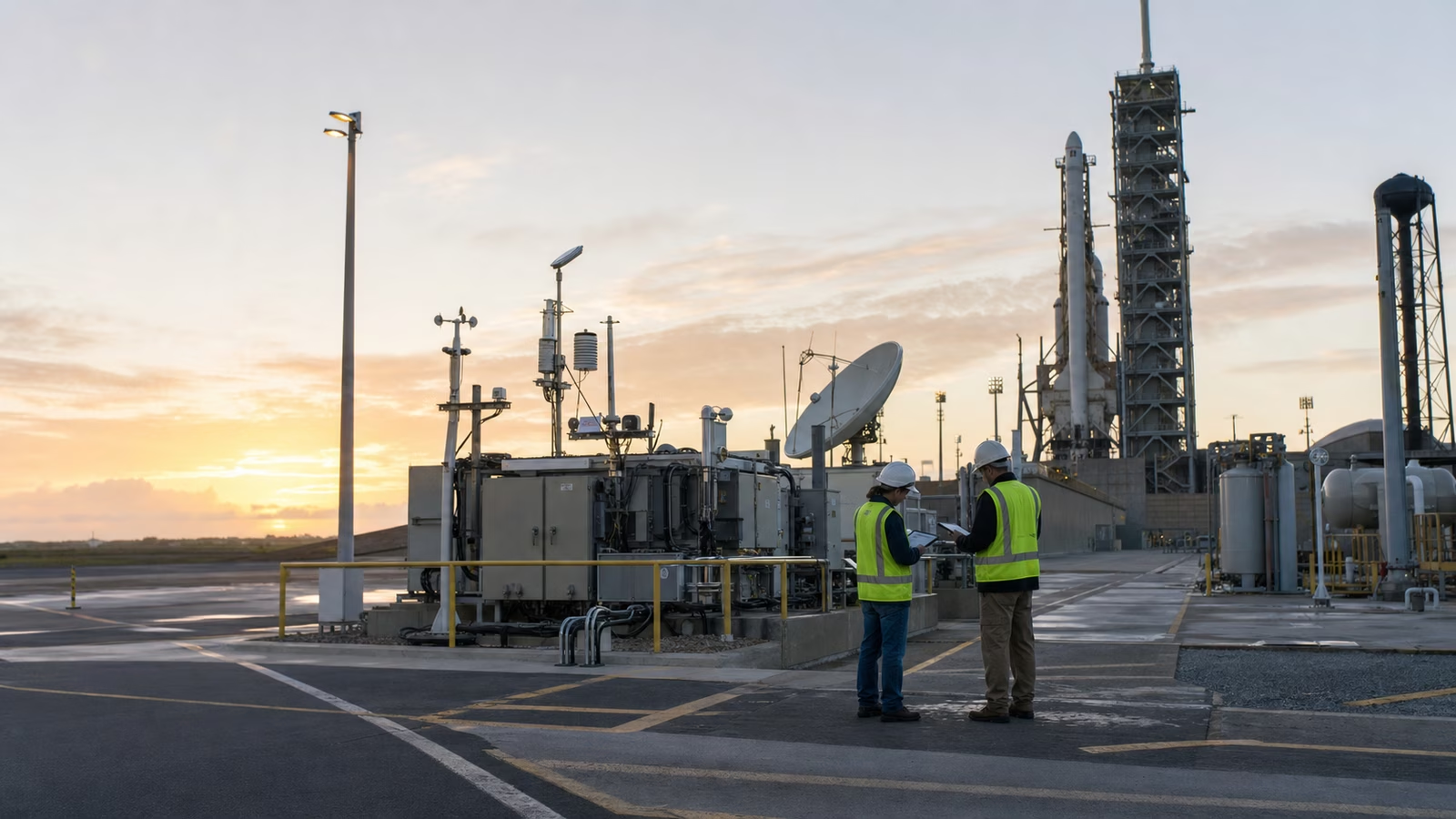
A launch pad looks like a place where a rocket waits. That is true in the same way a train station is a place where a train waits. The waiting object gets the eye, but the system around it decides whether the day can happen.
Before a rocket leaves the ground, the spaceport has already done an enormous amount of work. Roads carried hardware, cranes lifted stages, clean rooms protected payloads, pumps moved propellant, power systems fed equipment, antennas listened, weather teams watched the sky, safety officers cleared areas, range systems tracked the corridor, and people in control rooms argued over details that spectators will never see.
The launch is the visible moment. The ground system is the long preparation that makes the visible moment possible.
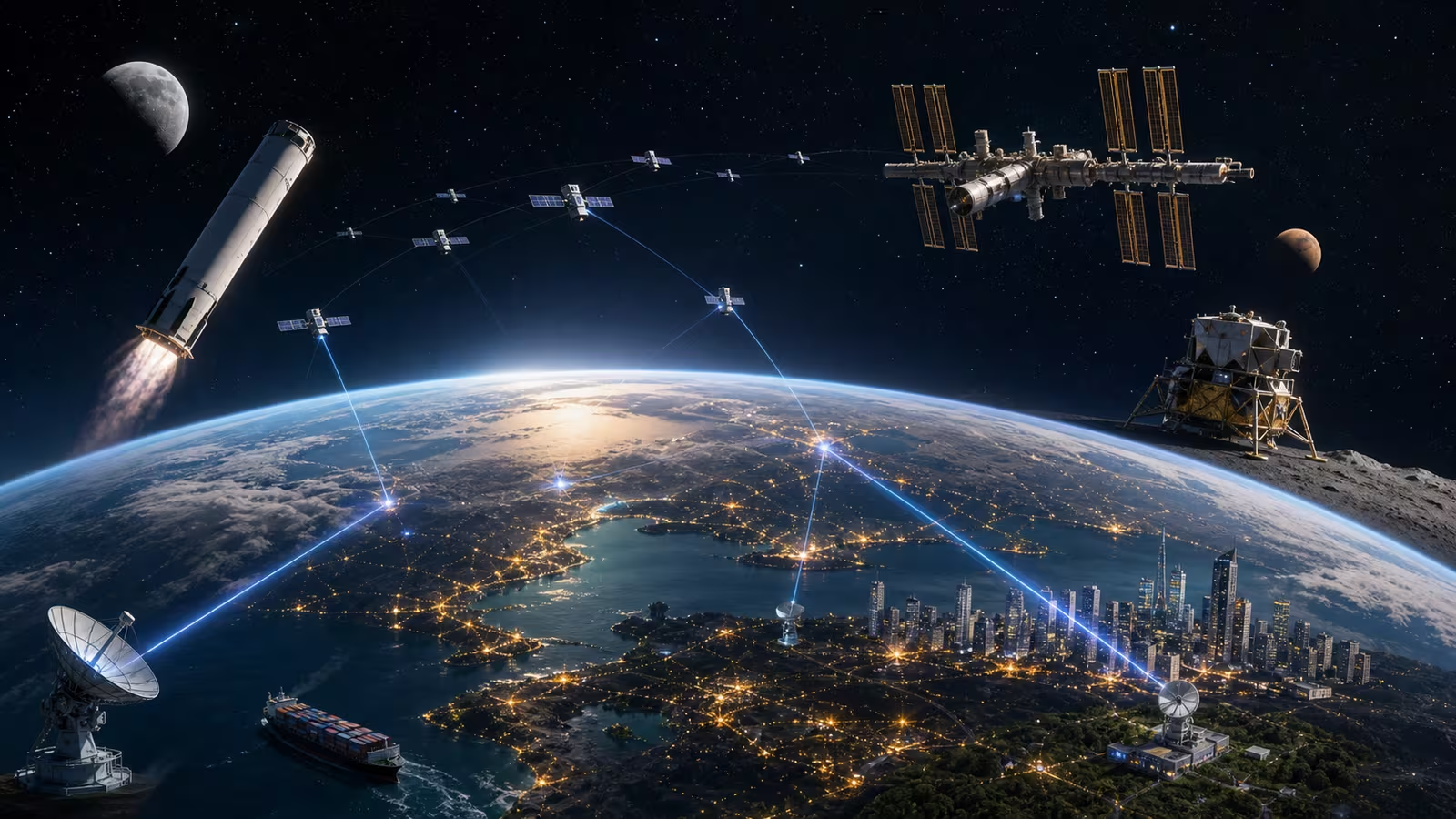
The pad is a machine attached to the planet
A launch pad is not a concrete parking spot with a tower. It is an industrial machine built into land, utilities, software, weather, safety rules, and transportation. It has to hold the rocket, provide access, route fluids and gases, protect workers, support checkout, survive heat and vibration, and recover enough afterward to be used again.
The pad has plumbing for propellants and pressurants. It has electrical systems, data lines, lightning protection, fire suppression, communications, cameras, sensors, and emergency procedures. It may have flame trenches, water deluge systems, umbilical arms, service structures, hold-down points, environmental enclosures, and access platforms. Every one of those pieces has to be designed for a strange job: being close to a controlled explosion without becoming the reason it stops being controlled.
This is why launch cadence is not only a rocket question. A reusable rocket can return quickly in principle, but the pad, ground crews, range, inspections, repairs, propellant supply, payload flow, and regulatory process all have to keep up. The ground can become the bottleneck even when the vehicle is technically capable of flying more often.
Reusable Rockets and Launch Economics explains the vehicle side of that shift. The ground system is the other half. Reuse changes what the pad must endure, how fast it must reset, and how carefully teams must inspect parts that were once treated as single-use scenery.
Ground support equipment is the rocket’s borrowed body
On the pad, a rocket depends on systems that will not travel with it. Ground support equipment conditions propellants, supplies power, maintains temperatures, manages purges, checks valves, routes data, and holds connections until the vehicle is ready to stand alone. In the final seconds, the rocket transitions from being supported by Earth to being an independent machine.
That transition is delicate. Disconnect too early and the vehicle may lose a service it still needs. Disconnect too late and the ground system may be damaged or interfere with departure. The choreography has to be rehearsed, instrumented, and checked against the actual state of the vehicle, not only the planned timeline.
The phrase “ground support” can make this equipment sound secondary. It is not. A rocket that cannot be fueled safely, tested cleanly, commanded reliably, or protected from the local environment will not launch, no matter how impressive its engines are. The borrowed body matters until the moment it lets go.
This is also why different launch vehicles can require different pads or heavy pad modifications. Propellant choice, vehicle size, payload access, vertical or horizontal integration, crew needs, environmental limits, and turnaround goals all shape the ground system. A spaceport is not a universal socket. It is a set of negotiated interfaces.
The range watches the corridor
A launch does not only rise from a pad. It travels through airspace, over land or water, and into a planned orbital path. The range is the system that makes sure this corridor is understood and controlled. It includes tracking, communications, flight safety, hazard areas, coordination with aviation and maritime activity, and the authority to stop a launch when conditions are not acceptable.
To a viewer, a scrub can feel anticlimactic. To a range team, it may be the correct outcome. A ship in the wrong area, a tracking problem, a sensor issue, a flight safety concern, or weather outside limits can all turn a dramatic day into a waiting day. The decision may disappoint people, but disappointment is cheap compared with losing control of risk.
Modern launch ranges are under pressure to support more missions, more providers, and more varied trajectories. That pushes ground infrastructure toward automation, better scheduling, faster coordination, and clearer data sharing. It also makes the boring parts more important. A busy range is an infrastructure problem, not just a calendar problem.
Weather is not background scenery
Weather decides launches more often than casual observers expect. Winds, lightning risk, clouds, precipitation, temperature, sea state for recovery, upper-level winds, and visibility can all matter depending on the mission. A blue sky near the pad is not enough. The rocket has to pass through layers of atmosphere, and the recovery or abort plans may depend on conditions far from the camera view.
Weather teams do not simply glance upward. They use sensors, balloons, radar, forecasts, rules, and mission-specific constraints. The question is not whether the day feels pleasant. The question is whether the vehicle, payload, crew if present, range, recovery assets, and public safety plan all remain inside acceptable limits.
The ground system therefore includes patience. Spaceflight culture often celebrates boldness, but launch operations are full of people paid to say not yet. That caution is not a lack of ambition. It is the habit that allows ambition to survive repeated contact with physics.
Payload flow has its own clock
The payload may be more valuable than the rocket. A satellite, science instrument, national security payload, cargo vehicle, or crewed spacecraft arrives with its own handling rules, contamination limits, power needs, security requirements, fueling steps, and testing schedule. The spaceport has to provide buildings, clean environments, transport routes, integration equipment, and procedures that protect the payload before it ever meets the vehicle.
This work can be invisible because payload processing often happens away from the public launch view. But the mission can fail on the ground long before ignition if a payload is mishandled, exposed, delayed, or connected incorrectly. A spaceport that wants serious customers has to prove that it can protect what those customers bring.
Payload flow also affects cadence. If the rocket and pad can support rapid launches but payloads arrive slowly, need long checkouts, or require special handling, the system slows. Infrastructure maturity means looking at the whole path from factory to orbit, not only the last ten seconds.
Data keeps the day honest
Every launch campaign produces data: temperatures, pressures, valve states, software versions, sensor checks, weather readings, range status, countdown events, hold reasons, anomaly reports, and post-launch inspections. This data is how teams avoid relying on memory and optimism.
The best ground systems make state visible. Operators need to know what configuration the vehicle is in, what equipment is connected, what constraints are active, what changed since the last attempt, and what must be verified before continuing. A launch countdown is not a ritual chant. It is a structured way of making sure the machine, the ground, the range, and the people are aligned.
When a hold occurs, data decides whether the team can resume. Did the temperature return inside limits? Did the valve behave correctly? Was the sensor wrong or the system wrong? Did a software command leave anything in an unexpected state? Without good instrumentation, a countdown becomes guesswork under pressure.
This is where spaceports begin to resemble other high-reliability infrastructure. Airports, power plants, ports, factories, and rail systems all depend on maintenance records, configuration discipline, and operations culture. Space has more dramatic visuals, but the ground work is familiar in spirit: know the state, control the interfaces, document the exceptions, and do not let schedule pressure rewrite reality.
The launch starts long before liftoff
The public countdown compresses time. It makes launch feel like a short event with a clean beginning. In reality, the mission has been underway for months or years before the vehicle leaves the pad. The spaceport has been receiving, preparing, testing, clearing, rehearsing, repairing, and deciding.
That is why the ground system deserves attention. A space economy cannot mature on rockets alone. It needs places that can handle payloads repeatedly, pads that can turn around safely, ranges that can support traffic, weather systems that can protect decisions, data systems that can show state clearly, and teams that understand when the right launch decision is to wait.
When you watch a rocket lift off, look at what it is leaving. The tower, the tank farm, the antennas, the roads, the water system, the control rooms, the guarded perimeter, the weather mast, the flame trench, the recovery equipment, and the people holding clipboards and tablets are not background. They are the infrastructure that let the vehicle have its one bright moment.
Space begins on Earth because every mission needs a ground system sturdy enough to let it go.