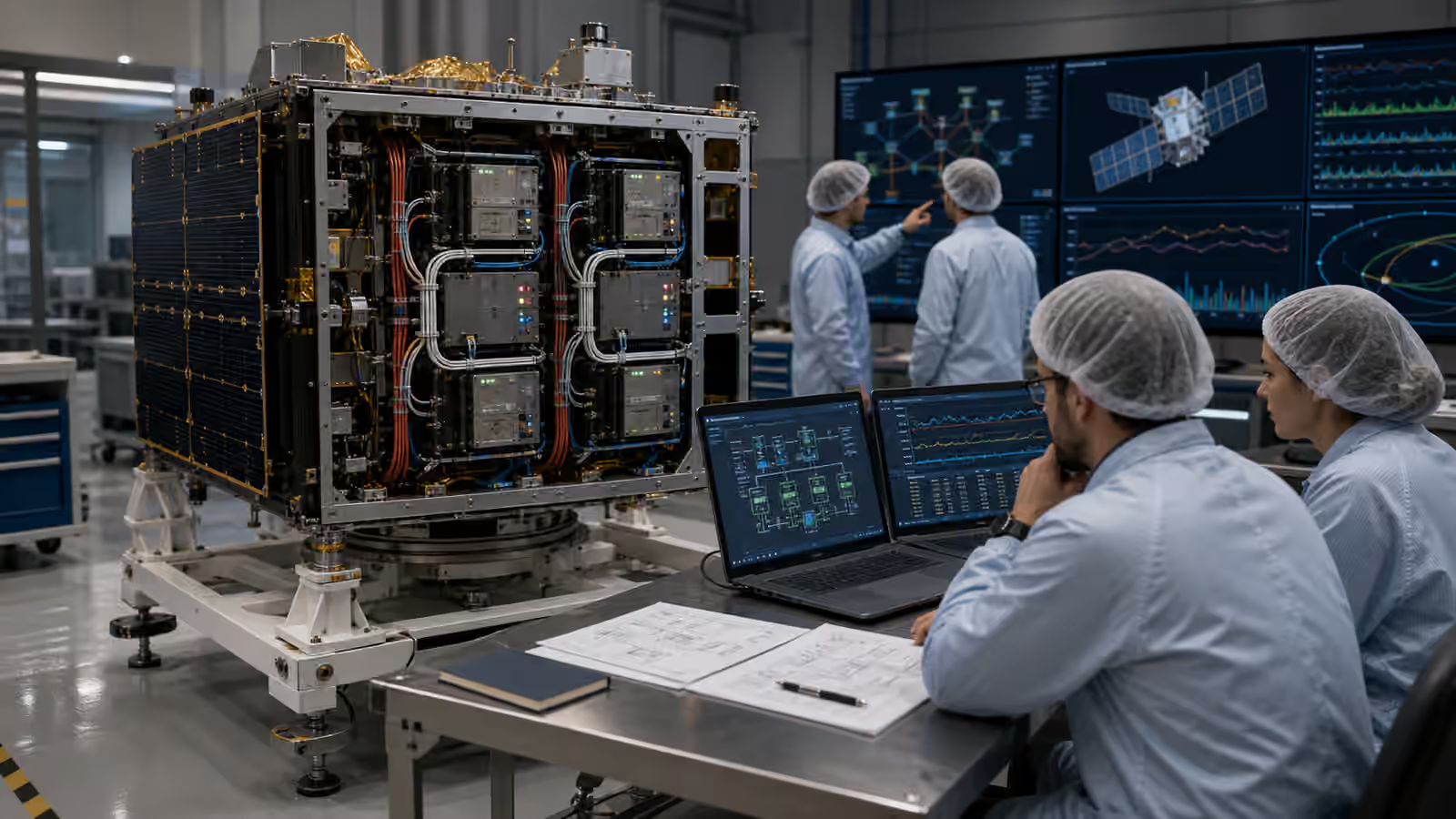
A spacecraft surface is never just a surface. It can reject heat, absorb sunlight, hold alignment, protect electronics, reflect a signal, keep stray light away from an instrument, resist charging, survive atomic oxygen, shed particles, or quietly release molecules that later settle where nobody wants them. Materials and contamination control are the disciplines that keep those surfaces from becoming surprises after launch.
This subject belongs beside Satellite Manufacturing and Testing because it is easy to underestimate until the hardware is already in the clean room. It also belongs beside Satellite Thermal Control and Satellite Radiation Effects because the space environment acts directly on materials. A spacecraft is not protected by air, weather, or easy maintenance. Its coatings, polymers, metals, composites, adhesives, lubricants, optical surfaces, and blankets become part of the mission’s behavior.
Materials Are Chosen for Environment
Materials that behave well on Earth may behave differently in orbit. Vacuum removes the ordinary atmosphere around a part. Sunlight and ultraviolet radiation can age exposed surfaces. Thermal cycling can expand and contract materials over thousands of orbits. Charged particles can damage electronics and alter surface behavior. Atomic oxygen in low Earth orbit can erode some exposed polymers. Micrometeoroids and small debris can pit or puncture surfaces. The result is not one generic hazard called space. It is a set of physical stresses that each material must answer.
That answer depends on the mission. A low-Earth orbit Earth observation satellite may care deeply about atomic oxygen, thermal cycling, optical cleanliness, and precise radiator behavior. A geostationary communications spacecraft may face different radiation, charging, thermal, and lifetime concerns. A lunar surface asset has to think about dust, abrasion, temperature swings, shadowed regions, and difficult access for repair. Orbital Regimes and Mission Design is therefore also a materials guide in disguise. The path through space changes what the spacecraft is made of.
Material selection is full of tradeoffs. Aluminum, titanium, composites, ceramics, glass, flexible films, paints, adhesives, foams, tapes, and multilayer insulation each bring useful properties and awkward limits. A material may be strong but hard to machine, light but sensitive to moisture, thermally useful but fragile, clean in one condition and troublesome after heating. Engineers do not choose materials because they sound advanced. They choose them because the whole mission needs a workable balance of strength, mass, thermal behavior, contamination risk, manufacturability, cost, and evidence.
Cleanliness Is an Engineering Requirement
Clean rooms can look like ritual from the outside: garments, gloves, hair covers, tool logs, covers, wipes, tacky mats, bagging, and slow movements around hardware. The purpose is practical. Particles, fibers, skin oils, machining residue, adhesive traces, and loose debris can harm the parts of a spacecraft that depend on precise surfaces.
Optical instruments are the clearest example. A lens, mirror, detector window, or baffle may lose performance if it collects particles or films. A small amount of contamination can scatter light, reduce throughput, create ghosting, or change calibration. Thermal surfaces are another example. A radiator coating, optical solar reflector, or multilayer insulation blanket works because its surface properties are controlled. If those properties change, the thermal model changes with them.
Mechanisms care too. A particle in a release device, hinge, bearing, latch, or deployment path can be more than dirt. It can become a mechanical risk. Propulsion and fluid systems care about residues and compatibility. Electronics care about conductive debris and workmanship. The clean room is not trying to make hardware beautiful. It is trying to preserve the assumptions that make the design believable.
Outgassing Travels After Launch
Contamination does not always arrive as visible dust. Some materials release trapped or volatile compounds when heated or placed in vacuum. This is called outgassing, and it can matter because released molecules do not politely disappear. They can migrate, condense on colder surfaces, and form thin films on optics, radiators, sensors, or mechanisms.
The tricky part is that the contamination source may not sit next to the damaged surface. A polymer, adhesive, lubricant, potting compound, cable jacket, or tape can release material in one part of the spacecraft, and the resulting film can appear somewhere else. Thermal gradients, vent paths, shadows, and operational temperatures all shape the route. This is why contamination control is a system problem rather than a housekeeping preference.
Engineers use material screening, bakeouts, witness plates, covers, purge flows, venting design, cleanliness budgets, and thermal vacuum tests to reduce uncertainty. A witness plate is a simple idea with serious value: place a clean surface where contamination would be noticed, then inspect or analyze it after exposure. The plate helps the team measure what the hardware environment is actually doing.
Earth Observation Sensors depends on this discipline. A satellite that promises trusted measurements has to keep its sensor surfaces and calibration behavior under control. The same is true for star trackers, navigation sensors, laser communication terminals, telescopes, and any mission where light is evidence.
Surfaces Control Heat, Charge, and Light
A spacecraft surface often has a job that is invisible in a photograph. A radiator must emit heat efficiently. A white coating may reflect sunlight. A dark baffle may absorb stray light. A conductive surface may reduce charging risk. A blanket may reduce heat flow. A solar array coverglass must protect cells while passing useful light. A deployable antenna surface must preserve shape and electrical behavior after launch and temperature changes.
Thermal design depends strongly on optical properties such as absorptivity and emissivity. Those properties can change as surfaces age, collect contamination, or face ultraviolet radiation. A radiator that worked in analysis may run warmer if a film forms on it. A surface that reflects sunlight when new may absorb more after years of exposure. Satellite Power Systems connects here because warmer batteries, less efficient solar arrays, and heater loads all affect energy margins.
Charging is another surface concern. Spacecraft can accumulate electrical charge from the plasma and radiation environment. If different parts charge unevenly, electrostatic discharge can threaten electronics or create noise. Material choices, grounding, coatings, shielding, and design discipline reduce the risk. The topic may sound far from ordinary manufacturing, but it begins with what surfaces are allowed to be.
Handling Creates Hidden History
Every spacecraft carries the history of how it was handled. A panel removed for access, a blanket folded back, a connector cleaned, a cover installed, a technician reaching across a surface, a late adhesive repair, or a bag opened in the wrong place can all become part of the mission story. Most of these actions are harmless when performed correctly. They become risky when nobody records them or understands what they changed.
This is why contamination control is inseparable from documentation. Which materials were used? Which lot of adhesive? Which cleaning method? Which surface was touched? Which cover was removed before which test? Which waiver accepted a mark or particle count? Which bakeout was completed? Which witness plate result was reviewed? These questions can seem excessive until a spacecraft in orbit shows a strange thermal trend or an instrument loses sensitivity.
Spacecraft Software Verification and Configuration Control uses configuration discipline for code and procedures. Materials work needs the same habit for physical reality. The spacecraft that flies is not the drawing, the bill of materials, or the clean-room memory. It is the object that resulted from every approved change and every recorded exception.
Testing Turns Surfaces Into Evidence
Material choices gain credibility through evidence. Thermal vacuum testing can reveal outgassing, thermal behavior, deployment effects, and compatibility issues. Bakeouts can remove some volatile compounds before launch. Vibration and acoustic testing can expose rubbing, shedding, or poorly restrained materials. Solar exposure, atomic oxygen testing, radiation testing, and abrasion studies may matter for specific missions. The exact test program depends on risk, orbit, payload sensitivity, and cost.
Testing should be honest about interfaces. A material may pass a coupon test but behave differently when bonded, painted, folded, heated, shielded, or placed near another material. A blanket is not only a film; it has seams, fasteners, grounding paths, cutouts, handling marks, and edges. A coating is not only a color; it has thickness, cure history, surface preparation, and aging behavior. Spacecraft surfaces live in assemblies, not in catalog tables.
The payoff is not perfection. Space hardware always carries compromises. The payoff is knowing which compromises the mission has accepted and why they remain reasonable. A low-cost technology demonstrator may accept more material risk than a flagship telescope. A constellation spacecraft may rely on repeatable production and fleet learning. A lunar payload may choose dust tolerance over delicate performance. Mature engineering does not pretend these choices vanish. It records them and tests them well enough that operators understand the vehicle they inherit.
Materials and contamination control make spacecraft less mysterious. They remind us that space infrastructure is built from real surfaces under stress. The mission depends on what those surfaces absorb, emit, shed, trap, release, conduct, reflect, and remember. If the surface story is weak, the spacecraft may still look complete in the fairing. It will only reveal the missing discipline later, when the people who could have wiped, covered, baked, tested, or documented the problem are no longer standing beside it.