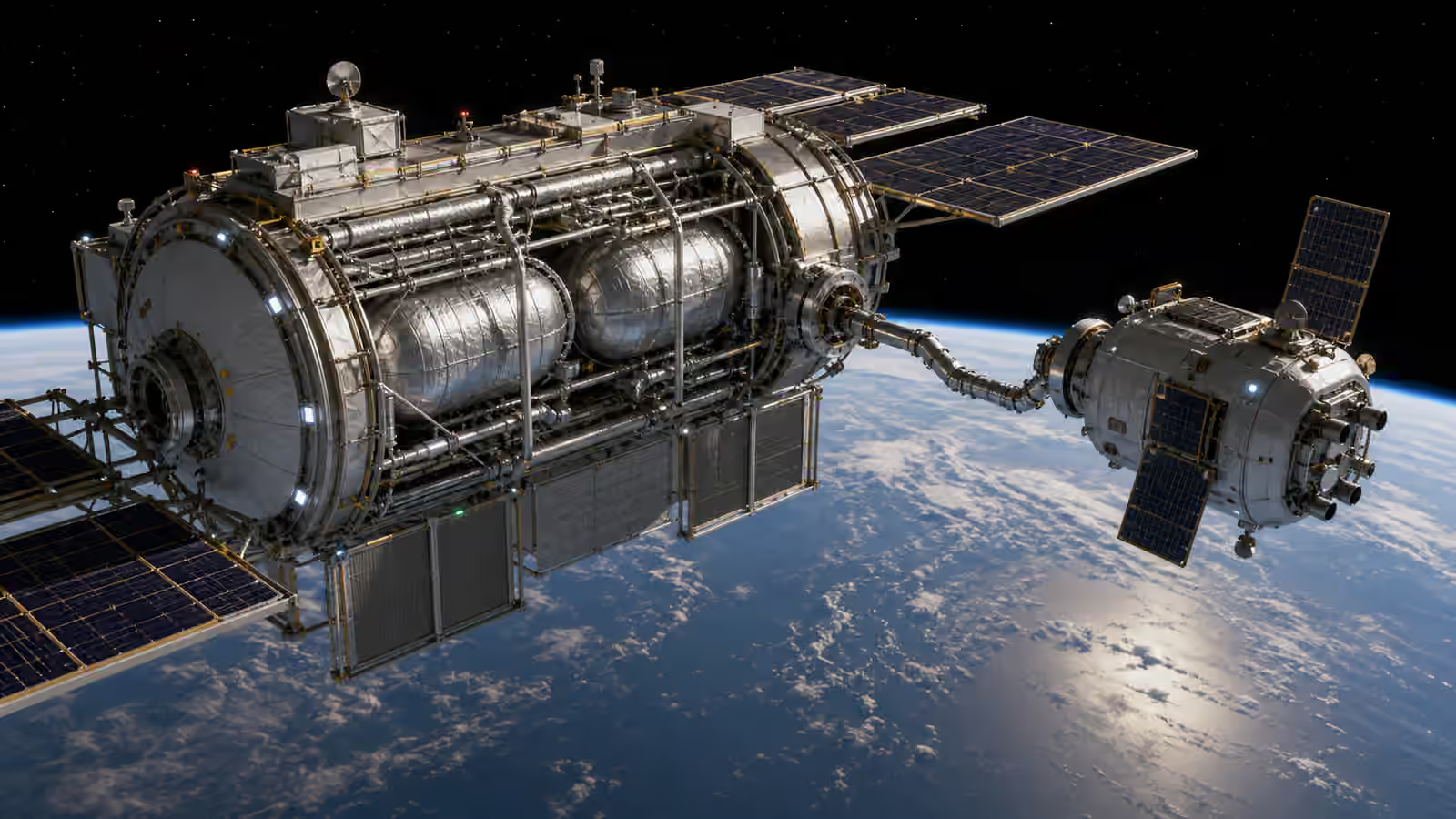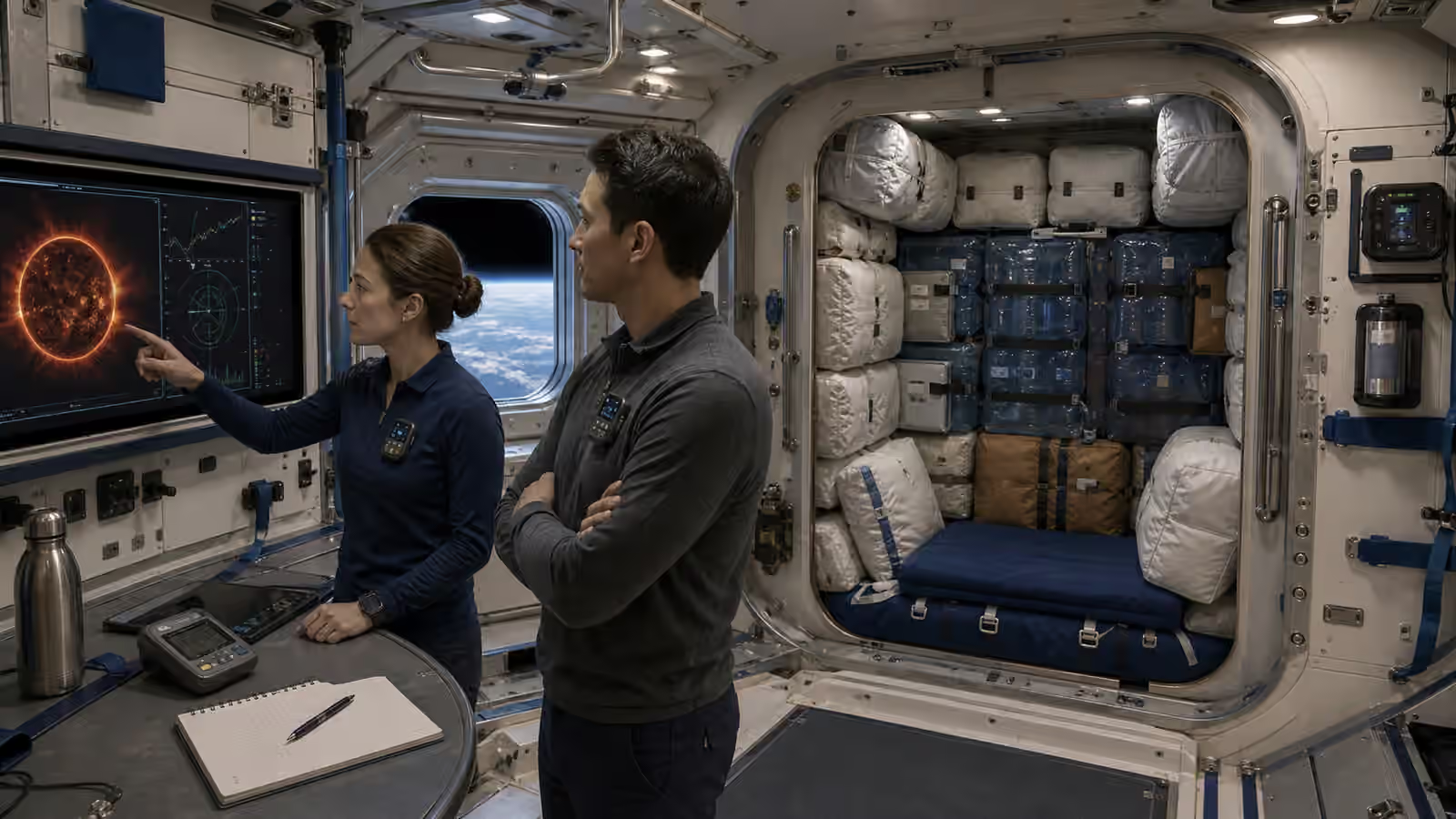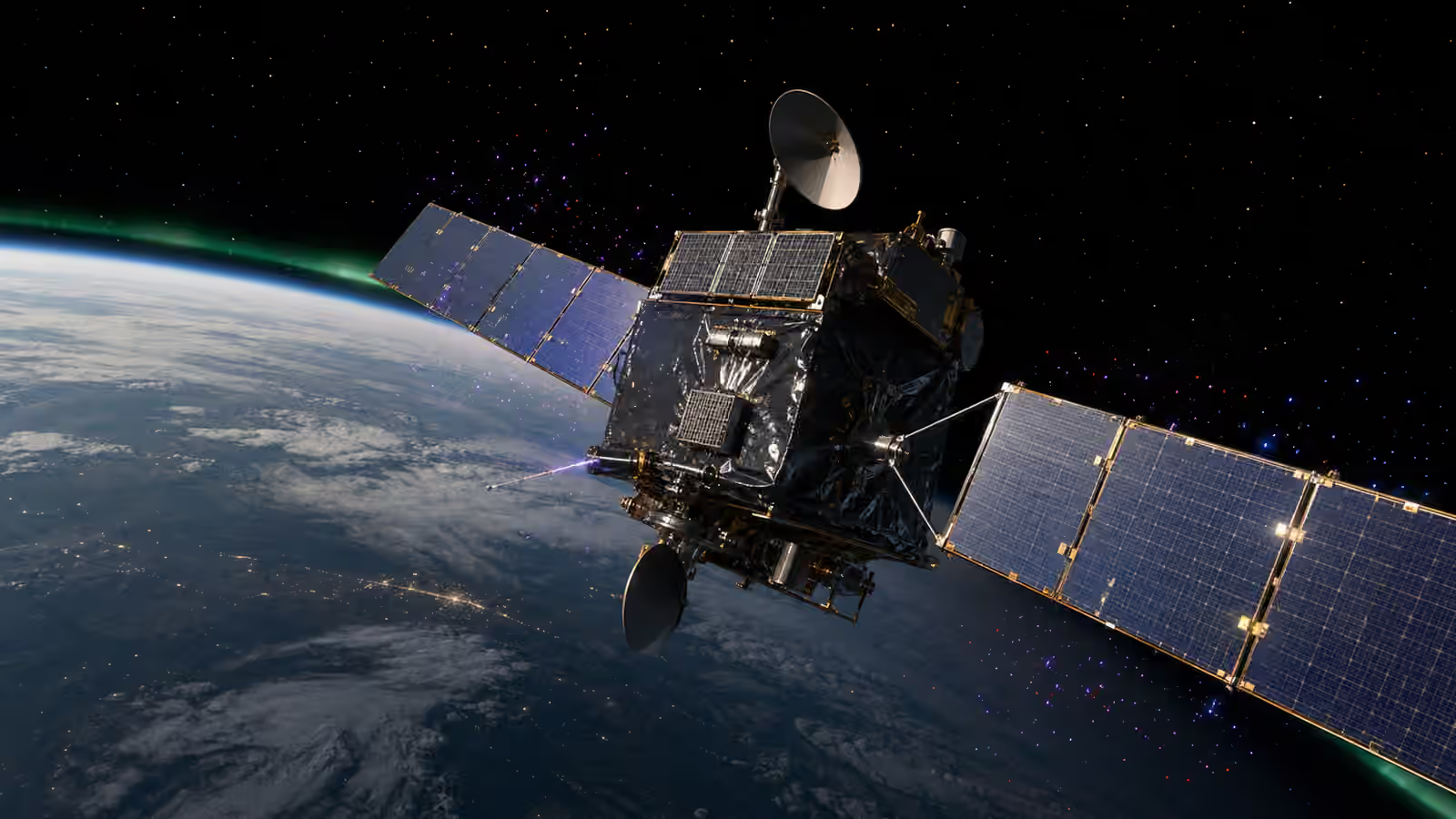
A satellite is not flying through empty nothing. It moves through plasma, sunlight, shadow, radiation belts, charged particles, and magnetic-field conditions that change with orbit and solar activity. Most of the time that environment is quiet enough for routine work. Sometimes it becomes an electrical problem. Surfaces charge. Insulators hold voltage. Particles penetrate shielding. A small discharge can disturb electronics, corrupt data, upset sensors, mark a surface, or add one more clue to an anomaly that operators have to untangle from far away.
Spacecraft charging is easy to overlook because it is less visible than launch loads, thermal cycling, or radiation damage. It is still part of the space environment. A spacecraft is a collection of conductors, insulators, coatings, blankets, solar arrays, harnesses, antennas, sensors, and electronics. In orbit, those materials do not all collect and release charge in the same way.
Satellite Radiation Effects explains how charged particles can upset or degrade electronics. Charging sits beside that topic. Radiation asks what energetic particles do inside components and materials. Charging asks how the spacecraft as a physical object builds up electrical differences with its environment and with itself.
Charging Starts With Uneven Conditions
In sunlight, spacecraft surfaces emit electrons through the photoelectric effect. In plasma, surfaces collect electrons and ions. In shadow, the balance changes. Some materials conduct charge away quickly. Others hold it. A solar array, thermal blanket, painted panel, dielectric cover, antenna, radiator, and sensor aperture may each respond differently. The spacecraft can therefore develop voltage differences across surfaces that look calm from the outside.
The problem is not simply that the spacecraft has a voltage relative to the surrounding plasma. Uniform charging can matter for some measurements, but differential charging is often more troublesome. If one surface becomes more negative than a neighboring surface, the electric field between them can grow. At some point, the difference may discharge. The discharge can be tiny and still noisy enough to matter.
This is why Spacecraft Materials and Contamination Control is also an electrical topic. Coatings are not chosen only for appearance or thermal behavior. Surface conductivity, aging, contamination, ultraviolet exposure, atomic oxygen effects, and cleanliness can change how materials interact with charge. A film on a surface may affect thermal balance and electrical behavior at the same time.
The Orbit Shapes the Risk
Charging risk changes with location. A low-Earth orbit satellite may pass through ionospheric plasma and auroral regions. A geostationary spacecraft may experience energetic electron environments that create different surface and internal charging concerns. Highly elliptical orbits can move through changing plasma and radiation regions over one mission. A lunar surface asset has to think about dusty regolith, sunlight, shadow, and local plasma effects in another way.
Orbital Regimes and Mission Design is therefore not only about coverage and latency. It also chooses the electrical weather a spacecraft must survive. A mission that expects long life in geostationary orbit does not face the same charging environment as a short low-orbit demonstration. A spacecraft crossing auroral regions does not have the same exposure as one staying near the equator. The orbit is part of the electrical design.
Space weather can sharpen the issue. Solar storms and geomagnetic activity can change particle populations, disturb the ionosphere, increase drag in low orbit, and affect radio systems. Space Weather covers those broader operational effects. For charging, disturbed conditions can increase the chance that a spacecraft experiences voltage differences outside ordinary expectations.
Surface Charging Is Only One Layer
Surface charging is the visible mental model: a panel gains charge, a nearby surface sits at another potential, and a discharge jumps. Internal charging is more hidden. Energetic particles can penetrate materials and deposit charge inside dielectrics, cables, circuit boards, or components. That charge may accumulate until it finds a path to discharge inside the spacecraft.
Internal discharges can be difficult to diagnose because they may not leave a clear external sign. Operators may see a reset, a sensor glitch, corrupted data, a spurious command rejection, or a one-time telemetry oddity. The event can resemble radiation upset, software behavior, power noise, or an ordinary electronics fault. The spacecraft is far away, and the evidence is often indirect.
Satellite Onboard Computers and Data Handling shows how spacecraft turn commands, telemetry, timing, memory, and autonomy into behavior. Charging events become serious when they disturb that behavior. A discharge near a sensitive line can create a false signal. A memory upset can confuse stored data. A reset can interrupt a payload activity. The event may be small, but it enters a tightly coupled machine.
Grounding Is a Design Habit, Not a Single Wire
Engineers reduce charging risk with material choices, grounding, bonding, shielding, layout discipline, filters, surge protection, and test evidence. Grounding sounds simple because the word suggests connecting everything to one reference. In spacecraft, it is an architecture. Panels, structures, harnesses, electronics boxes, blankets, deployable mechanisms, payloads, and antennas all have to be considered as part of the current path and electrical reference system.
Bonding matters because poor connections can allow voltage differences to grow where the design expected continuity. Harness routing matters because cables can carry noise into electronics. Shielding matters because energetic particles and electric fields do not politely avoid sensitive areas. Material transitions matter because an insulating patch beside a conductive bracket may create a local charging site.
This work intersects with Satellite Manufacturing and Testing . A design drawing may show bonding straps and surface treatments, but the flight spacecraft is built by people in rooms with tools, blankets, fasteners, covers, and procedures. A missing bond, damaged coating, wrong washer, contaminated surface, or undocumented material substitution can change electrical behavior. Charging protection is only as real as the hardware that flies.
Testing Has Limits and Still Matters
Charging environments are hard to reproduce perfectly on Earth. A spacecraft in orbit sees vacuum, plasma, sunlight, shadow, radiation, motion, geometry, aging, and operational modes all at once. A test chamber can examine parts of that reality, but it cannot make every mission case effortless. That does not make testing optional. It makes the test plan an argument about the most important risks.
Engineers may test materials, coupons, electronics boxes, surface conductivity, discharge susceptibility, grounding paths, and environmental behavior. They may review similar missions, model the expected environment, and define operations rules for higher-risk periods. The useful question is not whether a test recreates space perfectly. No ground test does. The question is whether the team has gathered enough evidence to understand where the spacecraft is vulnerable and how it will respond.
Mission Simulation and Digital Twins is useful here because some charging risks become operational scenarios. What happens if a sensor glitches during an eclipse transition? What if a payload mode is sensitive during a high-risk plasma region? What if a discharge causes a reset just before a ground pass? The answer may involve fault protection, scheduling, telemetry review, and recovery procedures as much as materials engineering.
Operations Watch for Patterns
Once the spacecraft is flying, charging becomes part of anomaly reasoning. Operators look for timing, location, space weather context, spacecraft attitude, eclipse transitions, payload modes, and repeated signatures. A single reset may not prove a charging event. A cluster of odd behavior during similar orbital regions may deserve attention. A surface voltage monitor or particle detector can help, but many missions rely on indirect evidence.
Satellite Operations After Launch describes this kind of patient work. Spacecraft health is often a story told through trends. Charging can hide inside those trends. A payload may be scheduled differently. A mode transition may be delayed. A sensitive instrument may avoid certain conditions. A software threshold may be adjusted after review. None of those changes make the spacecraft immune. They keep the mission inside better-understood limits.
Charging is a good reminder that space infrastructure depends on small physical truths. A satellite can have a powerful payload, reliable radio, careful orbit, and polished software, yet still be shaped by how electrons move across a blanket seam or inside a cable dielectric. The invisible environment becomes visible only when the design has respected it or when an anomaly forces everyone to look backward.
The best spacecraft do not treat charging as exotic trivia. They treat it as one more operating condition that deserves material discipline, electrical architecture, test evidence, and honest telemetry review. Orbit is not empty. It is an electrical place, and every satellite carries its own weather through it.