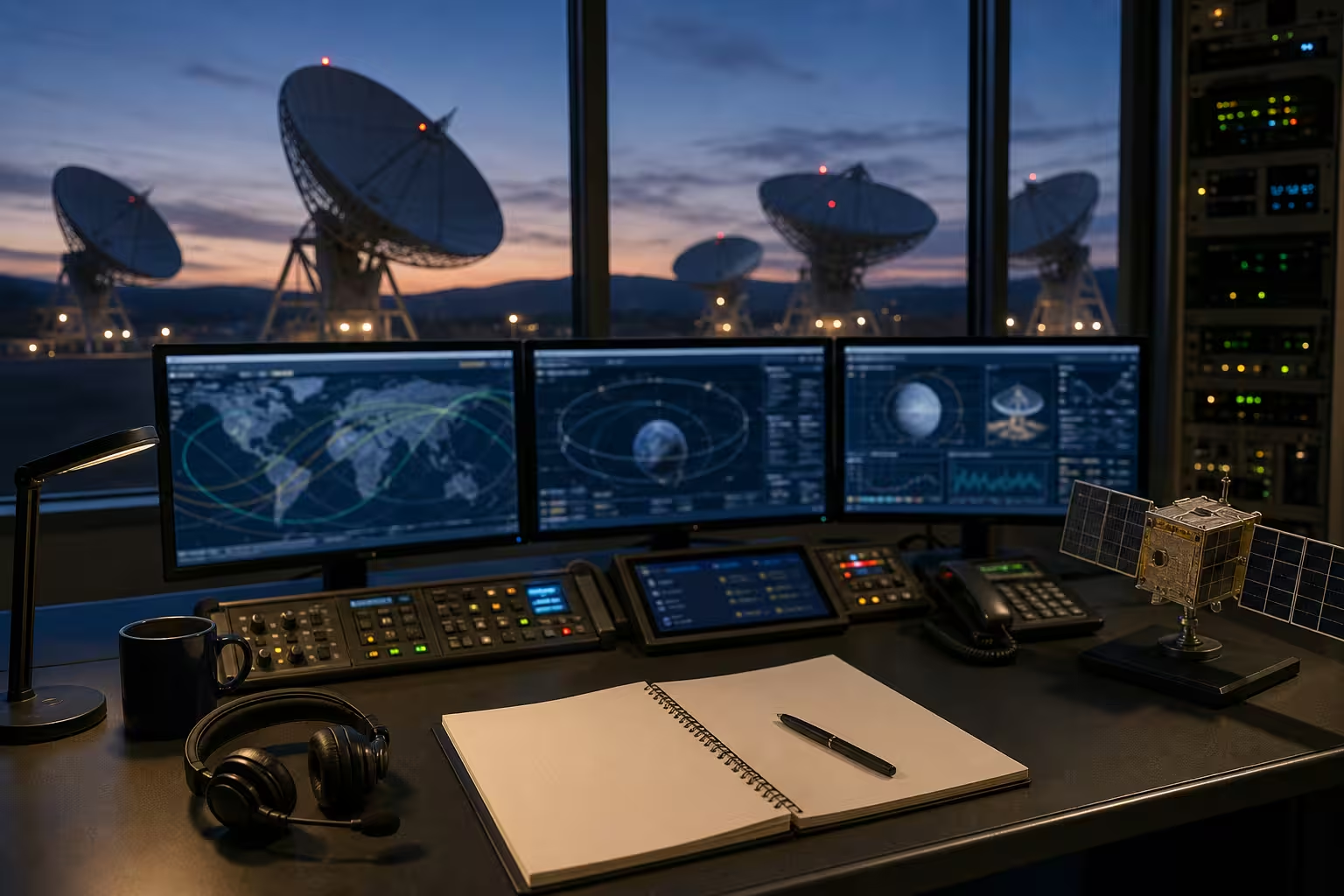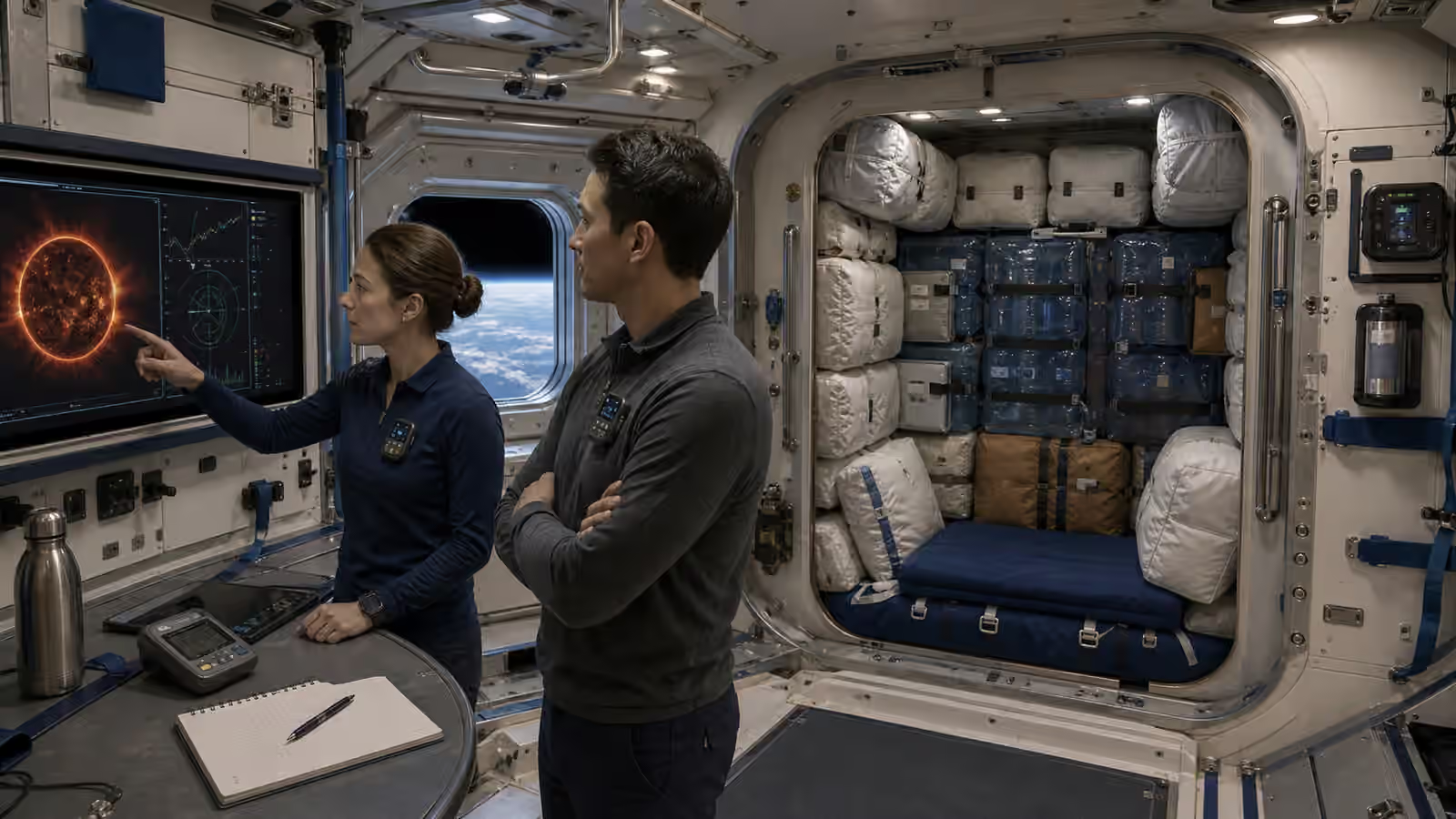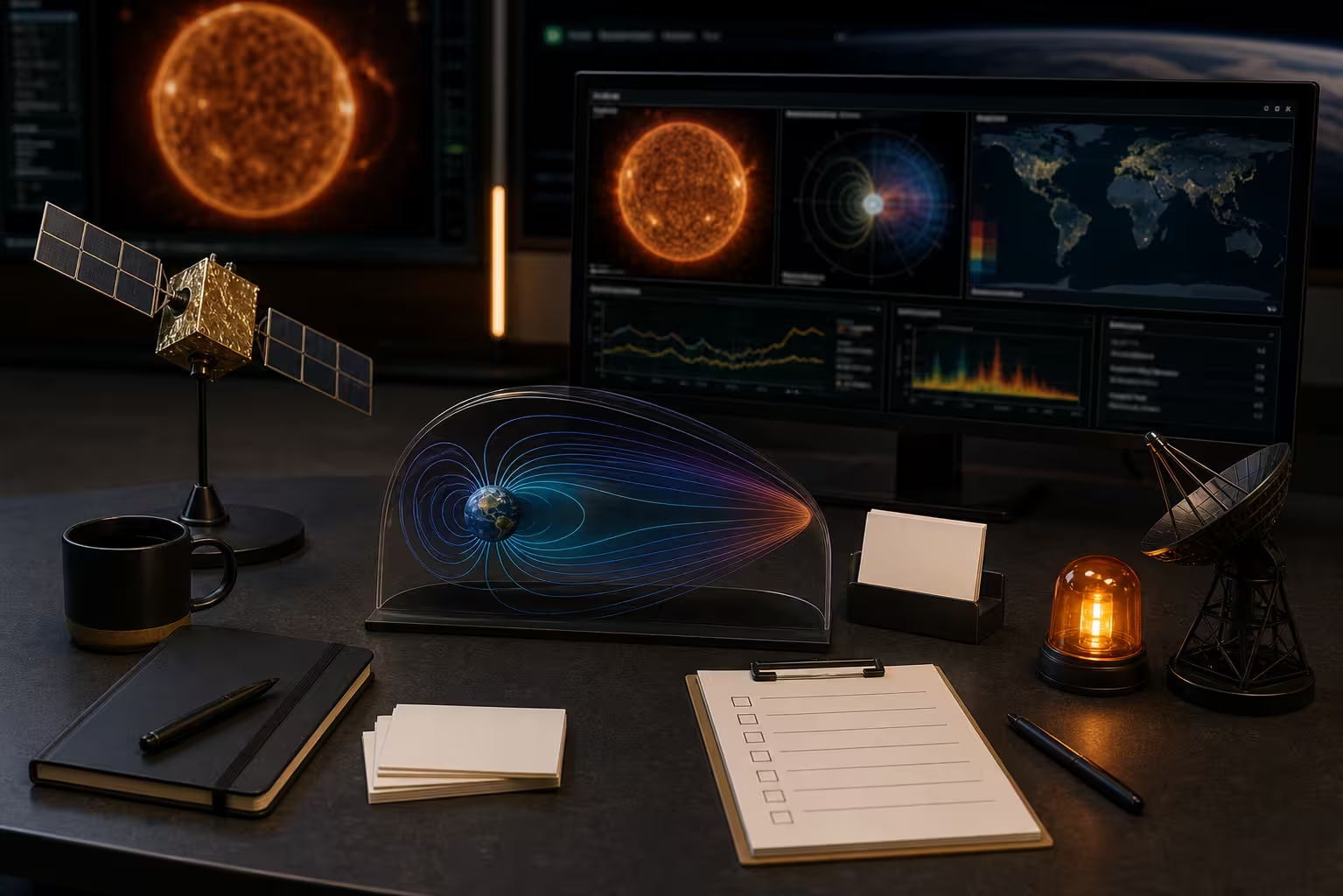
Space weather is what happens when the Sun reminds modern infrastructure that Earth is not sealed off from space. Most days, the Sun is a steady background presence. Sometimes it sends bursts of radiation, charged particles, and magnetic disturbance toward Earth. The atmosphere and magnetosphere protect life on the ground, but satellites, radio systems, navigation signals, power grids, aviation routes, and space operations can still feel the effects.
The phrase can sound abstract, but the consequences are practical. A satellite may need to enter a safe mode. A radio link may degrade. GPS accuracy may suffer. High-frequency communication may become unreliable near polar routes. Satellite drag can increase when the upper atmosphere expands. Grid operators may watch for geomagnetically induced currents. Astronauts and high-altitude aviation planners may need radiation awareness. Space weather is not a movie disaster every week. It is an operational condition.
The Sun has several ways to cause trouble
Solar flares are sudden releases of energy from the Sun’s atmosphere. They can produce intense radiation that reaches Earth quickly and affects radio communication, especially on the sunlit side of the planet. Coronal mass ejections are different: huge eruptions of plasma and magnetic field that can travel through space and, if directed toward Earth, disturb the magnetosphere. Solar energetic particles can raise radiation concerns for satellites, astronauts, and polar aviation.
These events often get blended together in casual coverage, but operators care about the differences. A radio blackout can arrive quickly after a flare. A coronal mass ejection may take longer to reach Earth, giving some warning but also requiring forecasting of speed, direction, and magnetic orientation. The magnetic orientation matters because not every solar eruption couples strongly with Earth’s magnetic field. Some pass with modest effects. Others hit in a way that drives larger geomagnetic storms.
The uncertainty is part of the work. Space weather forecasting is real, but it is not weather forecasting with perfect radar coverage. The Sun is dynamic, the path to Earth is large, and small differences can change impact.
Satellites are exposed infrastructure
Satellites live where space weather is not theoretical. Charged particles can interfere with electronics, create single-event upsets, degrade solar panels, affect sensors, and increase charging on spacecraft surfaces. During geomagnetic storms, the upper atmosphere can heat and expand, increasing drag on low-Earth orbit satellites. That drag changes orbits and can complicate tracking, collision avoidance, and constellation management.
Satellite operators respond with procedures. They may delay maneuvers, protect sensitive instruments, adjust orientation, monitor power systems, or enter safe mode. A satellite in safe mode is not destroyed; it is pausing normal operations to protect itself. But if many satellites need attention at once, operations teams can become busy quickly.
Large constellations make this more important. When hundreds or thousands of satellites occupy low Earth orbit, small changes in drag and tracking uncertainty can become a fleet-management problem. Space weather joins debris, spectrum, ground stations, launch cadence, and regulation as one of the practical constraints on making orbital infrastructure dependable.
Signals can be more fragile than they seem
Many space services depend on clean signal paths. Navigation satellites send weak signals from far away. Satellite internet depends on timing, pointing, and link budgets. Radio communication depends on atmospheric layers that space weather can disturb. Ionospheric changes can bend, delay, absorb, or scatter signals in ways that matter for GPS accuracy, aviation, maritime communication, emergency services, and remote operations.
This does not mean every solar storm breaks navigation. It means system designers need redundancy and users need awareness. A farmer using precision agriculture, a ship relying on satellite navigation, a drone operator, a timing-dependent financial system, or a remote community using satellite connectivity may experience space weather differently. The more society leans on space-based timing and communication, the more invisible solar conditions become part of everyday resilience.
Good systems should degrade gracefully. If one signal path becomes noisy, another should help. If accuracy declines, users should know. If a service is critical, it should not depend on a single fragile assumption.
The ground is not completely separate
Geomagnetic storms can induce currents in long conductors on Earth. Power grids are the most discussed example. Long transmission lines, transformers, grounding systems, and grid operating conditions all influence risk. The concern is not that every storm turns off the lights. It is that strong disturbances can stress equipment and complicate grid operations, especially in regions and systems that are more exposed.
Pipelines, rail systems, undersea cables, and other long infrastructure can also care about geomagnetic effects in specific ways. The details vary, but the principle is the same: space weather can reach technological systems through Earth’s magnetic environment.
This is where space weather stops being only a space industry topic. It becomes part of infrastructure planning. Operators need monitoring, procedures, training, and coordination with forecasting agencies. The public usually notices only rare major events, but resilience comes from quieter preparation.
Forecasting is a chain, not a single alert
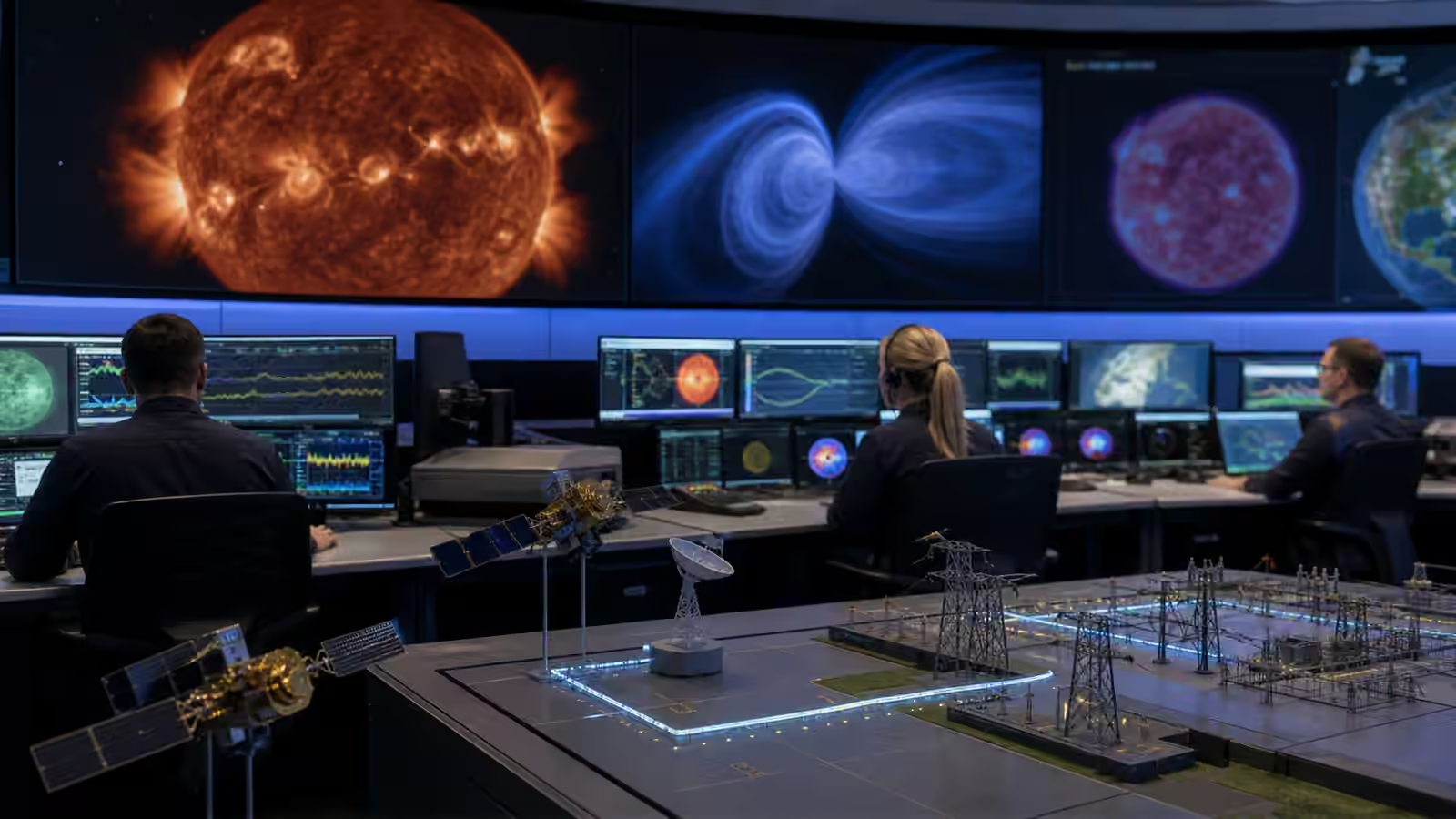
Useful space weather forecasting begins with observing the Sun. Instruments watch active regions, flares, solar wind, and eruptions. Models estimate whether material is Earth-directed and when it may arrive. Spacecraft upstream of Earth can sample solar wind before it reaches the magnetosphere, improving short-term warnings. Ground systems monitor geomagnetic response.
The forecast then has to reach people who can act. Satellite operators, grid operators, aviation planners, radio users, emergency managers, and mission controllers need different information. A vague headline about a solar storm is less useful than timing, severity, affected systems, confidence, and recommended actions.
The best operational culture treats space weather like a risk condition rather than a novelty. Checklists matter. Practice matters. Knowing who makes the decision matters. A warning that nobody knows how to use is only decoration.
Resilience is mostly boring
Space weather resilience is not one heroic shield. It is hardened electronics, redundancy, safe modes, spare capacity, better forecasting, operator training, grid procedures, signal alternatives, and honest customer communication. It is designing satellites with radiation tolerance. It is giving constellations enough operational margin. It is protecting transformers where risk warrants it. It is knowing when to delay a launch, maneuver, spacewalk, or sensitive operation.
For everyday users, the lesson is not to panic about the Sun. It is to understand that modern life depends on layers of infrastructure, and some of those layers extend into space. Satellite navigation, timing, communications, Earth observation, aviation, and grids are connected to a space environment that changes.
Space weather makes Spacefront more grounded because it adds friction to the dream of seamless orbital infrastructure. The future does not only need more satellites and rockets. It needs systems that keep working when the Sun is in a bad mood. That means forecasting, engineering, procedures, and humility about the environment every spacecraft actually lives in.