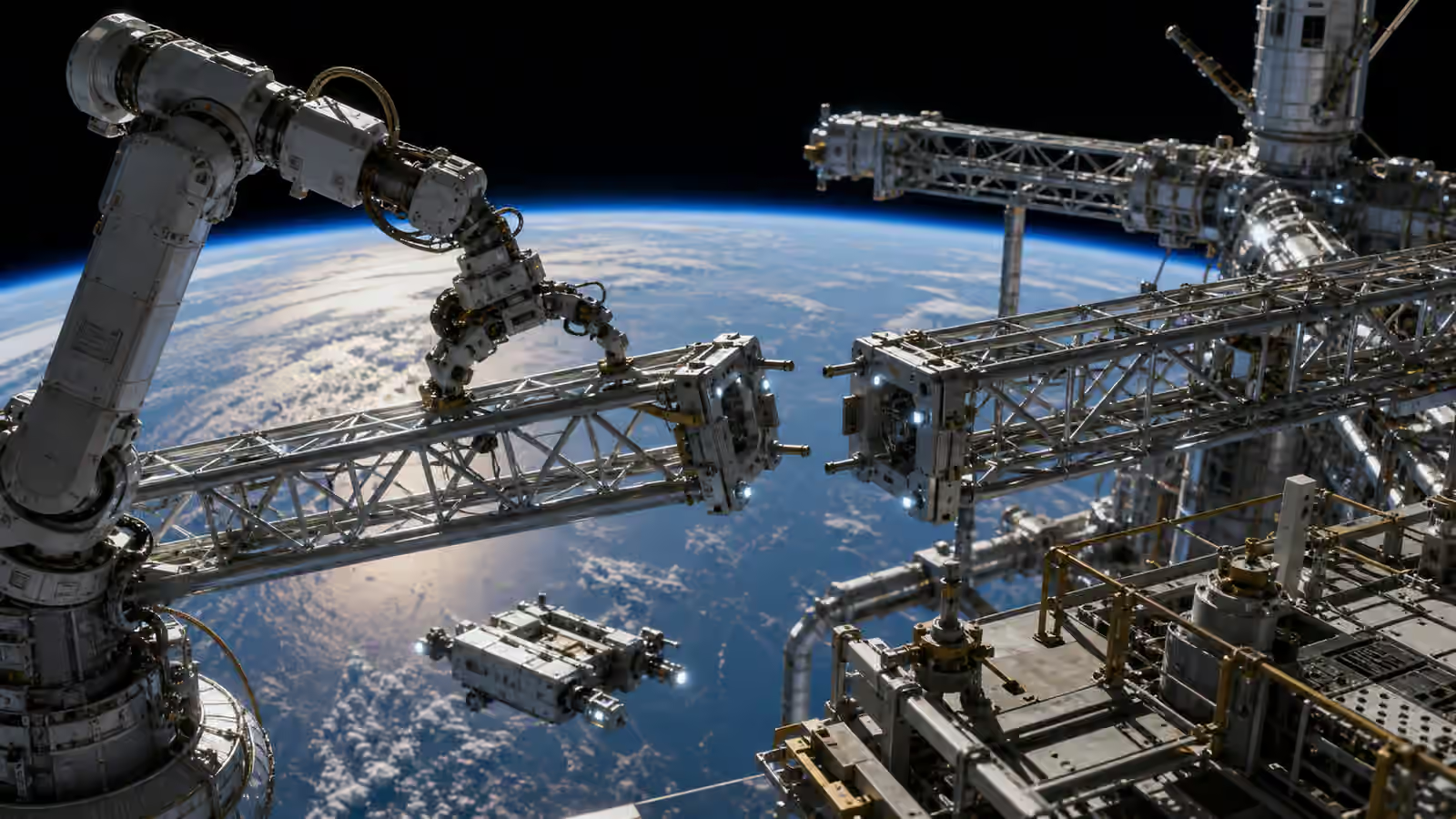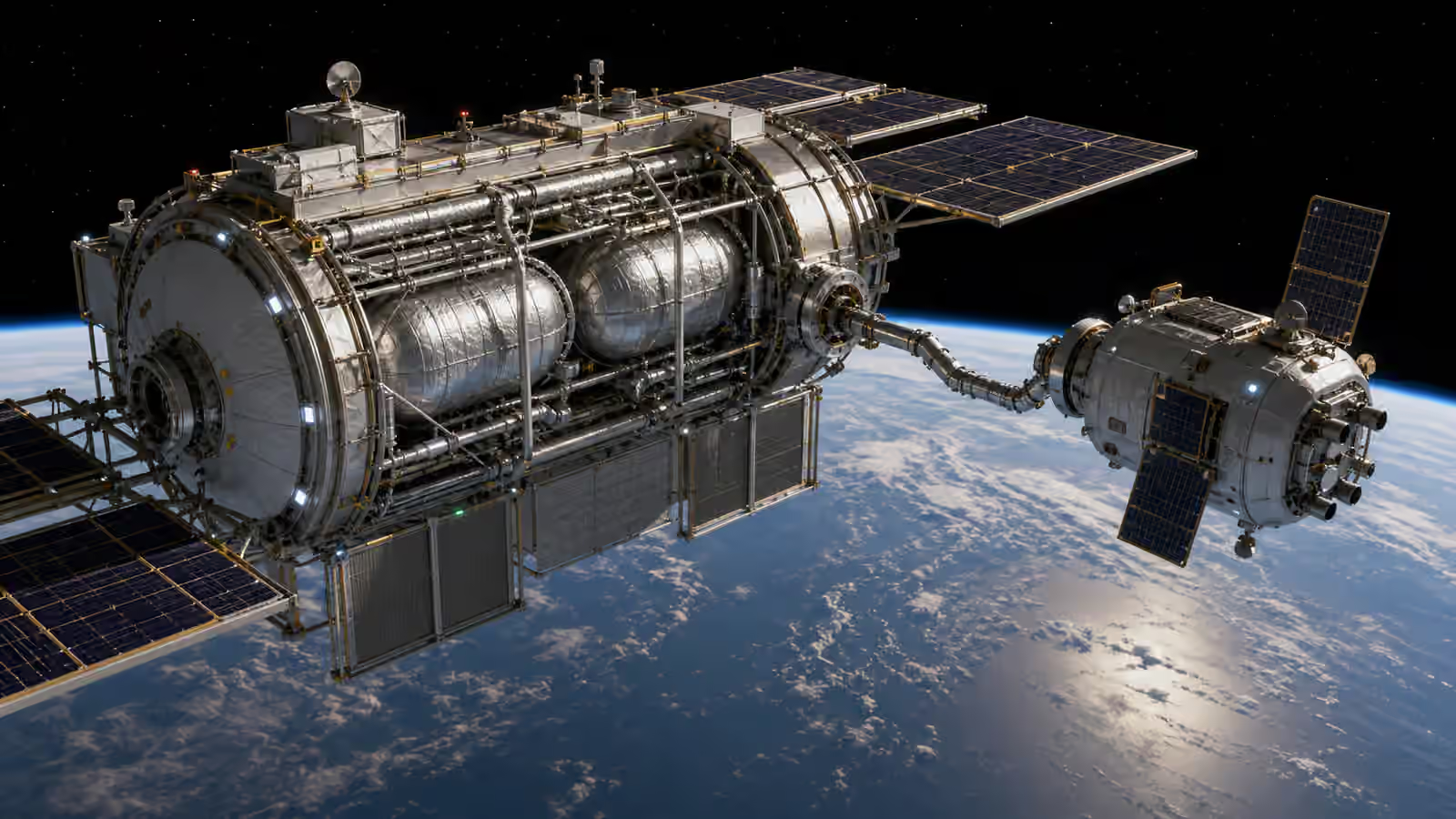
Space robotics is easy to imagine as a metal arm doing whatever a human hand would do, only farther away. The reality is more demanding. A robotic arm in orbit works without a floor, with fragile hardware nearby, communication delays in some missions, limited camera views, changing sunlight, strict keep-out zones, and consequences that can drift away or become debris. The useful comparison is not a factory robot behind a fence. It is a careful tool operating inside a moving, shared, unforgiving workspace.
Robotic manipulators matter because space infrastructure eventually needs more than launch and disposal. Satellites may need inspection, relocation, refueling, module handling, cargo capture, sample transfer, antenna deployment, payload installation, and assembly. Some of that work can be done by crew during EVA. Much of it is better done by machines that can wait, hold steady, repeat motions, and keep people away from unnecessary risk.
In-Space Servicing and Refueling explains why mature orbital infrastructure cannot treat every spacecraft as untouchable after launch. Robotics is one of the ways servicing becomes physically possible. A refueling port, inspection camera, grappling fixture, replacement module, or stuck component all need hardware that can approach, align, touch, and let go under control.
An Arm Is a System, Not a Limb
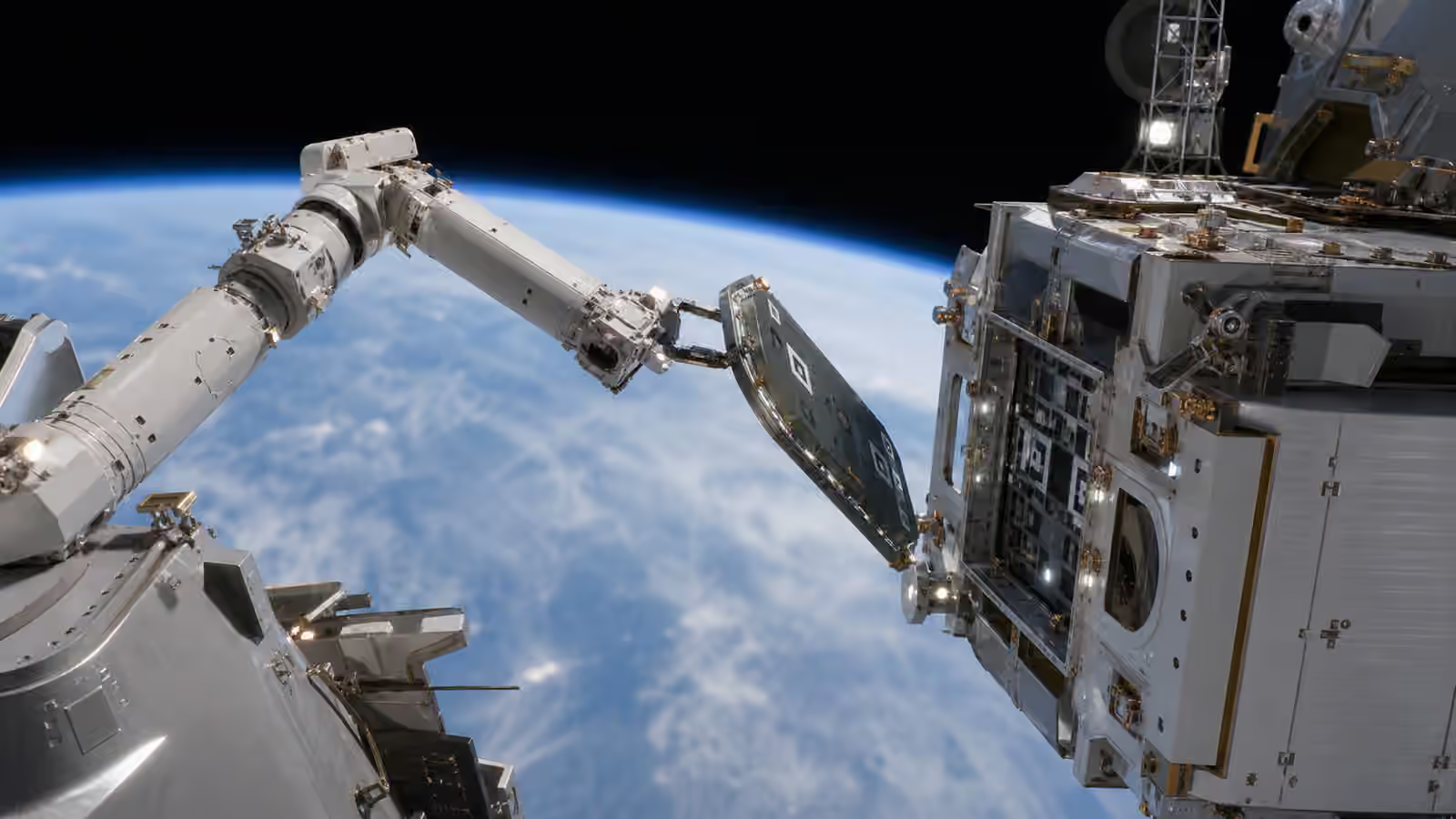
A space robotic arm includes joints, motors, brakes, sensors, cameras, software, control modes, structure, power, thermal design, and the end effector that actually contacts the work. It may mount on a station, servicing vehicle, lander, rover, or free-flying spacecraft. Each setting changes the problem. A station arm can rely on a large host vehicle for power and oversight. A small servicing spacecraft may need to manage its own attitude while the arm moves. A lunar surface robot has to deal with gravity, dust, terrain, and communication geometry.
The arm is also connected to the vehicle carrying it. Moving a robotic arm changes mass distribution and can push against the spacecraft. In microgravity, forces do not vanish. They move through the whole system. A manipulator that pulls on a stubborn object can rotate the servicer or stress the target. The spacecraft attitude-control system, arm controller, sensors, and operations team have to treat the motion as coupled behavior rather than isolated arm movement.
Satellite Attitude Control becomes relevant here. Pointing is not only for cameras and antennas. A servicing vehicle may need to hold a stable attitude while the arm reaches, or it may need to coordinate attitude motion with arm motion. The arm is part of the vehicle’s dynamics.
Touch Has to Be Designed
In ordinary life, people adjust touch constantly. Fingers feel resistance. Eyes shift. A wrist changes angle. A person can tell when a screw is cross-threading or a lid is about to slip. A robot in space needs designed substitutes for that judgment. Force and torque sensors, compliant joints, cameras, fiducial targets, tactile cues, software limits, and carefully shaped tools all help the system understand contact.
The end effector is where this becomes practical. It may grapple a fixture, hold a tool, mate with a standardized interface, capture a free-flying object, or restrain hardware while another mechanism works. The best end effector for one job may be poor for another. A capture mechanism designed for a cooperative spacecraft with a prepared fixture is different from a device meant to stabilize an old object that was never designed to be serviced.
Rendezvous, Proximity Operations, and Docking covers the approach discipline before contact. Robotics continues that discipline at smaller distances. A servicing vehicle may spend a long time getting close safely, only for the hardest work to begin when the arm enters the target’s immediate volume. Proximity is not the same as permission to touch.
Interfaces Make Servicing Real
Servicing becomes easier when spacecraft are designed with robotics in mind. Grapple fixtures, refueling ports, accessible panels, alignment guides, replaceable modules, known fasteners, standardized connectors, and clear keep-out zones all turn an uncertain operation into a planned one. This does not mean every satellite has to become a modular workshop. It means designers should think about the physical future of the vehicle before it becomes unreachable.
Satellite Bus and Payloads describes the spacecraft as a payload supported by bus systems. A robotics-friendly design asks where the bus can be safely touched, how a tool can reach a valve or module, what surfaces should never be loaded, and how operators will verify that an interface has latched correctly. A hidden port may satisfy a drawing and still be useless if a manipulator cannot reach it without hitting an antenna.
Older spacecraft create a different challenge. Many were not built for servicing. They may have delicate thermal blankets, unknown surface conditions, no grapple fixture, tumbling motion, aging components, or incomplete records. A servicing mission then becomes a recovery and risk problem, not a simple repair call. Robotics can help, but it cannot erase the cost of design choices made years earlier.
Cameras Do Not See Everything
Robotic work depends heavily on vision, but cameras can mislead. Sunlight can glare off metal. Shadows can hide clearances. A camera mounted on the arm sees a different view from one mounted on the servicer body. Depth perception can be difficult. Thermal blankets wrinkle. Fiducial markers may be partly obscured. Earth in the background can overwhelm contrast. On the lunar surface, dust can coat lenses and change the appearance of hardware.
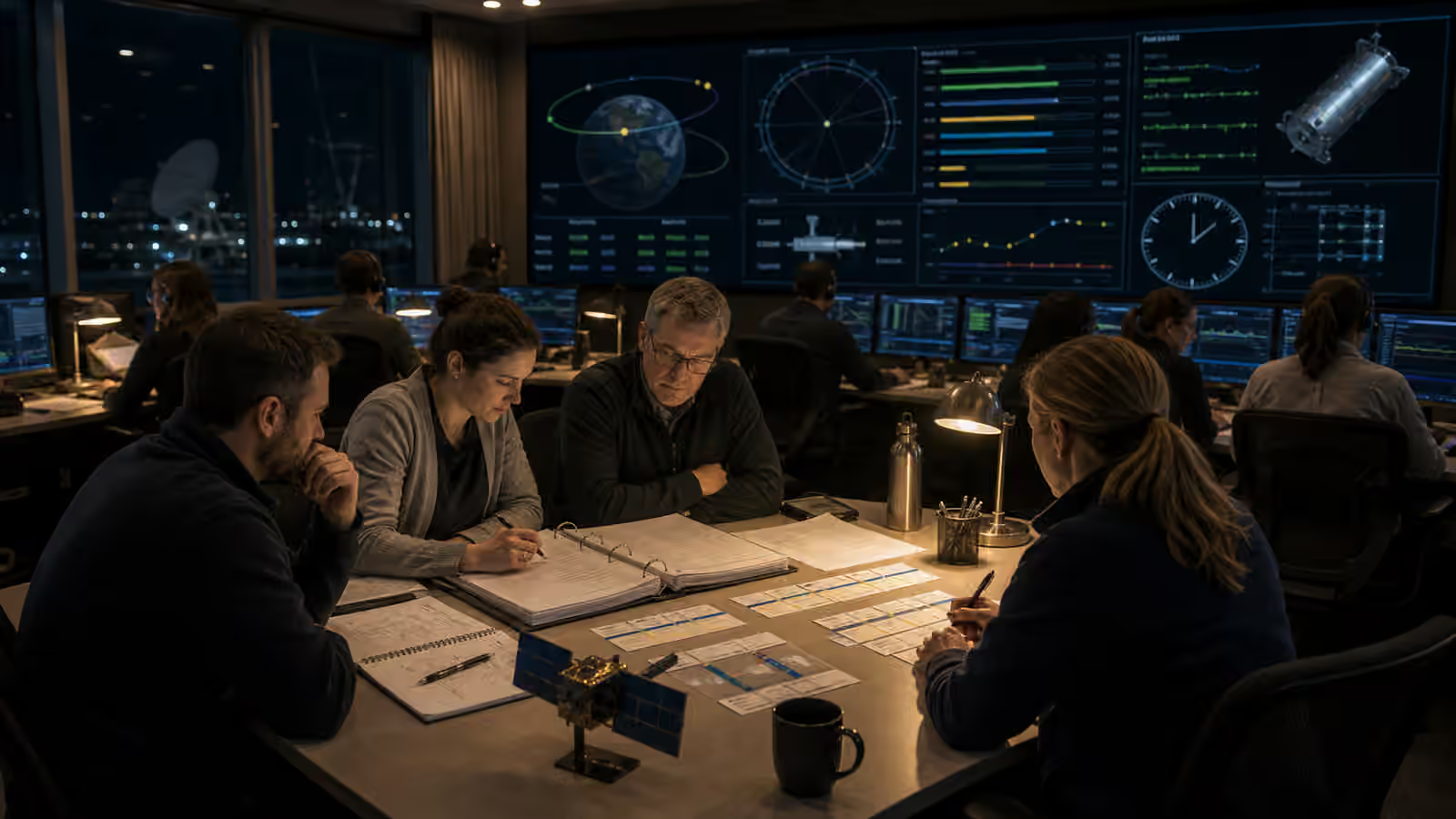
Operators therefore use multiple views, models, rehearsals, and cautious motion. A robotic sequence may pause often so teams can confirm alignment. The arm may move slowly because speed reduces time to understand a problem. Automation can help with routine paths, but consequential contact usually needs validated limits and clear authority.
Mission Simulation and Digital Twins is central to robotics because rehearsal finds geometry problems early. A simulated arm path can reveal that a camera view is blocked, a joint reaches a limit, a tool collides with a handrail, or a force case is less benign than expected. The rehearsal is not a substitute for reality. It is the way teams arrive with fewer unknowns.
Robotics and EVA Share a Boundary
Robots do not replace all outside work by people, and people should not be used for tasks a robot can handle with less risk. The boundary depends on the job. Spacesuits and EVA Operations explains how hard human outside work is: pressure garments, tethers, tools, fatigue, consumables, and limited time. Robotics can stage hardware, hold a workpiece, inspect a site, or reduce the amount of time a crew member spends outside.
The relationship can also be direct. A robotic arm may position a crew member, carry a payload to an EVA worksite, or hold a component while the crew fastens it. That creates a choreography among the arm operator, suited crew, vehicle attitude control, ground controllers, and procedure writers. The arm is not background equipment. It is a participant in the work.
For future stations and surface systems, that relationship may become more ordinary. Large structures, external payloads, logistics modules, radiators, antennas, and construction materials are awkward to handle by human strength alone, especially in suits. Robotics can make bigger infrastructure possible without turning every task into a risky EVA.
Autonomy Needs Boundaries
Space robotics often invites talk about autonomy. Autonomy is useful, especially when communication delay, workload, or repeated tasks make constant manual control inefficient. A lunar robot may need to avoid rocks during a traverse. A servicing arm may need automatic alignment assistance. A free-flying inspector may need to hold a safe relative position. But autonomy near valuable hardware has to be bounded.
Satellite Fault Protection and Autonomy gives the right mindset. The goal is not personality or improvisation. The goal is behavior that remains inside known limits when conditions change. A robotic system should know when to stop, when to back away, when to wait for confirmation, and how to preserve the target and itself if sensors disagree.
This is especially important for uncooperative objects. A tumbling satellite, loose appendage, leaking propellant concern, or unknown surface condition can turn contact into a hazard. The robot may be capable of reaching the object, but the mission must still decide if touching it is responsible.
Careful Hands Are Infrastructure
As space activity expands, robotics becomes less like a demonstration and more like maintenance culture. Stations need cargo handling. Servicing vehicles need tools. Lunar sites need excavation, inspection, cable deployment, dust management, and repair. Sample missions need arms that can collect without confusing the evidence. Assembly missions need manipulators that can repeat precise operations without creating debris.
The important lesson is that robotics is not a single technology added at the end. It affects interfaces, procedures, ground training, safety zones, camera placement, lighting, fault rules, and mission architecture. A spacecraft that might be serviced later should be designed so careful hands can reach it. A station that expects construction should be designed around how arms will move. A lunar base that expects maintenance should give robots surfaces, fixtures, and tools that match the work.
Space will always reward dramatic images, but useful infrastructure depends on patient contact. Something has to hold the panel, inspect the valve, guide the module, brush the seal, retrieve the sample, and stop when the view is not good enough. Robotic manipulators are the careful hands that make that kind of work repeatable.