Space logistics begins with a blunt fact: the thing that is missing in orbit or on the Moon cannot be fetched from a nearby warehouse. Every tool, spare, propellant load, sensor, seal, cable, experiment, food package, repair kit, data recorder, and disposal container competes for mass, volume, schedule, interface control, and attention. Logistics is not the dull aftermath of mission design. It is mission design once the promises have to fit inside real transportation.
Payload Integration and Rideshare Launches explains how spacecraft and payloads fit into launch opportunities. Logistics stretches that idea across time. It asks what must arrive before something else can work, what can wait, what can be shared, what has to be duplicated for safety, what can be repaired, and what becomes useless if it arrives late.
The Manifest Is a Story About Dependencies
A cargo manifest can look like an inventory, but it is really a dependency map. A replacement pump is useful only if the crew or robot has the tools, access, procedure, and time to install it. A science instrument is useful only if power, thermal support, data handling, mounting hardware, calibration references, and operations time exist. A pallet of supplies may be urgent because a later mission depends on it being unpacked, tested, and staged before the next vehicle arrives.
Good cargo planning therefore begins with use, not with objects. Planners ask what the mission is trying to do during a specific period and what material enables that work. A lunar surface campaign may need landing-pad hardware before frequent landings. A habitat may need spare filters before crew duration increases. An orbital servicing mission may need adapters, tools, and capture fixtures that match a target spacecraft. The manifest is the physical expression of those decisions.
Space Mission Architecture and Tradeoffs belongs in this conversation because logistics exposes architecture that was only implied. If a plan depends on a spare part but has no mass allocation for it, the architecture is incomplete. If a lunar worksite assumes maintenance but no cargo path for replacement parts, the system is borrowing reliability from hope.
Packing Constraints Shape Operations
Launch cargo has to survive vibration, acceleration, pressure changes, handling, cleanliness rules, safety reviews, and the geometry of fairings, capsules, dispensers, lockers, or landers. Fragile hardware may need protective packaging. Hazardous items may need special approval. Batteries, pressure vessels, fluids, biological samples, sharp tools, and dusty hardware all bring constraints. Packing is engineering, not storage.
The order of packing can become the order of work. If an item is buried behind later-use equipment, the receiving crew or robot may waste precious time. If a checkout cable is packed separately from the device it tests, a commissioning sequence may stall. If labels, barcodes, or digital records are poor, inventory confidence can decay quickly after arrival. Logistics has to account for tired people, constrained robotics, weak lighting, gloves, dust, and communication delay.
Space Habitats and Life Support shows why this can become critical. Life-support consumables, filters, microbial controls, emergency equipment, and maintenance spares cannot be treated as ordinary cargo. Their placement, traceability, shelf life, and access paths affect safety as much as mass does.
Cadence Creates or Breaks Resilience
A single launch can deliver a mission. A steady cadence can create infrastructure. The difference matters. If cargo flights are rare, each one must carry more redundancy and absorb more schedule risk. If flights are frequent, the system may tolerate smaller batches, faster learning, and rolling replenishment. But frequent launches also demand standardized interfaces, repeatable processing, reliable ground operations, and clear priorities when a flight slips.
Reusable Rockets and Launch Economics explains why launch cadence has become such a central infrastructure topic. Lower launch friction can make logistics more flexible, but it does not remove planning. A delayed cargo flight can still strand an experiment, shorten a campaign, or force operators to consume reserves. The question is not only how much mass can be launched, but whether the transportation rhythm matches the work rhythm.
For orbital systems, cadence also interacts with docking ports, traffic coordination, storage volume, crew time, and disposal. A station may receive cargo, unload it, repack waste, move spares, install upgrades, and prepare for the next vehicle. Rendezvous, Proximity Operations, and Docking is part of the logistics story because every visiting vehicle is also a traffic event.
Spares Reveal What the System Fears
The spare parts list is a quiet risk register. It says which failures the mission expects, which ones it can tolerate, which ones it plans to repair, and which ones it has accepted. Too few spares can make a system brittle. Too many can consume mass and volume that would have supported the mission. The useful middle requires honest reliability data, maintenance concepts, and failure consequences.
Spares are not only hardware. A mission may need spare procedures, spare software images, spare keys, spare sensors for calibration, spare batteries for tools, spare filters, spare connectors, and spare ways to route data. Mission Assurance and Spaceflight Reviews is relevant because review culture should ask whether the logistics plan matches the risk story. A part identified as mission-critical but absent from the spares plan deserves attention.
Standardization helps, but it has limits. Common fasteners, modular interfaces, shared tools, and repeatable cargo containers can reduce complexity. At the same time, oversimplified standardization can hide the unique needs of payloads, habitats, propulsion systems, and surface equipment. Logistics benefits from common patterns only when the hardware actually agrees with them.
Lunar Logistics Adds Terrain and Dust
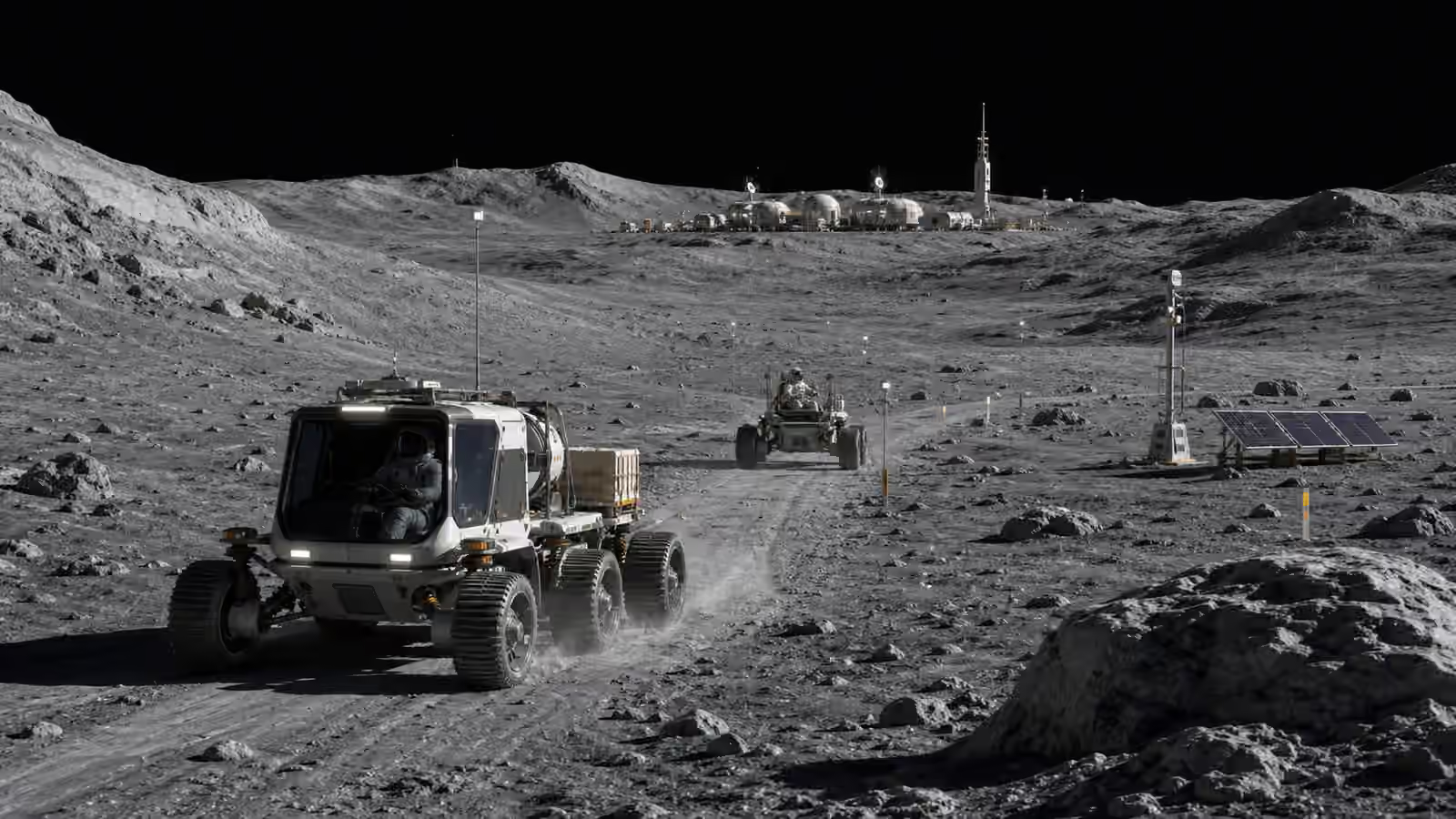
On the lunar surface, delivery is only the first step. Cargo has to be unloaded, moved across terrain, protected from dust, connected to power and communications, stored through temperature swings, and found again later. A lander that touches down safely may still place equipment in a location that is awkward for rovers, crew, cables, or future construction. The surface turns logistics into field operations.
Lunar Infrastructure covers landing pads, power, roads, communications, and dust control. Lunar Resource Prospecting and ISRU adds another layer: if local resources become useful, logistics will include both imported cargo and locally produced material. That mixed supply chain will need quality standards, storage, transfer interfaces, and fallback plans when local production is slower than expected.
Timing also matters. Some cargo may need to arrive before a crew. Some may need to wait because it cannot survive long unpowered exposure. Some may depend on local navigation aids or surface communications that are not yet installed. The sequence of deliveries can be as important as the total mass delivered.
Logistics Is How Infrastructure Becomes Real
Infrastructure is often drawn as finished systems: a station, a depot, a lunar base, a servicing vehicle, a communications relay. Logistics reveals the unfinished reality behind those drawings. It asks how the first version arrives, how it is assembled, what breaks, what gets replaced, what is consumed, what is thrown away, and how the next version improves.
Orbital Transfer Vehicles and Space Tugs may change where cargo can go after launch. In-Space Servicing and Refueling may change what has to be replaced versus repaired. But neither removes the need for cargo discipline. Moving material through space is still a chain of interfaces, records, constraints, and decisions.
A mission with strong logistics feels less glamorous than a mission with an inspiring rendering, but it is more likely to become something people can use repeatedly. Space infrastructure matures when the right part, tool, fluid, dataset, spare, or container is where it needs to be before the absence becomes a crisis.