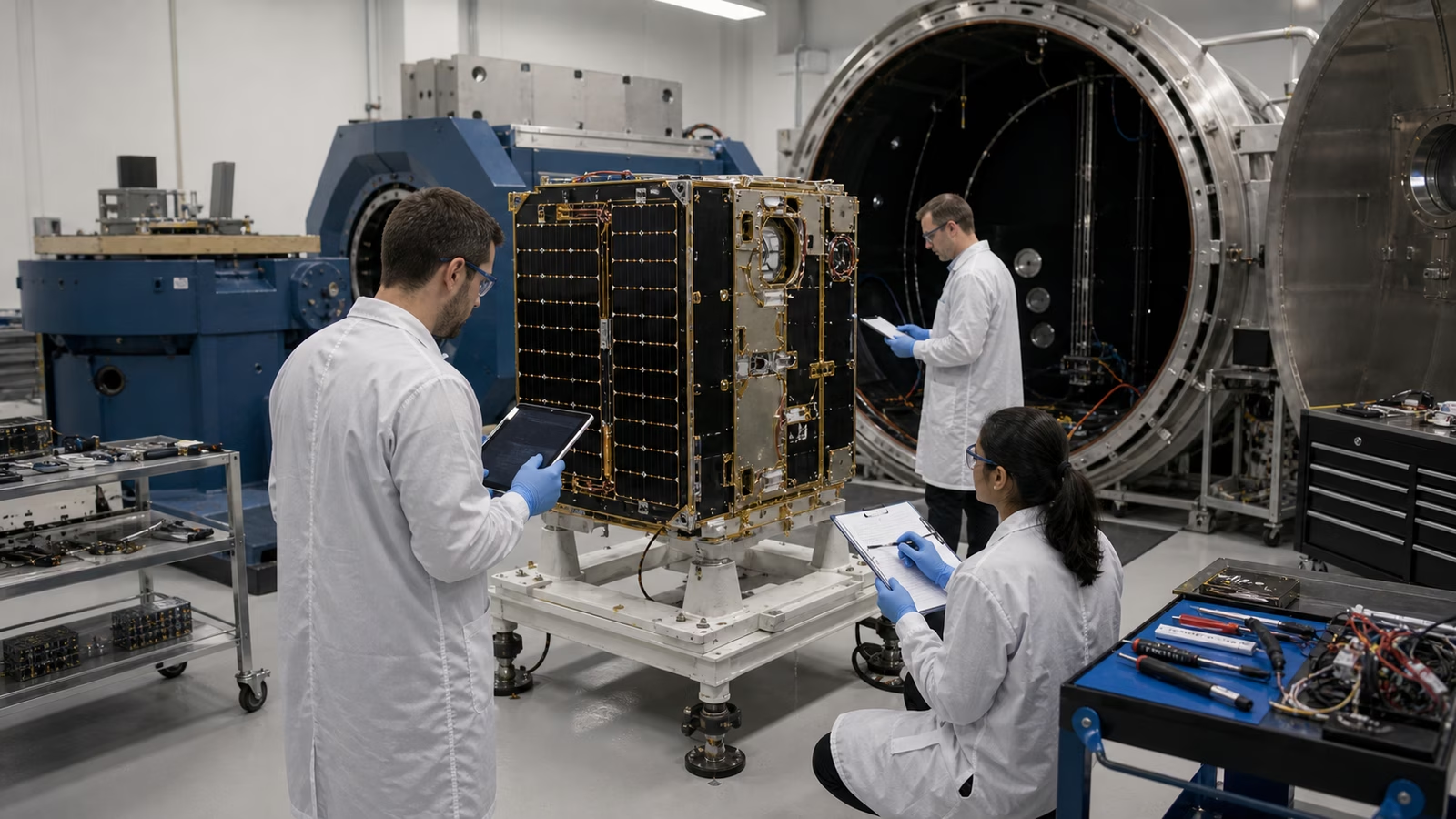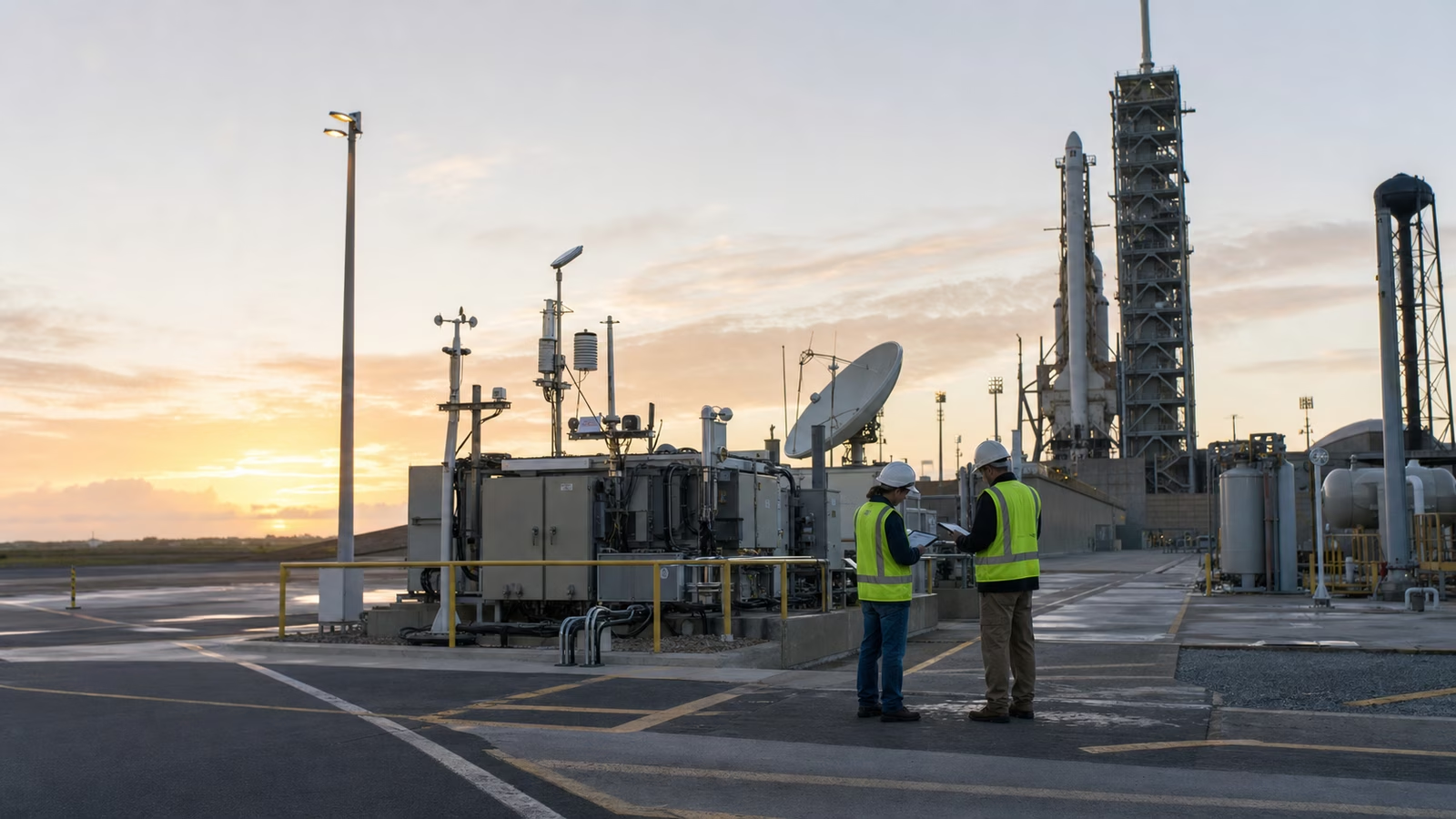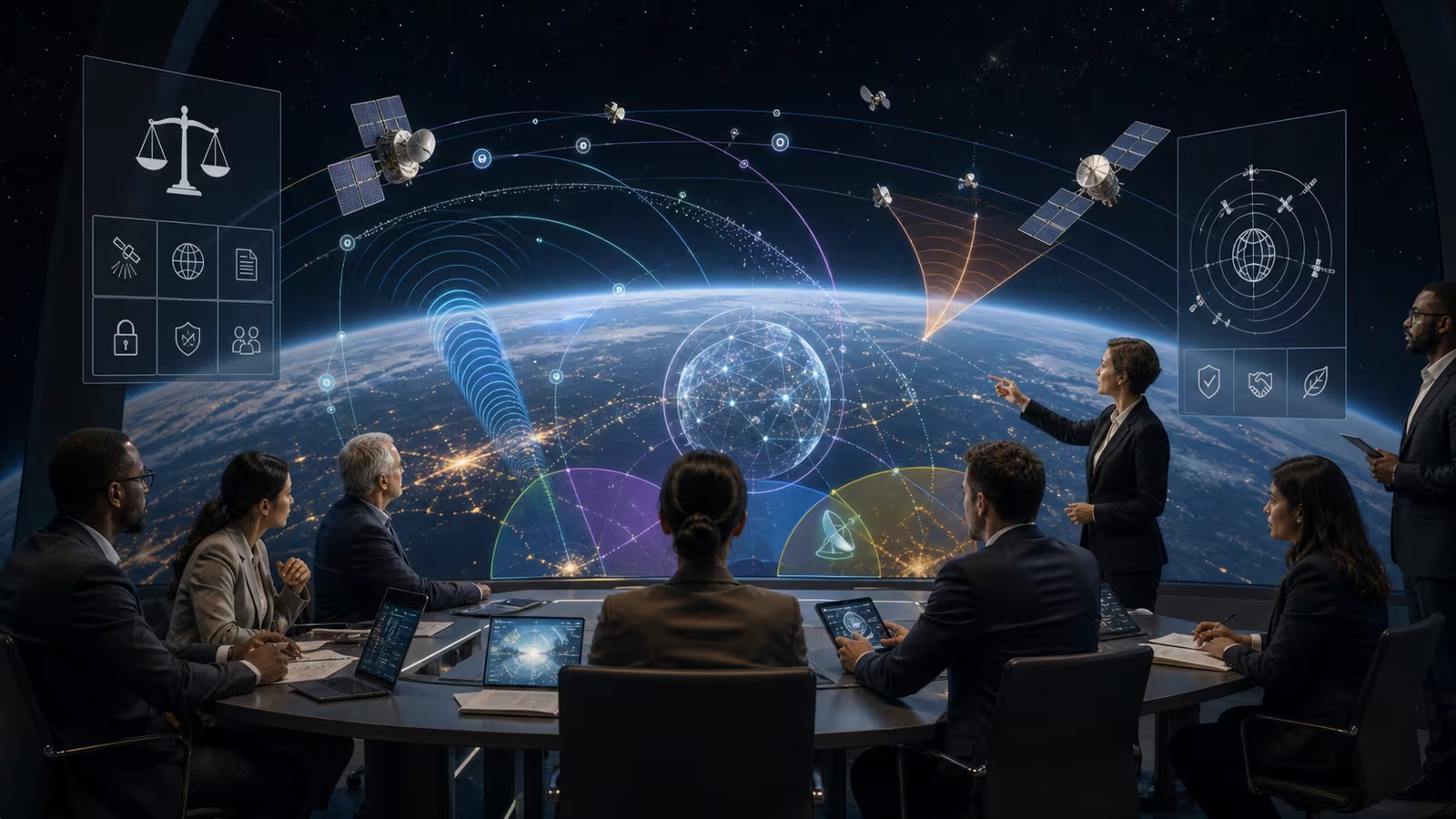
Space law sounds like something for diplomats until a satellite needs a radio frequency, a rocket needs a license, a constellation needs collision rules, a company wants to use lunar resources, or debris from one object threatens another. Then law becomes infrastructure. It is the set of rules that lets many actors use a shared environment without turning it into a mess.
The basic tension is simple. Space is global, but companies and agencies are licensed by countries. A satellite launched by one country may pass over every other country. A radio signal can interfere across borders. Debris created by one operator can threaten another operator’s spacecraft. Lunar activity may involve national pride, commercial claims, science, and military concern at the same time. Space is not lawless. It is a shared environment where the rules are still catching up to the pace of activity.
The old treaties and the new economy
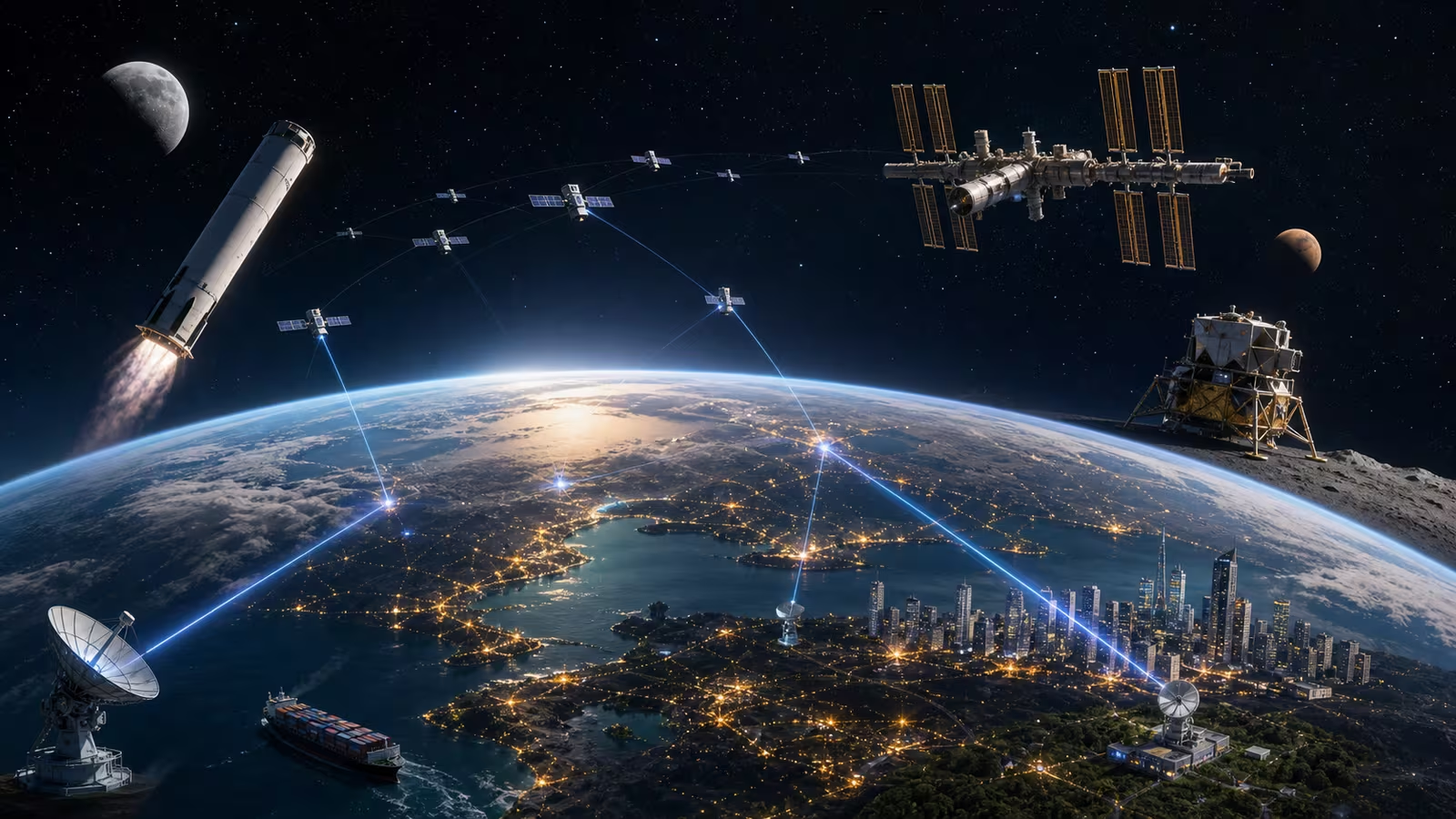
The foundation of space law comes from international treaties built during the Cold War. They establish ideas such as peaceful use, national responsibility for space activities, liability for damage, registration of space objects, and the principle that outer space is not subject to national appropriation. These ideas still matter, but the environment has changed. Space is no longer only two superpowers and a few national missions. It includes commercial constellations, private launch providers, lunar startups, remote-sensing companies, tourism, and more countries with space ambitions.
That does not mean the treaties are obsolete. It means they need interpretation, national regulation, norms, and practical coordination. The old rules are like a constitution. The modern economy needs traffic codes, building permits, insurance requirements, technical standards, and enforcement habits.
Spectrum is invisible real estate
Satellites communicate with radio frequencies, and those frequencies must be coordinated. Spectrum is invisible, but it behaves like scarce real estate. If two systems shout over each other, both can fail. Satellite internet, direct-to-phone service, Earth observation downlinks, navigation, defense systems, and scientific missions all need clean communication paths.
This is why telecom regulators are part of the space economy. A satellite service may be technically brilliant but commercially useless if it cannot legally use spectrum. Direct-to-phone services are especially complex because they may use frequencies associated with terrestrial mobile networks. Regulators must avoid harmful interference while allowing useful new services.
Licensing launch and reentry
Rockets involve risk to people, property, aircraft, ships, launch-site communities, and the environment. Launch licensing reviews vehicle safety, flight paths, debris risk, insurance, and operations. Reentry licensing matters because spacecraft and rocket stages coming back to Earth can pose hazards if not controlled.
As launch cadence increases, regulators face a difficult balance. Too much delay can slow useful innovation. Too little oversight can create accidents and public backlash. Good regulation should be predictable, technically competent, and honest about risk.
Debris responsibility
Space debris is one of the clearest governance tests. If operators leave dead satellites in busy orbits, everyone faces higher risk. Rules can require disposal plans, passivation of spent stages, collision-avoidance capability, tracking data, and shorter deorbit timelines. But rules differ by country, and enforcement can be hard.
The debris problem resembles pollution. One actor may benefit from cutting corners, while the cost is shared by others. Governance tries to align private incentives with public safety. Insurance, licensing, customer pressure, and international norms can all help.
Lunar resources and the commons
The Moon raises hard questions. The Outer Space Treaty says countries cannot claim sovereignty over the Moon, but modern policy discussions often allow the extraction and use of space resources under national law. How that works in practice remains contested. If a company extracts water ice, what rights does it have? How are scientifically important sites protected? How are landing zones coordinated? What happens if two actors want the same permanently shadowed crater region?
These questions are not theoretical if lunar infrastructure grows. The best outcome is not a race with no rules. It is a framework that allows useful activity while preventing conflict, preserving science, and respecting the shared character of space.
Security and dual use
Many space technologies are dual use. A satellite that images crops can also image military sites. A servicing spacecraft that repairs satellites could theoretically interfere with them. A debris removal tool could look like a weapon. Communications networks can serve civilians and militaries. This dual-use nature makes trust and transparency difficult.
Space governance therefore includes national security, norms of behavior, crisis communication, and arms-control concerns. The more everyday infrastructure depends on space, the more dangerous misunderstandings become.
Why this matters
Space law matters because space is becoming useful enough to fight over and fragile enough to damage. Rules are not the opposite of exploration. They are what let exploration become infrastructure. Without coordination, satellites interfere, debris grows, launch risks rise, and lunar activity becomes conflict-prone.
For a normal reader, the useful questions are practical. Who licensed this mission? What spectrum does it use? What happens at end of life? Who is liable if something goes wrong? How does it avoid collisions? What international norms apply? Space may feel distant, but governance determines whether the services overhead remain reliable, fair, and safe. The future space economy needs rockets and satellites, but it also needs rules that work.
Good rules do not remove adventure from space. They make useful adventure repeatable. Ports, airports, and radio networks all became more valuable when people could trust schedules, standards, and shared procedures. Orbit is moving into that same phase. The more ordinary space services become, the more governance matters.