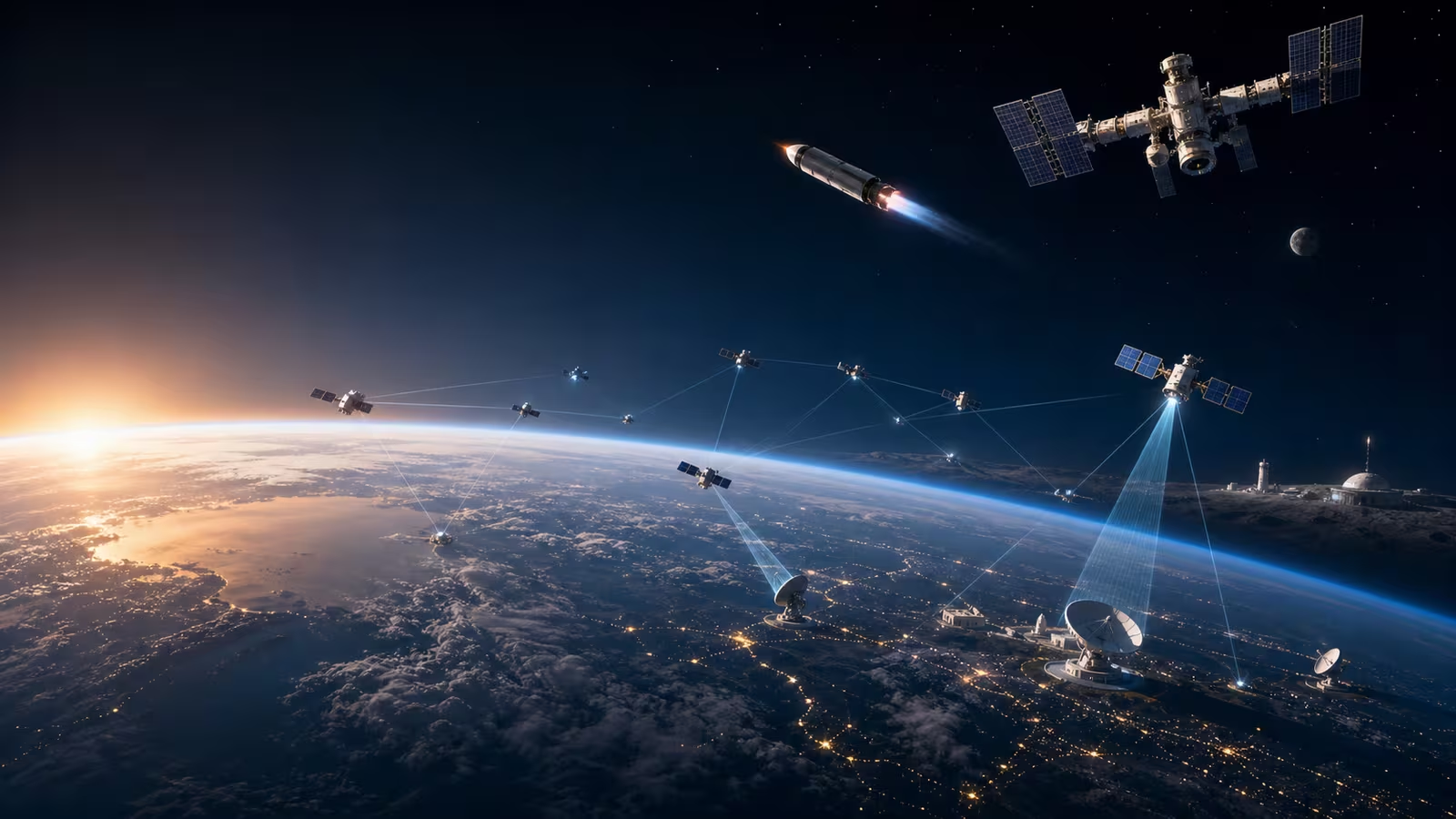
Space insurance exists because spacecraft are expensive, launches are unforgiving, and uncertainty does not disappear just because a mission has passed a review. A satellite can be carefully built and still fail during ascent, deployment, early operations, or years later in orbit. A launch vehicle can have a strong record and still carry risk. A ground system can be well run and still suffer an interruption. Insurance does not make these hazards harmless. It changes who carries some of the financial consequence when they happen.
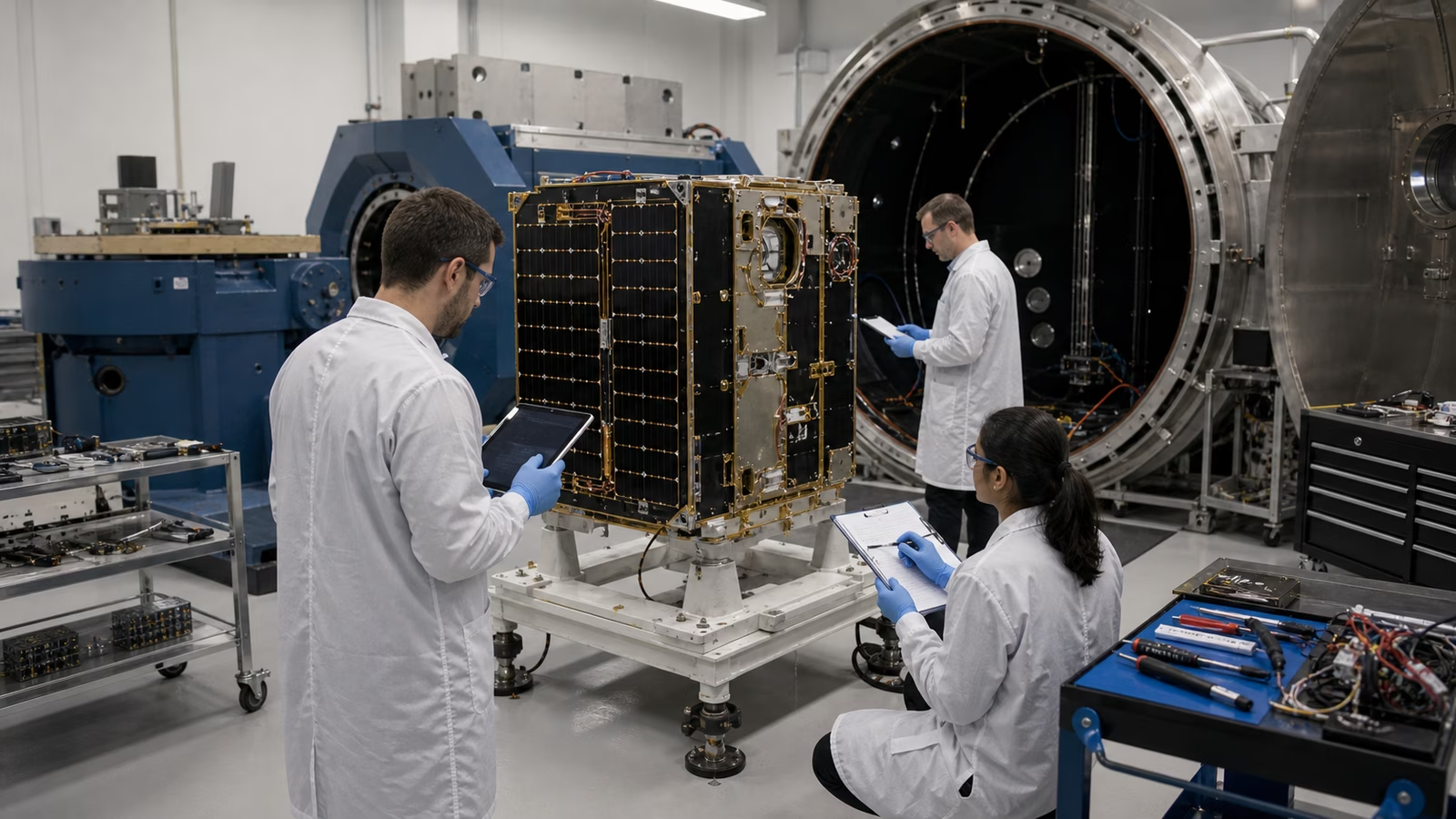
This topic sits between engineering and finance, but it is not separate from the hardware. Underwriters care about evidence: design maturity, manufacturing discipline, launch vehicle history, mission profile, redundancy, testing, operations plans, and the consequences of failure. Satellite Manufacturing and Testing may look like clean-room work, yet it also becomes part of the risk story that insurers, investors, lenders, customers, and operators use to judge a mission.
Insurance Begins With a Mission’s Shape
There is no generic space risk. A small experimental satellite in low Earth orbit, a geostationary communications satellite, a rideshare Earth observation payload, a lunar relay, a crewed station module, and a servicing vehicle all present different questions. What is being launched? How mature is the design? Which launch vehicle carries it? What orbit is needed? How many deployments must work? Can the spacecraft recover from partial failure? What revenue, public service, or scientific value depends on it?
The mission phase matters. Prelaunch coverage is different from launch coverage. Launch and early orbit risk is different from years of in-orbit operation. Some missions may insure only a portion of the value or only certain phases. Others may accept more self-insured risk because the spacecraft is cheaper, the owner has many satellites, or the business model expects some losses. A constellation operator thinks differently from a company that depends on one large satellite reaching service.
That is why Satellite Constellation Design changes the risk conversation. A fleet can absorb some individual satellite failures if replenishment, coverage, capacity, and operations are planned for churn. A single high-value satellite may have far less tolerance for a launch failure or deployment problem. Insurance pricing follows not only the object but the system around it.
Underwriting Is an Engineering Interview
Underwriting can sound like a spreadsheet exercise, but space underwriting is full of technical questions. The insurer wants to understand how the mission could fail and what evidence suggests it will not. Has the bus flown before? Is the payload new? Were similar deployments tested? How much redundancy exists? What environmental tests were completed? Are there waivers or known anomalies? What is the launch adapter? How is first contact planned? What happens if a solar array deploys slowly or a propulsion system underperforms?
The answers are not always tidy. Space missions often combine proven parts with new interfaces. A component may have heritage, but not in this exact thermal environment. A launch vehicle may be reliable, but not with this payload stack. A satellite may use a familiar bus, but carry a new instrument, software load, or propulsion system. Underwriting is the discipline of finding where confidence is earned and where it is assumed.
Payload Integration and Rideshare Launches is especially relevant because launch is not just a ride. Adapters, dispensers, fairing constraints, separation timing, vibration environments, and schedule pressure all shape risk. A small satellite that is safe on its own still has to survive the shared choreography of launch and deployment.
Launch Risk Has a Long Tail
Launch failure is the dramatic risk because it is visible and sudden. The rocket fails, the payload is lost, and the cause may be obvious or painfully slow to determine. But launch risk also includes partial outcomes. The satellite may reach the wrong orbit. A deployment may be delayed. The upper stage may underperform. The spacecraft may separate with an unexpected attitude. A battery may be lower than planned at first contact. The mission may not be dead, but its margins may have changed before operations truly begin.
Upper Stages and Orbit Insertion explains why the final rocket handoff shapes a satellite’s first hours. From an insurance perspective, those hours matter because they turn launch success into mission success. A policy may define milestones carefully because a spacecraft that separates successfully but cannot establish communications is a different case from a spacecraft that reaches orbit and later suffers an unrelated anomaly.
This is one reason documentation and telemetry are crucial. When something goes wrong, the parties need to understand what happened, when it happened, and whether the loss fits the coverage. The claim is not only a financial document. It becomes a technical reconstruction of the mission’s failure path.
In-Orbit Risk Is Quieter but Persistent
Once a spacecraft reaches service, the risk changes rather than disappears. Radiation can upset electronics. Thermal cycles can age components. Propellant margins can shrink. Batteries degrade. Reaction wheels wear. Solar arrays lose output. Software bugs may surface under rare conditions. Ground stations may miss passes. Space weather can disturb links, drag, and navigation. Debris may force maneuvers or threaten the spacecraft directly.
The in-orbit risk story connects to many guidebooks on this shelf. Space Weather describes environmental stress from the Sun. Space Debris and Orbital Traffic explains why the orbital neighborhood is part of mission risk. Satellite Cybersecurity and Resilience shows that trusted command paths and data integrity are not optional extras. A spacecraft may be insured as an asset, but that asset lives inside a web of operational dependencies.
For some satellites, in-orbit insurance can be harder to judge than launch risk because degradation and partial failures are subtle. A communications satellite may lose some capacity. An Earth observation satellite may have a sensor issue that reduces product quality. A propulsion problem may shorten the useful life. These cases require careful definitions of loss, impairment, and remaining value. Engineering facts and policy language meet in uncomfortable detail.
Risk Transfer Does Not Replace Risk Reduction
Insurance can create a temptation to think of risk as something moved off the mission. That is false. Risk transfer is not risk elimination. A failed satellite may produce an insurance claim, but it can also leave customers without service, damage trust, delay scientific work, waste launch capacity, create debris concerns, and consume scarce engineering attention. Money can cover some losses. It cannot rewind a launch window or restore a damaged reputation.
The best insurance conversations therefore reward real risk reduction. Robust testing, clean configuration control, fault protection, responsible end-of-life planning, secure ground systems, clear operations procedures, and credible recovery modes all matter. They matter to the mission first, and to the insurer because they make the mission more understandable.
Satellite Fault Protection and Autonomy is a good example. A spacecraft that can enter a stable safe mode, preserve power, communicate, and wait for instructions may turn an anomaly into a recoverable event. That capability has economic value because it changes the shape of loss. Resilience is not only a noble engineering word. It can decide whether a problem becomes a claim, a delay, or a routine entry in the operations log.
New Markets Change the Questions
The expansion of small satellites, rideshare launches, mega-constellations, lunar missions, servicing vehicles, and commercial stations changes how risk is grouped. A single spacecraft may be less expensive than older satellites, but a fleet may have complex aggregate exposure. A servicing mission may create value by extending another asset’s life, while adding rendezvous and proximity operations risk. A lunar payload may face launch risk, transfer risk, landing risk, surface environment risk, and communications risk in a sequence where one phase depends on the previous one.
In-Space Servicing and Refueling and Rendezvous, Proximity Operations, and Docking show why the next generation of space infrastructure asks different insurance questions. Approaching another spacecraft is useful, but it introduces consent, navigation, liability, and damage scenarios. A refueling service could reduce life-extension risk for one satellite while creating a new operational risk around the servicing vehicle.
Commercial stations and habitats add another layer because hardware, cargo, crew time, visiting vehicles, experiments, and operations may involve several organizations. The risk is no longer only whether one satellite works. It is how many parties share responsibility for a place in orbit.
Claims Teach the Market
When space losses happen, they become part of the market’s memory. Engineers study failure causes to improve designs and operations. Insurers study them to adjust pricing, exclusions, questions, and appetite for similar missions. Operators study them to decide what risk to retain. Investors and customers study them to judge reliability claims. A failure can therefore influence missions that have not yet left the drawing board.
This learning is useful only when the facts are clear. Vague claims, weak telemetry, incomplete records, and ambiguous responsibility make the whole market less confident. Strong post-failure analysis can be painful, but it turns a loss into knowledge. In that sense, insurance is connected to the same culture of evidence that space engineering already needs.
Space insurance is not the center of the mission. The center is still the spacecraft, launch path, service, science, or infrastructure purpose. But insurance reveals something important about the space economy: orbit is not only a technical environment. It is a place where risk has to be described, priced, shared, reduced, and remembered. The missions that do that honestly are easier to trust before launch and easier to learn from after trouble.