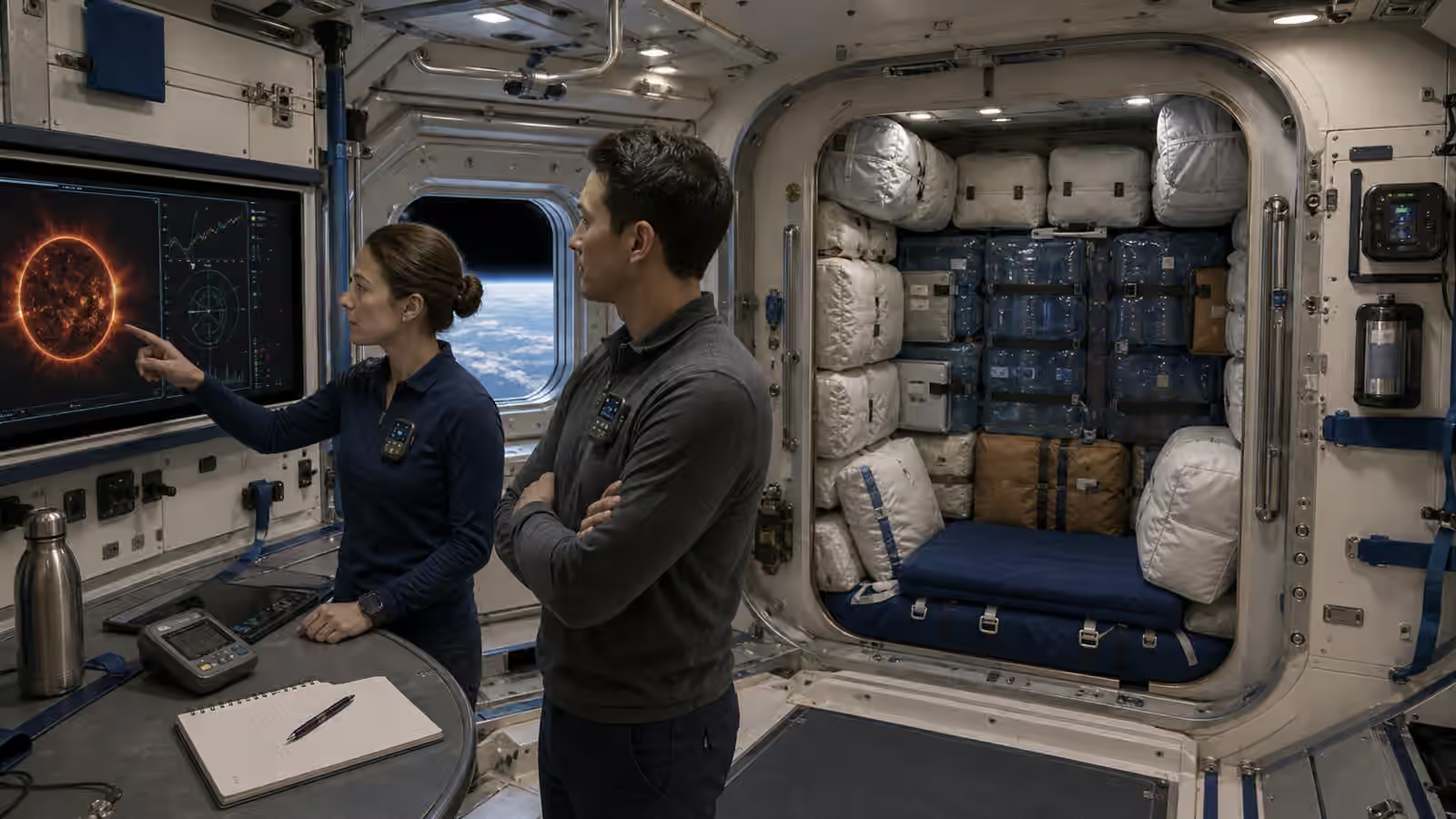
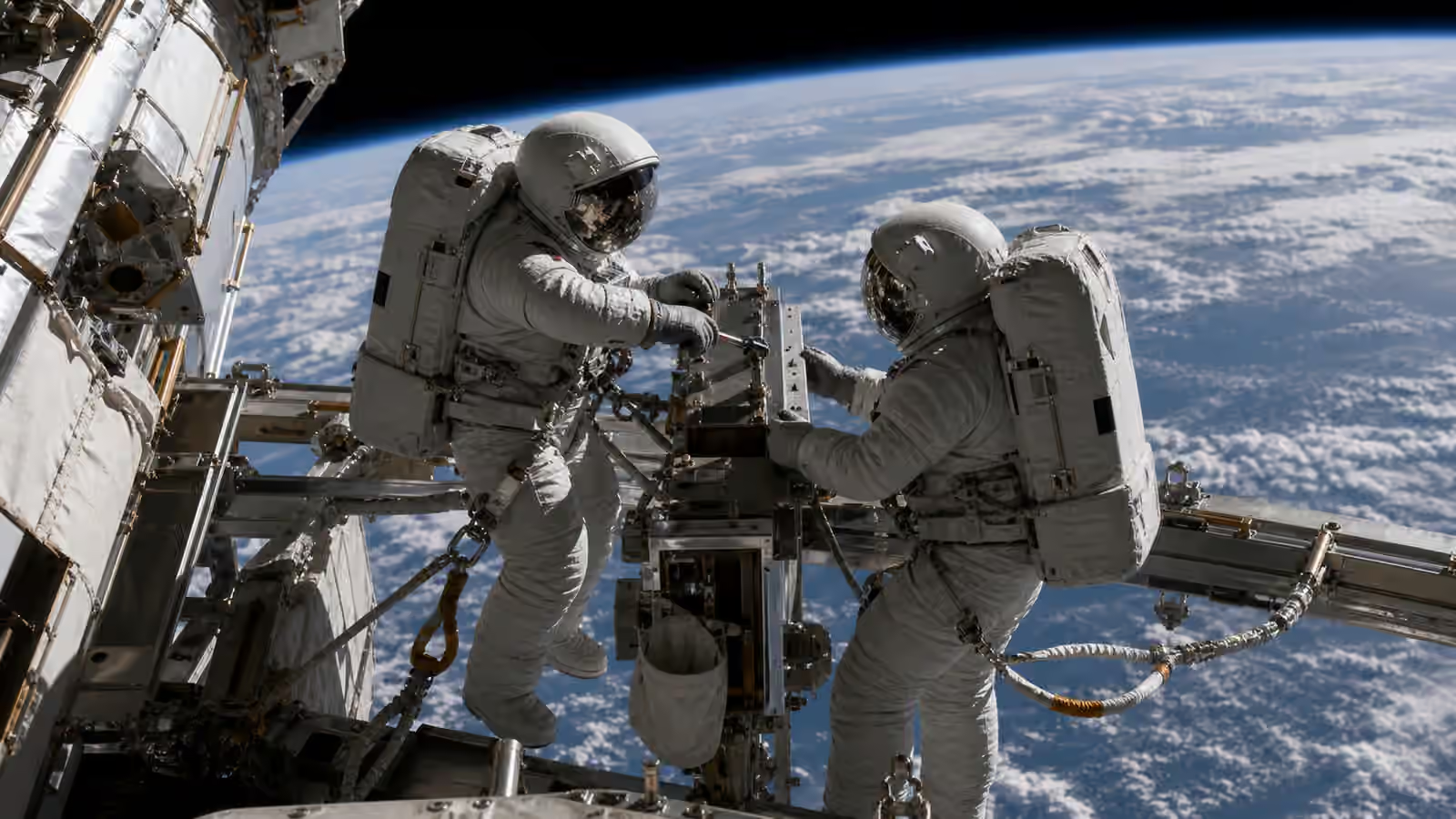
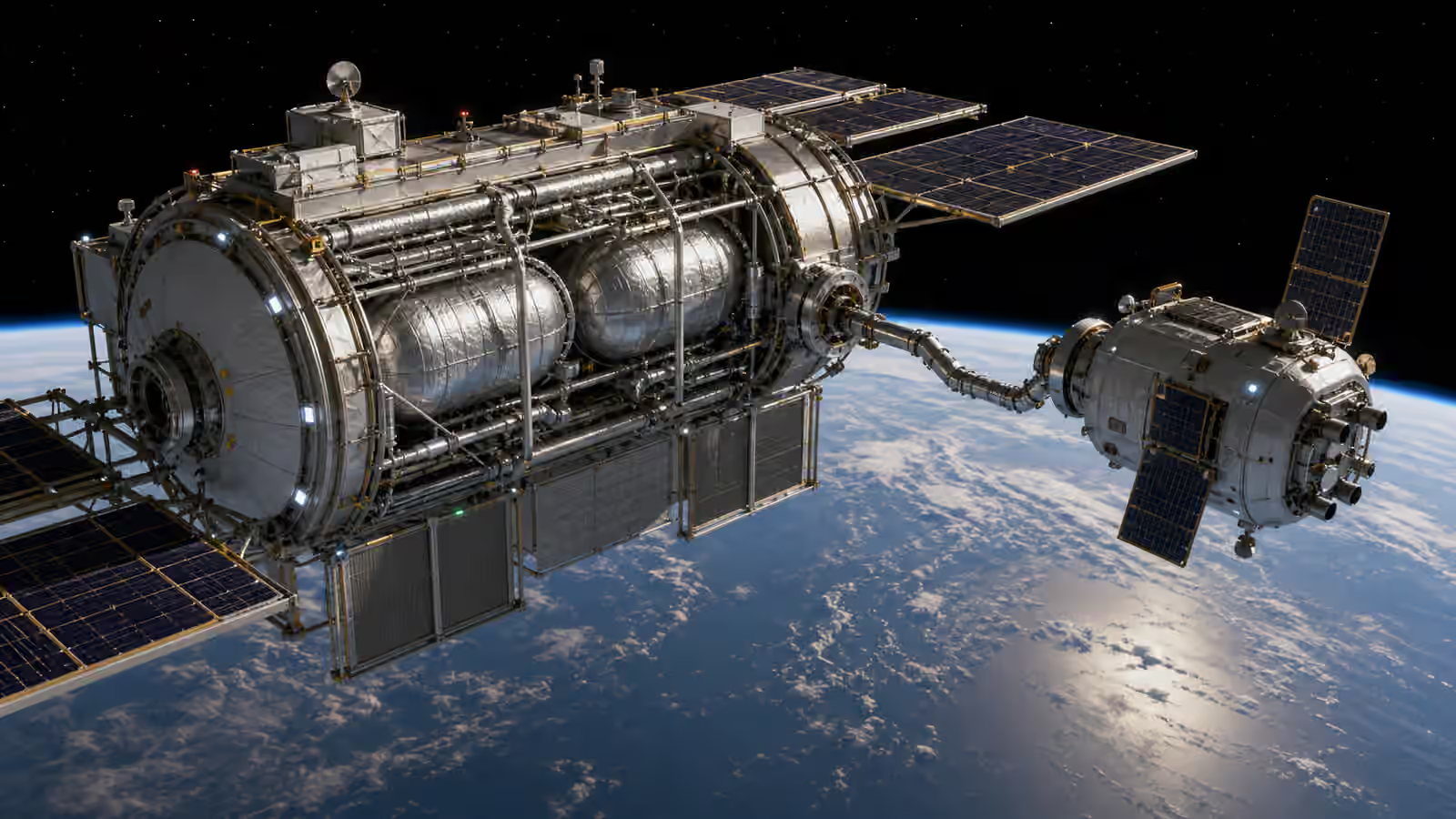
A space habitat is not only a room in orbit. It is a small agreement with physics, written in air pressure, temperature, humidity, water, power, alarms, filters, procedures, and crew habits. The walls may get the attention because they separate people from vacuum, but the more interesting work is happening inside the walls and behind panels. Every breath, cup of water, warm meal, sleeping period, repair task, and science run depends on machinery that turns a sealed volume into a place where people can think clearly and keep working.
Space Stations and Orbital Manufacturing explains why orbital workplaces may matter. A workplace with people needs a different kind of infrastructure than a free-flying satellite. A satellite can run cold, power-cycle a subsystem, wait for the next ground pass, or survive in a safe mode that would be intolerable for a crew. A habitat has to support bodies and judgment at the same time. The crew is part of the system, but the crew is also what the system must protect.
A Habitat Begins With Air
Breathable air sounds simple until it has to be maintained inside a sealed machine. Oxygen must be supplied or generated. Carbon dioxide must be removed before it affects health and decision-making. Trace contaminants from plastics, electronics, cleaning materials, experiments, and people must be filtered. Humidity has to be controlled because too little dries eyes and throats, while too much can encourage condensation in places where water should not collect. Fans matter because warm air and exhaled carbon dioxide do not drift away in microgravity the way they do in a room on Earth.
Air revitalization is therefore not one device. It is a chain of circulation, sensing, filtering, chemical processing, and operations discipline. The crew notices air as comfort, but engineers see it as a moving inventory. How much oxygen is available? Where is the carbon dioxide concentration highest? Which filters are nearing replacement? Does a rack run hotter than expected? Is a sensor drifting? Are alarms set for a real risk or for a nuisance condition that will train people to ignore them?
This is where life support resembles Satellite Thermal Control more than it first appears. Heat, airflow, moisture, and equipment placement are connected. A cold surface can collect condensation. A warm electronics bay can change cabin comfort. A failed fan can turn a local corner into a stale pocket. The habitat is a climate system wrapped around people.
Water Is a Logistics Problem and a Trust Problem
Water is heavy, and moving it from Earth is expensive in mass, volume, and launch planning. That makes recovery and reuse central to long-duration habitats. Water can come from stored supplies, fuel-cell byproducts, humidity condensate, hygiene systems, urine processing, and other recovered streams. Each source has a different contamination profile and a different level of psychological acceptance. The technical question is whether the system can purify water. The human question is whether the crew trusts the result enough to drink it without hesitation.
Water recovery hardware has to be reliable, maintainable, and honest about its own limits. Filters clog. seals age. pumps wear. sensors need calibration. microbial control matters. A beautiful recovery rate on a chart is less useful if the hardware demands constant attention or produces water that operators cannot verify. The real goal is not heroic recycling. It is a stable water budget that lets the habitat operate without treating every small leak or failed valve as a mission-threatening surprise.
The same discipline will matter more as habitats move beyond low Earth orbit. Lunar Infrastructure shows how surface operations create practical supply problems. A lunar outpost cannot assume quick replacement deliveries or easy evacuation. Water may be cargo, local resource, shielding material, coolant, hygiene supply, and life-support feedstock at once. A habitat that wastes water is not merely inefficient. It narrows the mission’s choices.
Food, Waste, and the Unromantic Middle
Food storage, preparation, and waste handling rarely carry the romance of docking ports or observation windows, but they shape the daily life of a crew. Food has to be stable, safe, nutritionally useful, and tolerable over time. The packaging has to survive launch and storage. Crumbs and free-floating liquids are operational hazards. Odors matter in a closed environment. So does variety, because morale is not separate from performance.
Waste handling is even less glamorous and even more important. Human waste, food packaging, wipes, filters, failed parts, experiment leftovers, and disposable clothing all become inventory. Some waste can be compacted, treated, stored for return, or loaded into a departing vehicle. Some may eventually be processed for useful resources. None of it can be ignored. In a habitat, there is no outside in the ordinary sense. Everything remains part of the system until the mission deliberately moves it somewhere else.
This changes the meaning of cleanliness. A habitat needs housekeeping not because it should look tidy in photographs, but because floating debris, hidden moisture, microbial growth, blocked vents, and misplaced tools can become safety issues. The crew’s routine work is part of the life-support system. A filter replacement, surface wipe, air intake inspection, or stowage audit may look mundane. In a sealed environment, mundane work is how margins are preserved.
Fire Safety Is Different When the Exit Is Space
Fire is one of the clearest examples of why habitats cannot borrow safety thinking directly from buildings on Earth. A building can evacuate people outside. A spacecraft cannot. Smoke movement is different in microgravity. Fire suppression must protect the crew without ruining essential equipment or filling the cabin with another hazard. Materials have to be chosen carefully. Electrical faults, overheating hardware, oxygen concentration, airflow, and stowed items all become part of the safety picture.
The best fire response is prevention supported by early detection and rehearsed action. That means controlling ignition sources, limiting flammable materials, monitoring equipment, keeping air paths clear, training crew responses, and designing compartments so a problem can be isolated. A habitat’s fire plan is not a poster on a wall. It is a design philosophy that touches wiring, racks, procedures, sensors, crew training, and emergency equipment.
Satellite Fault Protection and Autonomy describes how uncrewed spacecraft protect themselves when something goes wrong. A crewed habitat needs similar bounded responses, but with people in the loop and people at risk. The system must make trouble visible early enough for judgment to matter.
Crew Time Is a Scarce Resource
Life-support equipment can fail in two ways. It can fail technically, and it can fail by consuming too much crew time. A habitat that needs constant repair may still be alive, but it is not an efficient workplace. Every hour spent chasing leaks, swapping filters, cleaning sensors, recovering from nuisance alarms, or coaxing a fragile processor is an hour not spent on science, manufacturing, inspection, exercise, training, or rest.
Maintainability is therefore a design requirement. Can a crew member reach the part that fails most often? Are tools available? Can a filter be changed without releasing debris? Are connectors keyed clearly enough under fatigue? Does the procedure match the hardware that actually flew? Are spares packaged and tracked so they can be found quickly? These questions connect habitat design to Satellite Manufacturing and Testing , where configuration records and ground tests become the basis for later confidence.
Simulation matters here too. Crews and ground teams rehearse failures because a real emergency is a bad time to discover that a panel is hard to open, a procedure is ambiguous, or two alarms sound similar. A good habitat is not only designed to work. It is designed to be understood under stress.
Plants Are Useful, but They Are Not Magic
Plant growth in space habitats is often described as a future solution for food and air. It may become part of that solution, but it is not a shortcut around engineering. Plants need light, water, nutrients, temperature control, airflow, root support, microbial management, harvesting time, and power. They can contribute food variety, crew morale, research value, and perhaps partial environmental support. They also add equipment, maintenance, and biological complexity.
That does not make plant systems decorative. It makes them infrastructure with a living component. A growth rack can teach engineers about water handling, lighting efficiency, crop selection, crew interaction, and closed-environment biology. It can also reveal where people want something green and alive inside a machine. Habitats are technical systems, but the people inside them are not instruments. A life-support design that ignores human texture will miss part of its purpose.
The Habitat Is Part of a Larger Supply Chain
No habitat is independent. It depends on launch vehicles, cargo vehicles, docking systems, ground teams, spare parts, communications, power, procedures, and decisions made months before the crew arrives. Rendezvous, Proximity Operations, and Docking explains the careful approach work that brings visiting vehicles close. For a habitat, those visits carry more than cargo. They carry oxygen, water, food, experiments, replacement parts, trash removal capacity, and the option to rotate crew.
As habitats move farther from Earth, the supply chain becomes less forgiving. A low Earth orbit station can still be difficult to support, but its logistics are familiar compared with cislunar or lunar operations. Distance changes delay, launch windows, emergency options, spare strategy, and the acceptable level of closure in air and water systems. The farther the habitat goes, the more it must behave like an ecosystem and a repair shop, not a temporary shelter.
The future of human spaceflight will not be decided by pressure vessels alone. It will be decided by whether habitats can keep air clean, water trusted, heat controlled, waste managed, fires unlikely, routines humane, and repairs possible. A habitat succeeds when people stop thinking about survival every minute and can turn their attention to useful work. That quiet normality is not the absence of engineering. It is the result of engineering doing its job.