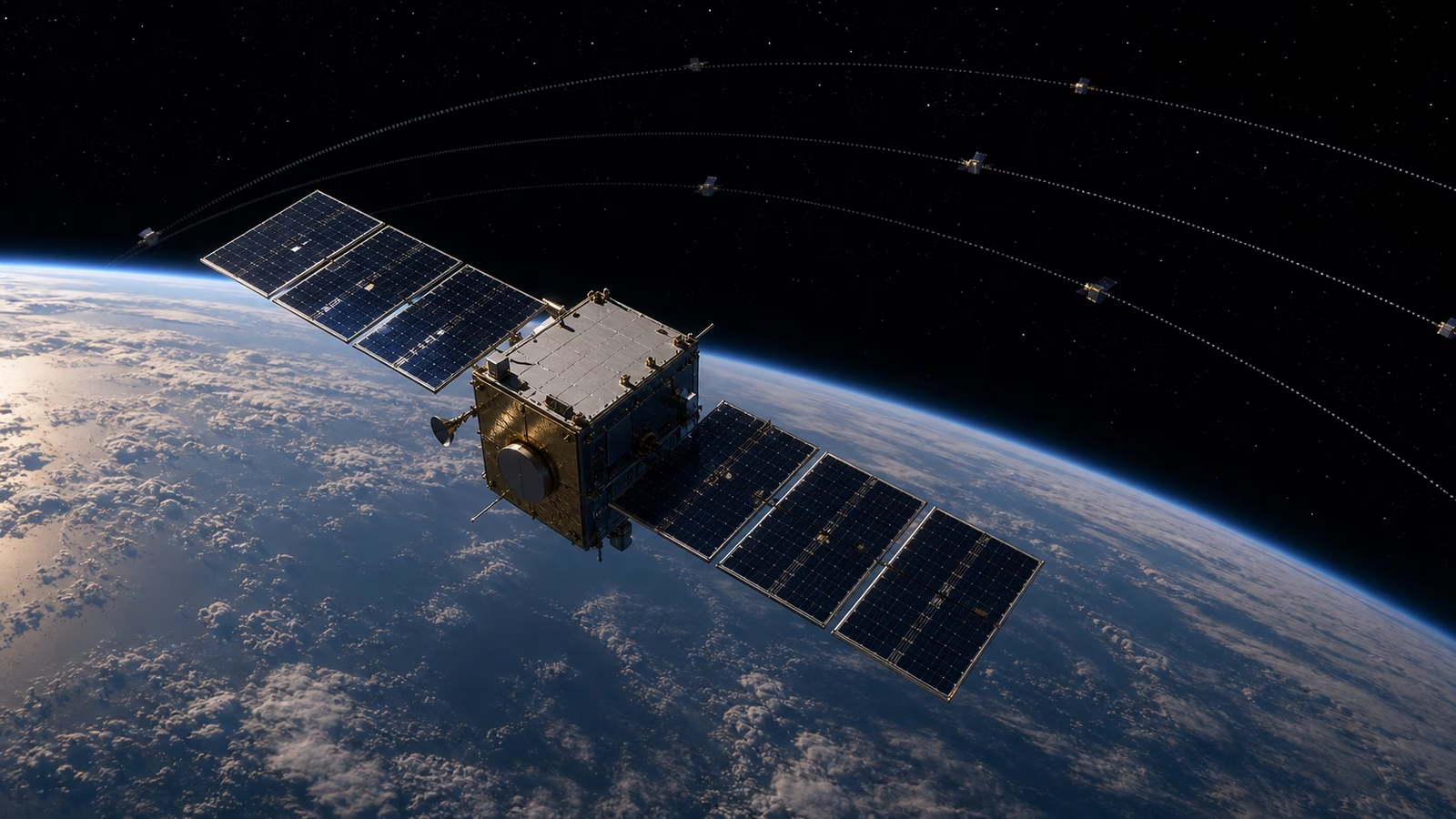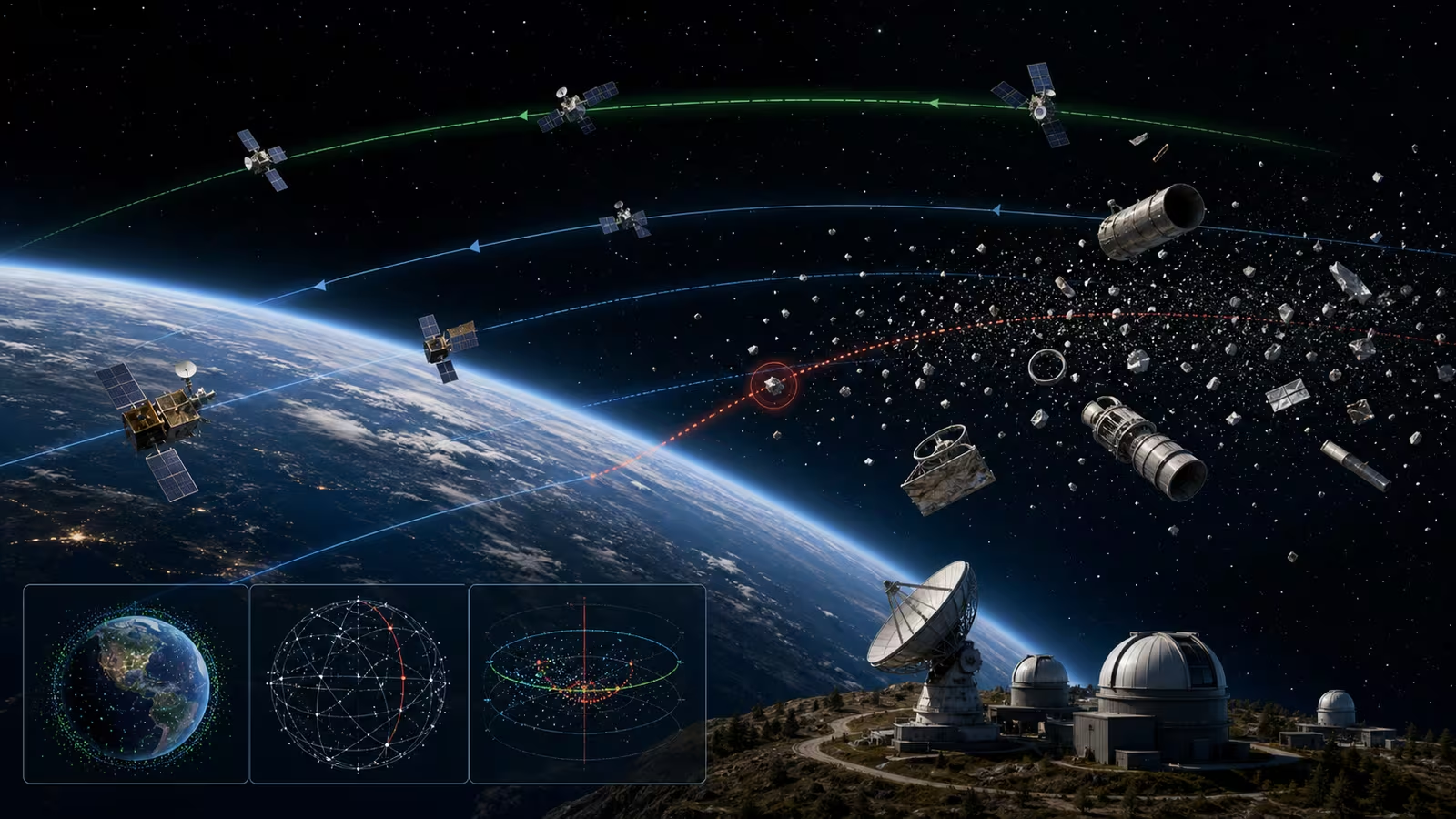
Space debris is easy to sensationalize. A movie image of shattering satellites and runaway destruction sticks in the mind. The real problem is less theatrical and more like traffic management in a city where vehicles move incredibly fast and cannot easily pull over. Debris is any human-made object in orbit that no longer serves a useful purpose: dead satellites, old rocket bodies, fragments, bolts, paint flakes, and pieces from past collisions or explosions.
The danger comes from speed. Objects in low Earth orbit travel at several kilometers per second. At those speeds, even a small piece can damage a spacecraft. A larger collision can create many new fragments, increasing risk for everyone. Orbit is big, but useful orbital regions are not empty. As satellite constellations grow, stewardship becomes part of the business model.
Why debris accumulates
Satellites do not hover in place. They follow orbital paths. Some eventually reenter and burn up. Others remain for years or decades depending on altitude and drag. Old rocket stages can stay in orbit. Dead satellites can become uncontrolled. Batteries or fuel tanks can explode if not properly passivated. Collisions can turn one object into many.
In low orbits, atmospheric drag slowly pulls objects down, though the timeline depends on altitude and solar activity. Higher orbits may keep debris for much longer. That means mission design has to include end-of-life planning. A responsible satellite is not only one that works. It is one that knows how to leave.
Tracking is essential but incomplete
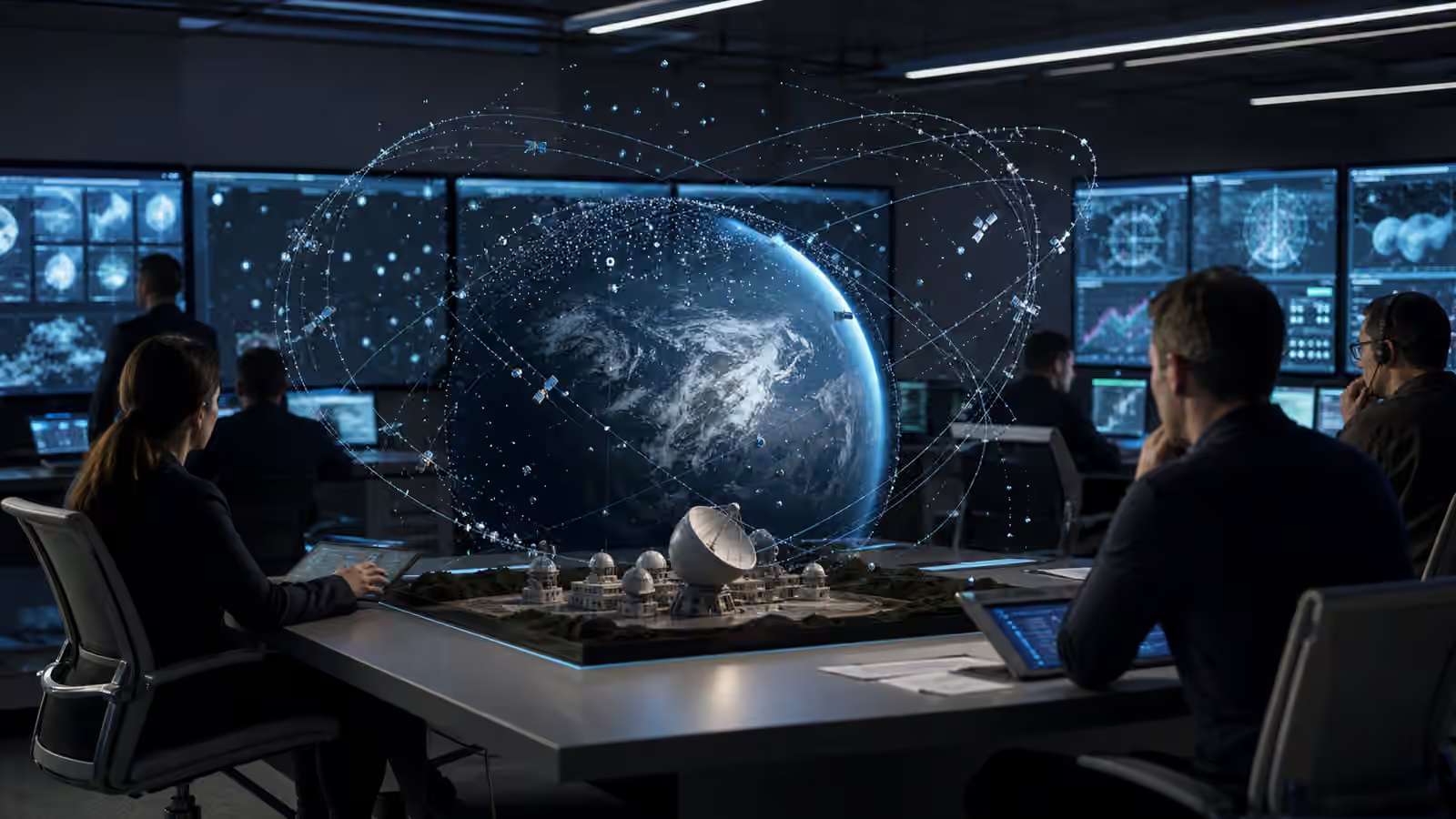
Ground radars, telescopes, and space-based sensors track many objects. Operators receive warnings when a close approach is predicted. Satellites with propulsion can maneuver to reduce collision risk. But tracking has limits. Very small debris may be hard to see. Predictions include uncertainty. Maneuvers use fuel and coordination. If two active satellites both plan avoidance poorly, they can create new risk.
This is why orbital traffic management matters. As more satellites launch, operators need data sharing, standards, automated coordination, and clear responsibility. Space cannot rely on everyone improvising politely.
Think of aviation. Airplanes use transponders, air traffic control, flight rules, maintenance standards, and shared procedures. Space is developing its own version, but the environment is harder because objects move faster, ownership is international, and some debris cannot respond.
Constellations raise the stakes
Large LEO constellations can provide valuable services, especially internet and Earth observation. They also put many satellites into shared orbital shells. If designed well, they can maneuver, deorbit, and coordinate. If designed poorly, they increase congestion and create future debris.
The number of satellites alone is not the only issue. Reliability, deorbit success, collision avoidance, brightness, spectrum coordination, and operator behavior all matter. A constellation with strong end-of-life plans may be safer than a smaller set of abandoned objects. But scale means small failure rates can still create many failed satellites.
Debris removal is hard
Removing debris sounds obvious: send a spacecraft to grab old junk. The reality is difficult. Debris may tumble. It may have no docking fixture. Capturing it can create risk. Each removal mission costs money. Legal ownership remains with the launching state or operator, so permission matters. A debris removal system could also look like a dual-use technology, raising security concerns.
Still, active debris removal may be needed for the most dangerous large objects. Removing a few high-risk rocket bodies or dead satellites could reduce future collision risk. But prevention is usually cheaper than cleanup. The best debris strategy is to avoid creating debris in the first place.
Rules and incentives
Orbital stewardship depends on rules and incentives. Regulators can require disposal plans, shorter deorbit timelines, reliable maneuvering, collision-risk analysis, and responsible design. Insurers can price risk. Customers can prefer responsible operators. Governments can share tracking data and set norms. International coordination is hard, but orbit is shared whether countries like it or not.
The economic challenge is that debris risk is partly a commons problem. One operator may save money by cutting corners, while everyone shares the added risk. Good governance tries to make responsible behavior the normal cost of doing business.
Why this matters
Space debris matters because the modern space economy depends on usable orbits. Satellite internet, weather data, Earth observation, navigation support, science, defense, and emergency communications all rely on spacecraft that need safe operating environments. If orbital risk rises too far, insurance gets harder, operations get more expensive, and useful services become fragile.
For a normal reader, the key is to see debris as infrastructure maintenance. Roads need traffic laws. Oceans need shipping rules. Airspace needs control. Orbit needs stewardship. The exciting parts of space depend on the boring parts working: tracking, disposal, coordination, and accountability. Keeping orbit clean is not anti-space. It is what lets space stay useful.
Debris also changes how we should judge new space projects. A satellite service may offer faster internet or better images, but it should also explain how its spacecraft avoid collisions, what happens when one fails, how quickly it deorbits, and how it shares data with other operators. Those details may not fit in an advertisement, yet they are part of the product. A company that uses orbit is using a shared road. Responsible driving belongs in the business plan.
The same idea applies to governments. Military, civil, and commercial spacecraft all share orbital neighborhoods. Better tracking data, clearer communication during close approaches, and norms against debris-creating behavior protect everyone. Space safety is not a side issue for specialists. It is the maintenance plan for the infrastructure that weather forecasts, communications, and observation increasingly depend on.