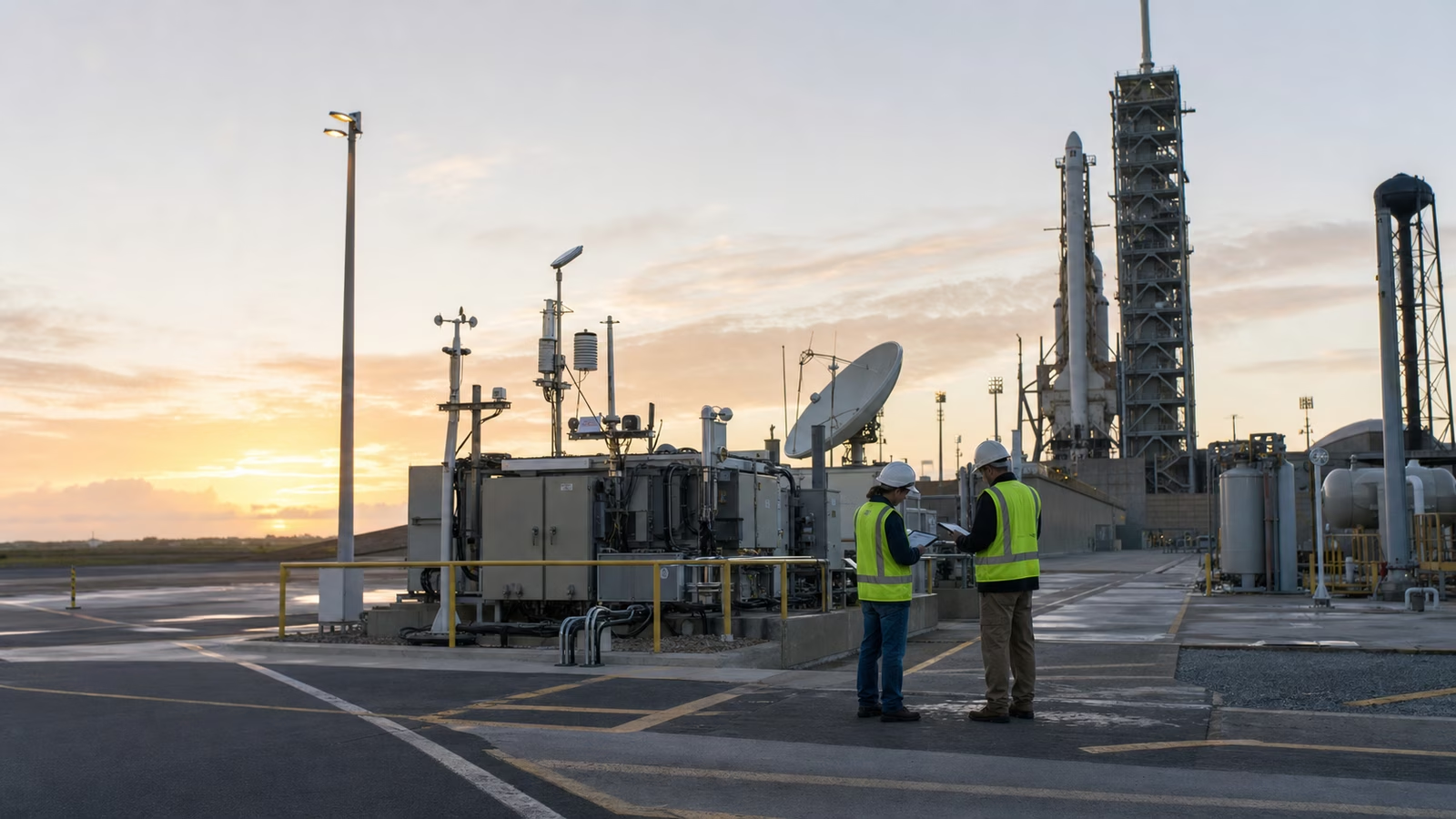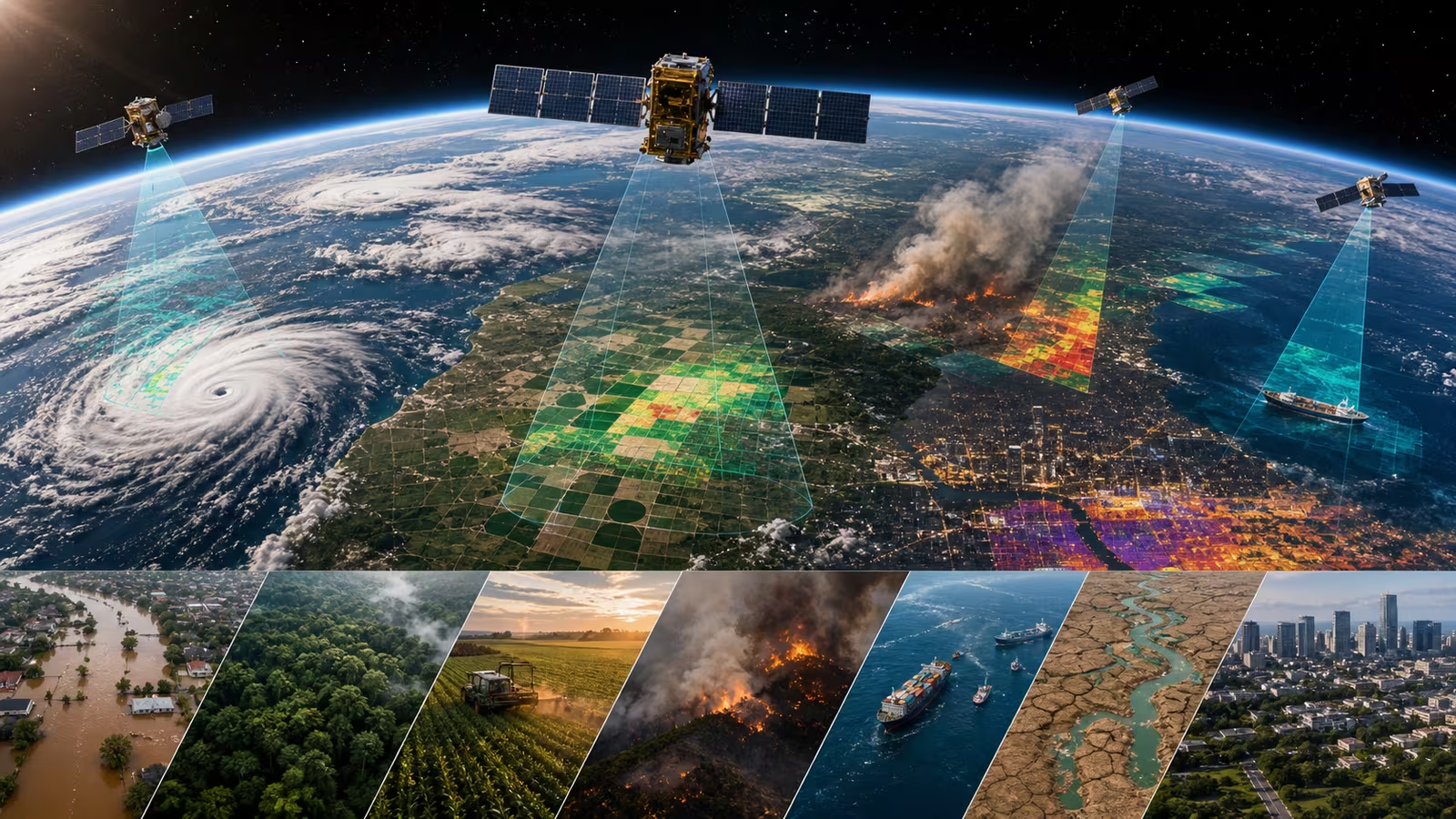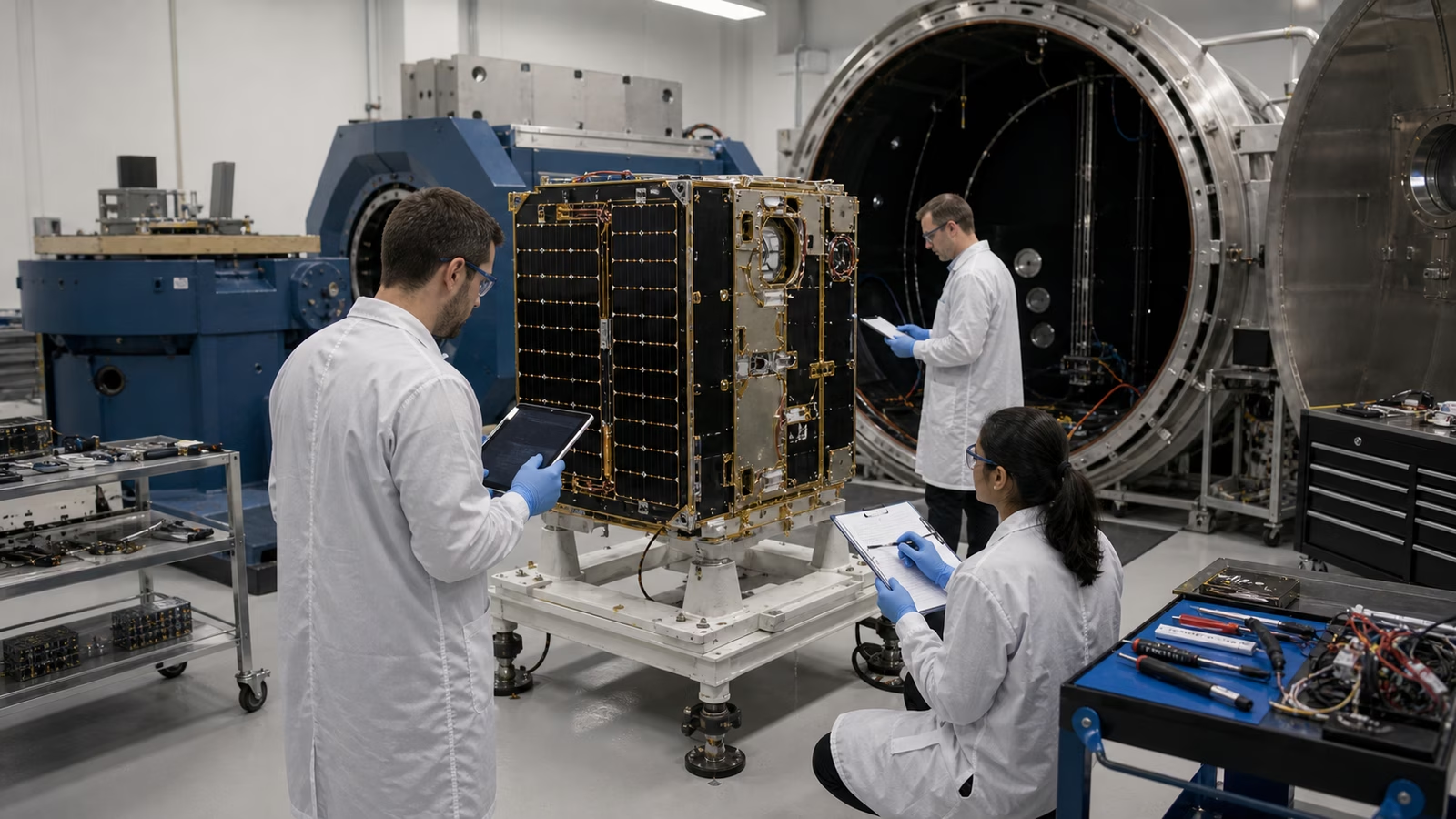
A satellite does not become real at launch. Launch is where the public usually meets it, but the spacecraft has already lived a long, anxious life by then. It has been designed, assembled, inspected, powered, shaken, heated, cooled, measured, revised, documented, and argued over in rooms where the most important question is not whether the satellite looks impressive. The question is whether it will still work after leaving the only place where people can touch it.
Space manufacturing is unforgiving because repair is rare, distance is large, and the environment does not negotiate. A cable routed casually on Earth can become a mission problem after vibration. A component that runs warm in the lab may overheat in vacuum. A loose particle can damage optics. A software setting can hide inside a test until the spacecraft is already gone.
That is why the work before orbit is so deliberate.
A satellite is a stack of interfaces
A satellite is often described by its mission: communications, Earth observation, weather, navigation, science, or technology demonstration. Inside the clean room, it is also a stack of interfaces. Structure holds equipment. Power flows from solar arrays and batteries. Computers talk to sensors and payloads. Radios connect to antennas. Thermal systems move heat. Attitude control points the vehicle. Software coordinates the whole machine.
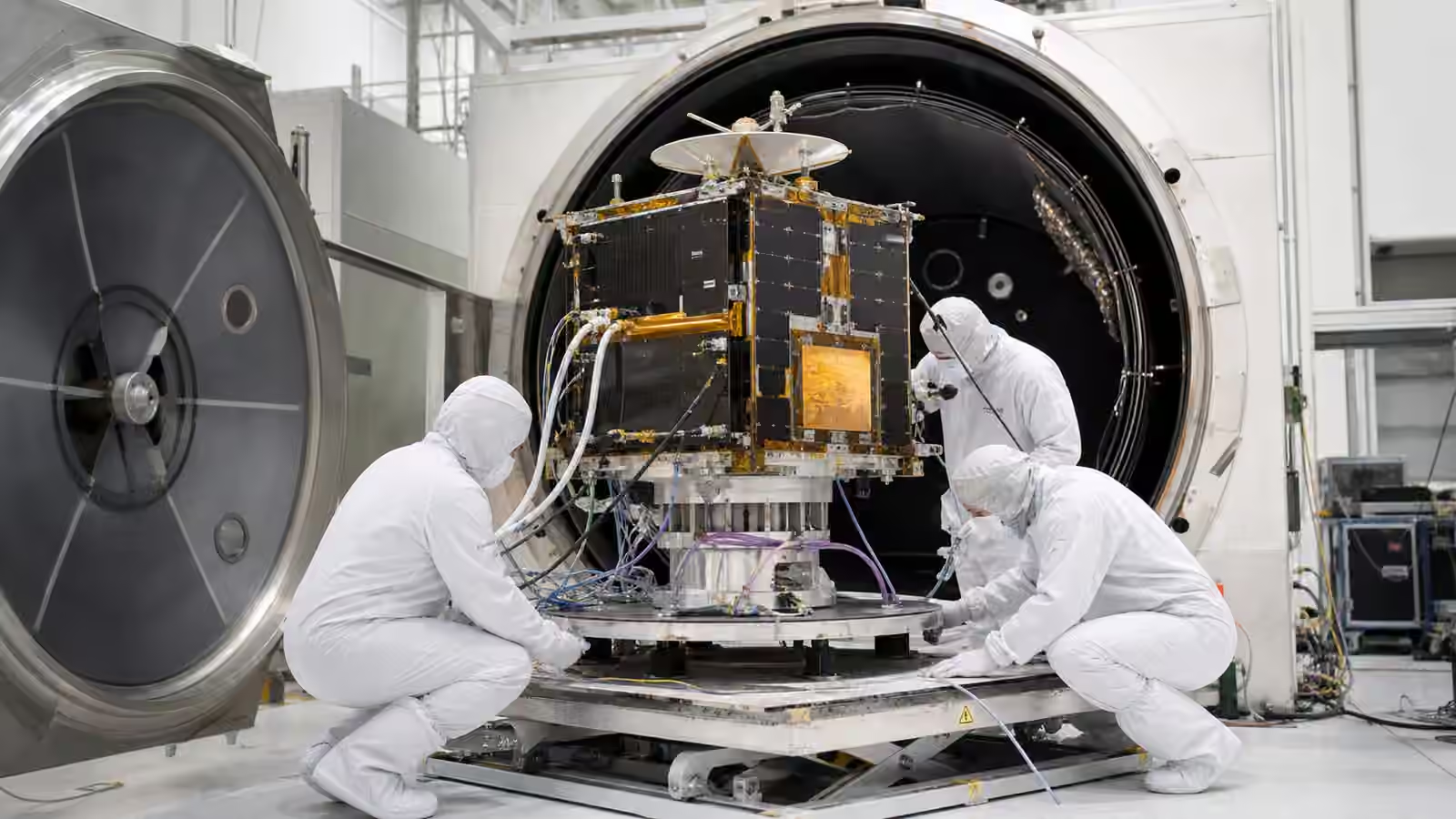
Every interface can fail in ordinary ways. A connector can be seated incorrectly. A harness can rub against an edge. A fastener can be torqued wrong. A sensor can be installed with the wrong orientation. A software version can be out of sync with test documentation. The spacecraft may be sophisticated, but many risks are humble.
Manufacturing discipline exists to catch those humble risks before they become orbital mysteries. The clean room is not ceremonial. The gloves, covers, logs, procedures, checklists, and inspections are part of the spacecraft.
Clean rooms protect more than cleanliness
Clean rooms reduce contamination, but they also create a culture of care. Dust, fibers, oils, and loose particles matter, especially around optics, mechanisms, thermal surfaces, and sensitive electronics. A fingerprint in the wrong place can be more than a smudge. It can change how a surface behaves or invite problems later.
The room also slows people down. Tools are tracked. Parts are handled intentionally. Work instructions are followed. Deviations are recorded. That can look bureaucratic from the outside, but the alternative is memory under pressure. Spacecraft do not forgive missing context.
This matters even for smaller satellites. The rise of smallsat manufacturing and constellations can make space hardware feel more like electronics production, but orbit still imposes its own standards. A cheaper satellite can accept different risk than a billion-dollar observatory, yet it still has to survive launch, vacuum, radiation, thermal cycling, and operations. Lower cost is not the same as casual workmanship.
Integration is where assumptions meet
Integration is the process of bringing subsystems together. It is also where assumptions collide. The payload team may have expected one power profile. The bus team may have planned another. A mechanical clearance may be tight. A cable route may interfere with access. A thermal strap may need more room than the drawing seemed to show. A test port may be blocked after another panel is installed.
Good integration teams do not treat these surprises as personal failures. They treat them as information. The physical spacecraft teaches the team what the model missed. The question is whether the process can absorb that information without losing control of configuration.
Configuration control is the quiet backbone. What hardware version is installed? Which software build is loaded? Which test was run after which change? Which waiver was approved? Which nonconformance remains open? If those answers are unclear, test results become hard to trust.
Satellite Operations After Launch begins after deployment, but operations quality starts here. A mission team can only operate the satellite it actually built, not the satellite people vaguely remember building.
Environmental testing is rehearsal for a hostile trip
Launch is violent. The spacecraft experiences vibration, acoustic energy, acceleration, separation events, and shock. Then it enters vacuum, sunlight, eclipse, thermal cycling, radiation, and a communications environment that may offer only short windows for recovery. Environmental testing tries to expose weaknesses while the satellite is still reachable.
Vibration testing shakes the spacecraft to simulate launch loads. Acoustic testing can expose it to intense sound energy. Thermal vacuum testing places it in a chamber where pressure and temperature conditions resemble parts of the space environment. Deployment tests verify that panels, antennas, booms, or mechanisms move as intended. Electromagnetic compatibility tests check whether systems interfere with one another.
These tests are not performed because engineers enjoy abusing hardware. They are performed because a failure on the ground can be investigated with tools, people, and time. A failure in orbit may become a line in a telemetry log and a long meeting about what might have happened.
Testing must be honest enough to hurt
A test that cannot fail is not a test. That does not mean teams should be reckless. It means the test has to be connected to real requirements and real risk. If vibration levels are too gentle, the test may create false confidence. If thermal cases do not reflect mission reality, the spacecraft may pass the chamber and fail in orbit. If software tests avoid edge cases, the clean room only proves the happy path.
Honest testing can be emotionally difficult because it may reveal expensive problems late in the schedule. A weak connector, marginal battery behavior, unexpected heating, noisy sensor, or deployment issue can threaten delivery. Schedule pressure then becomes dangerous. The team may want the test to be good enough because the launch date is approaching.
This is where space culture has to choose discipline. A scrubbed or delayed launch can be painful. A preventable orbital failure is worse.
Documentation is part of the spacecraft
Space hardware carries paperwork, but paperwork is the wrong word if it makes the records sound separate from the machine. Procedures, inspection reports, test logs, anomaly reports, configuration records, calibration data, and review notes are how the team knows what the spacecraft has become.
Later, when an operator sees a strange temperature trend or a subsystem behaves unexpectedly, those records matter. Was this component replaced? Did this sensor read high during thermal vacuum? Was there a waiver on that mechanism? Which software version fixed the earlier issue? The answer may be hidden in documentation created months before launch.
Ground Stations and Satellite Cybersecurity and Resilience both depend on trusted configuration and clear operational knowledge. Manufacturing is part of that chain. A satellite cannot be resilient if nobody has a reliable account of what was tested, changed, and accepted.
Manufacturing shapes the space economy
As space becomes more like infrastructure, manufacturing and testing become more important, not less. Constellations need repeatable production. Commercial stations need reliable modules and visiting vehicles. Lunar infrastructure needs hardware that can survive dust, temperature swings, transport, and limited repair. Earth observation and communications markets need satellites that can be built at cost without becoming disposable junk by accident.
The future of space will not be decided by launch alone. It will be decided by whether companies and agencies can build spacecraft repeatedly, test them honestly, learn from failures, control configuration, and keep quality high enough that orbit does not become a graveyard of rushed promises.
When you see a satellite folded inside a fairing, remember the rooms it passed through first. The clean room, the vibration table, the thermal vacuum chamber, the integration stand, the review board, and the engineer checking a blank-looking harness for the fifth time are all part of the mission.
Orbit gets the romance. Manufacturing decides whether the romance has a chance.