Satellite internet used to carry a reputation for being slow, expensive, and a little desperate. It was the option for places where nothing else reached. The basic idea was useful, but the experience often lagged because traditional internet satellites sat very far above Earth. Signals had to travel up, down, and sometimes through other network paths before a page loaded or a call responded. That distance created delay.
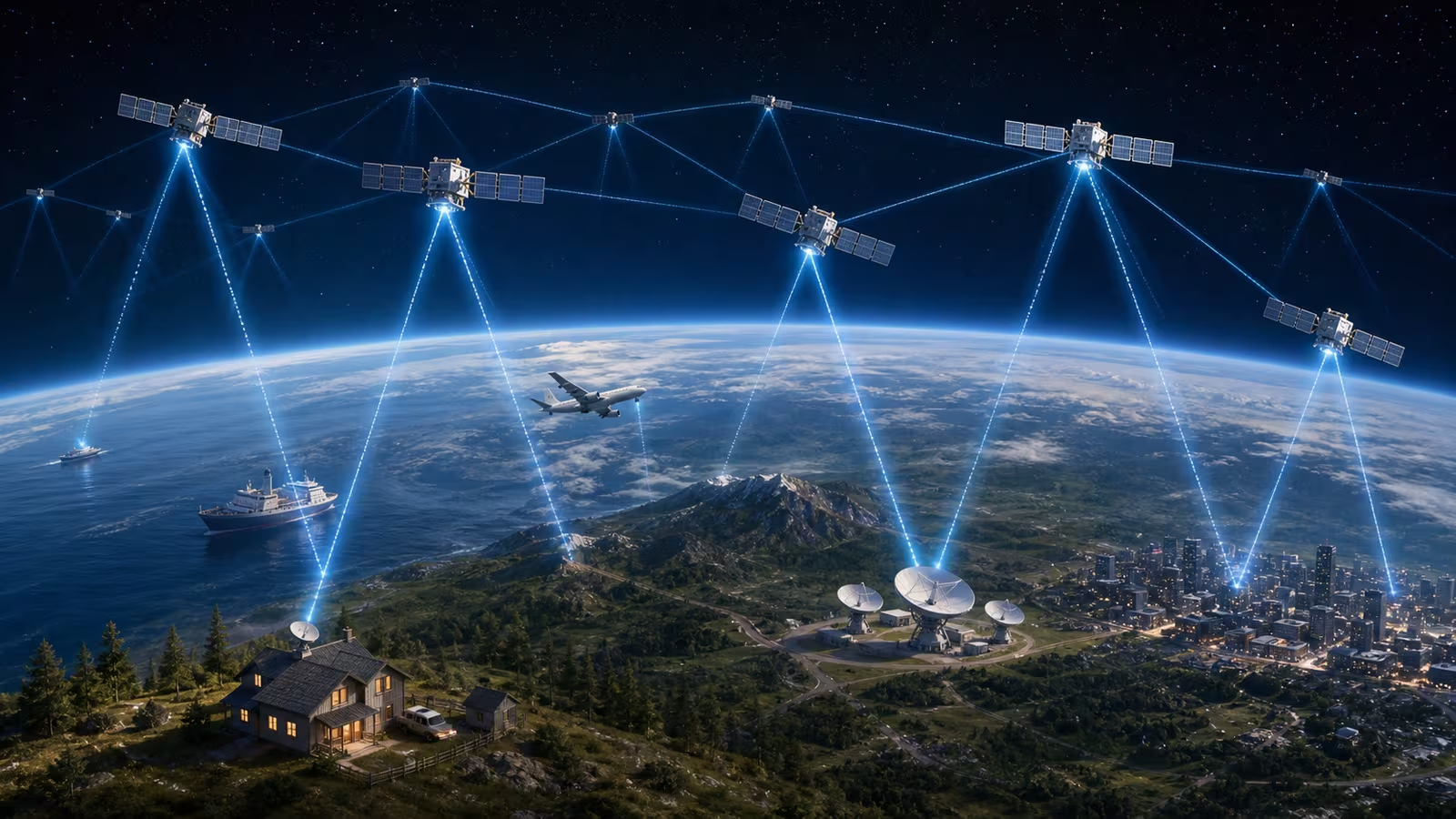
Low-Earth orbit networks changed the feel of the category. LEO satellites orbit much closer than geostationary satellites. Because the signal path is shorter, the delay can be lower. But one LEO satellite cannot stare at the same region all day. It moves across the sky quickly, so the service needs a constellation: many satellites working together, handing connections along like runners in a relay.
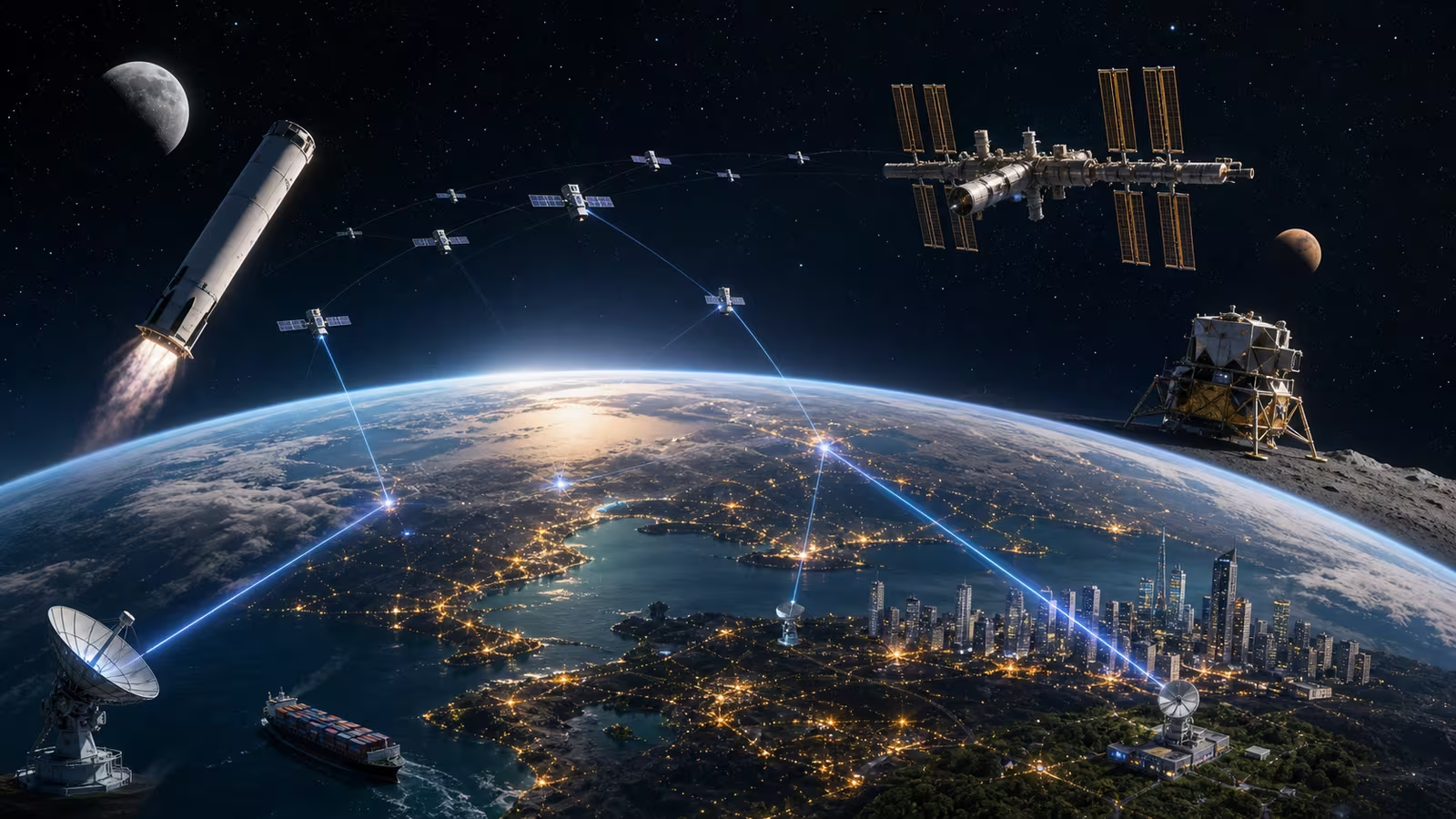
Why orbit height matters
Imagine trying to talk to someone across a room, across a city, and across an ocean. Your words may still arrive, but distance changes the conversation. In satellite internet, distance affects latency, which is the delay between sending a request and receiving a response. High latency can make video calls awkward, games frustrating, and interactive work sluggish.
Geostationary satellites sit high above the equator and orbit at the same rate Earth turns, so they appear fixed in the sky. That makes ground antennas simpler, and each satellite can cover a huge area. The tradeoff is distance. LEO satellites are much closer, so latency can improve, but each satellite covers a smaller moving area. The network needs more satellites, more tracking, more coordination, and often more sophisticated user terminals.
This is the central trade: high orbit gives broad coverage with distance; low orbit gives closer connection with complexity.
The ground still matters
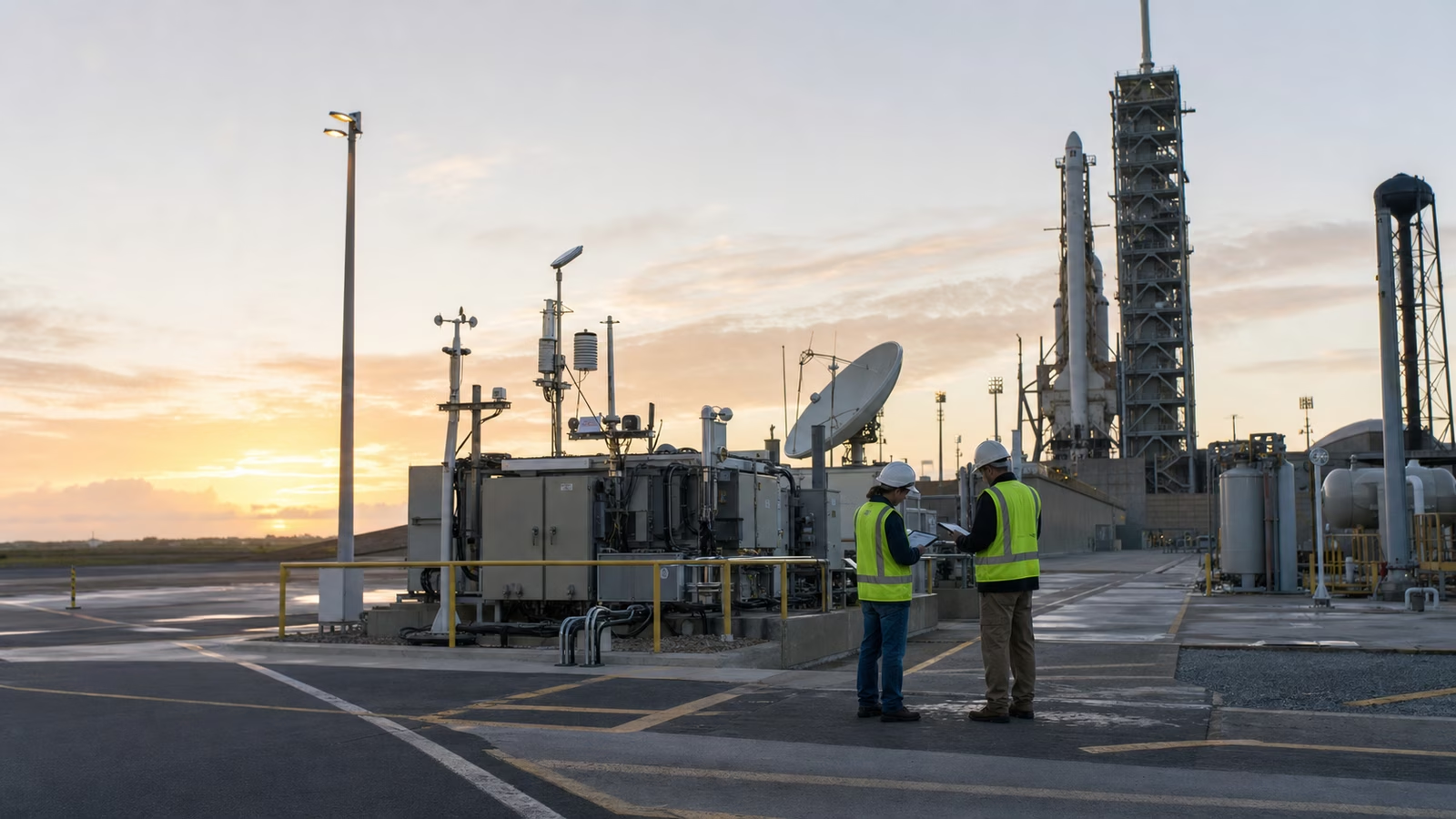
Satellite internet is not only satellites. It needs user terminals, ground stations, network software, spectrum rights, power, customer support, launches, replacement satellites, and links to the broader internet. The dish or flat terminal at a home is only the visible edge of a large system.
Ground stations connect satellite traffic to terrestrial networks. Inter-satellite laser links can move data between satellites before it comes down, reducing dependence on nearby ground stations in some cases. Network software decides how to route traffic as satellites move. User terminals track satellites electronically or mechanically. The service feels simple only when all of that works.
This is why satellite internet companies are not just space companies. They are network operators, hardware makers, launch customers, spectrum users, software companies, and service providers at the same time.
Where satellite internet helps most
Satellite internet is most valuable where ground networks are weak, expensive, damaged, or absent. Rural homes may lack fiber. Ships and aircraft are mobile. Remote work sites may be too far from towers. Disaster zones may lose ground infrastructure. Scientific teams, construction crews, farms, mines, and emergency responders may need connectivity before traditional networks arrive.
It is not always the best choice in dense cities where fiber and 5G are strong. Space is useful because it sees broad areas, not because it magically beats every local network. The best infrastructure mix uses fiber, cellular, Wi-Fi, microwave, and satellite where each makes sense.
Satellite internet can also create competition. In places with one weak broadband provider, a satellite option can change expectations. It may not replace fiber, but it can improve choice.
Congestion and capacity
Coverage is not the same as capacity. A satellite beam can reach an area, but many users sharing the same capacity may slow service. This is why user density matters. A rural region with few users may have a good experience. A crowded area with many terminals competing for satellite capacity may see limits.
Adding satellites, improving spectrum use, using better antennas, adding ground stations, and deploying optical links can increase capacity, but physics and regulation remain. Spectrum is shared. Satellites must avoid interference. Networks must coordinate with other systems. The sky is not an unlimited Wi-Fi router.
Debris and replacement cycles
Large LEO constellations require many satellites, and satellites do not last forever. Operators must launch replacements, manage failures, avoid collisions, and deorbit old spacecraft responsibly. This creates a logistics rhythm. The constellation is not a finished monument. It is a living fleet.
That living-fleet model has benefits. Technology can improve quickly. Old satellites can be replaced with better ones. But it also raises stewardship questions. More satellites mean more tracking, more coordination, more brightness concerns for astronomy, more spectrum management, and more responsibility at end of life.
Why this matters
Satellite internet matters because connectivity is now basic infrastructure. Work, school, emergency services, markets, medicine, and public life all assume some connection. LEO networks can bring useful internet to places where wires and towers are hard to build or restore.
For a normal reader, the practical question is fit. Do you need fiber-like stability, mobile coverage, rural service, disaster backup, aircraft connectivity, or remote operations? Satellite internet is not a miracle replacement for every network. It is a powerful new layer, especially where the ground network is missing, broken, or too slow to arrive. Understanding that layer makes the modern space economy feel less distant. It is not only rockets overhead. It is an internet path moving across the sky.
That path also changes expectations. A rural student who can join a video class, a ship crew that can send maintenance data, a fire crew that can connect at a temporary base, and a small clinic that can keep records moving during a terrestrial outage are not using space as a novelty. They are using it as infrastructure. The best measure of a LEO network is not whether it feels futuristic. It is whether people stop thinking about orbit because the connection simply works when the ground network cannot.