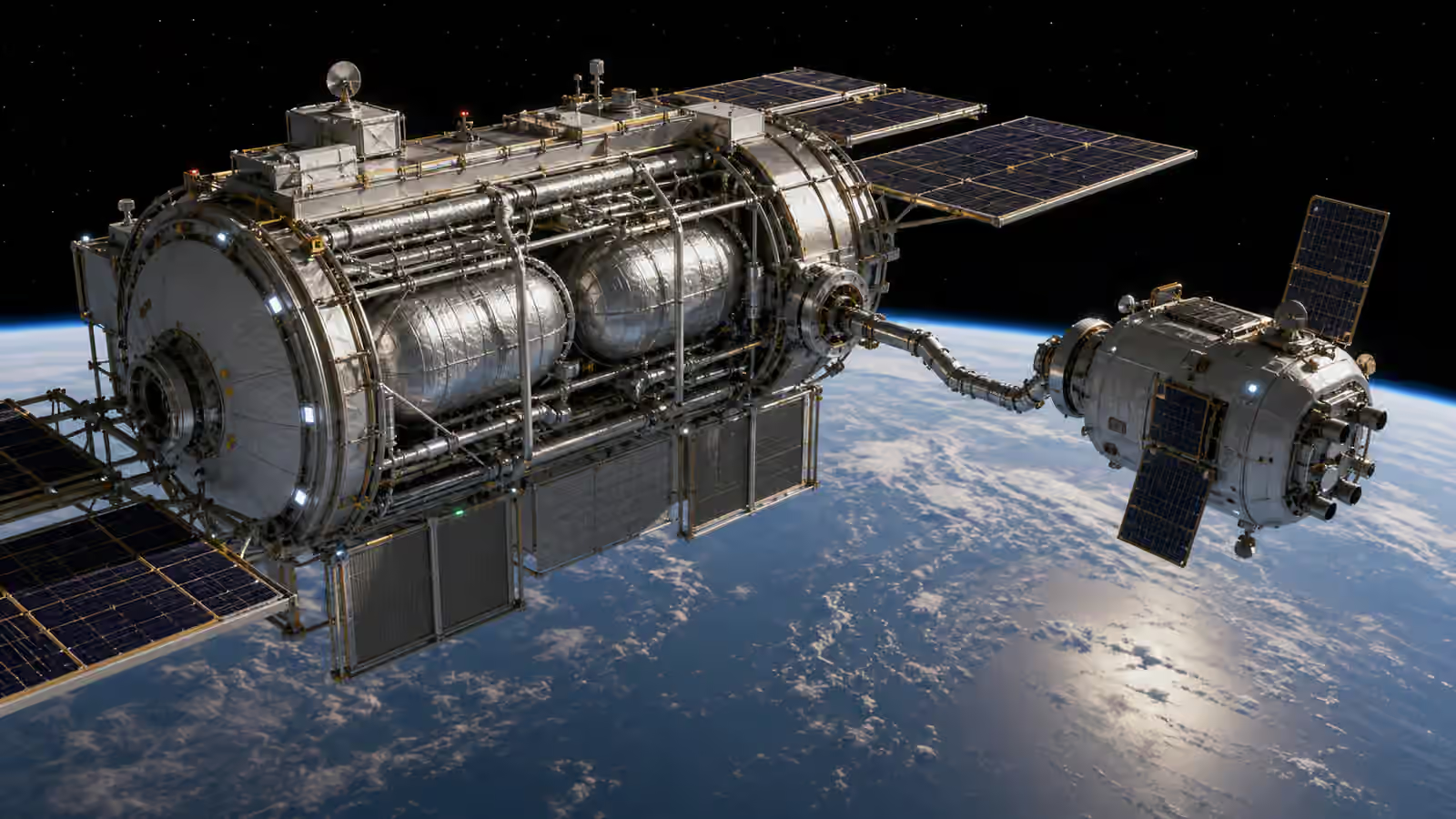
Satellites look distant, but their security problems are very close to Earth. A spacecraft may be hundreds or thousands of kilometers overhead, yet it depends on ordinary things: software, networks, ground stations, suppliers, operators, credentials, updates, radio links, procedures, and people trying to make decisions at 3 a.m. when something does not look right.
That is why satellite cybersecurity should not be imagined as a hooded figure attacking a glowing spacecraft. The real picture is more practical and more difficult. Space infrastructure has to protect command authority, data integrity, timing, telemetry, customer networks, ground systems, and recovery paths. It has to do this across hardware that may be hard to patch, missions that last for years, and organizations that include manufacturers, launch providers, operators, cloud services, ground station networks, regulators, and customers.
The goal is not perfect invulnerability. No serious infrastructure can promise that. The goal is resilience: making attacks harder, mistakes less damaging, failures easier to detect, and recovery less improvisational.
The ground segment is often the larger surface
When people think about satellite security, they often picture the spacecraft. The spacecraft matters, especially command links and onboard software. But the ground segment is usually larger, messier, and more connected to ordinary digital infrastructure.
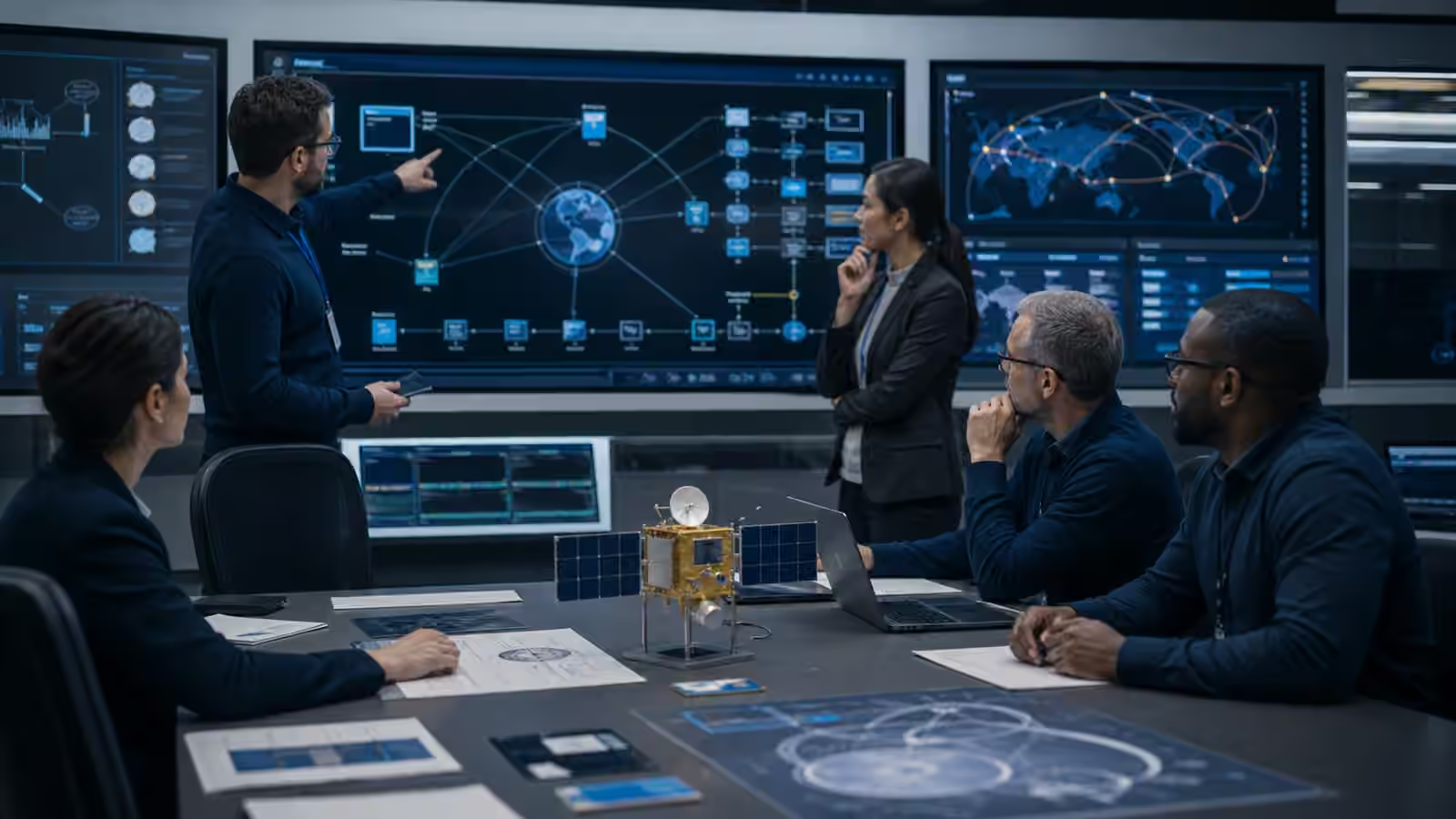
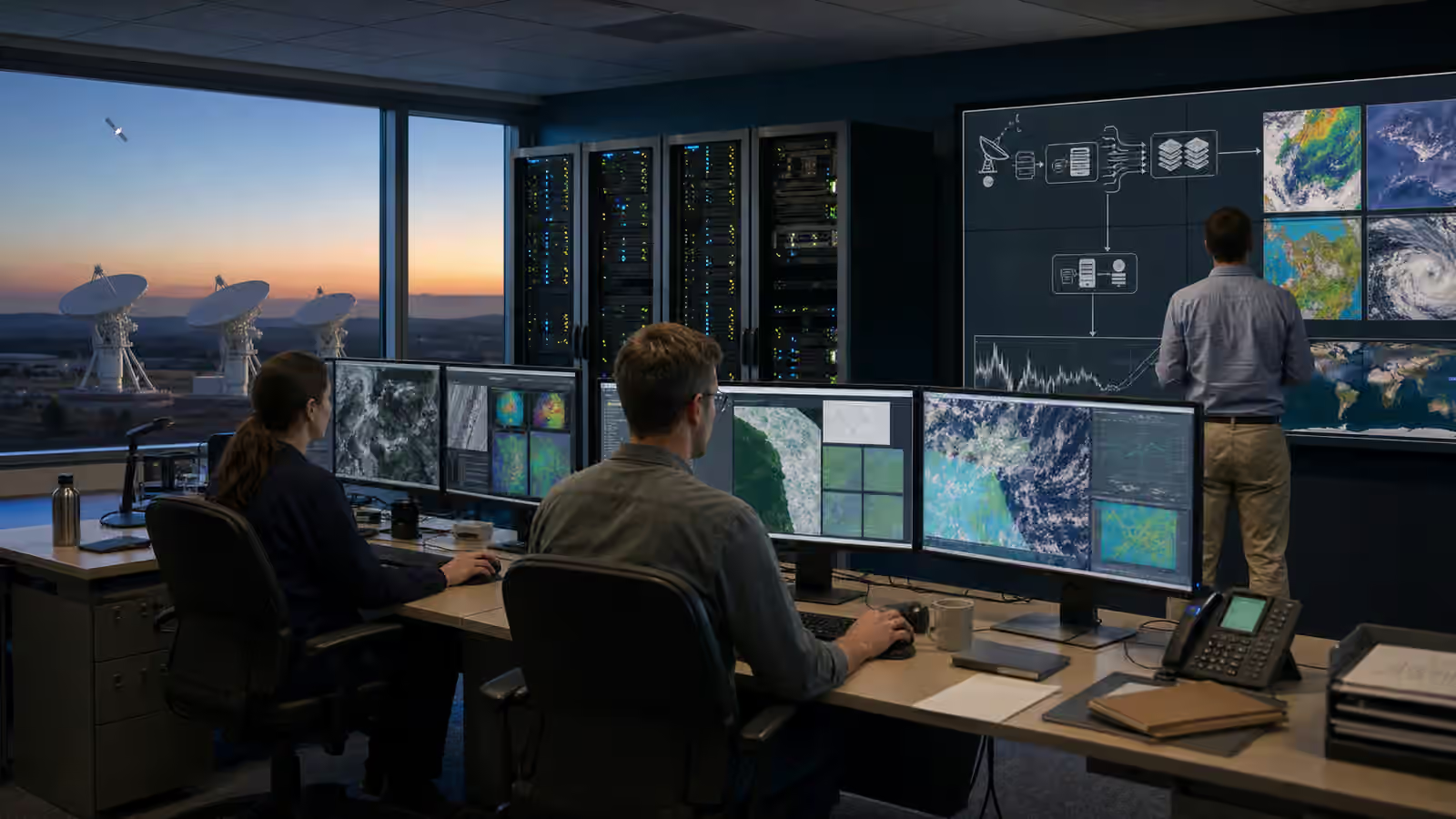
Ground stations send commands, receive telemetry, downlink data, schedule contacts, route traffic, and connect space systems to terrestrial networks. Mission operations centers use workstations, identity systems, monitoring tools, databases, cloud services, and vendor software. A satellite may be in orbit, but the keys to its behavior can pass through rooms full of equipment on Earth.
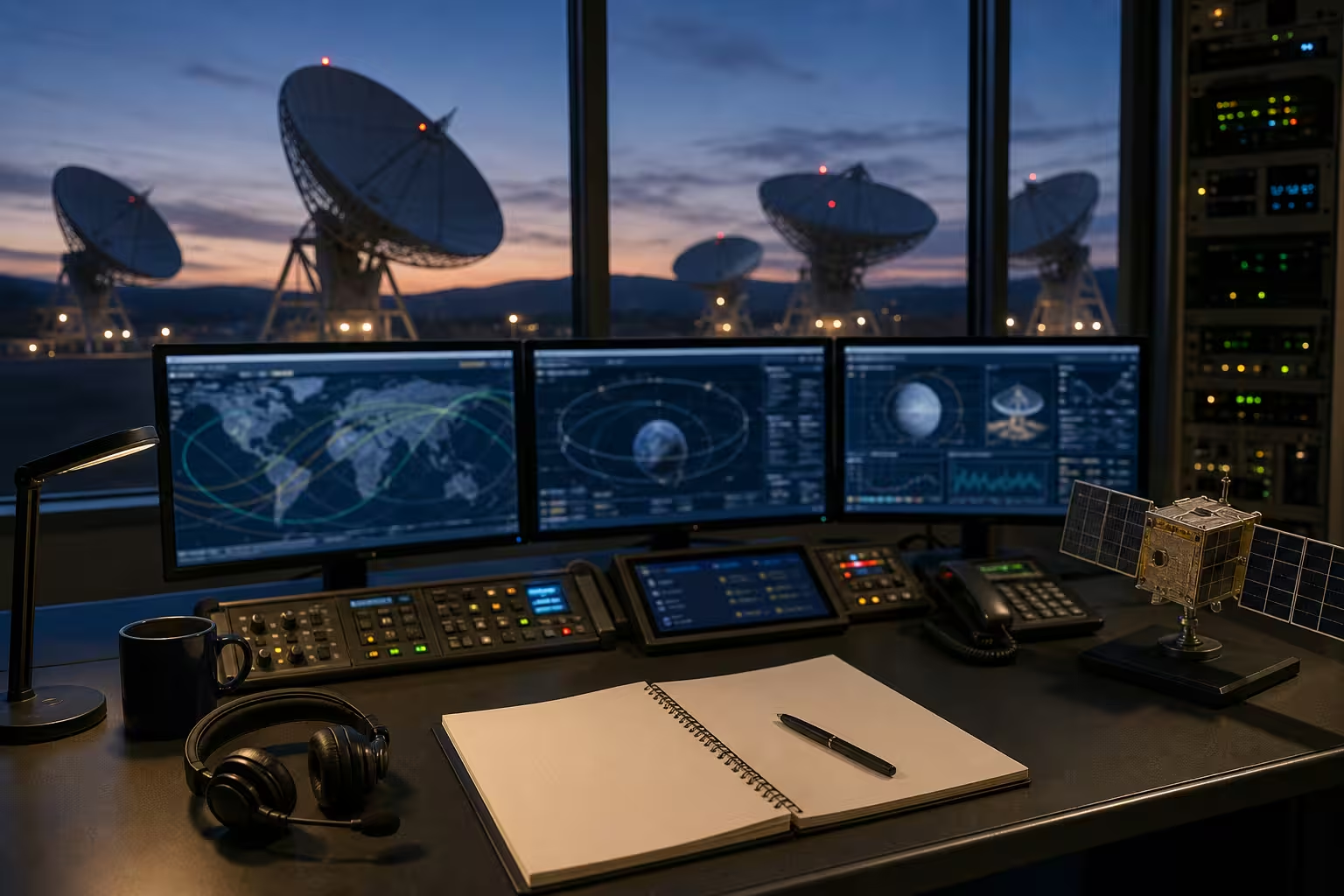
This makes Ground Stations part of the cybersecurity story. A dish in a field is not just an antenna. It is a point where authority crosses between Earth and space. If the systems around that crossing are poorly protected, the satellite’s distance does not help much.
Command is different from data
Not all satellite traffic carries the same risk. A data downlink may contain Earth observation imagery, weather measurements, communications traffic, or system telemetry. A command link can tell the spacecraft what to do. It may change pointing, update software, alter schedules, move the spacecraft, or affect mission safety.
That difference matters. Command authority should be protected with special care because a bad command can create consequences that are hard to undo. It can interrupt service, waste fuel, damage hardware, create collision risk, or end a mission. Even when a spacecraft has safeguards, the command path deserves strong identity, authorization, logging, and operational discipline.
Data integrity matters too. If satellite data is altered, delayed, mislabeled, or spoofed, decisions on Earth may be affected. Weather, shipping, farming, defense, finance, emergency response, and environmental monitoring can all depend on trusted data. A satellite system does not have to be physically taken over to become harmful. It can become harmful if people lose confidence in what it reports.
Security has to fit long-lived machines
Space missions often last years. Some last much longer than originally planned. That creates a security problem because the threat environment changes while hardware remains in orbit. Cryptographic choices age. Software dependencies change. Ground systems are replaced. Staff turns over. Vendors merge or disappear. New attack techniques emerge.
A laptop can be replaced. A satellite usually cannot be brought into a shop and rebuilt. That means security has to be considered from the beginning. Can the spacecraft receive authenticated updates? What happens if an update fails? Are there safe modes that preserve control? Are old credentials retired? Can operators detect unusual behavior? Are logs good enough to understand what happened?
Security for long-lived systems is partly humility. Designers have to assume that future operators will face problems the original team did not fully imagine. Good documentation, maintainable software, key management, and recovery procedures become gifts to people who will inherit the mission later.
Supply chains carry trust
A satellite is not built by one person in one room. It contains components, software, firmware, radios, sensors, processors, ground tools, and services from many sources. Each supplier brings a trust question. Was the component built as specified? Is the software maintained? Are vulnerabilities tracked? Who has access to updates? How are test tools secured? What happens when a supplier’s system is compromised?
Supply chain security can sound abstract until a mission depends on a black box nobody understands well enough. In space systems, opacity is expensive. A component may be hard to inspect after launch. A software dependency may become a hidden risk. A rushed integration may leave security assumptions undocumented.
This does not mean every organization must build everything itself. It means trust needs structure. Contracts, testing, provenance, vulnerability handling, and documentation matter. A space economy that depends on faster commercial development also needs mature ways to carry trust through the supply chain.
Monitoring should look for the boring signs
Security monitoring in satellite operations is not only about dramatic alarms. It is often about noticing small mismatches. A command request at an unusual time. A login from an unexpected place. Telemetry that does not match the scheduled activity. A ground station configuration change nobody remembers approving. A data flow that becomes strangely large or strangely quiet.
Good monitoring combines technical signals with operational context. A satellite pass has a schedule. A maneuver has a plan. A software update has an approval path. A customer data transfer has an expected shape. When systems understand the normal rhythm, abnormal behavior becomes easier to see.
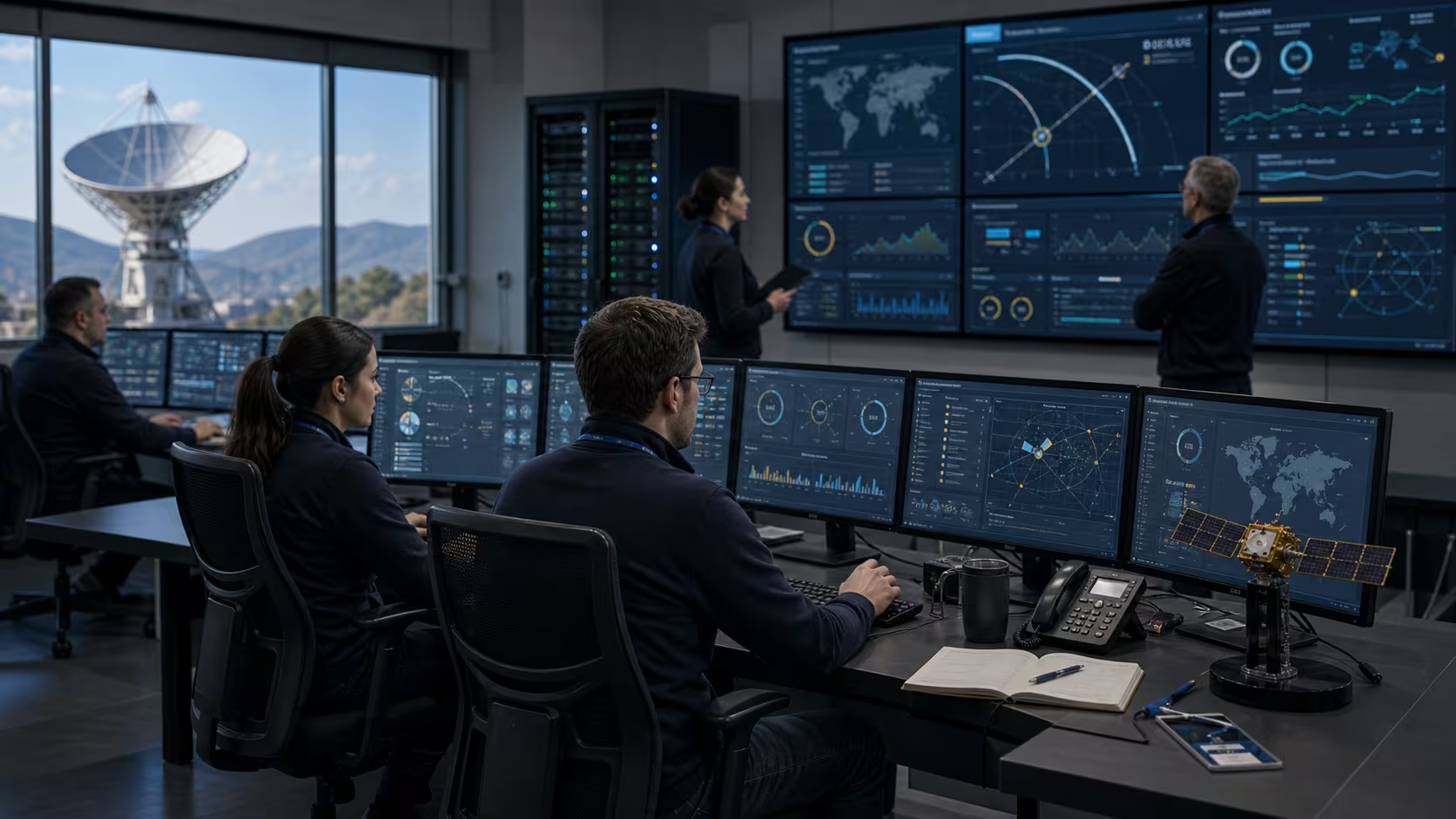
The challenge is avoiding both blindness and noise. Too few alerts and real problems hide. Too many alerts and people stop listening. Security operations is a human workflow as much as a technical one. The person watching the dashboard needs signals that mean something.
Resilience includes manual competence
Automation is useful, but satellite resilience still depends on people who know what to do when the automated path becomes uncertain. If communications are degraded, if a ground station is unavailable, if telemetry is confusing, or if a system may be compromised, operators need procedures that have been practiced before the crisis.
Manual competence does not mean heroic improvisation. It means trained fallback. Who can authorize a command? Which systems can be isolated? How is a safe mode entered? Which customers must be notified? Which logs are preserved? Which external partners are called? What happens if the primary operations center is unavailable?
Resilience is built before the incident. During the incident, the organization mostly discovers whether the preparation was real.
Space infrastructure is becoming ordinary infrastructure
The more satellites support daily life, the more their cybersecurity becomes part of ordinary infrastructure security. Satellite internet, Earth observation, direct-to-phone messaging, navigation timing, disaster response, logistics, and climate monitoring all carry public dependence. A failure may not look like a space event from the ground. It may look like lost connectivity, bad timing, missing imagery, delayed alerts, or uncertainty in a service people have stopped thinking about.
That is the mark of mature infrastructure. It disappears when it works. Security exists to keep it from reappearing only as a crisis.
Satellite cybersecurity is therefore not a niche concern for specialists alone. It is part of the same story as launch reliability, debris avoidance, ground stations, spectrum coordination, and space weather. Space systems have to survive not only radiation and vacuum, but human misuse, organizational drift, and the ordinary vulnerabilities of connected systems.
The spacecraft may be far away. The responsibility is not.