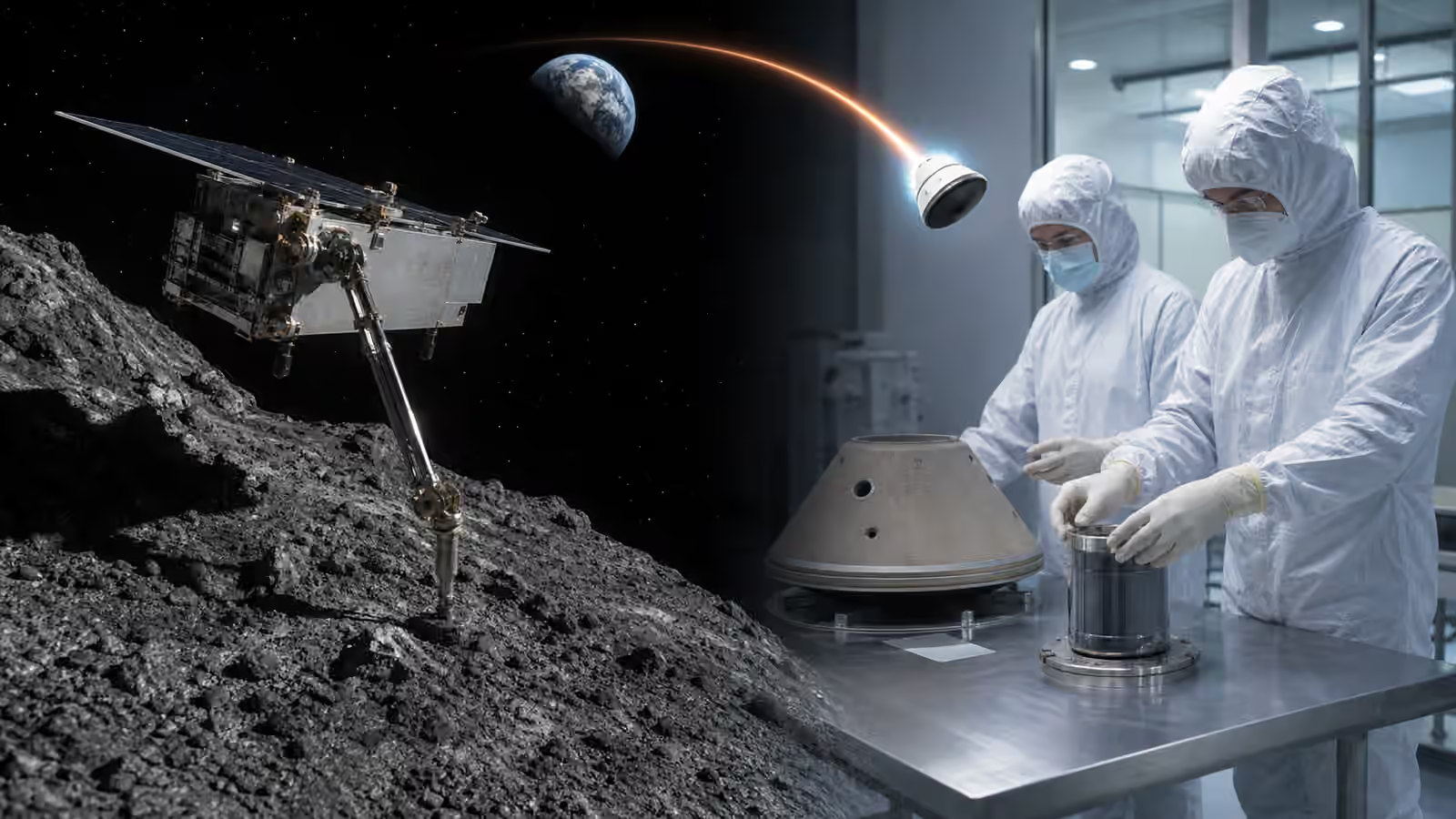
A sample return mission is built around a small object that carries a large burden. A tube of soil, a few grams of asteroid material, a sealed rock core, or a container of dust may look modest beside the spacecraft that brought it home. Scientifically, it can be more valuable than years of remote observation because laboratories on Earth can examine it with instruments too large, delicate, specialized, or newly invented to send on the mission.
But bringing a sample home is not only a transport problem. The mission has to preserve the story of the material. Where did it come from? What touched it? What temperature did it see? What gases surrounded it? What contamination could have entered? How was it sealed, stored, returned, recovered, opened, cataloged, and shared? A sample without a trustworthy story is less useful than it appears.
Planetary Protection and Sample Containment covers the stewardship layer: avoiding careless contamination in both directions and handling returned material with discipline. Sample return mission design sits around that layer. It asks how the whole chain is built so the sample can leave another world, survive the trip, and arrive as evidence rather than as a confusing souvenir.
The Sample Begins With a Question
No mission can return every interesting rock or grain. The spacecraft has limited mass, time, mobility, power, storage, and collection mechanisms. Site selection therefore begins with scientific questions. A mission may seek primitive asteroid material, volcanic history, water-altered minerals, organic chemistry, lunar polar volatiles, Martian sedimentary records, or clues about impact processes. The desired evidence shapes the destination, landing site, instrument package, collection tool, and preservation strategy.
Remote sensing helps narrow the target. Orbital maps, spectroscopy, radar, imaging, thermal measurements, and earlier mission data may suggest promising regions. Once near the surface, cameras and instruments help choose exact sampling spots. The spacecraft may need to avoid boulders, slopes, dust traps, shadow, contamination from its own thrusters, or areas that are scientifically ambiguous.
Planetary Landing Systems explains the arrival problem for landers. A sample return mission adds another layer: landing or proximity operations are not the end state. They are the setup for evidence collection. The best landing ellipse is not merely safe. It must also give access to material worth returning.
Collection Tools Shape the Evidence
The collection method decides what kind of sample the mission can bring back. A scoop collects loose material. A corer preserves layers. A drill reaches below the surface. A contact pad may capture fine grains. A gas sampling system may trap volatiles. A robotic arm may select and place material into a container. Each method changes the evidence.
A scoop can mix grains from a local area. A core may preserve depth relationships but demands more mechanism complexity. A volatile-rich sample may need temperature control and tight sealing. A fragile sample may be altered by vibration, heat, pressure changes, or rough handling. The mission has to know what kind of truth it wants before it chooses the tool.
Space Robotics and Manipulators connects here because sampling is physical contact under uncertainty. The tool has to reach, press, scrape, drill, seal, or transfer material while the spacecraft or lander remains stable. Camera views may be limited. Lighting may be harsh. The surface may behave differently than expected. A successful sample event is not a single grab. It is a controlled interaction between hardware and geology.
Containment Starts Before the Lid Closes
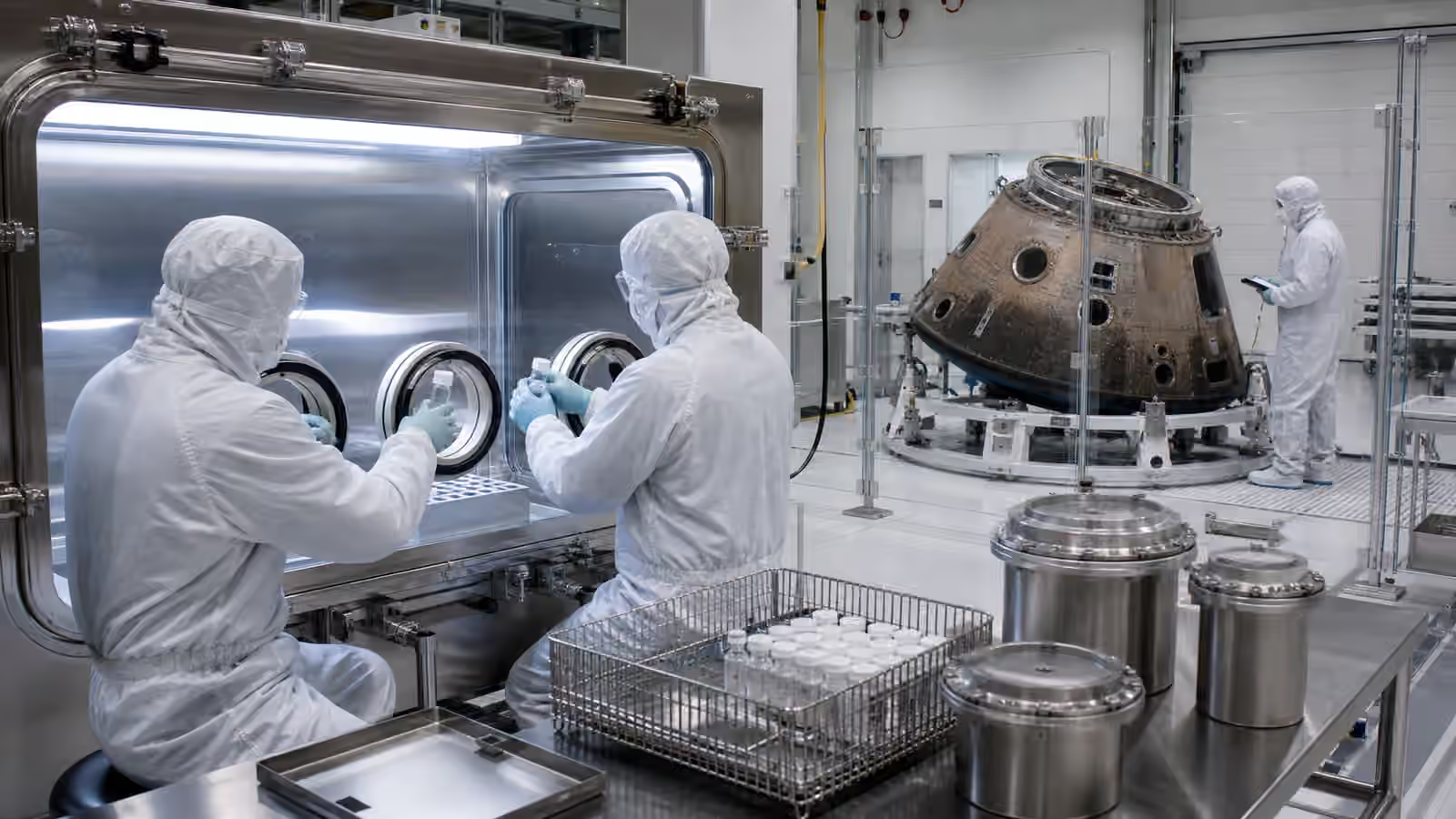
A sample container is not only a box. It is part of a cleanliness system that begins before launch. Materials, lubricants, seals, witness plates, cleaning procedures, assembly records, sterilization choices where applicable, and handling rules all influence what the container might contribute to the sample. If scientists later find an organic compound, a metal trace, a fiber, or a volatile, they need to know if it came from the destination or from the spacecraft.
This is why sample missions use evidence trails. Witness materials can record contamination exposure. Clean-room logs preserve handling history. Hardware blanks and calibration references help distinguish native material from mission-introduced material. The goal is not perfect innocence. Spacecraft are built from real materials by real people. The goal is to know the system well enough that contamination can be identified, bounded, and studied rather than hidden.
Spacecraft Materials and Contamination Control is therefore part of sample science. A material choice made for a seal, cover, adhesive, or tool coating may become a question in a laboratory years later. The sample is small. The consequences of careless material records are large.
The Return Trip Is a Mission of Its Own
Once a sample is sealed, the mission still has to bring it home. That may involve ascent from a planetary surface, rendezvous with an orbiter, departure from an asteroid, cruise navigation, Earth approach, capsule release, and recovery. Each step has to preserve containment and maintain enough tracking knowledge to find the capsule after landing.
Reentry, Heat Shields, and Recovery explains why returning through the atmosphere is its own discipline. A sample return capsule may be small, but it carries precious material and little room for repair. It must protect against heating, deceleration, vibration, and landing loads. It may need to avoid ocean water, dust, fuel residue, or uncontrolled handling after touchdown. Recovery is not an afterthought. It is part of sample preservation.
The return path also affects public trust. If a mission involves material that requires special containment, the safety case has to be clear before the capsule arrives. Even when the material is not considered biologically hazardous, the mission still needs disciplined recovery to protect science. A capsule sitting exposed to weather, mishandled by unprepared crews, or opened in the wrong environment can lose evidence that took years to retrieve.
Curation Turns Arrival Into Science
The mission does not end when the capsule is found. Curation begins. The sample may be moved to a receiving facility, inspected, documented, opened in controlled conditions, divided, stored, imaged, weighed, and cataloged. Scientists may request portions for analysis while curators preserve enough material for future methods. Some samples may need dry nitrogen cabinets, cold storage, clean tools, sealed handling, or special procedures for volatiles.
Curation protects time. The first scientists to study a returned sample will not ask every question worth asking. Future instruments may measure things that are impossible or impractical now. A well-curated sample remains useful for decades because the mission preserved both material and context.
Payload Calibration and Validation is about trust in space data, but the habit is similar. Evidence needs provenance. A spectrum, image, or rock fragment becomes more valuable when the chain of custody and measurement conditions are known. Sample return makes provenance physical.
Mission Architecture Holds the Chain Together
A sample return mission can require multiple spacecraft elements: lander, rover, ascent vehicle, orbiter, return stage, capsule, ground recovery, and curation facility. Not every mission uses all of those pieces, but every sample return has to connect collection, containment, transport, reentry, recovery, and science. Weakness in one link can reduce the value of the whole mission.
Space Mission Architecture and Tradeoffs gives the right lens. A larger sample may require a heavier container, stronger return capsule, more ascent capability, and more complex recovery. A cleaner system may require materials and procedures that raise cost and schedule. A more ambitious site may increase landing risk. A faster return may reduce cruise time but demand harder trajectory choices. The mission is a chain of tradeoffs around evidence.
This architecture also has to handle failure cases. What if the first sampling attempt collects too little? What if the container seal is uncertain? What if the spacecraft misses a planned transfer? What if recovery weather is poor? The mission may need backup containers, repeated sampling chances, health checks, tracking aids, and recovery procedures that preserve the sample even when events are not ideal.
Bringing Something Home Changes Responsibility
Remote sensing lets a spacecraft observe and leave the target behind. Sample return changes the relationship. It removes material from another world and places it into human custody. That act can be scientifically powerful, but it also carries responsibility to preserve context, avoid contamination, share access fairly, and explain the mission’s choices.
The best sample return missions do not treat the capsule as a trophy. They treat it as a vessel of evidence. The value is not only in the grains or cores inside. It is in the location, sequence, container history, temperature record, witness materials, recovery notes, curation logs, and the restraint to save some material for questions no one has asked yet.
Space exploration often celebrates arrival. Sample return celebrates return, but the deeper achievement is continuity. A piece of another place travels through machines, procedures, people, and years without losing the story that makes it meaningful. That is the design challenge. Bring the evidence home, and keep its memory intact.