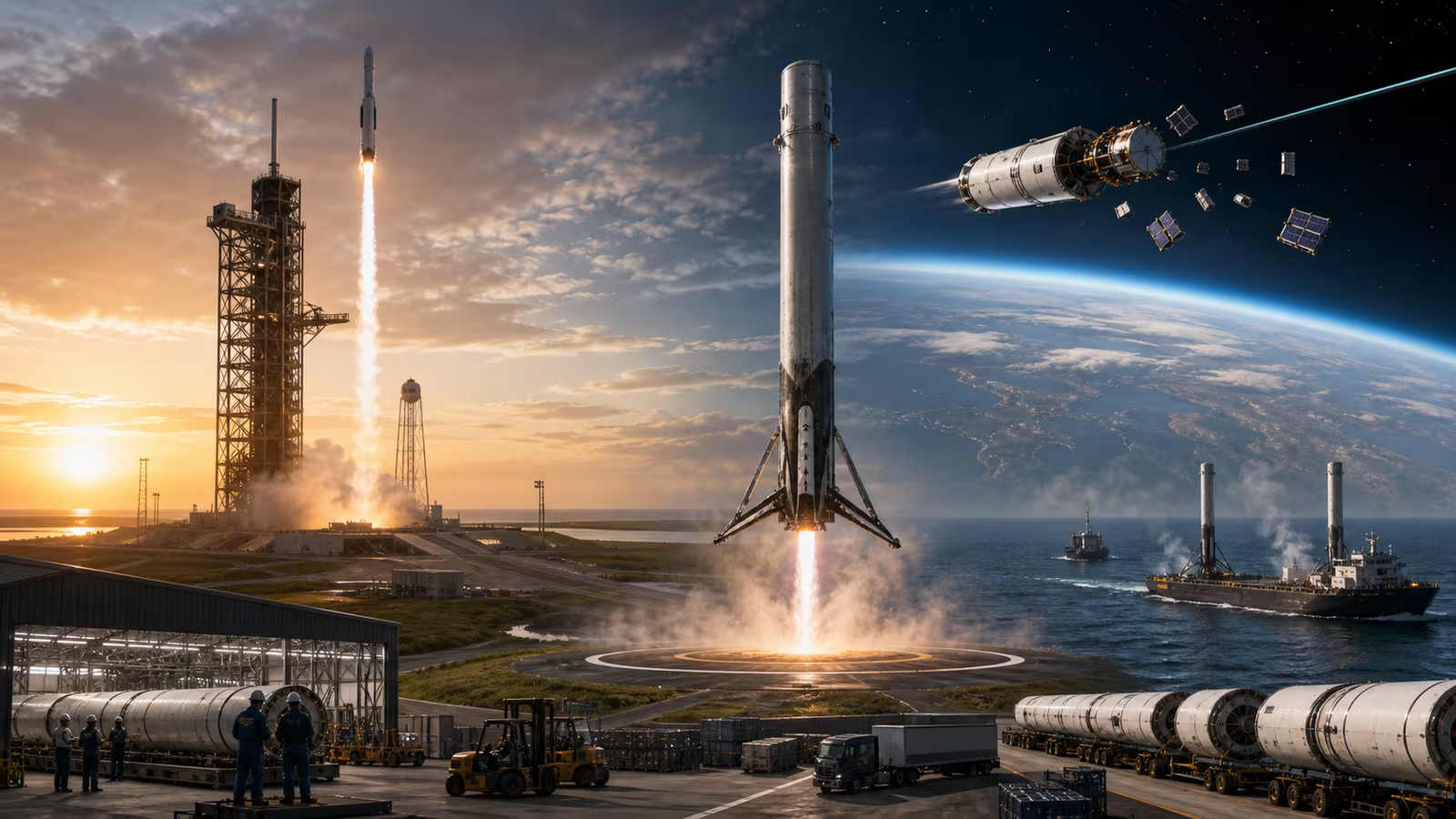
A reusable rocket landing is spectacular, but the landing is not the main point. The main point is repetition. If a booster can fly, return, be inspected, refurbished, and fly again, launch begins to look less like a custom event and more like transportation. That shift changes the space economy because almost every space business starts with the same problem: getting mass to orbit.
Rockets have traditionally been expensive partly because they were thrown away. Imagine taking a long flight and then scrapping the airplane after landing. Every ticket would include the cost of a new airplane. Reusable rockets do not make space easy, but they attack that absurdity. They turn the most expensive part of the launch vehicle into something that can carry cost across multiple missions.
Reuse is a system, not a trick
Landing a booster is only one step. The booster must survive launch stress, reentry heating, engine relight, landing forces, salt air or pad conditions, inspection, transport, refurbishment, and recertification. The launch company must know what to replace, what to trust, and how to fly again without excessive delay. If refurbishment takes too long or costs too much, reuse loses value.
This is similar to race cars or aircraft maintenance. The machine may be reusable, but only if the maintenance system is disciplined. Fast turnaround comes from design choices, data, procedures, spare parts, trained teams, and learning from repeated flights. Reuse is manufacturing, operations, and logistics as much as rocketry.
The best economic outcome comes when a reusable system flies often. If a vehicle flies once a year, the fixed costs remain heavy. If it flies frequently, the company learns faster and spreads infrastructure costs over more missions.
Lower launch cost changes what can be tried
When launch is rare and expensive, spacecraft designers become extremely cautious. Every kilogram is precious. Every mission carries high pressure. Lower-cost and more frequent launch changes the culture. Satellite operators can deploy constellations, replace hardware sooner, test new designs, and accept some iteration. Universities, startups, and smaller countries can reach orbit more easily than before.
This does not mean satellites become disposable toys. Space hardware still costs money, and debris responsibility matters. But the economics become less frozen. A company can build version one, learn, and launch version two. That software-like rhythm is one reason LEO constellations have grown quickly.
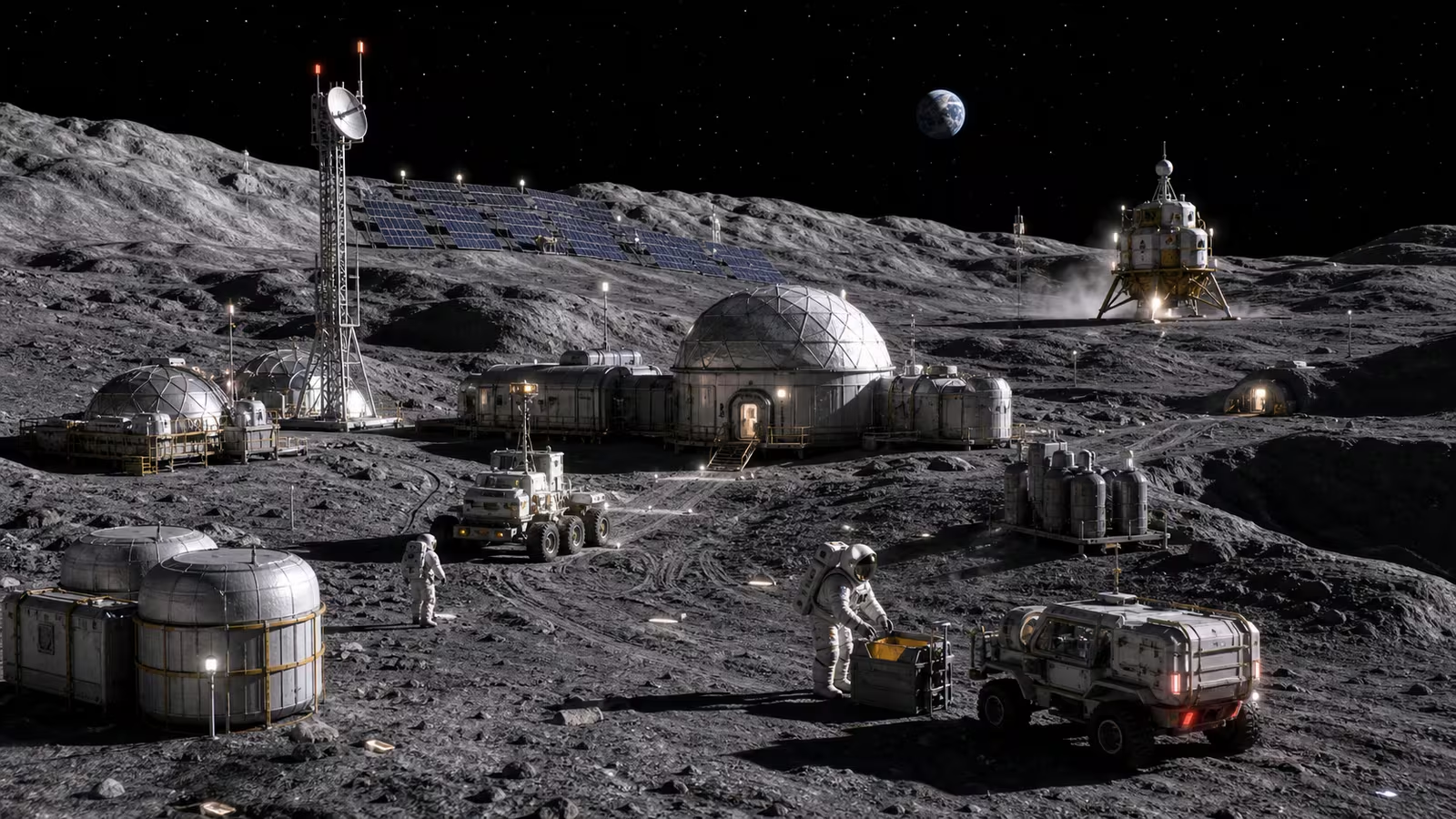
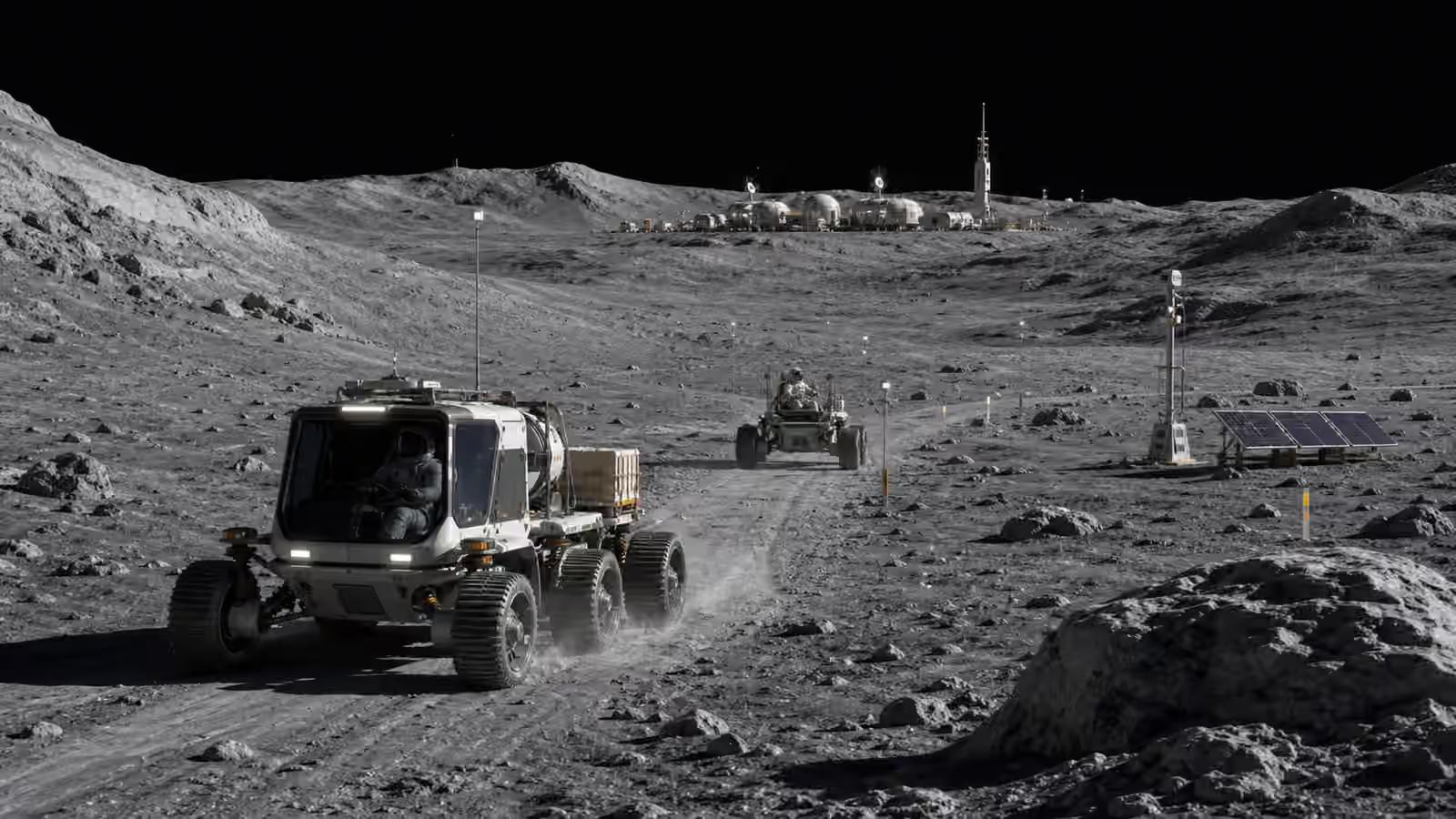
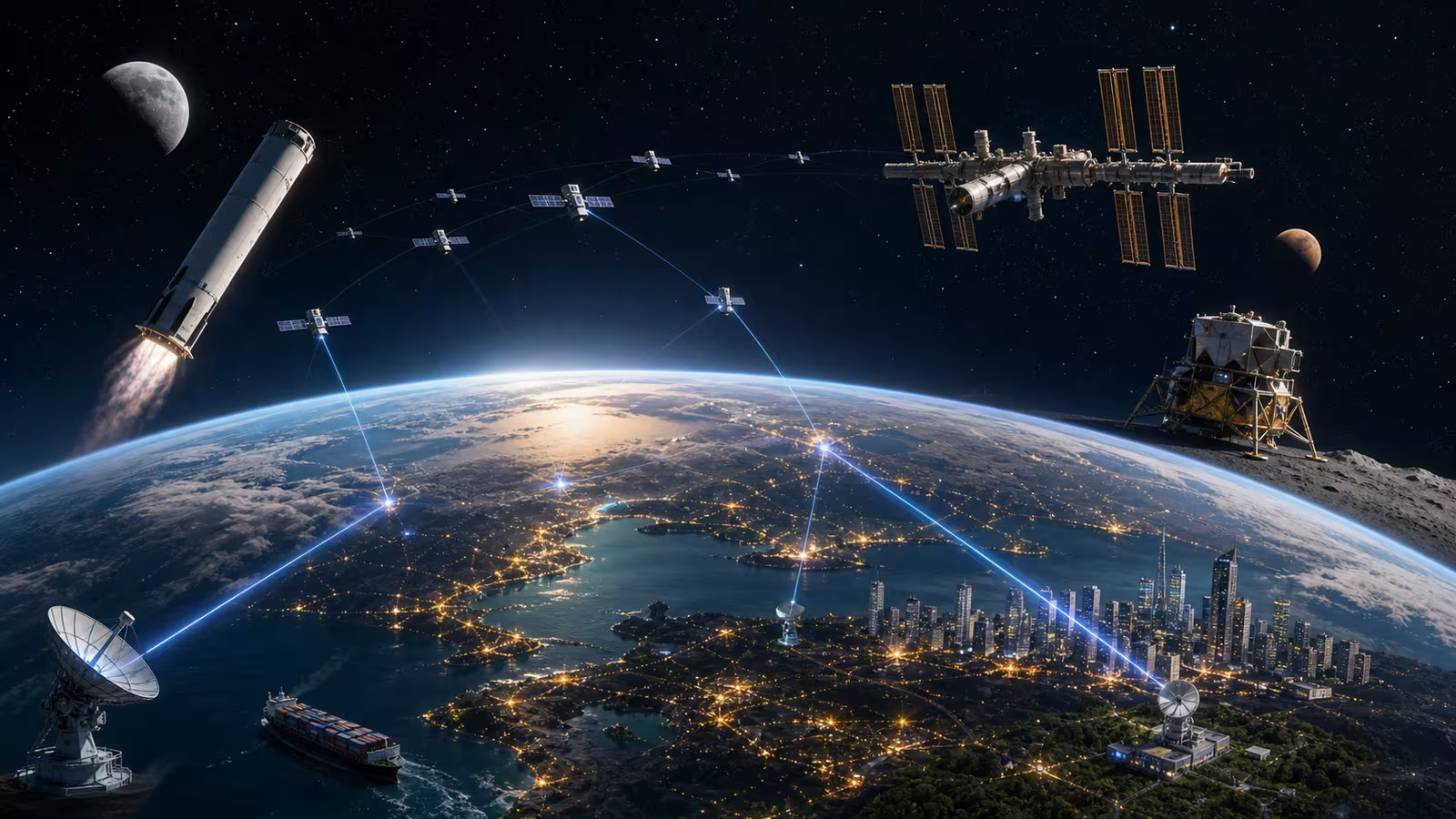
Reusable launch also supports heavier ambitions. Space stations, lunar cargo, fuel depots, large telescopes, in-space manufacturing, and planetary missions all benefit when transportation is cheaper and more regular. A port becomes valuable when ships come often. Orbit becomes more useful when launch cadence rises.
The payload still matters
Cheaper launch is not enough by itself. A satellite business still needs customers, spectrum rights, ground stations, manufacturing, insurance, operations, and regulatory approval. A lunar business needs cargo, power, landing precision, communications, and a reason to go. A space station needs crew or automated operations, life support, research demand, safety, and return paths.
Launch is the front door. It does not furnish the house. But a cheaper front door changes how many people can enter and what they can carry.
This is why reusable rockets are best understood as an enabling layer. They do not guarantee a space economy, but they make more experiments affordable. The winners are the services that use frequent launch to deliver real value.
Competition and reliability
A healthy space economy needs reliable launch options. If one provider dominates, customers may face schedule risk or pricing power. If several providers can launch different payload sizes to different orbits, the market becomes more resilient. Reuse can help one company scale, but the broader economy benefits from diversity.
Reliability is not only successful launches. It includes schedule reliability, fair pricing, responsive customer service, regulatory coordination, range availability, weather planning, and safe operations. A launch that is cheap but often delayed may still be costly for a customer with a tight deployment plan.
Environmental and local effects
Launch has environmental and community impacts. Rockets create emissions, noise, sonic booms, debris risk, water deluge needs, land-use conflicts, and local disruption. Reuse may reduce manufacturing waste per flight, but more frequent launches can increase local effects. Different propellants have different emissions profiles. Launch sites must balance economic opportunity with environmental review and community concerns.
The space economy should not pretend the ground does not matter. Rockets leave Earth from real places where people, wildlife, coastlines, and regulations exist.
Why this matters
Reusable rockets matter because they change the tempo of space. A rare-launch world favors national programs and very expensive missions. A frequent-launch world supports constellations, replacement cycles, commercial stations, lunar logistics, and more diverse experiments. It makes space less like a ceremonial expedition and more like a difficult but repeatable supply chain.
For a normal reader, the useful questions are practical. How much can the rocket carry? How often does it fly? How much refurbishment is needed? What orbit can it reach? How reliable is the schedule? Who are the customers? What happens to the upper stage? How are local impacts managed? Reuse is exciting, but its real success is boring: a rocket flies, returns, gets checked, and flies again until space access becomes routine enough for the next layer of infrastructure to grow.
That routine is the real revolution. Railroads did not matter because one train made one impressive trip. They mattered because schedules, depots, maintenance, and repeat service changed what businesses could assume. Reusable rockets are trying to do the same thing for orbit. When launch becomes something planners can count on, satellites, stations, lunar cargo, and research platforms can be designed around a service instead of a once-in-a-generation gamble.