Two spacecraft can share an orbit and still be nowhere near each other in any useful sense. They may be separated by hundreds of kilometers, moving at similar speeds around Earth but drifting relative to one another in ways that feel strange from a ground perspective. To meet, one spacecraft must change its orbit so that the geometry brings it toward the other at the right time, from the right direction, with the right speed, and with enough knowledge to stop before closeness becomes danger.
Rendezvous, proximity operations, and docking are the disciplines that make that meeting possible. They support crew and cargo vehicles visiting stations, satellites inspecting other satellites, servicing missions, debris-removal concepts, space tugs, refueling, assembly, and future lunar infrastructure. In-Space Servicing and Refueling depends on them. So do many visions of work beyond a single isolated spacecraft.
Approaching in Orbit Is Not Like Driving Across a Parking Lot
On Earth, closing distance usually means pointing toward something and moving forward. In orbit, motion is tied to energy and path. A small burn changes the shape or timing of an orbit, and the result may look indirect. Speeding up can raise part of the orbit. Dropping lower can make a spacecraft move around Earth faster. Relative motion near a target is governed by orbital mechanics that can surprise anyone expecting ordinary intuition.
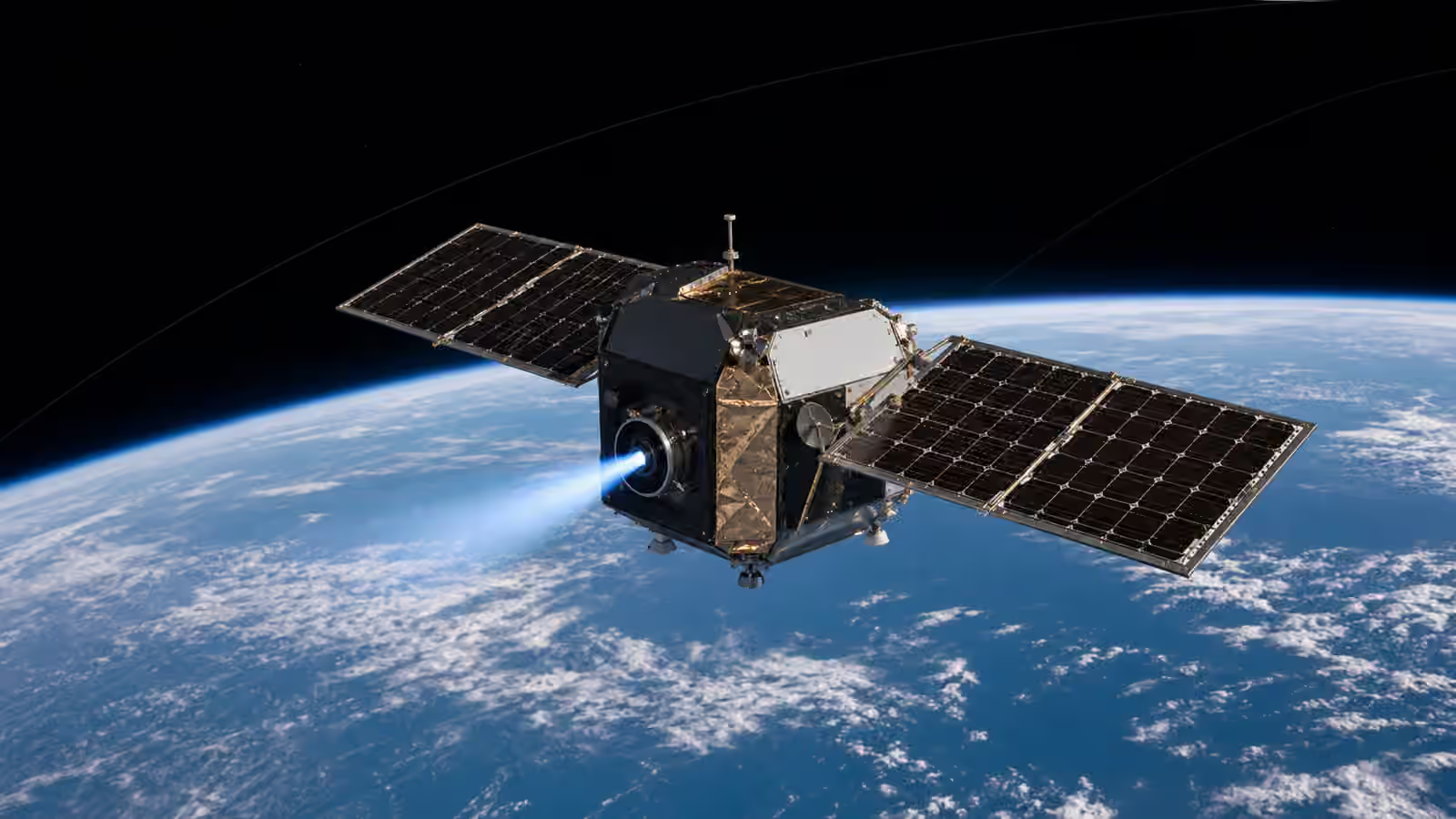
That is why rendezvous begins long before the vehicles are close. The chaser spacecraft plans phasing maneuvers so it arrives near the target at a controlled time. It uses navigation data from ground tracking, onboard sensors, satellite navigation when available, and sometimes information shared by the target. Each burn is followed by estimation: where are we now, what did the maneuver actually do, and what correction is needed?
Satellite Propulsion and Stationkeeping explains the small burns that keep spacecraft useful. Rendezvous uses the same basic fact, but with tighter consequences. A stationkeeping error may be corrected over time. A close-approach error can become a safety event. The closer the vehicles get, the more conservative the operation becomes.
Relative Navigation Builds the Picture
Proximity operations begin when the target is near enough that the chaser must understand relative position and motion with high confidence. At long range, ground tracking and orbital estimates may be enough. At closer range, the chaser may use cameras, lidar, radar, star trackers, inertial sensors, or cooperative navigation signals from the target. The point is not only to see the target. It is to estimate how the target is moving, how the chaser is moving, and whether the planned approach remains safe.
Cooperative targets make the job easier. A space station, cargo vehicle, or serviceable satellite may have markers, reflectors, navigation aids, published geometry, docking targets, and communication links. An uncooperative target is harder. A dead satellite may tumble, have unknown damage, or reflect sunlight in confusing ways. It may not share its attitude or health. Inspection missions often spend time watching before doing anything more ambitious.
Relative navigation is also a trust problem. Sensors can be blinded by glare, confused by shadows, or limited by range. Software can classify the wrong feature. A target may move unexpectedly. Mature systems use multiple cues, cross-checks, hold points, and abort paths. A spacecraft should not keep approaching simply because the timeline says so.
Keep-Out Zones Are a Safety Culture
Close approaches are managed through volumes and rules. A target may have approach corridors, keep-out zones, docking axes, retreat paths, and hold points. These are not ceremonial boundaries. They protect solar arrays, antennas, plumes, sensors, crewed modules, and the orbital environment. They also give operators predictable moments to assess whether the next step is acceptable.
A hold point is a pause with a purpose. The chaser stops relative motion, or holds a planned position, while teams verify navigation, communications, attitude, propulsion, target status, and authorization. If something looks wrong, the spacecraft can retreat or wait. The best proximity operation is often one that gives itself permission to be boring.
Plume effects matter. Thrusters do not only move the chaser. Their exhaust can disturb the target, contaminate surfaces, or push delicate hardware. Approach paths are designed so necessary burns do not spray sensitive areas. Docking mechanisms are designed to absorb small errors, but they are not invitations to be careless. The whole operation aims to arrive with low relative speed, known alignment, and enough control authority to back away.
Docking and Berthing Are Different Kinds of Contact
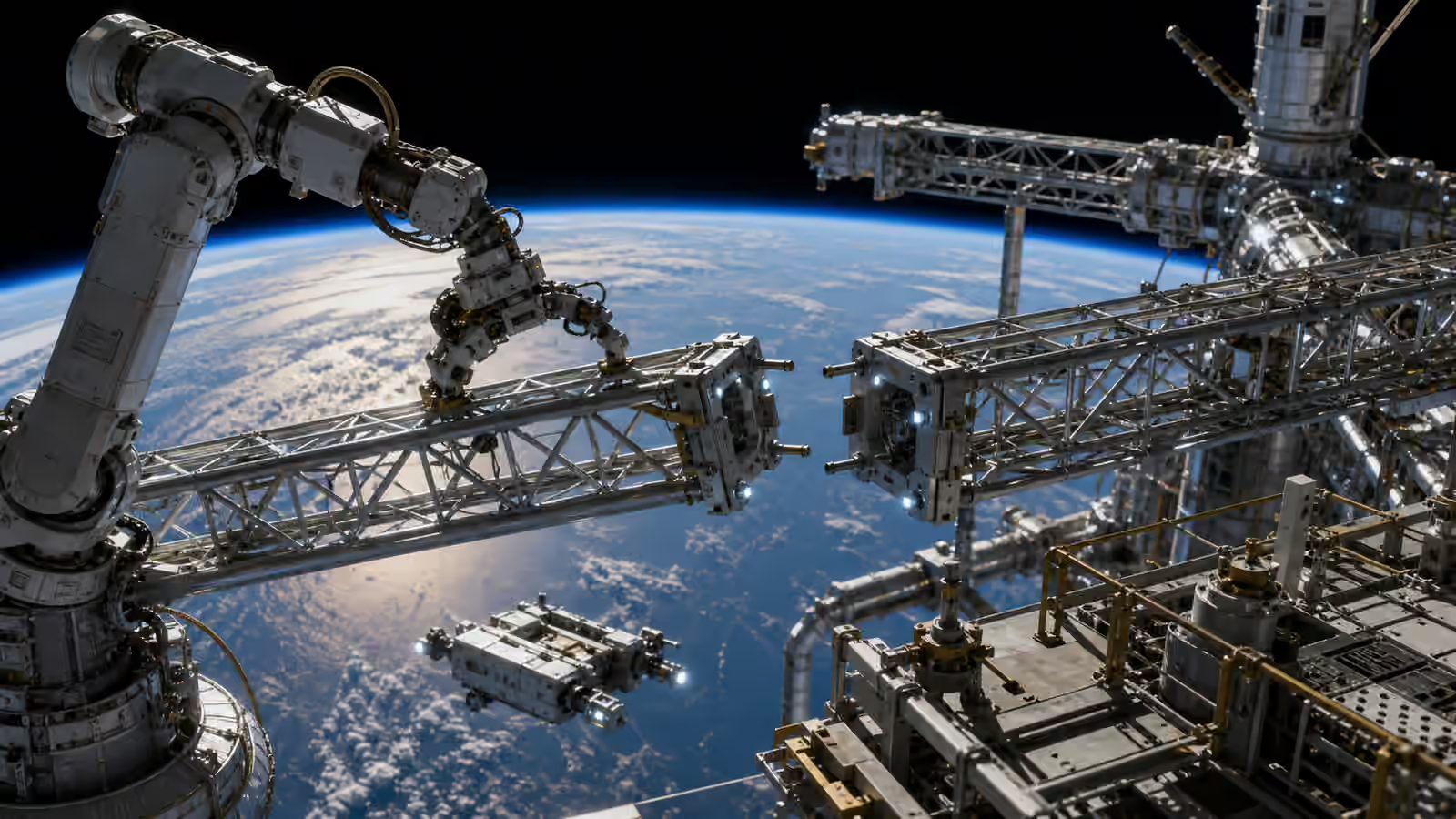
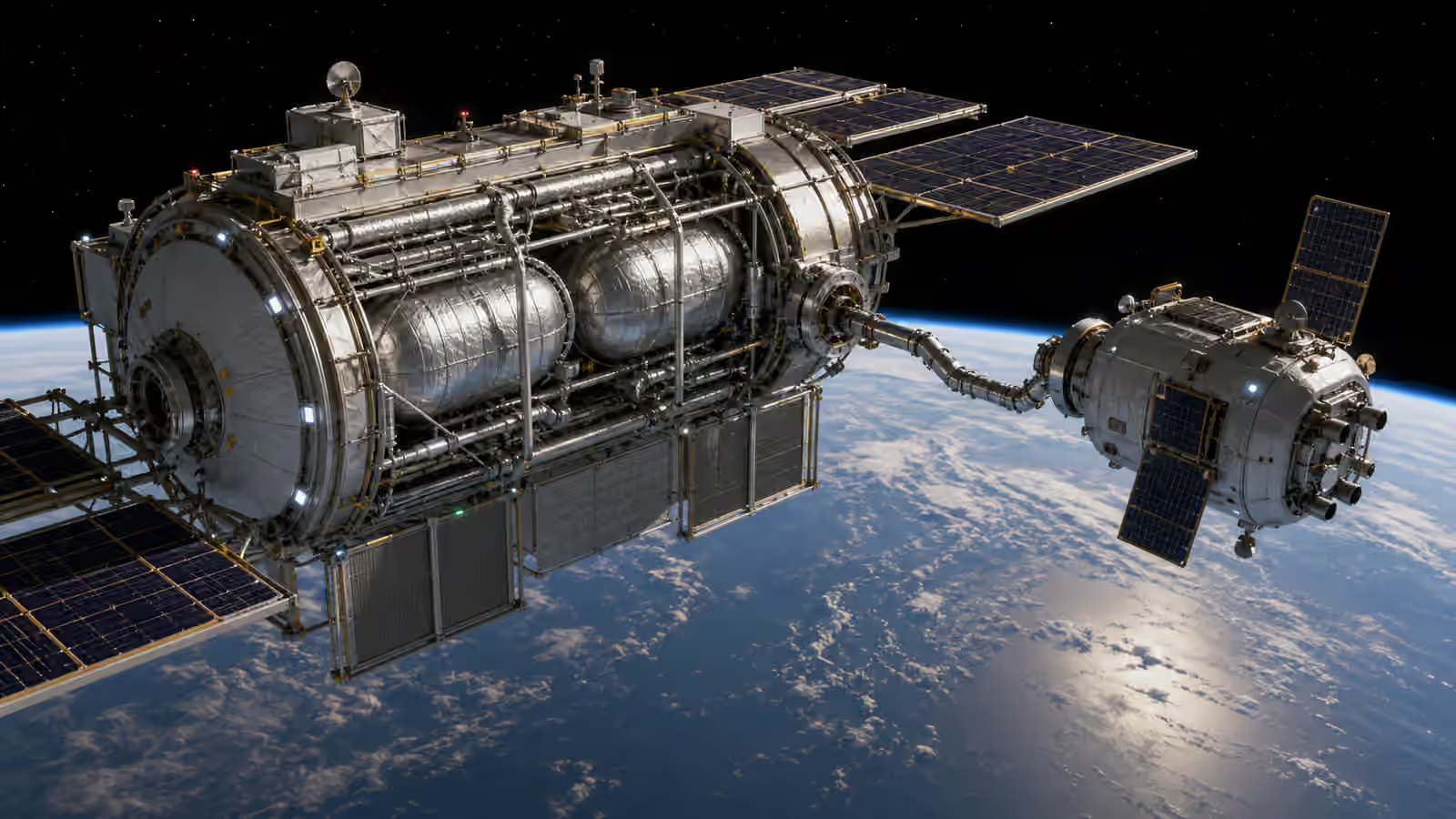
Docking usually means a visiting spacecraft actively aligns and connects with a port, using mechanisms that capture, latch, seal, or structurally attach the vehicles. Berthing usually means a spacecraft comes close and is then captured by a robotic arm or other system that moves it to an attachment point. The terms can vary by program, but the operational distinction is useful. In one case, the vehicle completes the final contact. In the other, the target or station system takes over near the end.
Contact is a mechanical event and an operational event. The vehicles must manage loads, alignment, seals if pressurization is involved, electrical connections, data links, and sometimes fluid transfer. Sensors confirm capture. Latches close. Systems check whether the connection is stable. If crew or cargo transfer follows, the docking event becomes part of a larger safety chain.
For uncrewed servicing, the contact may not be a docking port at all. A servicer may grapple a fixture, clamp a nozzle, attach a life-extension device, or stabilize a tumbling object. That is why future satellites may include servicing interfaces by design. A small target marker, grapple fixture, or standardized port can turn an impossible custom approach into a difficult but planned one.
Autonomy Has to Be Bounded
Communication delay near Earth is usually short, but proximity operations can still need onboard autonomy because events unfold faster than ground teams can safely micromanage every thruster pulse. Around the Moon or farther away, delay and limited contact make autonomy even more important. The chaser may need to detect drift, stop, retreat, or enter a safe mode without waiting for a human command.
Bounded autonomy is different from free-form improvisation. The spacecraft should know what it is allowed to do, under which sensor conditions, inside which volume, and with which abort rules. It should not invent a new approach because a planned sensor is noisy. Satellite Fault Protection and Autonomy describes this broader discipline: autonomy is useful when it is constrained by mission intent and tested against plausible failures.
Testing is therefore central. Rendezvous software is exercised in simulation, hardware-in-the-loop labs, optical test setups, and rehearsed operational procedures. Teams care about off-nominal cases because a close approach gives little room for confusion. What happens if lidar drops out? What happens if the target rotates slowly? What happens if a thruster underperforms? What happens if a hold point cannot be maintained? Those questions are part of the design, not gloomy speculation.
The Target Has Rights Too
Approach operations are not only technical. They are also about consent, ownership, and coordination. A spacecraft that can approach another spacecraft is capable of helpful servicing, but it can also look threatening if the owner has not agreed. Space Law and Orbital Governance explains why responsibility and permission matter in orbit. Proximity capability makes those questions concrete.
For cooperative missions, roles are negotiated in advance. The target owner shares geometry, constraints, communication protocols, and safety rules. The chaser operator shares approach plans, abort modes, navigation methods, and contingency procedures. Tracking organizations may need notice so unusual relative motion is not misread. If the target is defunct, ownership still matters. A dead satellite is not abandoned property simply because it is silent.
Traffic coordination also matters. A rendezvous can create multiple objects, maneuvers, and temporary uncertainties. If a servicing vehicle releases a cover, deploys a tool, or separates after contact, that activity belongs in the orbital traffic picture. Space Debris and Orbital Traffic is not a separate subject from proximity operations. It is the shared neighborhood that makes careful approach necessary.
A Capability That Makes Infrastructure Possible
Rendezvous and docking are easy to notice when people or cargo are involved, but their deeper importance is infrastructure. Space stations need visiting vehicles. Orbital manufacturing may need resupply and return. Space tugs may need to capture hosted payloads or release them safely. Servicing missions need inspection, stabilization, and contact. Lunar operations may need depots, relays, lander rendezvous, and assembly around different gravitational environments.
The common thread is trust at close range. Space infrastructure cannot mature if every object must remain isolated forever. Some machines will need to meet, connect, transfer, repair, refuel, assemble, or depart. Those actions require a culture of measured approach: know the geometry, respect the target, verify the sensors, preserve abort options, and treat contact as something earned.
The public image of docking is often a graceful final alignment. The real work is the sequence that makes grace possible. It is the phasing burn days earlier, the navigation filter, the hold point, the lighting check, the plume analysis, the target marker, the authority to retreat, and the discipline to stop when the data is not good enough.
That discipline is why rendezvous belongs on a space infrastructure shelf. It turns proximity from a hazard into a tool.