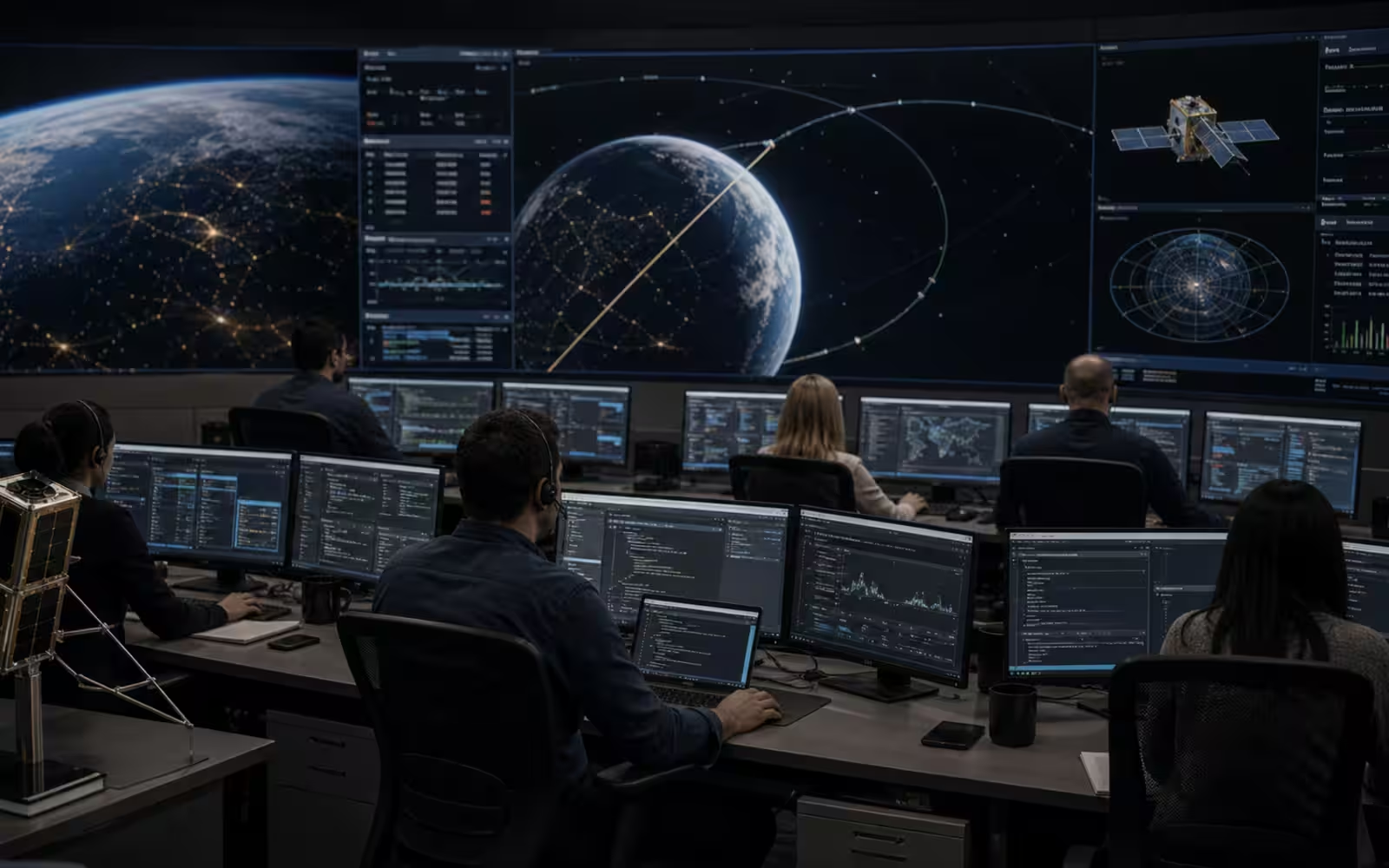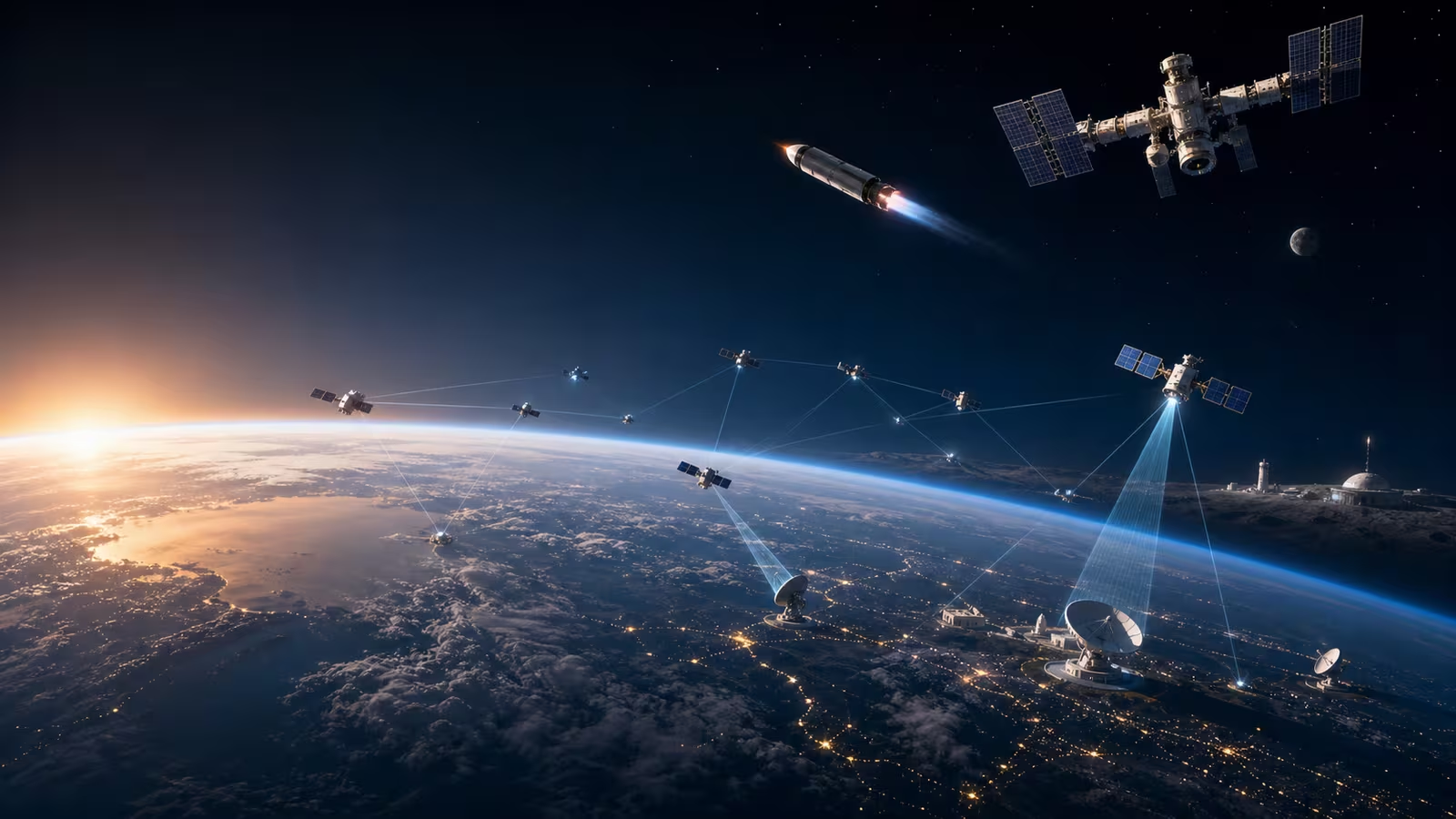
For most of modern history, space felt like a stage for rare events. A rocket launch. A moon landing. A spacewalk. A telescope image. Those moments still matter, but they are no longer the whole story. Space is becoming infrastructure: a working layer above Earth that supports internet connections, weather forecasts, farm decisions, shipping routes, disaster response, emergency communications, financial timing, climate monitoring, defense, and scientific measurement.
The shift is similar to what happened with undersea cables. Most people do not think about the fiber lines crossing oceans, but modern life depends on them. Space is becoming another invisible layer of the same kind. You may not see the satellite that helps route a ship, time a bank transaction, connect a rural home, guide a storm forecast, or map wildfire smoke. You simply experience the service.
Low Earth orbit changed the feel of space
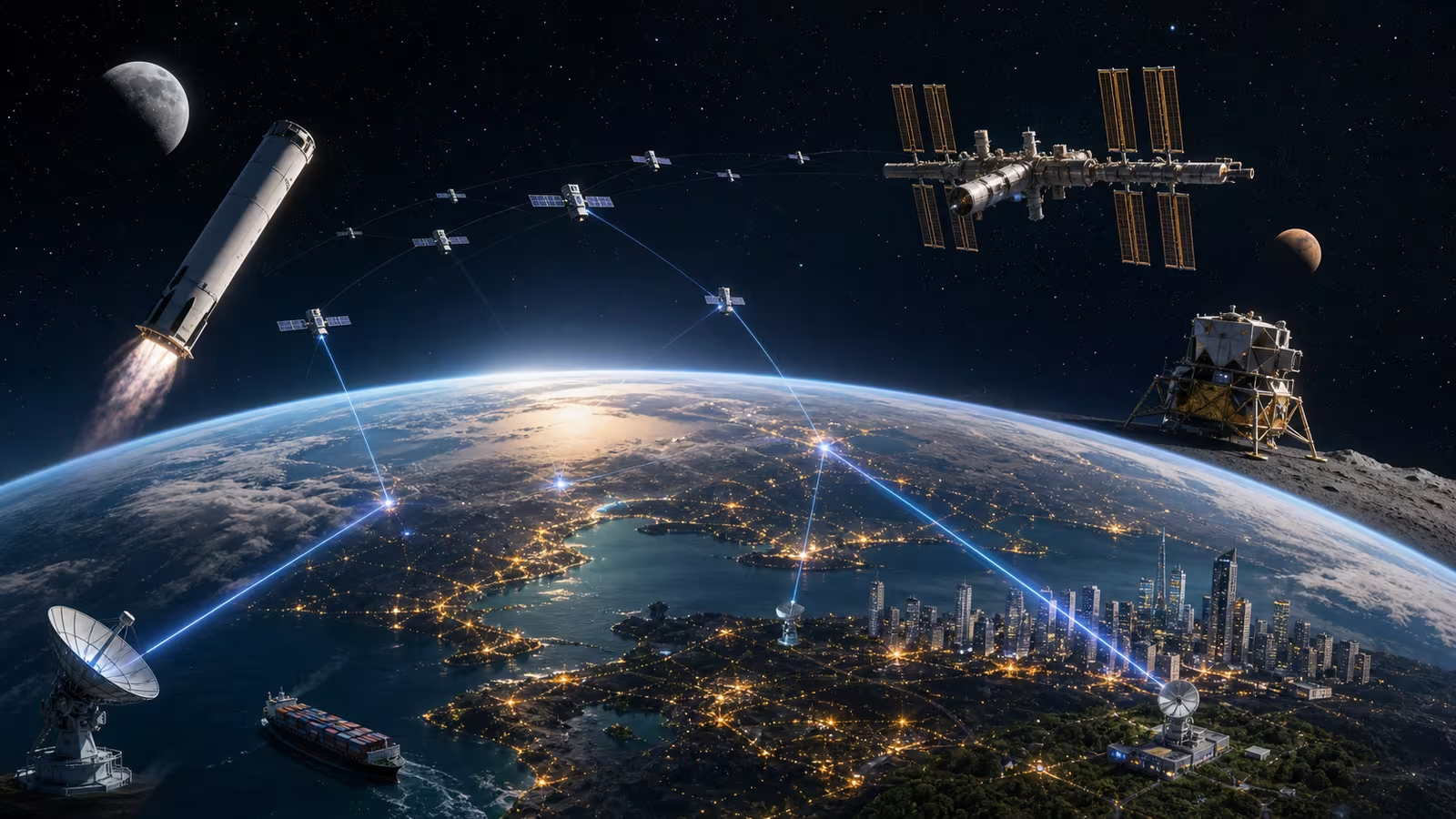
Low Earth orbit, often shortened to LEO, is close by space standards. Satellites there circle Earth quickly and sit much nearer than traditional geostationary satellites. That closeness changes what they can do. Signals travel a shorter distance, which can reduce delay. Smaller satellites can be launched in groups. Networks can be refreshed more often. Instead of one huge satellite parked far away, a company may operate hundreds or thousands of moving satellites that hand connections from one to another.
The analogy is a city full of delivery bikes versus one distant warehouse truck. A high satellite can cover a wide area, but the signal travels far. A LEO constellation needs many satellites because each one sees a smaller patch of Earth at a time, but the connection can feel more responsive. That tradeoff is why satellite internet has changed so quickly.
LEO is also becoming crowded. Useful orbits are not infinite. Satellites need tracking, coordination, collision avoidance, spectrum rights, and end-of-life plans. The space economy is expanding, but expansion without rules can damage the environment it depends on.
Launch became logistics
Reusable rockets are one of the biggest reasons the modern space economy feels different. When rockets were mostly thrown away after one flight, launch was expensive and rare. Reuse changes the rhythm. A booster that lands, gets inspected, and flies again can make launch feel more like a transportation service than a custom national event.
Lower launch costs do not make space cheap in an everyday sense, but they change what becomes thinkable. More satellites can be launched. Companies can replace older models faster. Universities and smaller countries can access orbit more easily. Space stations, lunar cargo, and in-space manufacturing become more plausible because transportation is less impossible.
The important point is that reuse is not just a spectacular landing video. It is a maintenance, manufacturing, fueling, scheduling, safety, and supply-chain system. The economic value comes from flying often, learning quickly, and making space access routine.
Satellites are becoming services
Satellite internet is the clearest consumer example. In places where fiber, cable, or cellular towers are weak, satellite internet can provide useful connectivity. It can support rural homes, ships, aircraft, remote work sites, emergency response, and backup networks. Direct-to-phone satellites push the idea further by trying to connect ordinary phones when cell towers are unavailable.
Earth observation is less visible but just as important. Satellites watch clouds, crops, forests, oceans, ice, fires, storms, cities, and shipping. They help governments and businesses understand the planet in near real time. A farmer may not think “space economy” when checking drought data, but satellites may be part of the information chain.
The same pattern appears across navigation, timing, communications, and sensing. Space is most valuable when it turns into a service someone can use without being a space expert.
The Moon is becoming a logistics question
Lunar infrastructure sounds dramatic, but the practical pieces are ordinary: power, communications, landing pads, habitats, cargo delivery, mobility, dust control, navigation, storage, and maintenance. The Moon is not only a destination. It is an environment where every basic service must be brought, built, or learned.
This is why lunar plans often sound like early port planning. Before a place becomes productive, you need reliable ways to arrive, communicate, survive, unload cargo, move around, and generate power. A lunar economy will not appear because one lander succeeds. It will need repeated missions and boring competence.
Orbit needs stewardship
The more useful space becomes, the more space debris matters. A paint chip moving at orbital speed can damage hardware. A dead satellite can threaten active satellites. A collision can create more debris, which increases future risk. Space is large, but useful orbital shells are busy and shared.
Good space stewardship includes tracking, collision avoidance, deorbit plans, satellite design, coordination, and law. It also includes business incentives. If companies benefit from orbit but leave risks for everyone else, the system becomes fragile. Space law may sound abstract, but it decides whether infrastructure remains usable.
Why this matters
Spacefront matters because space is no longer separate from daily life. It is becoming part of the internet, the phone network, the weather system, the logistics map, the climate record, and the security environment. That makes space more useful and more vulnerable.
For a normal reader, the best way to understand the modern space economy is to ask what service is being delivered. Is this satellite providing connection, observation, navigation, timing, manufacturing, research, or logistics? What orbit does it use? How does it launch, communicate, avoid debris, and end its mission responsibly? Once you ask those questions, space becomes less like science fiction and more like infrastructure overhead.