Planetary protection begins with a simple obligation: exploration should not make the evidence worse. A mission sent to another world can carry Earth material with it. A mission that brings samples home can carry material back. Most of the time this discussion is careful, technical, and procedural rather than dramatic. The point is not to feed fear. The point is to preserve science, protect future missions from confusion, and handle returned material with a level of discipline appropriate to uncertainty.
Spacecraft Materials and Contamination Control explains how particles, films, outgassing, and handling records affect spacecraft performance. Planetary protection adds a scientific and environmental dimension. A speck of terrestrial biological material may not matter to a communications satellite, but it can matter deeply to a mission looking for signs of life or prebiotic chemistry. Contamination is not only dirt. It is misplaced evidence.
Forward contamination confuses the destination
Forward contamination means carrying Earth material to another world in a way that could compromise science or alter a protected environment. The risk depends on the destination and the mission. A flyby of a dry, airless body is not the same as a lander going to a place that might preserve water ice, organics, or chemical conditions of astrobiological interest. The more a mission touches, drills, heats, vents, or moves through a sensitive environment, the more carefully it has to think.
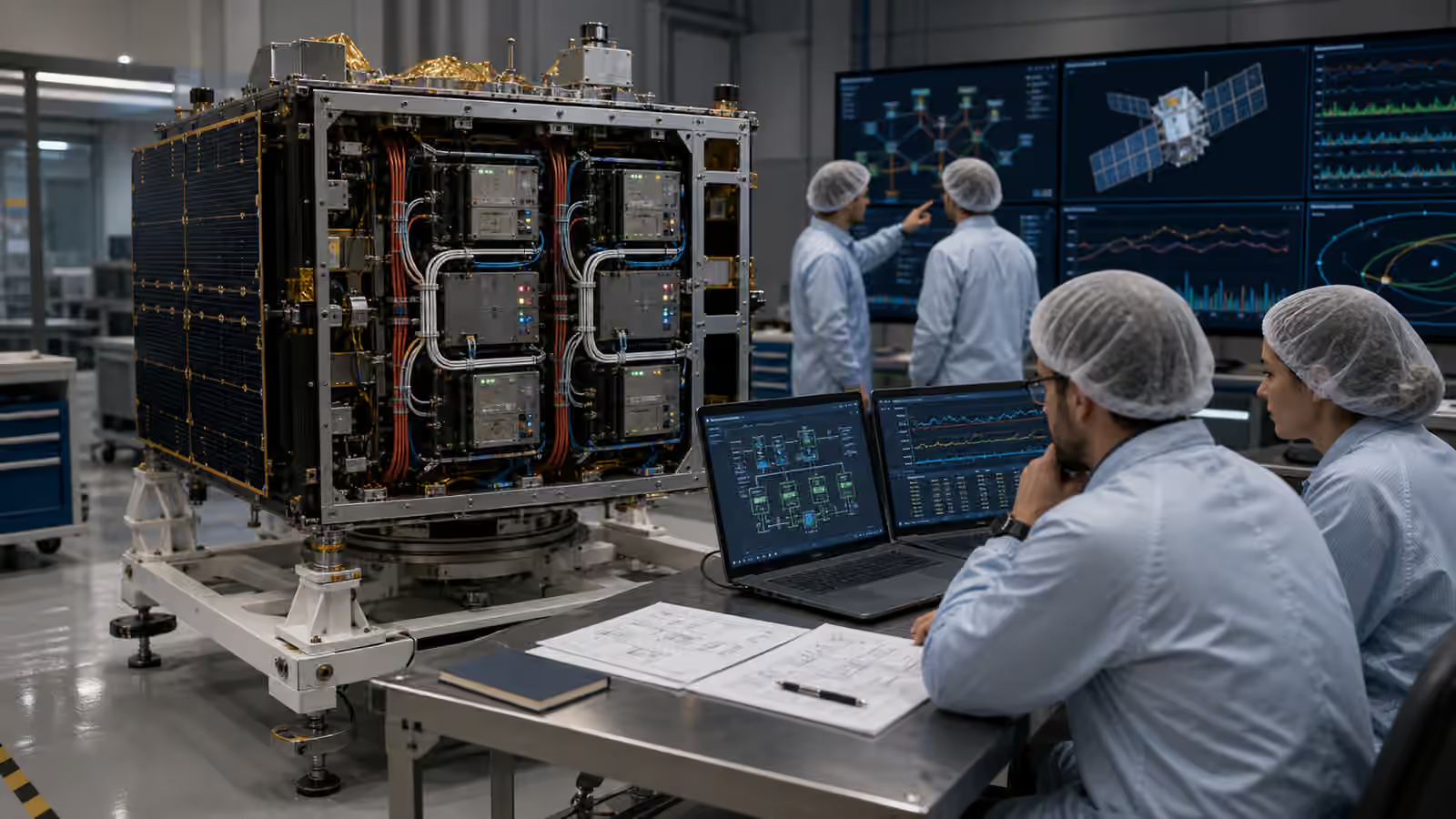
Sterilization and cleanliness are not one thing. A spacecraft may need bioburden control, clean-room assembly, dry heat treatment for some components, materials restrictions, witness plates, sampling records, packaging controls, and limits on how hardware is exposed. Some parts can tolerate aggressive cleaning or heat. Others cannot. Instruments, electronics, lubricants, seals, adhesives, optics, and batteries all impose constraints. Planetary protection is therefore a design problem, not just a final cleaning step.
Mission Assurance and Spaceflight Reviews fits naturally here because confidence comes from evidence. A planetary protection plan has to show what was cleaned, what was measured, what was protected, what changed, and who accepted the residual risk. It is not enough to say the spacecraft was built carefully. The mission needs a traceable argument.
Backward contamination is handled through containment
Backward contamination means bringing material from another world back to Earth in a way that requires controlled handling. This does not mean every returned sample is treated the same. Material from the Moon, a comet, an asteroid, Mars, or an icy moon can raise different questions. The appropriate containment approach depends on the source, the mission, the state of the material, and the scientific and policy framework around it.
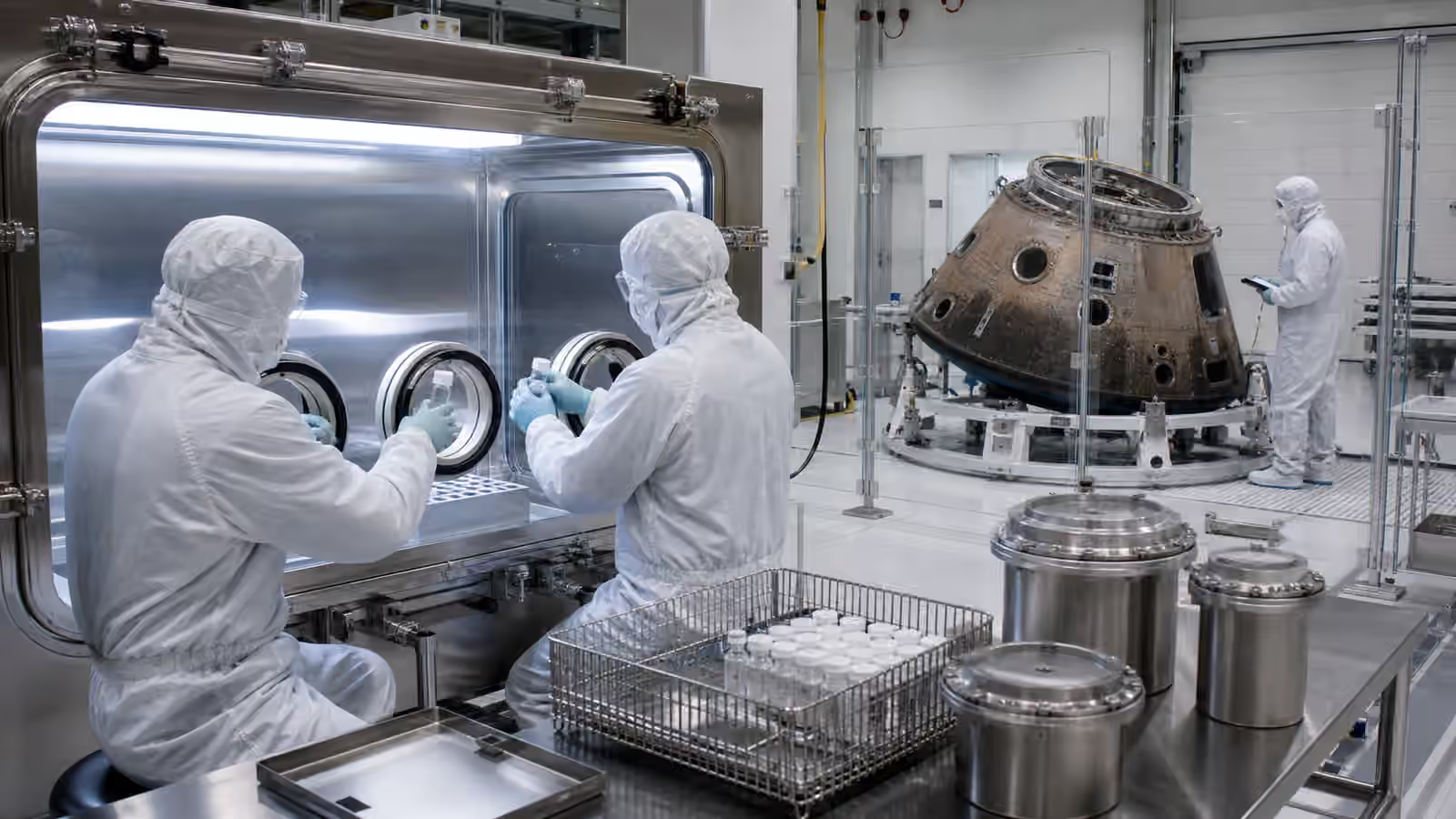
Sample containment begins long before the capsule lands. The collection hardware, seals, tubes, storage volume, return capsule, recovery procedure, transport path, receiving facility, and curation plan all have to support the same promise: the sample remains scientifically meaningful and responsibly isolated until it is understood. A tiny leak, a mislabeled container, a dirty tool, or an unclear custody record can damage confidence even if the material itself remains intact.
Reentry, Heat Shields, and Recovery covers the return leg of spacecraft. For sample return, recovery is not only finding the capsule. It is preserving condition, documenting context, avoiding uncontrolled exposure, and moving the capsule into a facility designed for the next phase of care. The landing site becomes the first room of the laboratory.
Clean rooms protect both directions of evidence
Clean rooms are often imagined as places that protect hardware from dust. In sample work, they also protect samples from the room and, when needed, protect the room from the sample. Airflow, garments, gloveboxes, tools, containers, filters, materials, cleaning procedures, monitoring, and human habits all matter. A sample receiving facility is a system of barriers and records, not just a bright room with stainless steel.
The challenge is that science wants access. Researchers need to see, weigh, image, subdivide, measure, and sometimes alter samples. Containment wants restraint. It asks who opens what, under which atmosphere, with which tool, after which verification, and with what record. Good sample handling balances those needs by making access procedural rather than casual. Each action should leave behind enough evidence that another team can understand the sample’s path.
Payload Calibration and Validation offers a useful analogy. Space data is not trustworthy simply because it came from orbit. A sample is not trustworthy simply because it came from another world. Its meaning depends on context, calibration, chain of custody, contamination knowledge, and honest uncertainty.
Planetary protection shapes mission architecture
Planetary protection can affect where a mission may land, which materials it can use, how it is assembled, how warm components may become, how vents are routed, how drills are cleaned, how samples are sealed, and what happens at end of mission. It can shape launch processing and integration because clean hardware must stay clean through transport, testing, and payload encapsulation. Payload Integration and Rideshare Launches shows how many interfaces appear before orbit. Sensitive missions add contamination-control expectations to those interfaces.
It can also affect disposal. A spacecraft that might carry Earth organisms should not be allowed to crash into a protected environment at mission end merely because operations are finished. Satellite End of Life discusses responsible retirement near Earth. Planetary missions need the same habit with different geography. End-of-mission choices can protect future science as much as launch cleanliness does.
Planetary protection also interacts with autonomy. A lander or rover may need to respond to off-nominal events without violating protected boundaries or contaminating sensitive regions. Planetary Landing Systems explains how landing systems make choices under delay. Those choices can carry scientific stewardship consequences when a destination is sensitive.
The rules are not only technical
Planetary protection sits at the boundary of engineering, science, policy, and public trust. International guidelines, national review processes, mission categories, scientific advisory groups, and agency practices help decide what level of control is appropriate. The details can change as knowledge improves. A place once considered low interest may become more sensitive after new evidence. A technique once considered adequate may be revised after better understanding.
Space Law and Orbital Governance provides the broader governance frame. No mission explores in a vacuum of responsibility. The scientific value of a destination may belong to humanity more broadly than to the organization that first reaches it. Preserving that value requires restraint even when a mission is technically capable of doing more.
This does not mean exploration should stop. It means exploration should carry its own cleanup, custody, and humility. The purpose of planetary protection is to make ambitious science more credible. A life-detection mission that cannot explain its contamination controls will struggle to persuade. A sample return mission that cannot explain containment will struggle to earn trust. Discipline protects discovery from its own shortcuts.
Containment is a promise to future investigators
The most important audience for planetary protection may be future scientists. They will ask what the spacecraft touched, what it carried, how the sample was sealed, what the clean room measured, which tools were used, how the container was opened, what blanks and controls exist, and how uncertainty was recorded. Their ability to answer new questions will depend on records made by people who could not know every future question.
That is why planetary protection belongs in Spacefront’s infrastructure story. It is not a dramatic add-on to exploration. It is one of the systems that makes exploration cumulative instead of careless. A mission that preserves evidence gives later missions a cleaner starting point. A sample that is contained, documented, and curated becomes more valuable with time. Responsible exploration does not only reach new places. It keeps those places scientifically legible after we arrive.