Large space infrastructure does not have to launch as one finished object. It can be assembled from pieces, if the pieces are designed for that future and the operation can be performed safely. On-orbit assembly is the practice of building, extending, repairing, or reconfiguring structures after launch. It can involve robotic arms, docking fixtures, modular trusses, power connections, thermal panels, antennas, habitats, servicing vehicles, or crew support. The idea is simple to describe and difficult to make routine.
The appeal is clear. A rocket fairing limits size and shape. Launch loads punish delicate structures. A folded spacecraft may need complicated deployable mechanisms to become large after launch. Assembly offers another path: launch sturdy modules, bring them together in orbit, and build a structure larger or more adaptable than any one launch could carry. Satellite Structures and Deployable Mechanisms explains the folded-hardware problem. On-orbit assembly asks when unfolding is not enough.
The Interface Is the Product
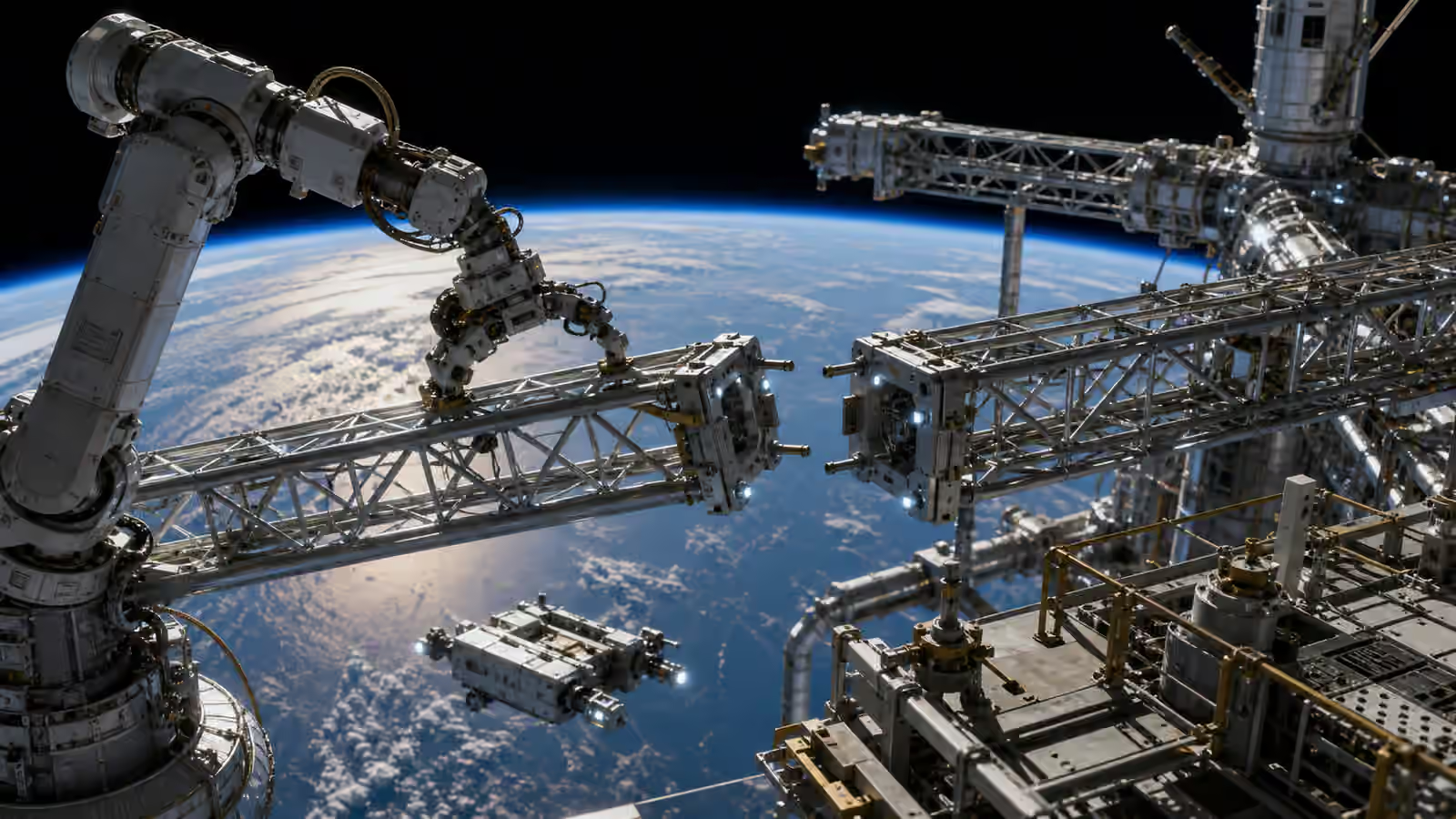
Assembly depends on interfaces. A module needs a place to be grasped, aligned, latched, powered, cooled, connected, inspected, and eventually released or serviced. If those features are added late, the operation becomes awkward. If they are designed from the beginning, the module is no longer just a standalone spacecraft part. It is a construction element.
Interfaces have to tolerate imperfect reality. A robotic arm may approach with small errors. Thermal expansion may shift dimensions. Lighting may make cameras less useful. A latch may need to pull two pieces together without jamming. A connector may need dust covers, alignment guides, or compliance so it does not demand impossible precision. The best interface is not necessarily the most elegant one on a drawing. It is the one that can be used repeatedly by the tools that will actually be present.
Rendezvous, Proximity Operations, and Docking provides the close-approach discipline behind this. A construction site in orbit is not a warehouse floor. Every visiting vehicle and every moving piece carries relative motion, collision risk, plume concerns, communication needs, and abort logic. Assembly begins before contact, with the geometry of approach and consent.
Robots Give Space Work Hands, Not Magic
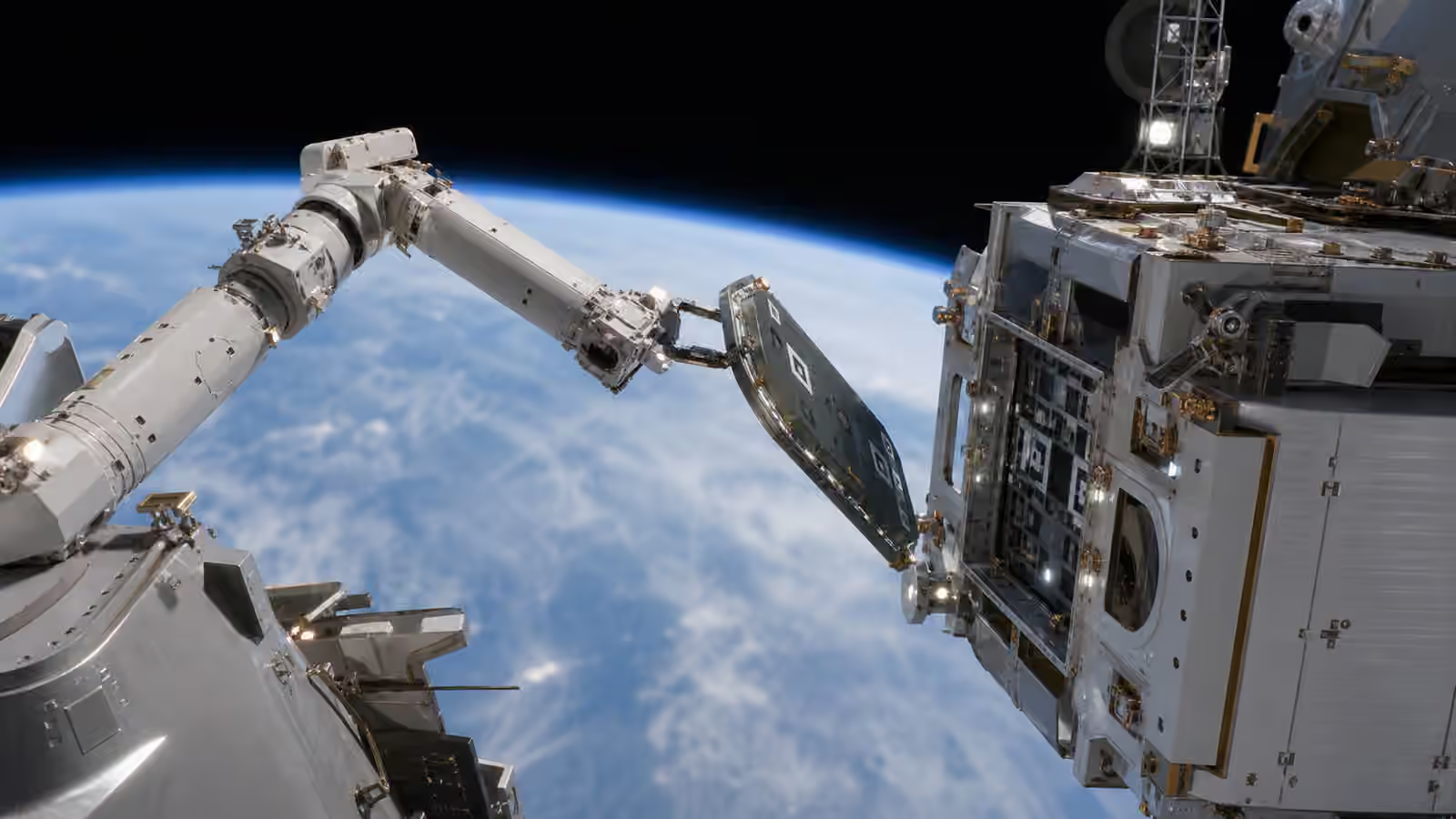
Robotic arms and manipulators are central to many assembly concepts because they can hold, align, inspect, and position hardware with patience. They can also work in places where crew time is scarce or EVA risk is not justified. But a robot does not make the problem disappear. It needs cameras, force sensing, end effectors, software limits, lighting, grapple fixtures, control modes, and operators who understand what contact means.
Space Robotics and Manipulators is the natural companion. The key lesson is that contact in orbit has to be earned. A manipulator can push a structure, twist a joint, excite vibration, or hide a bad alignment behind a camera angle. Assembly tasks therefore need rehearsals, models, keep-out zones, slow approaches, and ways to back out before a small mismatch becomes damage.
Autonomy may help, especially for repetitive tasks or delayed operations, but it has to be bounded. A robot can recognize fiducials, hold alignment, or stop on unexpected force. It should not be asked to improvise construction judgment without a tested envelope. The more valuable the structure, the more important it is to know when automation will pause and ask for ground or crew decision.
Modular Design Trades Launch Simplicity for Operations Complexity
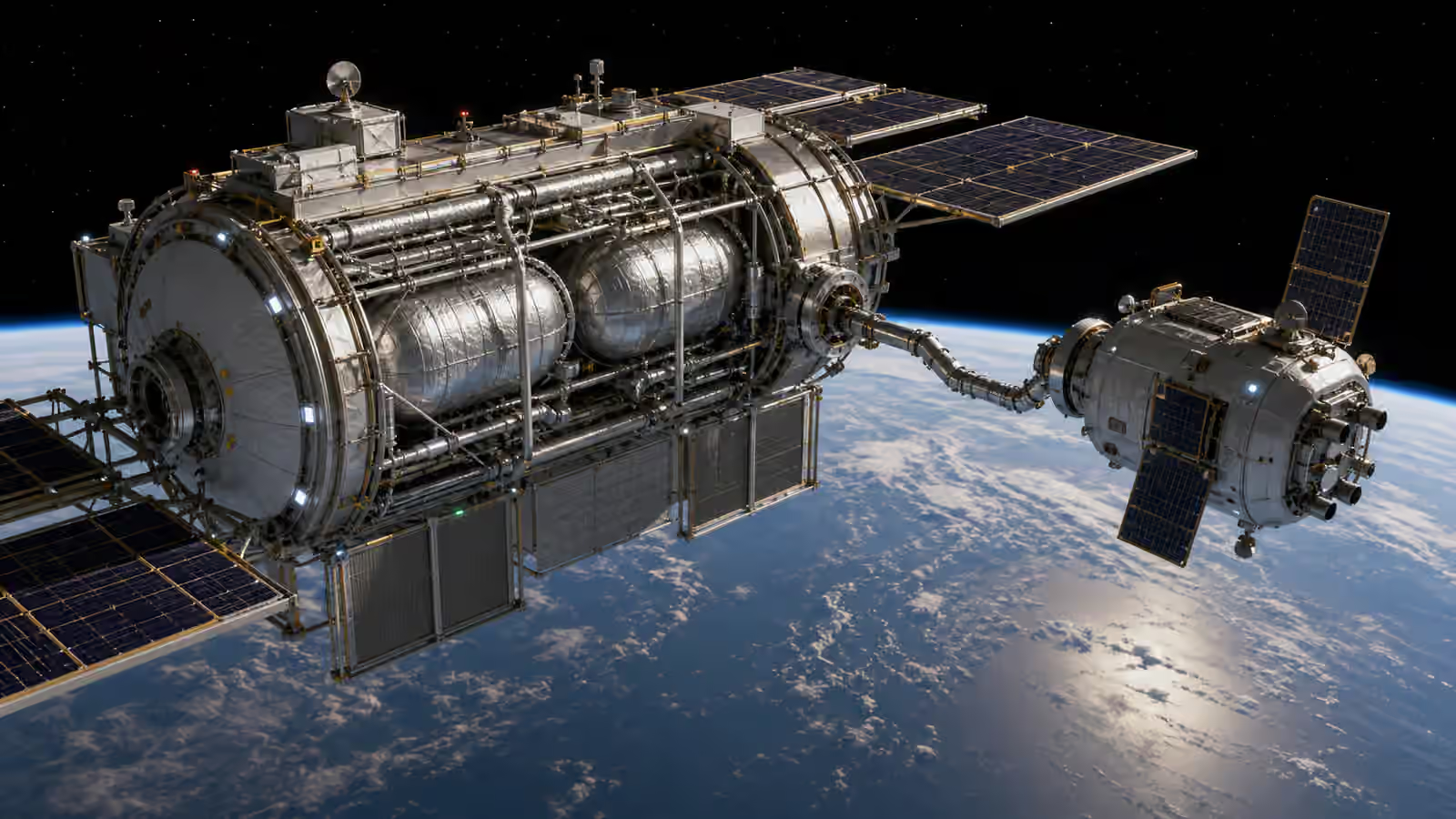
Modularity can make launch easier. A large structure can be divided into pieces that fit standard fairings, ride as secondary payloads, or travel with orbital transfer vehicles. Damaged modules might be replaced. Upgrades might be added later. A station, telescope, depot, or power platform could grow over time instead of being frozen at launch.
The trade is that the mission now includes construction operations. Each module needs tracking, delivery, temporary storage, approach planning, interface verification, power-up sequences, and integration tests. A module that launches successfully is not yet part of the structure. It has to be accepted by the site. Orbital Transfer Vehicles and Space Tugs explains why last-mile delivery matters. Assembly adds the final handoff from delivered hardware to working infrastructure.
Modular systems also have to manage tolerance buildup. A tiny alignment error in one joint may be harmless. Many tiny errors across a large structure can affect pointing, thermal behavior, vibration, or docking geometry. This is familiar in ground construction, but orbit removes easy access to measurement tools and rework. The assembly plan has to include metrology, inspection, and correction, not only connection.
Large Structures Have Dynamic Personalities
A long truss, broad antenna, solar power platform, or assembled telescope does not behave like a small rigid box. It flexes, vibrates, heats unevenly, and reacts to motion. A robotic arm that moves one end can excite modes across the structure. A docking vehicle can add loads. A thermal cycle can change alignment. A momentum wheel or thruster firing may create subtle pointing effects.
Satellite Attitude Control and Satellite Thermal Control both become more complex as structures grow. The control system has to understand the assembled shape, not the pieces on their own. Thermal design has to manage shadows, radiators, joints, and surfaces that may be installed over time. A structure built in phases may have several temporary states that need their own safe operating rules.
This is one reason assembly campaigns need verification after each step. A new module may add mass, shift inertia, change power flows, alter thermal behavior, or affect communication geometry. The mission should not wait until the entire structure is complete to discover that the first joint changed the pointing budget.
Inspection Is Part of Construction
On Earth, construction workers can walk around a joint, touch a surface, use a measuring tool, and look again from another angle. In orbit, inspection depends on cameras, sensors, telemetry, lighting, sometimes EVA, and sometimes visiting vehicles. The inspection plan has to be designed with the structure. If a latch state cannot be seen or inferred, operators may not know whether it is safe to load the joint.
Inspection also has to separate appearance from evidence. A camera view may look aligned but hide a connector that is not fully seated. A telemetry flag may report latch closure without proving that a secondary restraint is engaged. A thermal sensor may reveal a poor contact only after the system warms. Good assembly plans use several kinds of evidence where the consequence matters.
Mission Assurance and Spaceflight Reviews is relevant because on-orbit assembly extends the review mindset into operations. The mission needs criteria for proceeding from one step to the next. It needs hold points. It needs abort paths. It needs records that future operators can understand when a joint installed years ago becomes part of an anomaly investigation.
Assembly Could Change What We Build
If on-orbit assembly becomes routine, spacecraft design can change. Telescopes could have larger apertures than a fairing allows. Power systems could expand as demand grows. Habitats could be maintained and reconfigured. Depots could add tanks or docking ports. Antennas could be assembled from modular segments. Manufacturing equipment could be installed in stages rather than launched as one complex package.
Space Stations and Orbital Manufacturing describes the workplace side of this future. Assembly is the construction layer that would let orbital workplaces grow beyond the first layout. It also creates maintenance questions. A structure that can be assembled can often be inspected, repaired, upgraded, or partially retired. That is a different mindset from treating every spacecraft as sealed and disposable.
The risk is assuming that assembly is automatically cheaper or easier. It may reduce launch constraints while increasing operations cost. It may save mass in one subsystem and add mass in interfaces. It may enable upgrade paths but require long-term standards. A modular future depends on disciplined design, not on optimism about robots.
The Worksite Has to Be Governed
An orbital construction site is also a traffic and governance issue. Visiting vehicles need approach rules. Released parts must not become debris. Tools and covers need restraint. Radio links, optical sensors, and thrusters must not interfere with nearby spacecraft. If several organizations share a site, they need authority, scheduling, consent, and responsibility. Space Law and Orbital Governance may sound distant from a truss joint, but shared construction work makes governance practical.
Construction also has an end-of-life story. A large assembled structure cannot be left as a future hazard without a disposal plan. Modules may be replaced, moved, deorbited, boosted to disposal orbits, or repurposed. Satellite End of Life reminds us that responsible infrastructure includes its last configuration, not only its first.
On-orbit assembly is exciting because it suggests larger, longer-lived, more adaptable space systems. It is sobering because every connection must be made in an environment that punishes casual work. The future of orbital construction will depend less on grand renderings than on interfaces that align, robots that know their limits, operators who respect evidence, and designs that can become useful one careful piece at a time.