Space missions are built from confidence that has to be earned before anyone can repair the spacecraft by hand. Mission assurance is the habit of asking what the team knows, how it knows it, what remains uncertain, and what evidence justifies moving to the next phase. It is not a substitute for engineering judgment. It is the structure that keeps engineering judgment from disappearing into optimism, schedule pressure, or a persuasive slide deck.
The phrase can sound bureaucratic because reviews, boards, waivers, and records are visible parts of the work. The deeper purpose is practical. A spacecraft is a tightly coupled system that must survive launch, operate in a hostile environment, and recover from some mistakes without a mechanic nearby. Space Mission Architecture and Tradeoffs explains how early choices shape the system. Mission assurance asks whether those choices have been turned into evidence that the mission can trust.
Reviews Are Structured Arguments
A good design review is not a ritual where engineers perform confidence for managers. It is a structured argument about readiness. The team presents requirements, design choices, analyses, interfaces, margins, test plans, risks, open work, and decisions that need authority. Reviewers look for missing evidence, weak assumptions, hidden dependencies, and places where the mission is accepting risk without naming it.
The exact review names vary by organization and mission size, but the underlying pattern is stable. Early reviews ask whether the concept and requirements are coherent. Later reviews ask whether the design is mature enough to build, whether the hardware is ready for environmental testing, whether the spacecraft is ready for shipment, whether the launch campaign is ready, and whether operations are ready to control the vehicle. Each review should reduce uncertainty or make the remaining uncertainty explicit.
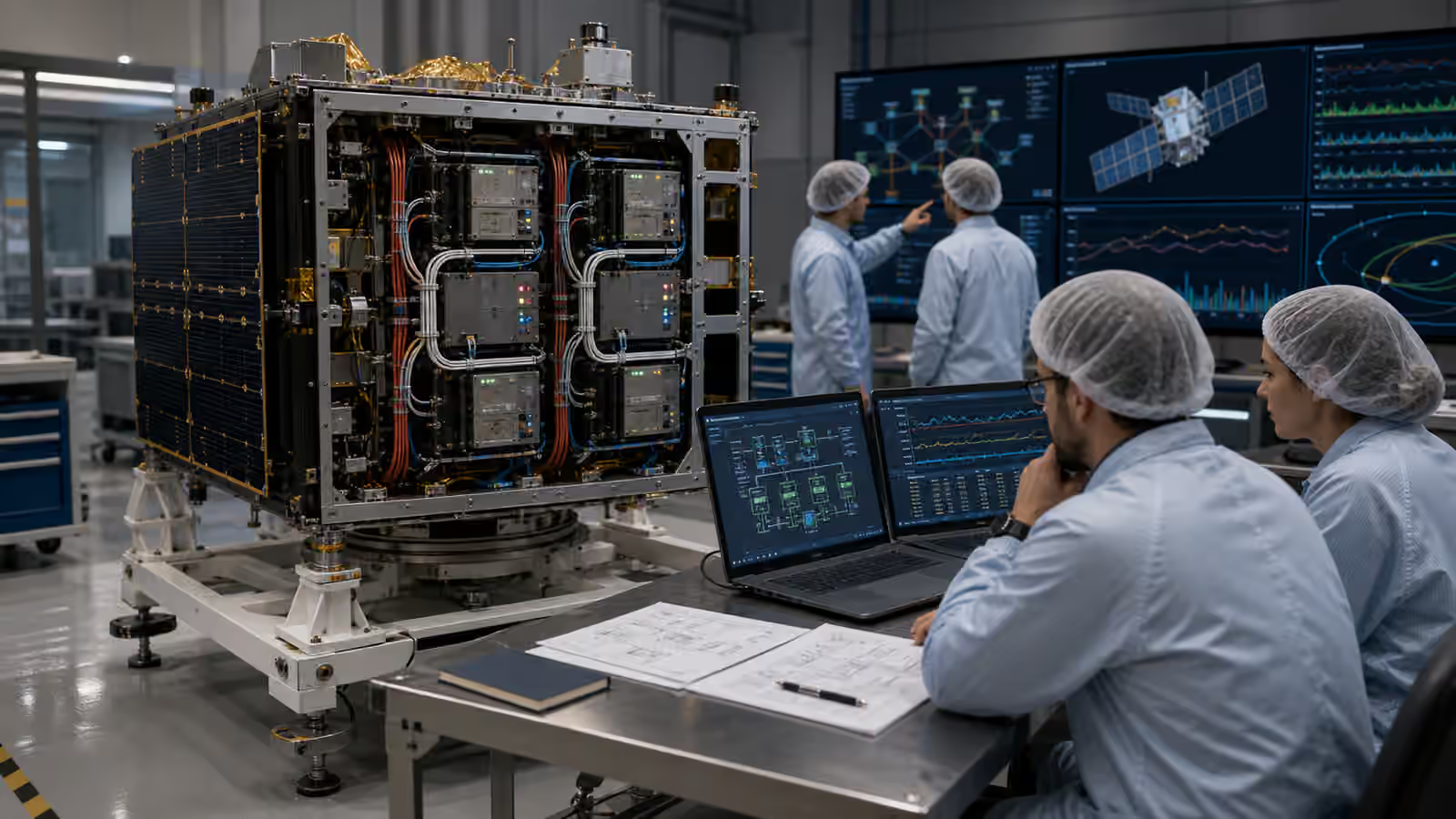
Satellite Manufacturing and Testing connects directly to this flow. A test is not only a physical event in a chamber or on a shaker table. It is evidence inside a larger argument. If vibration testing shows a response near a limit, the review has to ask what that means for hardware, analysis, workmanship, and launch loads. If thermal vacuum testing passes but only with a late configuration change, the review has to preserve that fact rather than letting the word pass hide it.
Margins Are Not Decorative
Space projects talk about margin because the real world will not match the spreadsheet exactly. Mass, power, thermal limits, link budget, data volume, processor load, propellant, pointing accuracy, structural stiffness, and schedule all need room for error and growth. Margin is not a pile of extra comfort. It is a way of admitting that the mission is built from estimates, measurements, vendor data, models, and incomplete knowledge.
The hardest margin conversations happen when one subsystem wants to borrow from another. A payload may need more power. A radio may need more time on the schedule. A mechanism may add mass. A late thermal fix may change surface properties. Each change can be reasonable locally and damaging globally. Mission assurance keeps the mission from treating every local request as harmless.
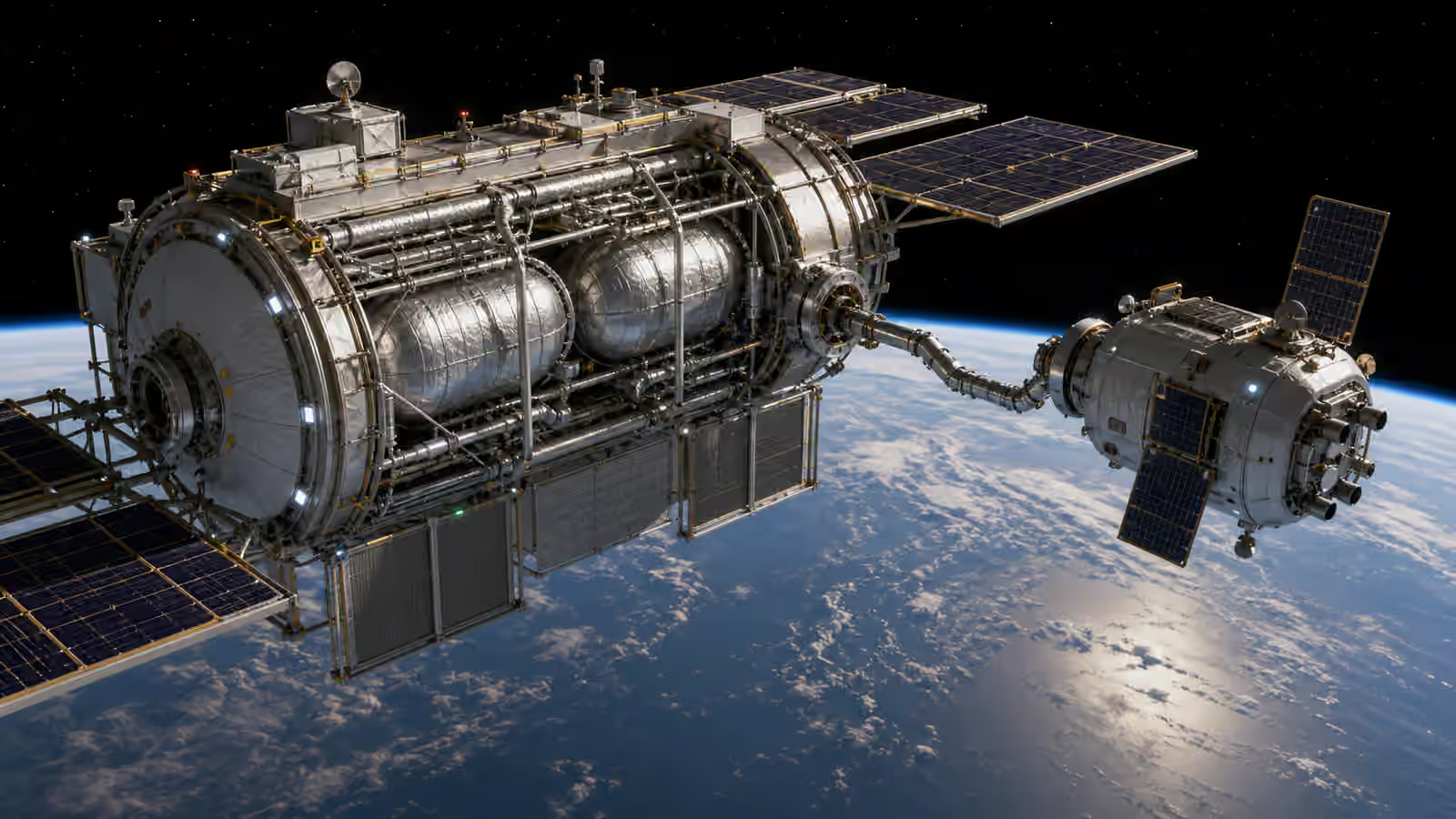
Satellite Bus and Payloads is useful background because the bus exists to support the payload, but not without limits. A payload that wins every trade may leave no room for communications, power, thermal control, pointing, fault recovery, or disposal. A bus that is too conservative may carry a payload that cannot meet the mission promise. Assurance work makes that tension visible.
Nonconformances Tell the Truth
No serious space program proceeds without surprises. A part arrives with the wrong documentation. A test cable is misconfigured. A coating behaves differently than expected. A fastener is installed with a process deviation. A board fails a screening test. A clean-room event exposes hardware to a contamination risk. These events are sometimes called nonconformances, and the useful question is not how to hide them. The useful question is what they teach.
A healthy nonconformance process separates embarrassment from evidence. The team records what happened, what hardware or software is affected, what analysis or inspection was done, what corrective action was taken, and what residual risk remains. Some issues are repaired. Some are accepted with rationale. Some force redesign. The record matters because a small process deviation may become important months later when telemetry shows an unexpected behavior.
Spacecraft Materials and Contamination Control offers a clear example. Contamination risk is often invisible until an optical surface, radiator, sensor, or mechanism behaves badly. A fingerprint, particle event, outgassing concern, or handling deviation may seem minor in the moment. Assurance discipline preserves the context needed to decide whether it is truly minor.
Software Assurance Has to Meet Hardware Reality
Flight software often changes faster than hardware, but it flies on hardware that cannot be casually serviced. Mission assurance has to account for this mismatch. The team needs requirements, code reviews, tests, simulations, hardware-in-the-loop runs, fault injection where useful, configuration control, and a careful path for updates. The goal is not to freeze software into perfection. The goal is to know what is flying and why it is safe enough to command.
Spacecraft Software Verification and Configuration Control goes deeper into that evidence. From an assurance perspective, the important connection is that software changes can invalidate prior testing if the team does not track them. A command sequence tested against one build may not prove the same thing against another. A safe-mode threshold tuned on a bench may need review after flight telemetry shows a different thermal or power pattern.
Cybersecurity also belongs inside assurance, not as a decorative afterthought. Satellite Cybersecurity and Resilience explains command security, ground systems, supply chains, and recovery. A mission readiness review that ignores access control, logging, update paths, and incident response is leaving a real spacecraft risk outside the room.
Readiness Is More Than Hardware
Launch readiness includes spacecraft hardware, but it also includes operations procedures, ground station support, flight dynamics products, command approval paths, anomaly response, payload data systems, customer expectations, and end-of-life planning. A mission can have a healthy satellite and still be unready if the ground team cannot command it safely or interpret its data.
Ground Stations and Satellite Operations After Launch belong in the same readiness story. The mission needs pass schedules, station configurations, tested command paths, telemetry displays, time synchronization, network links, and people who know what to do during the first contacts. Early orbit operations are too compressed to discover that the ground system is only theoretically prepared.
Readiness reviews should also ask what happens if the mission does not get the smooth scenario. What if first contact is missed? What if a deployable is ambiguous? What if the orbit estimate is weak? What if a payload has to remain off for a week? What if the spacecraft enters safe mode during a holiday shift? These questions are not pessimism. They are a way to protect the mission from surprise when surprise is still affordable to discuss.
Assurance Should Improve Decisions
The best mission assurance work is not a police function hovering outside the engineering team. It improves decisions by making evidence clearer. It helps leaders distinguish known risk from unknown risk, accepted risk from ignored risk, and schedule pressure from technical readiness. It also protects engineers by giving them a language for saying that a problem is real before it becomes a failure.
Space Insurance and Mission Risk shows why this record can matter beyond engineering. Underwriters, partners, customers, and investigators all care about whether a mission can explain its choices. But the strongest reason for mission assurance remains closer to the hardware. Spaceflight asks machines to work beyond reach. Reviews, margins, records, tests, and honest risk language are how a team earns the right to believe that they will.