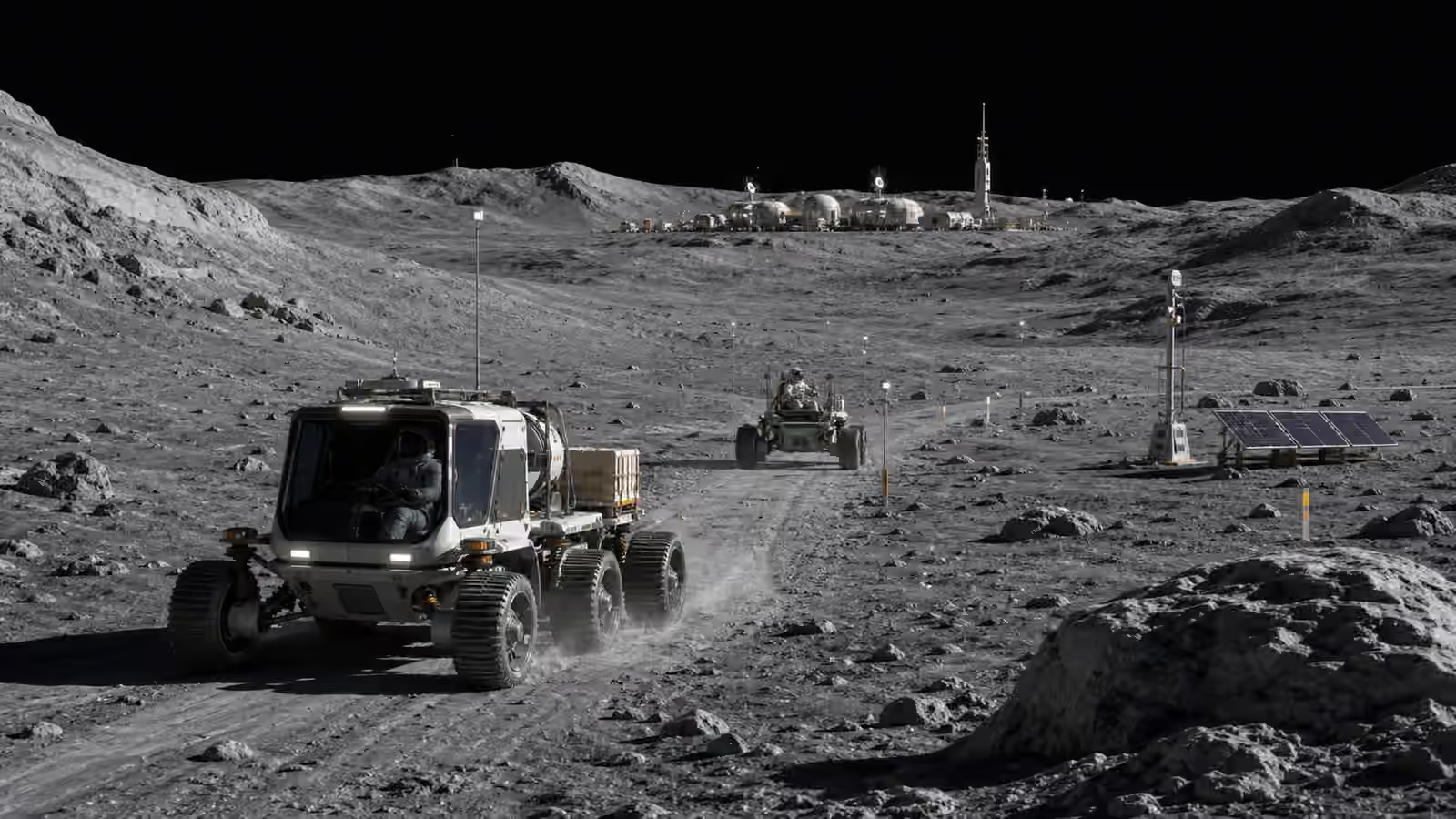
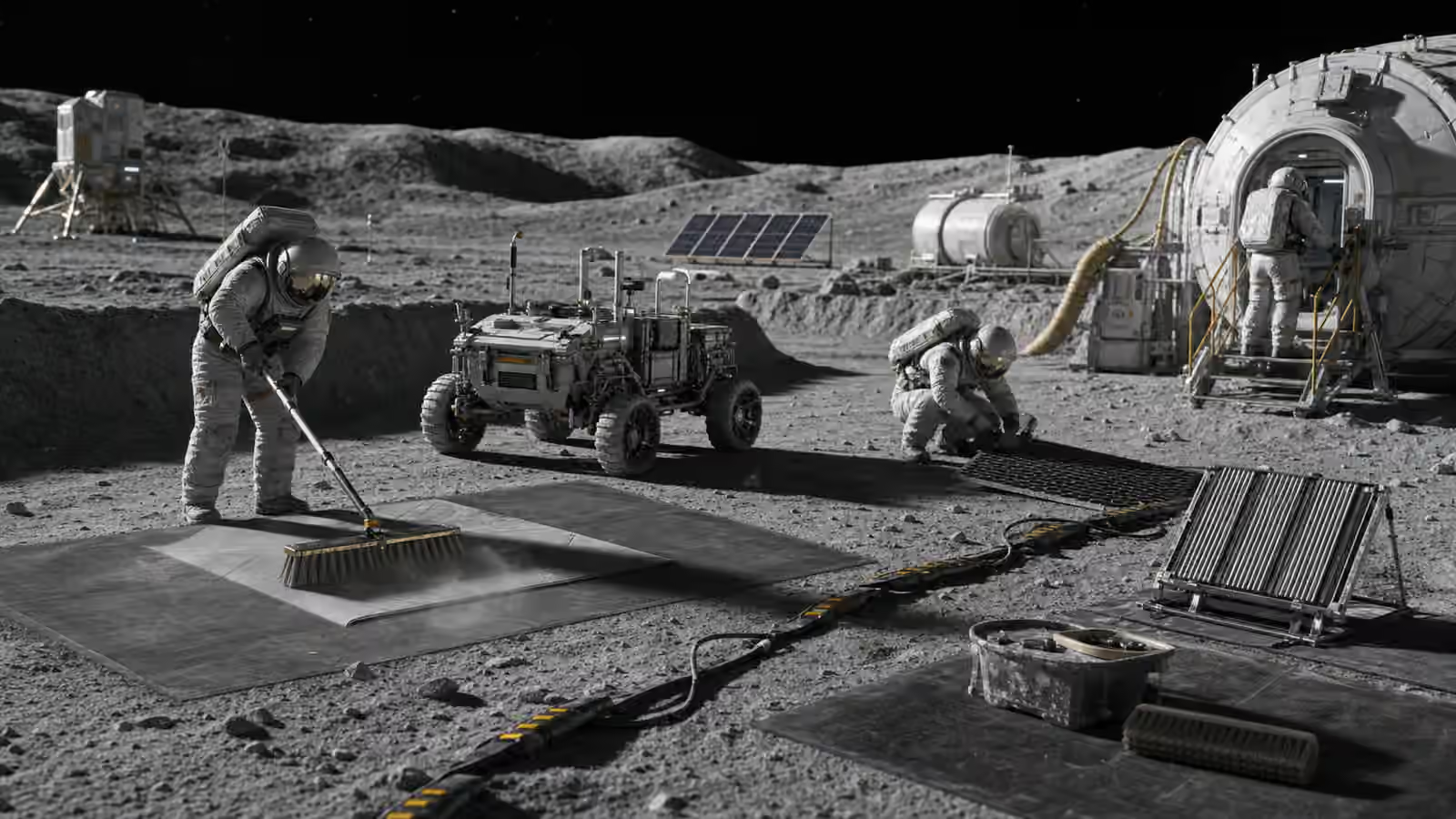
Using material on the Moon sounds simple until the word using is taken seriously. It means finding a resource, measuring it well enough to trust, reaching it safely, extracting it with machinery that works in vacuum and abrasive dust, processing it with limited power, storing the result, and delivering it to a user whose schedule and quality needs are real. In-situ resource utilization, often shortened to ISRU, is not a magic shortcut. It is a supply chain that begins in a hostile place.
Lunar Infrastructure introduces the roads, pads, power, communications, and dust discipline that a working lunar surface would need. Resource prospecting belongs beside it because material is only useful when infrastructure can reach and support it. A patch of water ice or oxygen-bearing regolith is not a fuel depot. It is a possibility that has to survive geology, engineering, economics, governance, and operations.
Prospecting Comes Before Extraction
Prospecting is the disciplined search for usable material. On the Moon, that may involve orbital remote sensing, neutron measurements, radar clues, thermal data, lander instruments, drills, scoops, spectrometers, cameras, rover traverses, and returned samples. Each method sees a different part of the problem. A remote-sensing map may suggest hydrogen. A surface instrument may reveal how that signal is distributed in soil. A drill may show whether volatiles are trapped in a form that can be extracted.
The distinction between presence and usability matters. A resource can be scientifically interesting and operationally difficult. Water ice in permanently shadowed regions may be cold and valuable, but those same shadows complicate power, thermal control, navigation, communications, and machinery. Regolith is everywhere, but processing it into oxygen or construction feedstock may require heat, sorting, reactors, spare parts, and careful dust management.
Earth Observation Sensors is about Earth-facing instruments, but the measurement lesson carries over. Instruments do not hand back simple truth. They produce signals that need calibration, context, and validation. Lunar prospecting has to turn sparse measurements into resource confidence without overstating what the data can prove.
Water Ice Is Valuable and Awkward
Water draws attention because it can support life, radiation shielding concepts, agriculture experiments, industrial processes, and rocket propellant if split into hydrogen and oxygen. It may reduce the amount that must be launched from Earth, but only after the whole chain works. The ice has to be located, excavated or heated, captured, purified if needed, stored, moved, and possibly electrolyzed. Each verb hides equipment and power.
Permanently shadowed regions near the lunar poles are often discussed because they can trap volatiles over long periods. They are also extremely cold and dark. Machinery may need power from nearby illuminated ridges, cables, batteries, beamed energy, nuclear systems, or other architectures. Communications may need relays because crater geometry can hide direct links. Thermal design becomes difficult because equipment may move between bright sunlight and deep cold.
Cislunar Communications and Navigation explains why lunar operations need dependable links and location services. A prospecting rover that cannot report its findings, receive commands, or navigate safely is not a resource system. The data path is part of the mine.
Regolith Is Not Just Dirt
Lunar regolith is a mixture of crushed rock, glassy particles, minerals, and dust shaped by impacts and the space environment. It can be a nuisance, a hazard, and a feedstock at the same time. It may provide oxygen bound in minerals, construction material, radiation shielding mass, landing-pad material, or feedstock for experimental manufacturing. But it is abrasive, electrostatically troublesome, and difficult for seals, joints, radiators, optics, fabrics, and mechanisms.
Spacecraft Materials and Contamination Control is relevant because dust and surface chemistry do not remain politely outside machines. A lunar resource system would need excavation hardware, conveyors or hoppers, reactors, filters, valves, bearings, sensors, and storage containers that tolerate repeated exposure. A process that works once in a laboratory may not survive months of dusty operations without maintainability and cleaning strategies.
Processing regolith also raises energy questions. Extracting oxygen from minerals can require high temperatures or chemical cycles. Melting, sintering, or sorting material for construction requires heat and handling. The Moon offers abundant sunlight in some locations and brutal darkness in others. Deep-Space Power Systems helps frame the broader problem: power architecture shapes what a mission can actually do.
ISRU Must Compete With Delivery
The central economic comparison is not between using lunar material and doing nothing. It is between producing a useful material locally and delivering it from Earth or another source. Earth launch is expensive and constrained, but it is also a mature supply chain compared with early lunar mining. ISRU has to justify the equipment, risk, development time, maintenance, power, spares, operators, and failures needed to make local production dependable.
For early missions, the first valuable product may be knowledge rather than bulk material. A small demonstrator that extracts oxygen from regolith, measures ice concentration, tests excavation tools, or survives a dusty work cycle can reduce uncertainty. That does not make it a commercial plant. It makes it evidence. Mature lunar resource use would likely grow through demonstrations, pilot plants, limited products, and only later larger supply systems.
Space Mission Architecture and Tradeoffs is the right lens. A lunar architecture that assumes cheap local propellant before the extraction system exists is fragile. A cautious architecture treats ISRU as a capability to be proven and integrated, not as a number that can be inserted into a spreadsheet to make the rest of the plan look lighter.
Storage and Quality Are Part of the Resource
A resource is not useful because it exits a reactor. It is useful when it meets a user’s needs. Water may need purity standards. Oxygen may need pressure, dryness, storage tanks, and interfaces. Propellant may need cryogenic handling and boiloff control. Construction feedstock may need particle-size consistency. Shielding material may need placement and stability. Each product requires quality control.
That makes lunar resources similar to space data in one respect: evidence travels with the product. Operators need to know where the material came from, how it was processed, what contamination risks exist, how much is stored, what losses occurred, and whether it is safe for its intended use. A fuel depot, life-support store, or construction system cannot depend on vague confidence.
Space Habitats and Life Support shows why quality matters for crewed systems. A life-support loop has little patience for romantic resource claims. It needs known inputs, controlled processes, and fallback paths when a local source underperforms.
Governance Will Shape the Worksite
Lunar resource activity also raises questions of coordination. Prospecting areas, landing zones, dust plumes, radio links, heritage sites, science regions, and safety zones may interact. Space Law and Orbital Governance covers the broader governance challenge. For resource work, the practical question is how multiple actors can explore, share information, avoid harmful interference, and build confidence without turning uncertainty into conflict.
The Moon does not become an industrial site merely because people want one. It becomes a workplace only when measurements, machines, power, communications, operations, maintenance, product quality, and rules all meet the surface honestly. Lunar resources may become important. The careful way to think about them is not as treasure waiting to be claimed, but as difficult material that might become infrastructure if the whole chain earns trust.