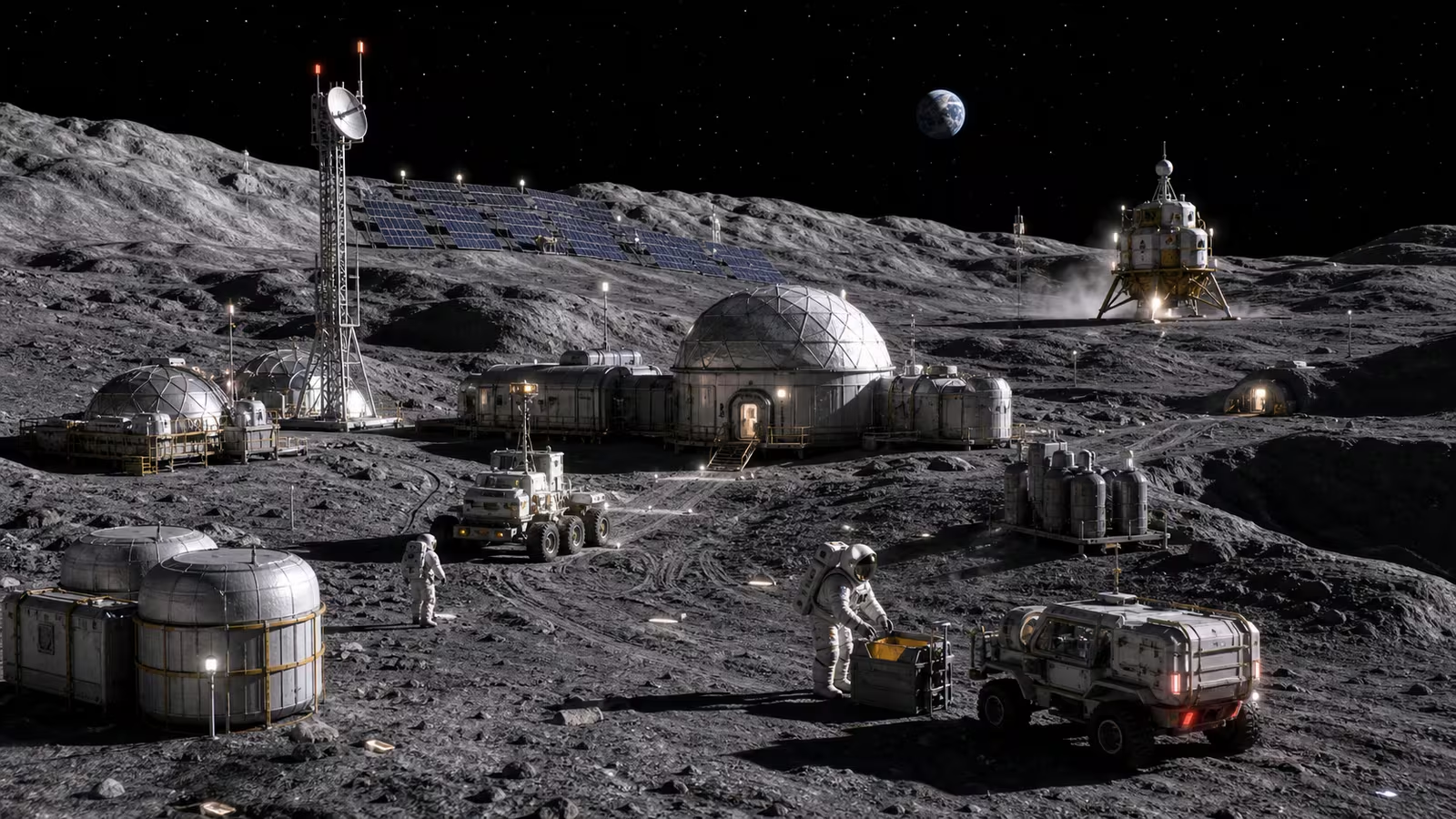
The Moon is often described with grand words: return, base, settlement, gateway, resource, frontier. The practical version begins with smaller words: power, landing, dust, water, cargo, shelter, communications, repair. A lunar economy will not appear because someone plants a flag or lands a robot once. It appears, if it appears, when repeated missions can arrive, unload, survive, communicate, move, and do useful work.
Think of the Moon less like a destination and more like a remote construction site with no air, no grocery store, no repair shop, no paved roads, extreme temperature swings, abrasive dust, and a long shipping delay from Earth. The first infrastructure is not glamorous. It is what lets the next mission become easier than the last.
Power comes first
Almost everything on the Moon needs power: communications, heaters, computers, rovers, drills, life support, lighting, scientific instruments, manufacturing experiments, and resource processing. Solar power is attractive because sunlight is available and no fuel delivery is needed, but lunar day and night cycles are harsh. Some regions near the poles have ridges with long periods of sunlight, while nearby craters may remain permanently shadowed.
That geography shapes planning. A sunlit ridge may be good for solar arrays and communications. A shadowed crater may contain water ice but be cold and dark. Infrastructure may need power cables, batteries, nuclear surface power, beamed power, or mobile energy systems. The Moon’s power problem is not just making electricity. It is moving and storing it in a place where shadows can be deadly.
Dust is a serious engineering problem
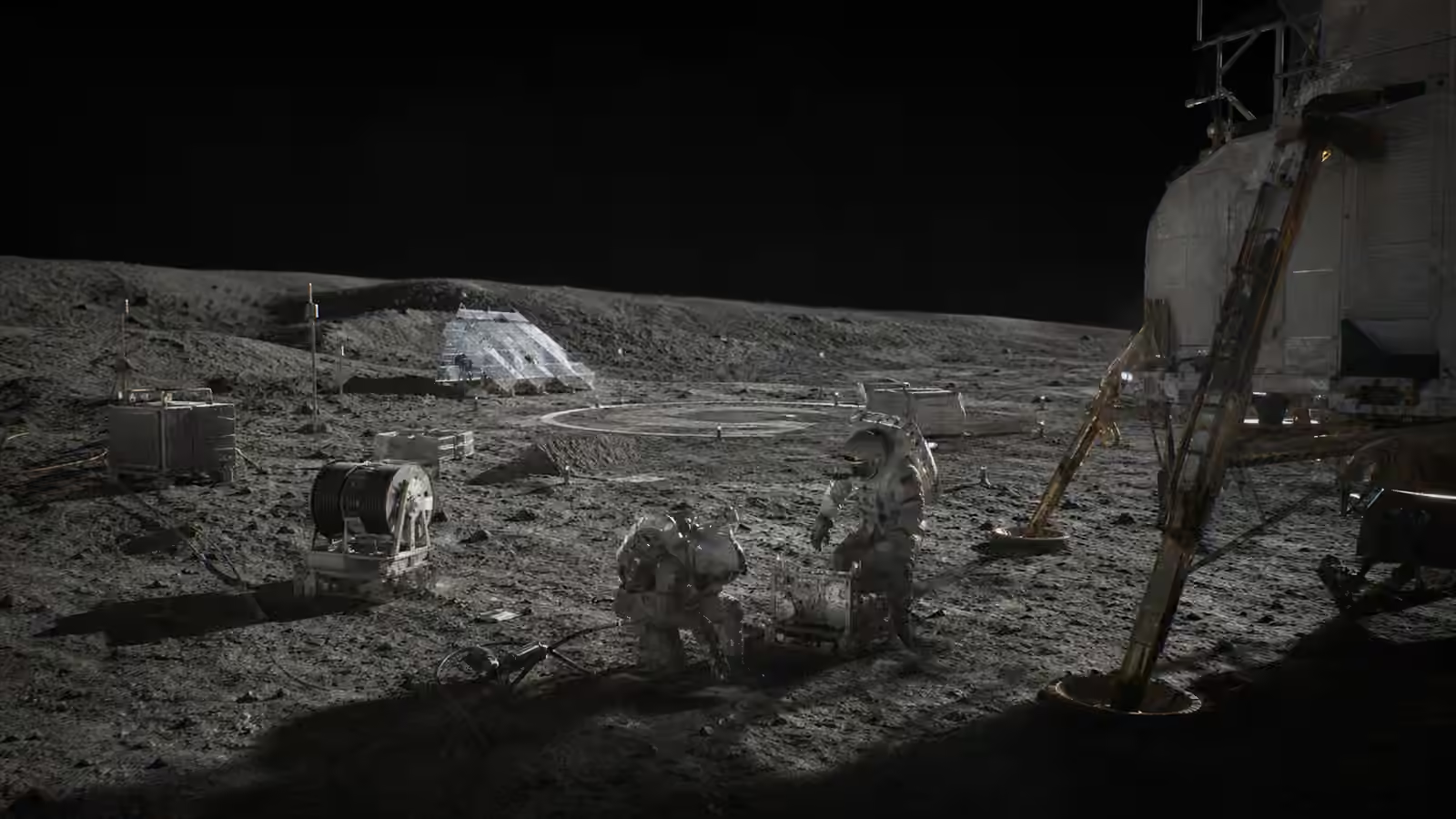
Lunar dust is not soft beach sand. It is fine, abrasive, electrostatically clingy, and formed by impacts rather than weathering. It can stick to suits, scratch seals, coat solar panels, jam mechanisms, and get tracked into habitats. Dust kicked up by landers can sandblast nearby equipment. This is why landing pads matter. They sound mundane, but they can protect expensive hardware.
A good lunar base needs dust management: landing zones, paths, suit ports, cleaning systems, filters, materials that resist abrasion, and operational habits. Dust is a reminder that space infrastructure is often about preventing small problems from becoming mission-ending.
Communications and navigation
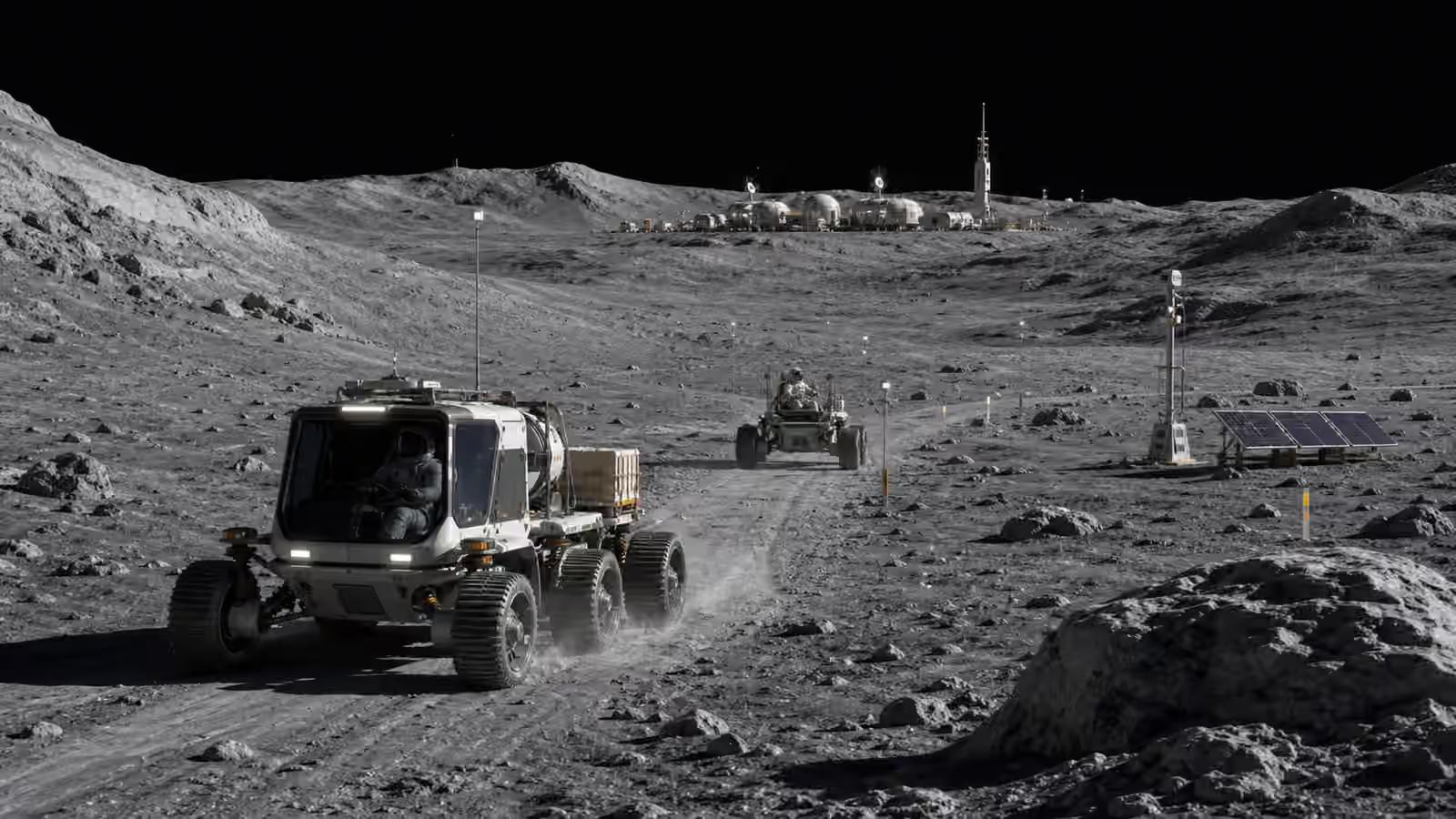
On Earth, we take maps, phones, GPS, and towers for granted. The Moon needs its own versions. Landers, rovers, astronauts, habitats, cargo systems, and scientific instruments must communicate with each other and with Earth. Some regions may not have direct line of sight to Earth all the time, so relay satellites or local towers may be needed.
Navigation is equally important. If rovers are moving between shadowed craters, power stations, habitats, and landing zones, they need positioning and mapping. A lunar communications and navigation network would be like the first roads and signs in a new industrial zone. It makes every later activity less blind.
Water ice and resources
Water ice near the lunar poles is interesting because water is useful. It can support life, be split into hydrogen and oxygen, help make rocket propellant, and reduce how much mass must be launched from Earth. But “there may be water ice” is not the same as “there is a gas station.” The ice must be located, characterized, extracted, cleaned, stored, and used with equipment that survives the environment.
Resource use is a step-by-step engineering problem. How much ice is present? How dirty is it? How deep? What energy does extraction require? Can machinery operate in darkness and cold? Is it cheaper than bringing supplies from Earth? The answers will decide whether lunar resources become infrastructure or remain a beautiful slide.
Habitats and logistics
Habitats must protect people from vacuum, radiation, micrometeorites, dust, and temperature swings. They need air, water, waste handling, food storage, medical support, fire safety, maintenance access, and psychological comfort. Robotic systems may do much of the early work, but human presence raises the standard.
Cargo logistics may be the real foundation. Regular delivery lets planners build confidence. A cargo lander that can place supplies accurately near a site is as important as a dramatic crewed mission. Spare parts, tools, replacement electronics, and construction materials are what make a place livable.
Why this matters
Lunar infrastructure matters because it tests whether space activity can become cumulative. If every mission starts from zero, the Moon remains a sequence of expeditions. If each mission leaves behind useful power, communications, landing surfaces, maps, tools, and knowledge, the next mission becomes easier. That is how infrastructure begins.
For a normal reader, the best lunar question is not “When will there be a Moon city?” The better question is “What service will exist there first?” Power, communications, landing pads, navigation, cargo, and dust control are less romantic than a city, but they are more real. The Moon becomes economically interesting only when the boring systems start to work.
Those systems will also teach lessons for Earth-orbit infrastructure. A reliable cargo lander is a logistics product. A lunar power station is an energy product. A communications relay is a network product. A dust-resistant suit port is a maintenance product. The Moon may remain small and specialized for a long time, but even a small outpost can create useful capabilities if each mission leaves behind something the next mission can use. That cumulative progress is the line between exploration and infrastructure.
That is why the most convincing lunar plans sound patient. They do not jump from landing to city. They explain what gets easier after the first power line, the first relay, the first mapped route, and the first reusable cargo process. On the Moon, progress will look like fewer surprises.