Lunar dust is not an inconvenience sprinkled on top of Moon exploration. It is one of the materials every surface system has to live with. The regolith is fine, abrasive, clingy, sharp-edged at microscopic scales, and easy to move into places where machinery would prefer it not go. It can ride on boots, wheels, tools, suits, sample containers, solar arrays, radiators, seals, bearings, connectors, and airlock floors. It does not need to be dramatic to be expensive.
The Moon has no rain to wash hardware, no thick atmosphere to soften motion, and no ordinary maintenance shop down the road. A surface campaign that treats dust as housekeeping will eventually discover that housekeeping is infrastructure.
Lunar Infrastructure introduces landing pads, power, communications, dust control, storage, and repeated logistics. Dust mitigation deserves its own attention because it touches nearly every one of those systems. A landing pad is partly a dust-control device. A rover route is partly a dust-management choice. An airlock is partly a filter between an abrasive outside world and a habitable inside one.
The Problem Begins With the Soil
Lunar regolith is made from broken rock, glassy fragments, mineral grains, and dust shaped by impacts and the space environment. Without weathering from water and wind, many particles can remain angular. Fine grains can cling through electrostatic effects and mechanical roughness. The exact behavior depends on location, particle size, lighting, handling, and surface condition, but the practical message is simple: lunar dust goes where operations take it.
That matters because surface hardware contains gaps, seals, joints, optics, coatings, radiators, gears, connectors, and fabrics. A little dust in the wrong place can increase wear, reduce heat rejection, scratch a visor, degrade a seal, obscure a sensor, or make a connector unreliable. No single grain is the villain. The problem is repeated exposure over many cycles.
Spacecraft Materials and Contamination Control explains how surface cleanliness and material behavior shape spacecraft in orbit. Lunar dust is a more forceful version of that lesson. The contamination is not only a clean-room concern before launch. It is a working material on the surface.
Landing Can Create the First Mess
A lunar landing does not place hardware gently into a clean parking lot. Rocket plumes can disturb regolith, accelerate particles, erode the surface, and throw dust across nearby equipment. The exact effect depends on engine height, thrust, soil properties, terrain, and the presence of prepared surfaces. Early missions may accept rougher sites. Repeated operations will need more discipline.
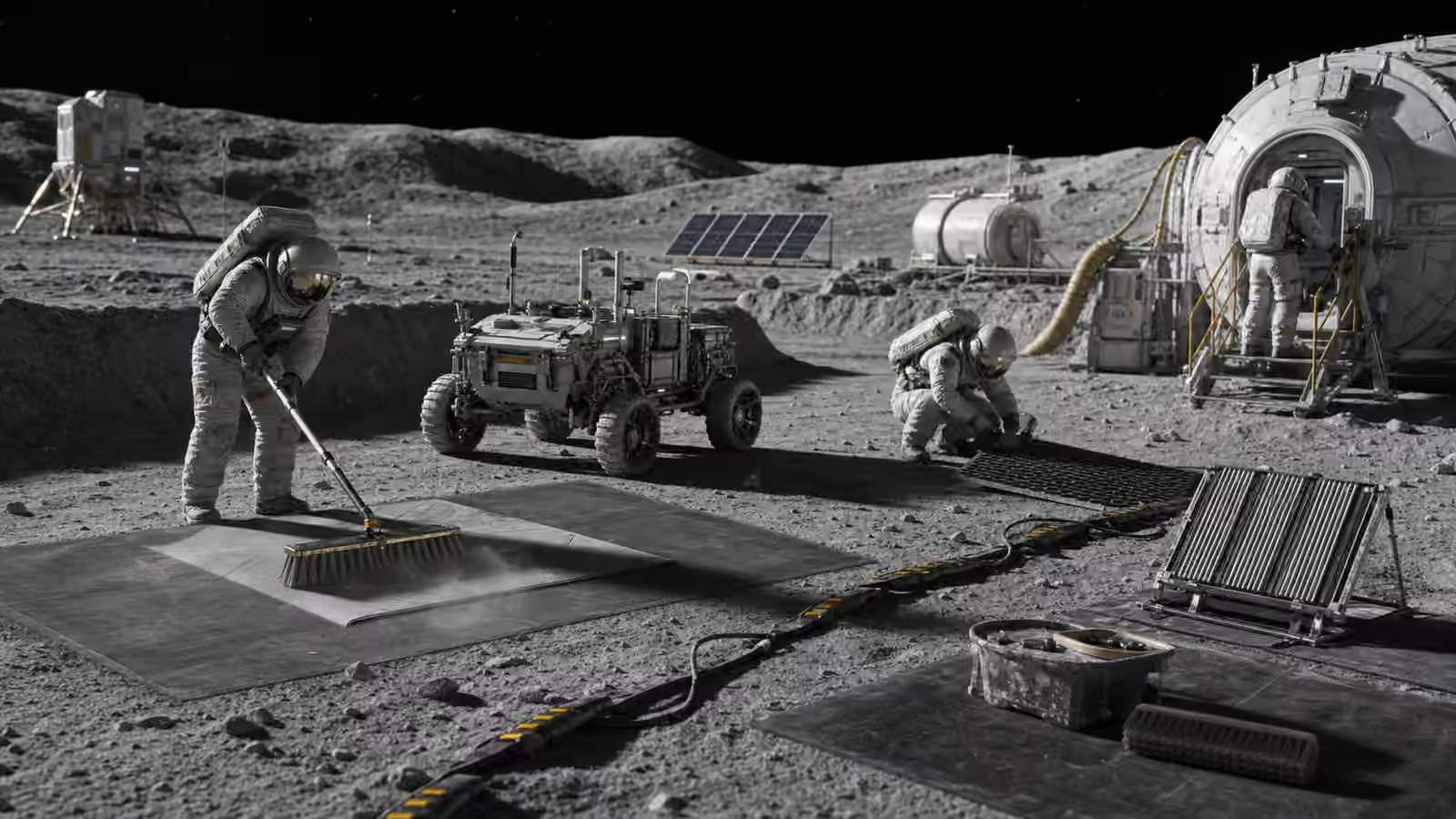
This is why landing pads are part of lunar infrastructure rather than decoration. A prepared pad can reduce plume erosion, protect nearby assets, make touchdown more predictable, and create a cleaner operating area. It may be made from processed regolith, placed materials, sintered surfaces, modular mats, or other approaches. Each option brings construction, transport, thermal, dust, and maintenance questions.
Space Mission Logistics and Cargo Planning fits here because every kilogram of dust-control hardware competes with something else. A pad material, sweeper, cover, filter, seal kit, spare wheel, or cleaning tool has to earn its place. The cost of not bringing it may appear later as degraded solar output, stuck hardware, or crew time spent fighting a preventable mess.
Rovers Carry Dust Through the Worksite
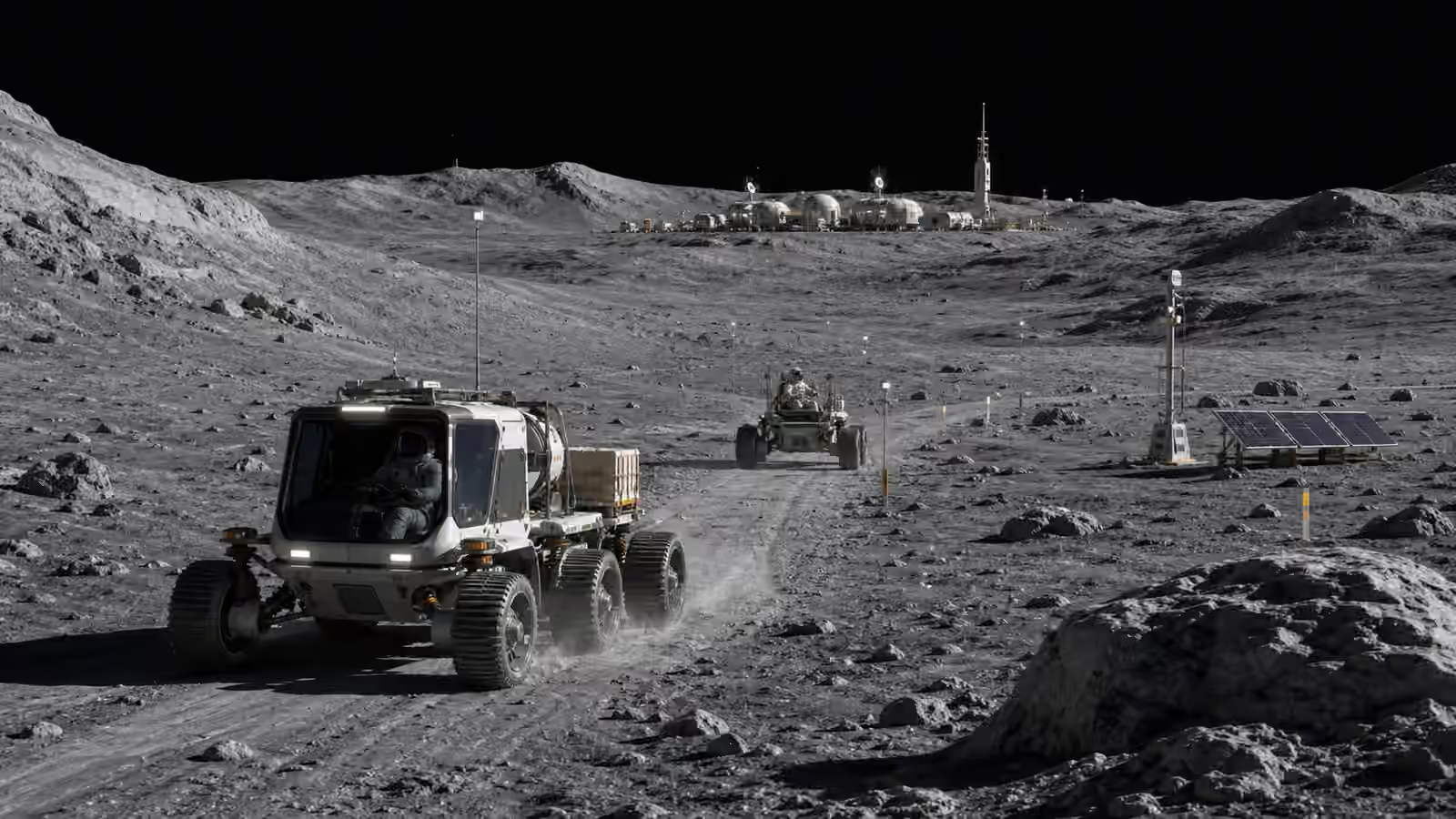
Rovers make a landing site useful by turning a point into a work area. They also move dust. Wheels disturb regolith, throw particles, pack soil, and carry material from one zone to another. A rover that travels near solar arrays, radiators, habitats, science instruments, or landing pads can create a local contamination story simply by doing its job.
Lunar Surface Mobility and Rovers covers terrain, power, navigation, cargo, and maintenance. Dust mitigation adds routing and behavior. Roads, berms, wheel designs, speed limits, parking zones, cleaning stations, covers, and inspection points may all become part of a mature site. A rover may need to approach sensitive equipment from a preferred direction or stop before entering a cleaner zone.
The same logic applies to robotic excavation or resource work. Lunar Resource Prospecting and ISRU explains the chain from prospecting to useful material. Excavation, sieving, heating, and transport can all spread dust. If resource operations are placed too close to habitats, optics, or thermal systems, the production chain can undermine the infrastructure it is meant to support.
Suits Turn Dust Into a Habitat Problem
Spacesuits cross the boundary between outside and inside. Gloves touch tools. Boots walk through regolith. Suit joints flex. Dust clings to fabric, bearings, visors, seals, and tool bags. When a crew member returns to an airlock, the suit becomes a carrier of outside material.
Spacesuits and EVA Operations describes suits as small spacecraft people wear. On the lunar surface, they are also contamination-control systems. Cleaning a suit is not only about neatness. It protects seals, reduces abrasion, preserves visibility, limits dust carried into living volumes, and keeps maintenance from becoming a constant emergency.
Different architectures handle that boundary differently. A traditional airlock brings the whole suit inside or partly inside. A suitport-style idea tries to keep more of the dusty suit outside while the crew enters through a rear interface. Each approach has tradeoffs in mass, reliability, sealing, emergency use, crew comfort, maintainability, and dust control. No architecture eliminates the problem. It decides where the problem is managed.
Dust Affects Heat, Power, and Vision
Dust on a solar panel can reduce power. Dust on a radiator can change heat rejection. Dust on a camera window can reduce useful imagery. Dust on a lidar or navigation sensor can affect surface operations. Dust on optical targets can make robotic alignment harder. Hardware does not need to be buried to lose performance. A thin layer can be enough in the wrong place.
Satellite Power Systems and Satellite Thermal Control are written for spacecraft, but the principles follow hardware to the surface. Energy and heat margins depend on surfaces doing what designers expected. A dusty radiator may run warmer. A dusty array may generate less power. A heater may need to run longer if a mechanism is contaminated and stiff. The site energy budget can quietly become a dust budget.
Vision systems are equally exposed. Navigation cameras, inspection cameras, docking aids, sample imagers, and human visors all depend on optical clarity. Dust mitigation may require covers, shutters, cleaning strokes, compressed gas if available, electrostatic removal methods, vibration, careful placement, or operational rules that keep dusty activities away from clean sensors. None of these are magic. They are layers.
Cleaning Is a Process, Not a Gesture
It is tempting to imagine dust control as a brush. Brushes will matter, but a durable system needs more than brushing. It needs zones, procedures, materials, inspection criteria, replacement parts, storage for dirty tools, planned cleaning time, and ways to measure when a surface is clean enough for its job. A radiator and a boot sole do not need the same standard. A sample container and a rover wheel do not have the same contamination concern.
Good cleaning also respects crew time. If every EVA ends with a long, awkward cleaning process, the site is paying for dust in the most limited currency it has. Robotic cleaners, designed pathways, covered storage, tool discipline, and sensible equipment placement can reduce that burden. The goal is not a spotless Moon. The goal is keeping critical surfaces, seals, and mechanisms inside useful limits.
Space Robotics and Manipulators belongs in this future because many dust tasks are repetitive, local, and better done by machines when possible. A robot that sweeps a mat, inspects a seal, carries dusty tools, or positions a cover may save crew time and reduce exposure. It still has to survive dust itself.
Dust Discipline Makes the Site Last
Lunar surface plans often focus on the first landing, first habitat, first rover traverse, or first resource demonstration. Dust asks a longer question. What happens after the tenth landing nearby, the hundredth rover trip, the fiftieth EVA, and months of sunlight and shadow cycling? Which seals are wearing? Which arrays are losing output? Which cleaning tools are degraded? Which paths are becoming messy? Which sensitive instruments need a cleaner neighborhood?
That is why dust mitigation is infrastructure rather than housekeeping. It shapes layout, traffic, landing zones, airlocks, suits, rovers, storage, maintenance, power margins, thermal design, robotics, and logistics. A surface base that can manage dust has a better chance of becoming a workplace instead of a short demonstration surrounded by worn hardware.
The Moon will not become friendly because people arrive with ambition. It becomes workable only when the ordinary hazards are taken seriously. Dust is one of the most ordinary hazards there is: small, persistent, and everywhere work happens. Managing it well is not a glamorous add-on. It is one of the ways a landing site earns the right to keep operating.