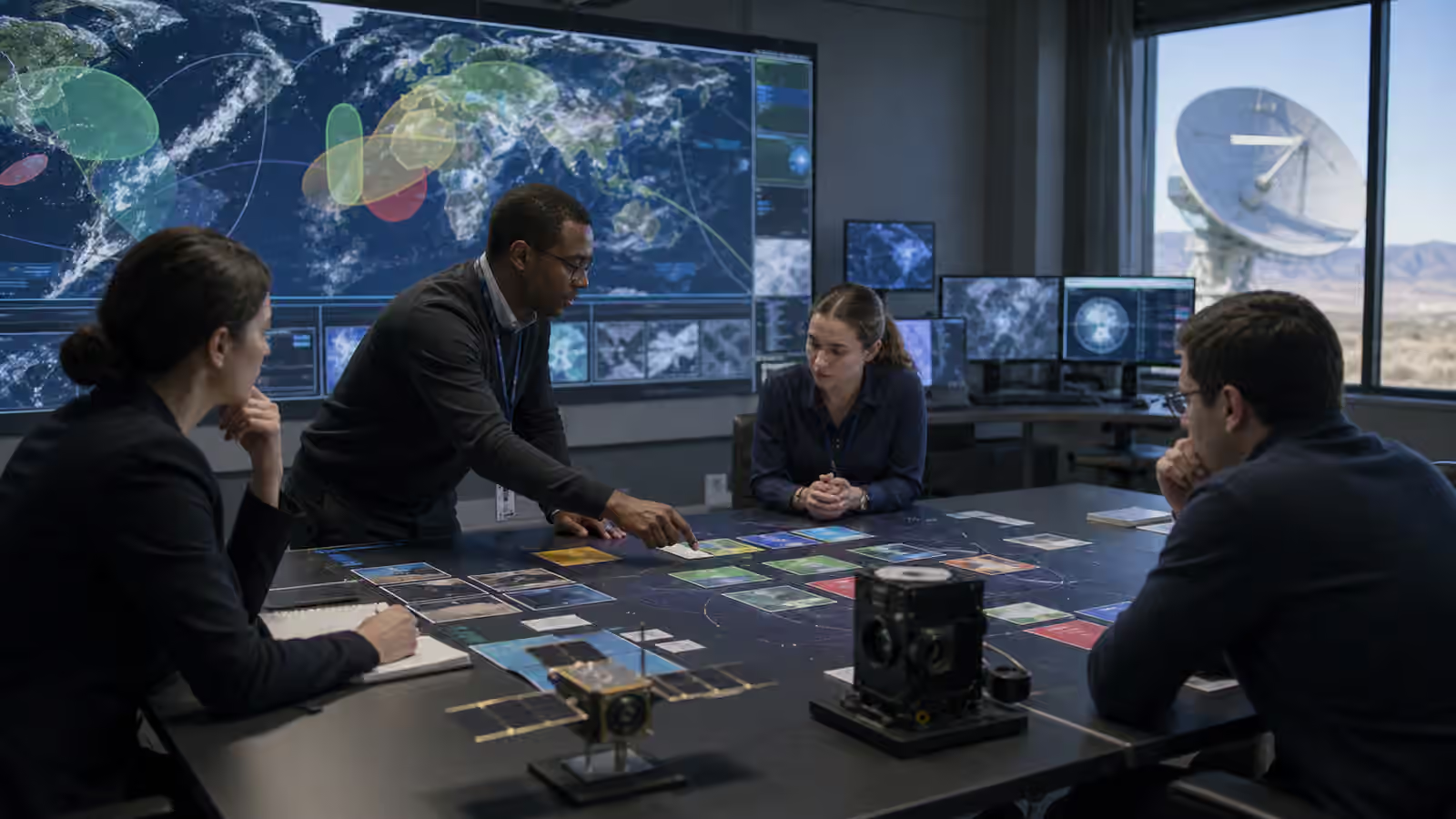
A rocket looks powerful enough to ignore the clock. It sits on the pad with engines, tanks, avionics, ground systems, and a mission team waiting for the final count. From the outside, it can seem as if the only question is whether the rocket is ready. If it is ready, light it. If it is not, wait. Spaceflight is less forgiving than that.
Launch windows exist because a mission is not simply trying to go up. It is trying to go somewhere in motion. Earth is rotating. The target orbit has a plane. A space station may be passing overhead. A lunar trajectory opens and closes. A planetary mission may depend on the relative positions of worlds. Weather changes. Range safety matters. Tracking stations, recovery ships, airspace, sea lanes, and ground systems all have schedules and limits.
The launch is a moment, but the mission is a sequence. A good launch time lines up the pad, the vehicle, the target, the environment, and the safety system closely enough that the rest of the mission can happen.
Orbit Has a Plane
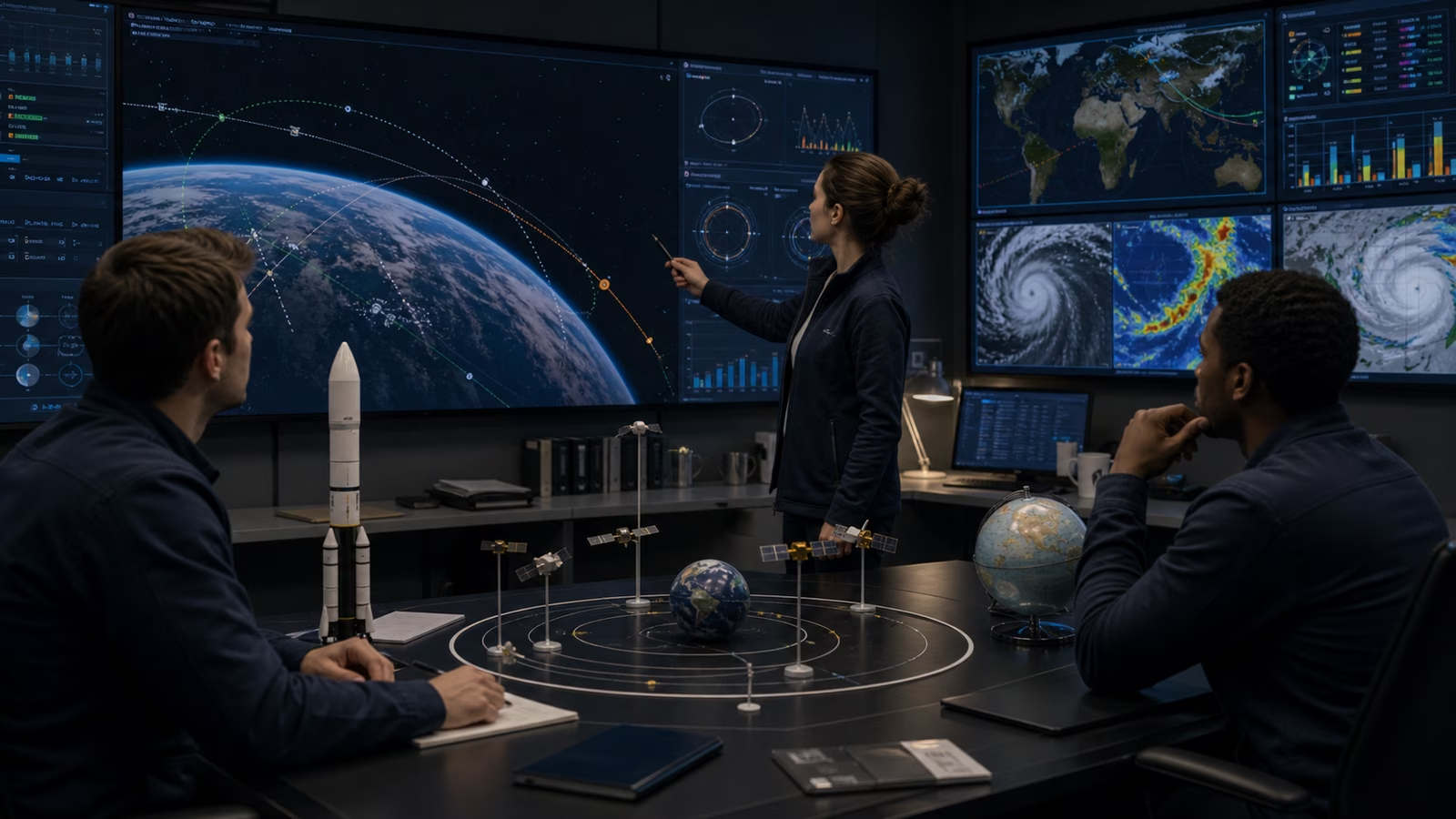
Many beginner explanations of orbit focus on altitude, but the direction of the orbit matters just as much. An orbital plane is the tilted sheet through space that the spacecraft will travel in around Earth. To reach a particular orbit efficiently, the rocket usually needs to launch when the launch site is carried into the right alignment by Earth’s rotation.
This is why missions to certain destinations have narrow timing. If a spacecraft is trying to rendezvous with a station, join a constellation, or enter a specific orbital plane, launching at the wrong time can require expensive fuel corrections or make the mission impossible. The rocket can be healthy, the sky can look clear, and the team can still wait because the target geometry is not ready.
Earth’s rotation can help. Launching eastward from many sites gives the rocket a boost from the planet’s spin. Different launch sites are better suited to different inclinations because of their latitude and downrange safety corridors. A mission’s path is shaped before the engines start.
Weather Is Not Just Clouds
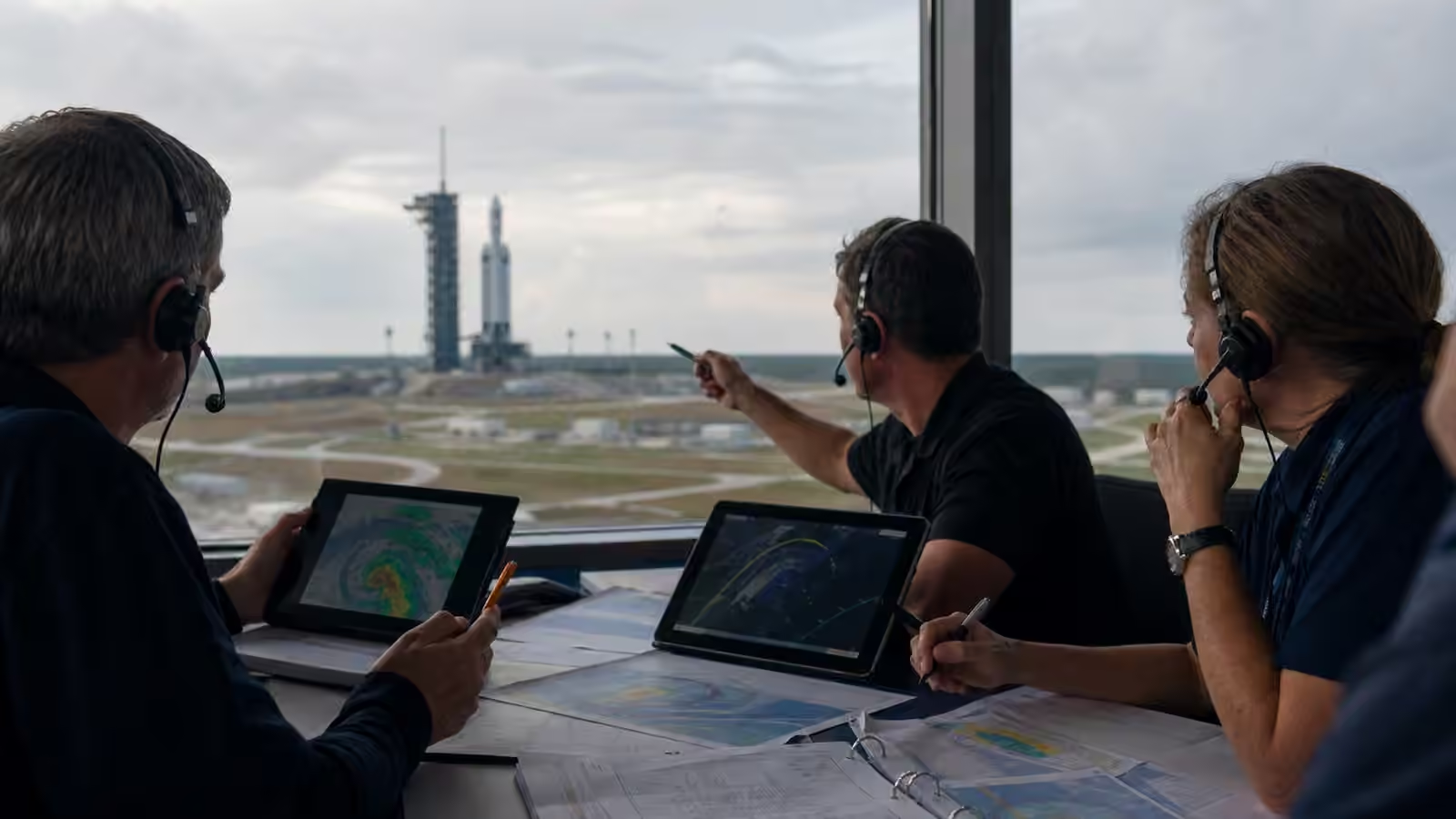
Weather delays can frustrate viewers because the pad may look calm. But launch weather is not ordinary picnic weather. Teams care about winds at the surface and high in the atmosphere, lightning risk, clouds with electrical concerns, precipitation, visibility, temperature, sea conditions for recovery, and weather along abort or downrange corridors.
A crewed mission may need acceptable weather not only at the pad but also in places where the vehicle could abort. A reusable booster may need recovery weather far from the launch site. A fairing recovery operation may depend on seas. A rocket passing through strong upper-level winds can experience loads that are not obvious from the ground.
The weather rule is not simply whether the rocket can punch through. The question is whether the vehicle, payload, crew if present, recovery plan, and public safety requirements all remain inside acceptable risk. A scrubbed launch can be disappointing. It can also be the system working properly.
Range Safety Has Its Own Clock
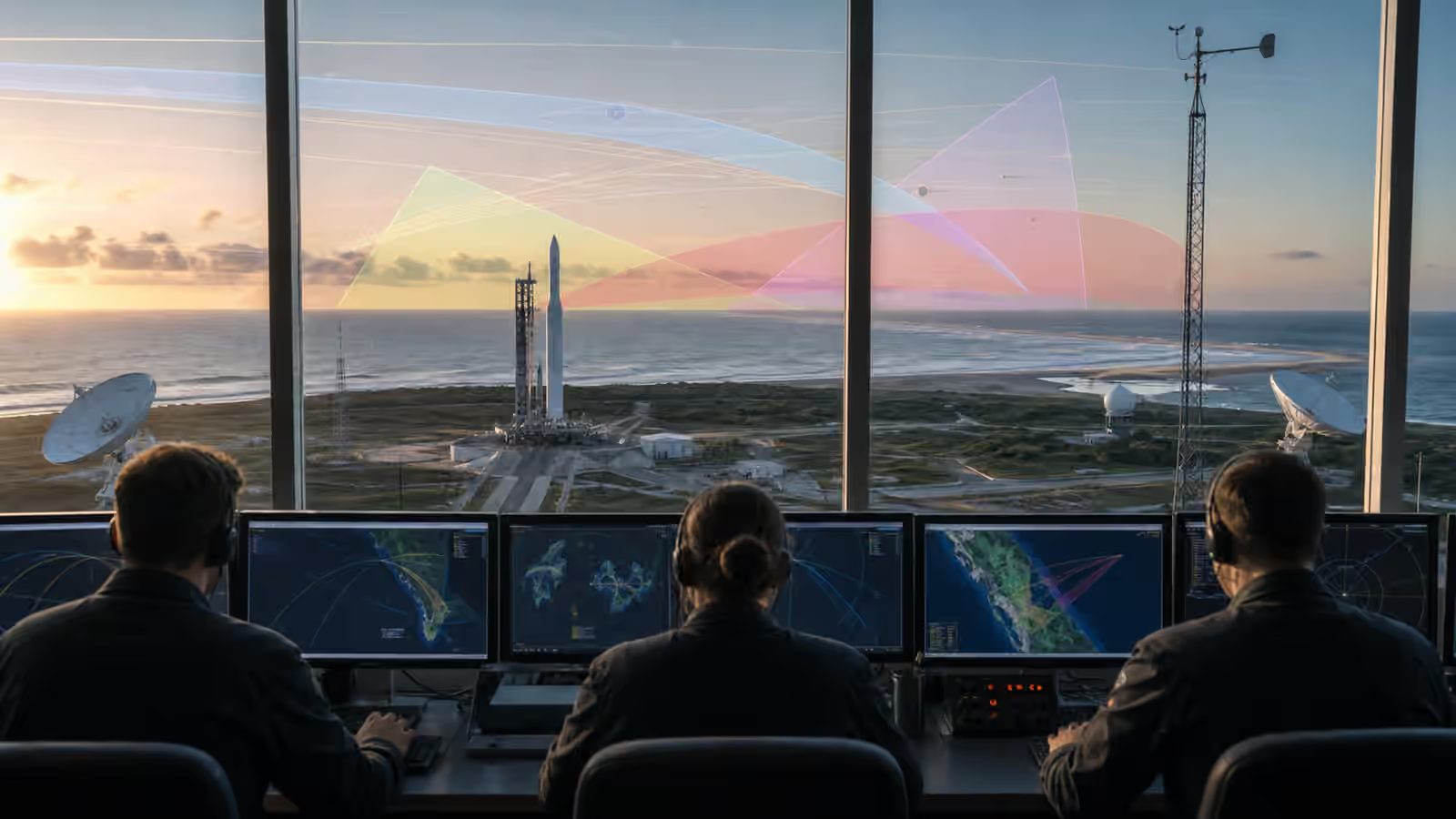
Launch ranges are shared safety systems. They coordinate airspace, sea space, tracking, telemetry, flight termination systems where applicable, emergency response, and public risk. A rocket does not launch into an empty world. Aircraft must avoid the hazard area. Ships may need to stay clear. Ground radars and communication links must be ready. Emergency teams and range controllers must be in position.
If a boat enters a restricted zone, the rocket may wait. If a tracking system is not ready, the rocket may wait. If the countdown runs long and the range window closes, the rocket may wait for another day. None of this means the rocket failed. It means launch is an operation inside a public safety envelope.
As launch cadence increases, range coordination becomes more important. Spaceports want to launch more often, but the surrounding airspace, ocean, workforce, and infrastructure must support that tempo. The launch window belongs to a larger system.
Rendezvous Missions Are Especially Demanding
Missions that need to meet another object in orbit have more complicated timing. The target is moving quickly, and the launch vehicle must insert the spacecraft into a path that allows phasing, approach, and docking or proximity operations. A few minutes can matter. Some crew and cargo missions have near-instantaneous launch windows because the target geometry is so specific.
After launch, the spacecraft may spend hours or days adjusting its orbit to catch up safely. The launch time sets up that dance. If the vehicle misses the window, launching later may not simply mean arriving later. It may mean the entire rendezvous plan no longer works within the mission’s fuel, safety, or schedule constraints.
This is one reason countdown holds are not always available. In some missions, the team cannot pause for half an hour and continue. The window has moved. The spacecraft would be starting from the wrong geometry.
Deep Space Has Seasons of Opportunity
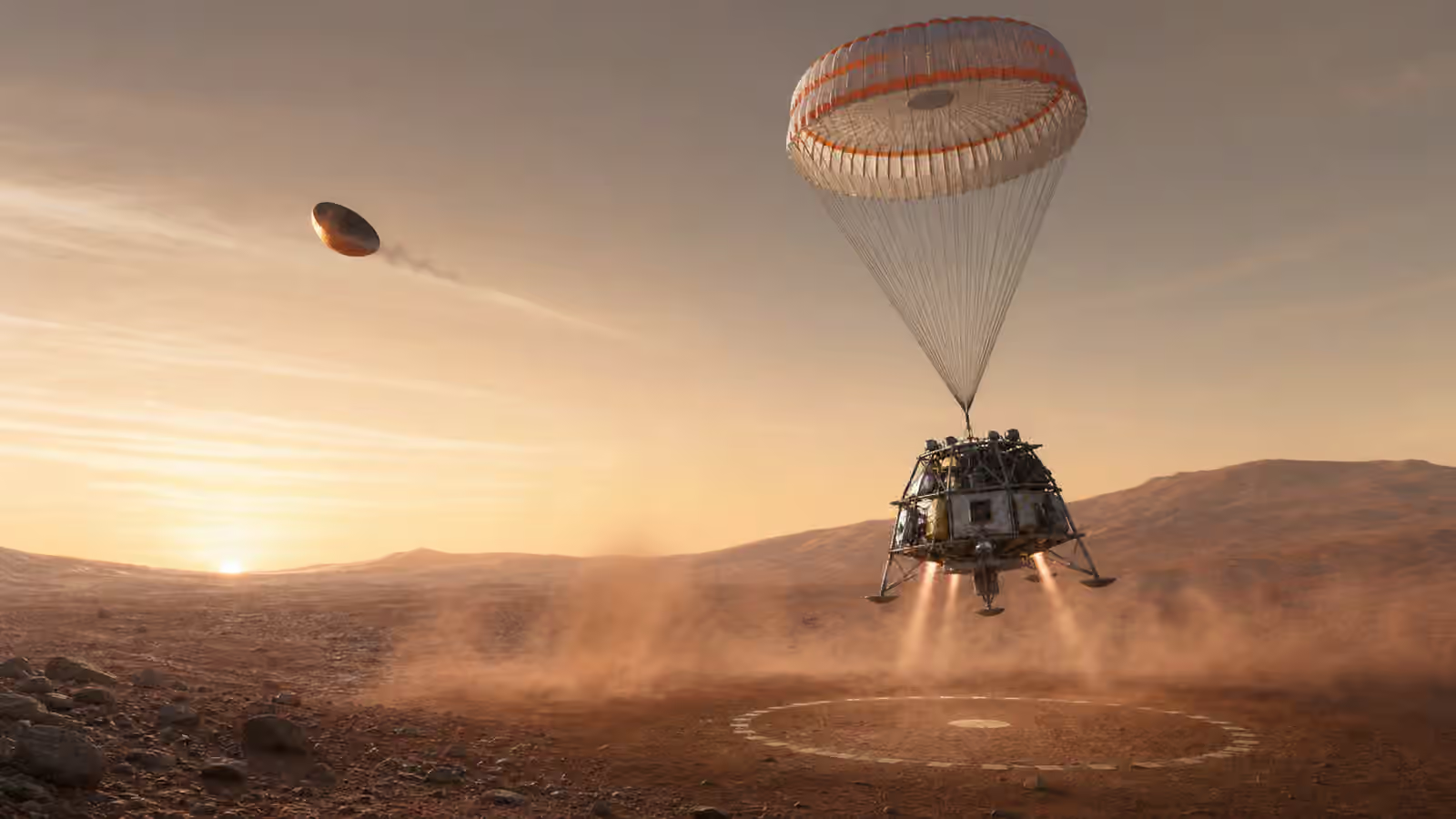
Planetary missions make timing even more dramatic. Mars, Jupiter, asteroids, and other destinations are not waiting in fixed places. They move around the Sun while Earth moves too. Mission designers use transfer windows when the energy required to reach the destination is acceptable. Miss the window and the next practical chance may be months or years away.
This is why interplanetary launch campaigns carry a different pressure. A delay of one day may be manageable inside the window. A delay beyond the window can reshape the entire mission. The spacecraft may have to wait in storage, be redesigned, accept a different trajectory, or miss a scientific opportunity.
Deep-space timing also includes arrival. The spacecraft must reach the destination at a useful point, with the right lighting, communication geometry, entry conditions, or orbital insertion plan. Launch timing is tied to the far end of the mission.
The Payload Has a Schedule Too
The payload may impose its own timing. A satellite might need to join a constellation plane. An Earth observation mission may want a certain local time of day for imaging. A scientific instrument may have thermal or lighting needs. A rideshare mission may combine payloads with different target orbits, forcing compromises. A national security mission may have constraints the public never sees.
The rocket is only the transportation system. The payload defines why the trip matters. A launch provider can offer performance, but mission success depends on placing the payload where it can do its job.
This is why launch windows are not only about rockets. They are about service. The best launch time is the one that supports the mission after the applause fades.
Waiting Is Part of Spaceflight
For spectators, a scrub feels like an absence. Nothing happened. For mission teams, the decision not to launch may be an active success. The rocket was preserved. The payload was protected. The safety envelope held. The mission waited for conditions that made sense.
Spaceflight rewards patience because the clock is not arbitrary. It is tied to physics, weather, safety, and operations. A rocket can be ready and still not have permission from the universe, the range, the clouds, or the target orbit.
That is the hidden lesson of launch windows. Going to space is not only force. It is timing. The launch vehicle must meet the moment, and the moment is moving.