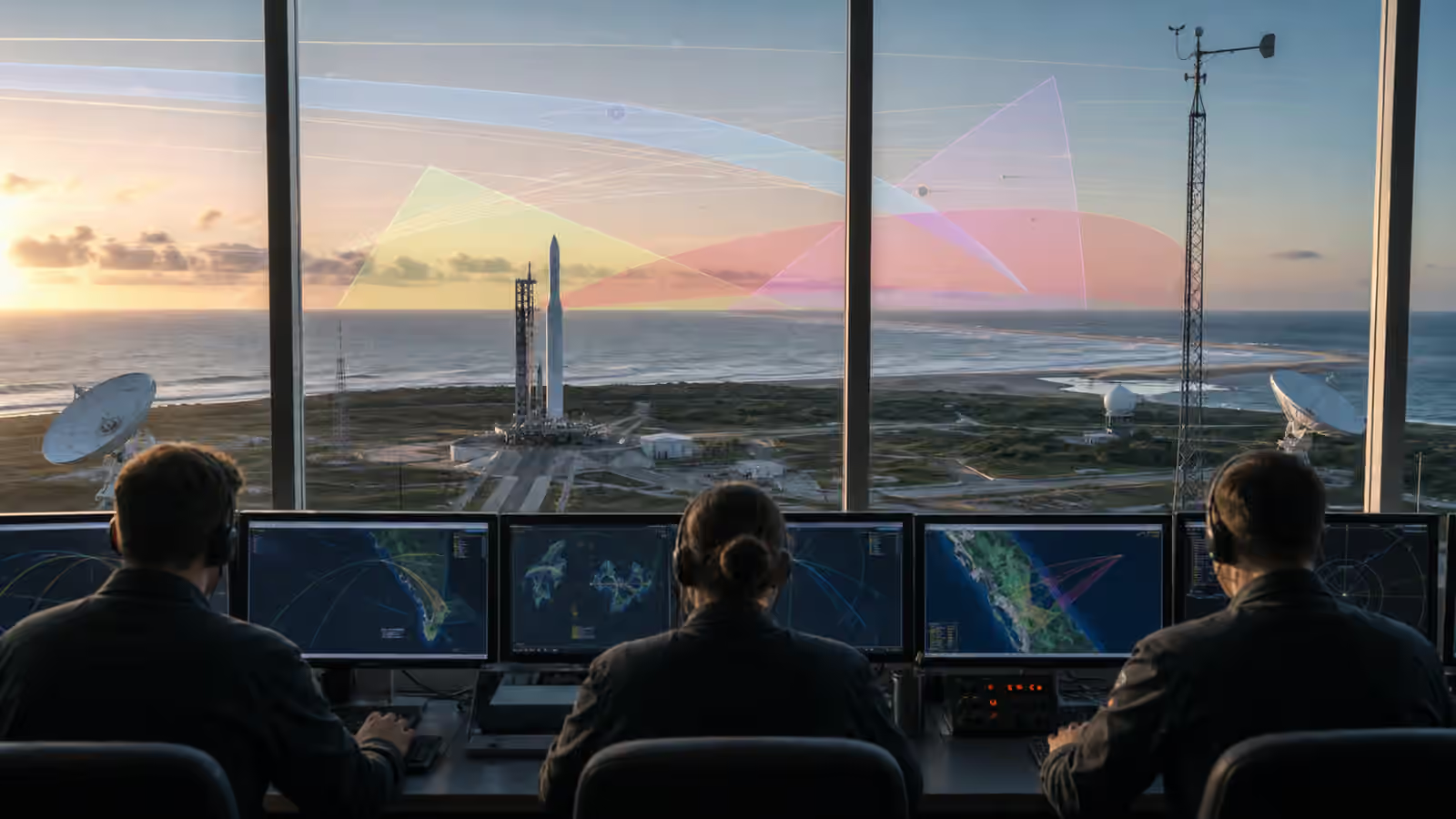
A rocket launch looks like a vehicle problem from the outside. Engines start, clamps release, flame hits the pad, and the vehicle climbs into the sky. The public sees thrust. The launch team also sees geography, weather, aircraft, ships, populated areas, debris fields, radio links, tracking sensors, emergency authority, and a corridor through the atmosphere that has to remain acceptable from ignition until the rocket is no longer a public hazard.
That corridor is the quiet subject of launch range safety. It is the work of deciding where a rocket may fly, what conditions make the attempt acceptable, what happens if the vehicle leaves its planned path, and how the surrounding world is protected while the mission tries to reach orbit.
The Spaceport Ground System explains pads, propellant systems, range assets, payload flow, and countdown infrastructure. Range safety is one of the reasons that ground system cannot be treated as launch scenery. A spaceport is not only the place where a rocket stands. It is the place where a flight path becomes an accountable public act.
A Launch Path Is a Safety Argument
Before a launch, teams model what the vehicle is expected to do and what it might do if it fails. The nominal trajectory is only the clean centerline. Safety analysis also asks where hardware could fall after an engine shutdown, breakup, staging event, fairing separation, destruct action, or uncontrolled reentry of an early stage. The result is not a single line on a map. It is a set of risk regions that move through time.
This is why many launches fly over ocean or sparsely populated corridors. The vehicle is not being dramatic. It is avoiding people. A rocket leaving Earth carries propellant, high-energy machinery, pressurized systems, and structures that may remain dangerous if the flight ends early. The safest route is often one where falling debris has the fewest chances to hurt anyone.
Launch Windows and Mission Timing shows how orbital geometry controls when a rocket can leave. Range safety adds another clock. The orbit may be right, but the corridor also needs acceptable weather, working tracking assets, clear airspace, clear marine zones, and a vehicle state that still fits the approved risk model. A countdown hold can come from a cloud rule, a boat in a restricted zone, a radar issue, or a late technical reading that changes the risk picture.
Flight Corridors Include the Air and the Sea
A launch range has to coordinate with the world that is already using the sky and water. Aircraft routes may be closed or rerouted. Ships may be warned away from downrange areas. Local authorities, coast guards, aviation agencies, port operators, and neighboring communities may all have roles. The launch provider may be a private company, but the airspace and sea lanes around the launch path are shared.
That coordination can look invisible when it works. A ship changes course before entering a hazard area. An aircraft route bends around a temporary restriction. A fishing vessel receives a warning. A launch slips because one object is in the wrong place at the wrong time. From a mission schedule viewpoint, that can feel frustrating. From a public safety viewpoint, it is the point of the system.
The corridor also changes as rockets become reusable. Reusable Rockets and Launch Economics focuses on the economic and operational value of flying hardware again. Range safety has to account for that return path too. A booster may separate, flip, relight engines, descend toward a landing zone, or land on a ship. That creates additional corridors, keep-out zones, tracking needs, weather concerns, and contingency cases. Reuse does not make range safety less important. It gives the range more moving pieces to understand.
Weather Is More Than Comfort
Launch weather rules are not only about avoiding rain on a camera lens. Wind can steer exhaust and debris. Upper-level winds can bend a vehicle’s path or increase structural loads. Lightning risk can threaten electronics and people. Clouds can affect tracking and violate electrical-field rules. Sea state can affect recovery ships or offshore landing platforms. Visibility can matter for optical tracking and local operations.
Weather also interacts with vehicle behavior. A rocket is designed for a range of conditions, not for every possible sky. A launch team may be able to accept one kind of wind but not another. A storm far from the pad may still matter if it affects a downrange region, recovery area, or emergency response route. The weather officer is not a ceremonial voice in the countdown. That person is one of the links between atmospheric reality and the approved safety case.
The same habit appears later in space operations. Space Weather describes solar storms, radiation, drag, and radio disruption after launch. Range weather is different, but the engineering posture is similar. The environment is part of the system. A mission plan that ignores it is only a drawing.
Tracking Turns Flight Into Evidence
During ascent, the range needs to know where the rocket is, how fast it is moving, and whether it remains inside expected limits. Radar, telemetry, GPS-like navigation sources, optical systems, communication links, and vehicle data can all contribute. The range compares the actual flight with the allowed corridor and with the rules that decide when intervention is required.
This tracking is not only for emergencies. It also creates the record of the flight. If the launch succeeds, the data helps confirm performance and improve future missions. If something fails, the data helps investigators understand when the vehicle departed from expectation and where debris may have landed. A launch that cannot be reconstructed is harder to learn from and harder to trust.
Upper Stages and Orbit Insertion covers the final rocket work before a payload becomes an independent spacecraft. Range safety is most visible earlier in ascent, but the handoff is connected. Staging zones, fairing drops, upper-stage passivation, and early orbital insertion all affect what the launch leaves behind. The corridor is not finished merely because the rocket disappears from local view.
Flight Termination Is the Last Layer
One of the starkest parts of range safety is flight termination. If a rocket becomes uncontrollable and threatens people, the range may need a way to end the flight before it reaches a worse place. Historically this could involve a human range safety officer sending a destruct command. Modern systems may include autonomous flight safety logic that monitors the vehicle and acts within defined rules.
This subject can sound severe because it is. It is also evidence of how seriously launch risk is treated. A flight termination system is not there because teams expect failure. It is there because launch vehicles carry enough energy that a credible failure path has to be bounded. The system itself must be secure, tested, independent enough to work when needed, and disciplined enough not to act when the vehicle remains within acceptable limits.
Autonomous systems do not remove accountability. They move some decisions into validated logic that must be reviewed, tested, and understood. Mission Assurance and Spaceflight Reviews belongs in this conversation because safety claims have to become evidence. A termination system that exists only as a line item is not enough. The range has to trust its sensors, rules, software, power, communication paths, and failure modes.
Payloads Depend on Range Discipline Too
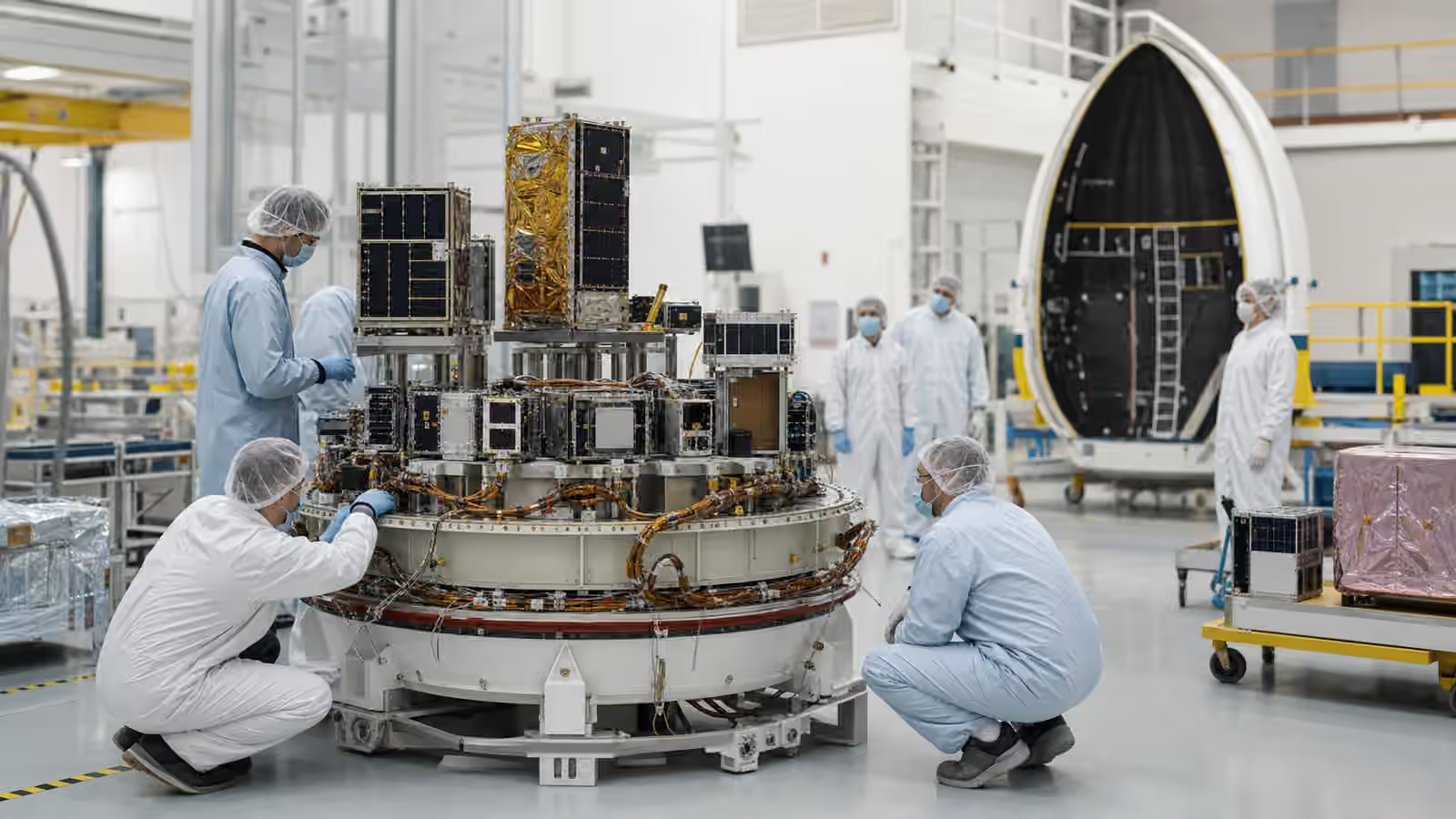
Payload teams may think of range safety as a launch provider responsibility, but their hardware is part of the stack. Payload Integration and Rideshare Launches explains adapters, fairing constraints, separation systems, and shared launch campaigns. Those payloads also bring batteries, pressure vessels, radio systems, deployable hardware, contamination concerns, and handling rules. The range needs to know what is aboard because a failure case is different when the payload changes.
Rideshare missions make this discipline more visible. Many spacecraft may leave on one rocket, and each may have its own owner, mission, and acceptable risk posture. The launch campaign still has to treat the stack as one physical system until separation. A small satellite cannot be allowed to transmit at the wrong time, deploy a mechanism inside the fairing, leak hazardous material, or complicate emergency response without being part of the safety analysis.
Good range work therefore begins long before the countdown. It shows up in interface documents, hazard reports, procedures, rehearsals, local notices, ship and aircraft coordination, ground system checks, weather rules, and the authority to stop when the situation no longer matches the approved plan.
Safety Is What Makes Cadence Possible
Frequent launch is often discussed as a business target. More cadence means more payloads, more replacement satellites, more science missions, more demonstrations, and more logistics. But cadence without trust is fragile. A launch site that repeatedly surprises neighbors, aviation users, marine traffic, regulators, or payload customers will not feel routine for long.
Range safety is one of the unglamorous systems that lets launch become infrastructure. It turns a dramatic event into a managed operation. It does not remove risk, and it should not pretend to. It identifies the risk, bounds it, measures it, communicates it, and gives people authority to delay or stop when the argument no longer holds.
The next time a countdown pauses for a boat, a cloud rule, or a range asset problem, it may look like a small nuisance beside the rocket. It is not. It is the surrounding system doing its job. Rockets need engines to climb. They need invisible guardrails to leave responsibly.