Most machines worth keeping have a maintenance story. Cars need oil, ships need dry docks, aircraft need inspections, bridges need repairs, and data centers need people who know where the bad power supply is hiding. Spacecraft have usually lived under a harsher rule. Once a satellite reached orbit, it was expected to work until it failed, ran out of fuel, lost enough capability to become uneconomical, or had to be moved out of the way.
That old habit made sense when space was rare, expensive, and organized around one-off missions. A satellite was designed, launched, commissioned, operated, and eventually retired. If a sensor failed, the operator worked around it. If a fuel valve stuck, the mission changed. If the spacecraft was healthy but low on propellant, its useful life ended anyway. The repair shop was on Earth, and the machine was not coming home.
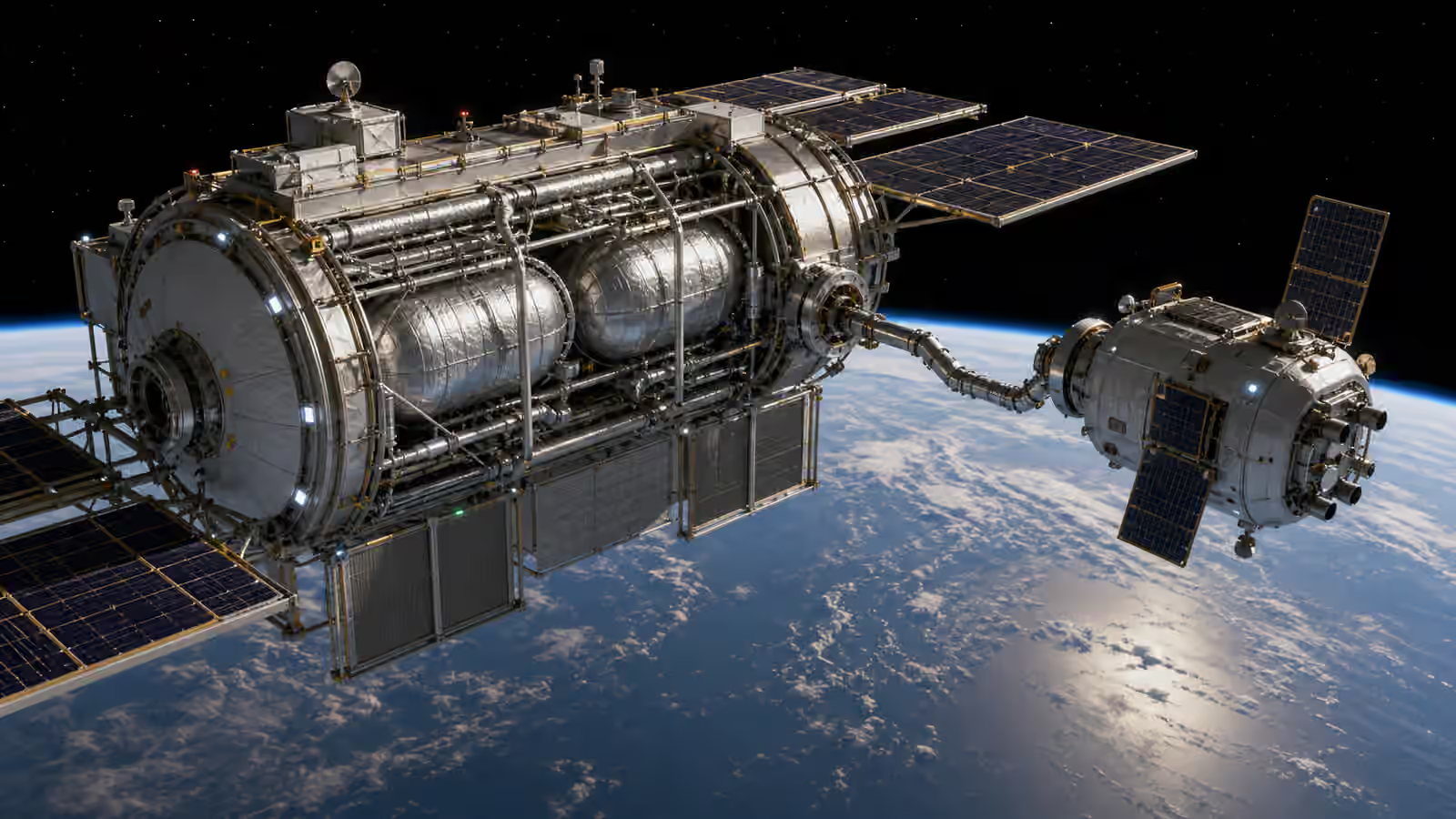
In-space servicing changes that assumption. It treats satellites less like disposable objects and more like infrastructure that can be inspected, stabilized, refueled, repositioned, upgraded, or safely removed. The idea is not new, but it becomes more important as orbit fills with communication networks, Earth observation platforms, weather assets, navigation support, research stations, and commercial hardware that people on the ground increasingly depend on.

A satellite can fail in ordinary ways
The public tends to imagine satellite failure as a sudden dramatic event, but many failures are quieter. A spacecraft may lose pointing accuracy. A solar array may not deploy cleanly. A sensor may need calibration. A battery may degrade. A reaction wheel may wear out. Propellant may run low even though the payload still works. Software can be patched from Earth, but not every problem is software.
The most frustrating cases are satellites that still have valuable hardware but no longer have the maneuvering ability or orientation control needed to keep operating well. Geostationary communication satellites are a classic example. They need fuel for station keeping, which means staying in the assigned orbital slot and maintaining the right orientation. When fuel runs low, the satellite may be moved to a graveyard orbit even if its communication payload could keep earning money.
Low Earth orbit has its own maintenance logic. Satellites experience drag from the thin upper atmosphere. They need orbit adjustments, collision avoidance maneuvers, and eventual disposal plans. A satellite that cannot maneuver becomes a traffic risk. A satellite that can be safely moved, serviced, or deorbited is easier to live with in a crowded orbital neighborhood.
Inspection comes before rescue
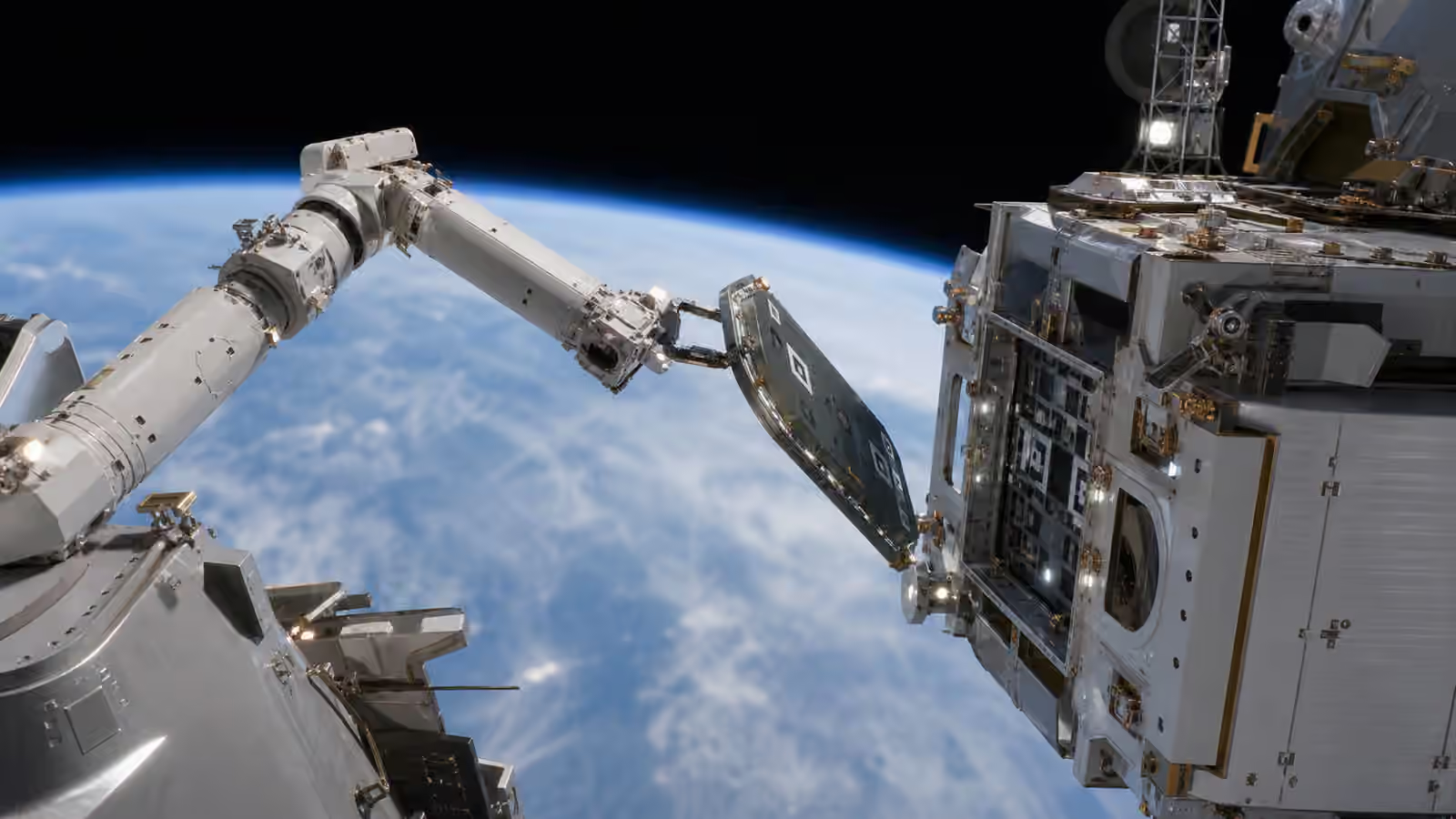
The first useful servicing skill is often inspection. Before anyone can repair or refuel a satellite, the servicing spacecraft has to approach it, identify its motion, understand its shape, and decide whether contact is safe. That sounds simple until you remember that both objects are moving at orbital speed, the target may not have been designed to be grabbed, and a mistake can create debris.
Inspection spacecraft use cameras, lidar, radar, relative navigation, and careful software to understand a target. If the satellite is cooperative, it may communicate its attitude and help the servicer approach. If it is tumbling or silent, the job becomes harder. A dead satellite is not necessarily still. It may rotate slowly, reflect sunlight unpredictably, or have loose appendages.
This is why in-space servicing is as much about patience as power. The servicing vehicle may spend time observing before touching anything. It may match motion, approach in stages, back away, and try again. The glamorous part is the robotic arm or docking tool. The serious part is knowing when not to use it yet.
Refueling is life extension
Refueling is one of the clearest business cases because propellant often limits satellite life. If a satellite can receive fuel, it may continue operating instead of being retired. For an operator, that can mean more years of service without immediately buying and launching a replacement. For the orbital environment, it can mean fewer rushed launches and better end-of-life control.
The practical difficulty is that many satellites were not built with a friendly gas cap. A servicer may need to connect to fill and drain valves, work around insulation, deal with old hardware, and transfer propellant without leaks. Future satellites can be designed with servicing ports, standardized interfaces, visual markers, and handles. That is where the field starts to look like real infrastructure. The first generation proves that servicing is possible. The later generation makes servicing normal by designing for it from the beginning.
Fuel is not the only consumable. Some spacecraft may benefit from coolant, modular battery replacement, new processors, upgraded payloads, or attached life-extension vehicles that take over station keeping. The more modular the satellite, the more repairable it becomes. The tradeoff is mass, complexity, and cost. A satellite designed for servicing may cost more up front, but if it survives longer or can be upgraded, the economics can still make sense.
Repair is harder than refueling
Repair in orbit is difficult because satellites are not built like cars with convenient access panels and familiar tools. A spacecraft is a compact bundle of structure, power, thermal systems, computers, radios, propulsion, sensors, and delicate deployed parts. It may be wrapped in thermal blankets. It may have sharp edges, fragile antennas, and old components that were never meant to be touched again.
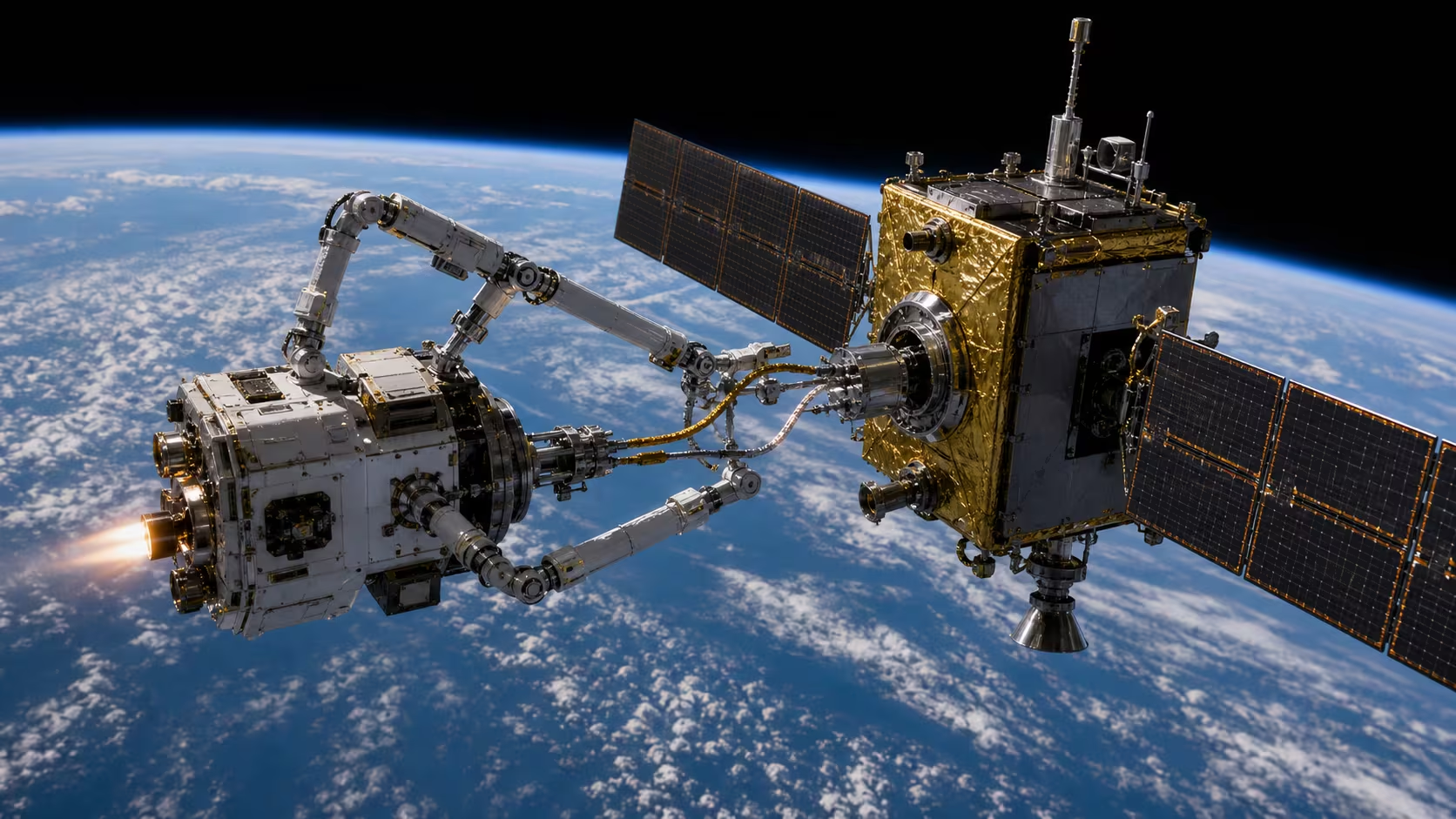
Robotic repair requires tools that can operate in vacuum, temperature extremes, harsh sunlight, deep shadow, and with communication delay. Even near Earth, a command path is not the same as standing beside the machine. Some operations can be controlled from the ground, some can be automated, and some need a mix. The servicer must hold position without pushing the target into a worse state. Every action needs a plan for what happens if the target moves, the tool slips, or the connection fails.
This does not mean repair is unrealistic. It means the early repairs will be selective. Inspection, docking, stabilization, refueling, antenna release, module swap, or orbit adjustment are more likely than a cinematic scene of a robot rebuilding a satellite from scratch. Useful maintenance starts with jobs that can be repeated safely.
Servicing can reduce debris risk
Orbital debris is not only a cleanup problem. It is also a maintenance problem. Dead satellites, spent rocket bodies, fragments, and abandoned hardware create collision risks. If a servicer can grab an object and move it to a disposal orbit or guide it into controlled reentry, it can make the orbital environment safer.
Active debris removal is politically and technically sensitive. A spacecraft that can capture another spacecraft is also a capability with security implications. Ownership matters. Consent matters. Verification matters. A dead object still belongs to someone. A responsible debris mission needs legal permission, careful tracking, and transparency about what the servicer can do.
Still, the logic is strong. If orbit is becoming infrastructure, operators need ways to maintain the shared space. Roads need tow trucks. Ports need tugboats. Railways need maintenance crews. Orbit needs its own versions, adapted to physics that do not forgive casual contact.
The design culture has to change
In-space servicing will not become ordinary if every satellite remains a custom puzzle. The field needs design habits that make spacecraft easier to approach, identify, hold, fuel, and retire. That can include standard docking targets, fiducial markers for machine vision, published servicing interfaces, cooperative navigation beacons, accessible valves, modular parts, and clear end-of-life plans.
This is not only an engineering preference. It is a market signal. If insurers, regulators, customers, and operators value serviceable satellites, manufacturers will have a reason to build them that way. If launch remains cheap enough and satellites are treated as short-lived disposable assets, servicing will have a narrower role. The future probably holds both models. Some small satellites will be replaced rather than repaired. Larger, more expensive, or strategically important satellites may deserve maintenance.
The most important shift is mental. Spacecraft used to be admired as solitary achievements. Infrastructure is different. Infrastructure is valuable because it keeps working, and anything that keeps working needs care. In-space servicing is the beginning of an orbital maintenance profession: quiet, technical, cautious, and more important than it looks from the launch livestream.
When you understand that, the servicing spacecraft stops looking like a novelty. It starts looking like a tool that belongs in any mature space economy.