Radiation is one of the hardest space hazards to make visible. A crew can see a loose tool, a blocked hatch, a broken fan, or dust on a seal. Radiation usually arrives as particles and energy that do not announce themselves with a shape. Yet it influences spacecraft layout, mission timing, storm shelters, suits, dosimetry, medical monitoring, operations rules, and the amount of risk a human mission can responsibly accept.
This guide is not medical advice and does not try to promise a safe dose for any person or mission. It is an infrastructure guide. The useful question is how engineers and operators design around an invisible hazard when people must live inside the system. Space Weather explains the solar environment that can disturb satellites and radio links. Human radiation protection asks what that environment means when the payload includes a crew.
The Hazard Has More Than One Source
Space radiation is not one thing. Galactic cosmic rays arrive from beyond the solar system and include high-energy particles that can be difficult to shield completely. Solar particle events can arrive from the Sun and may create short periods of increased risk. Trapped radiation belts around Earth affect certain orbits and transit paths. Secondary particles can be created when incoming radiation interacts with spacecraft materials. Each source has a different rhythm, energy, and operational meaning.
Near Earth, mission designers can use orbit selection, altitude, inclination, shielding, and procedures to manage exposure. Beyond Earth’s protective magnetic environment, the problem changes. A lunar mission, deep-space transit, or long-duration habitat cannot assume the same protection as low Earth orbit. The vehicle must carry more of its own answer.
Space Habitats and Life Support is relevant because radiation protection is part of the habitat system rather than a separate afterthought. Air, water, waste handling, fire safety, crew time, and shelter planning all share the same volume and mass budget. A habitat wall is not just a wall. It can be structure, storage, thermal boundary, micrometeoroid protection, and radiation mitigation at the same time.
Shielding Is About Placement, Not Just Thickness
The simple image of radiation protection is a thick shield. Real spacecraft design is more subtle because mass is expensive and not every material helps in the same way. Hydrogen-rich materials, water, food, waste, and other supplies can contribute to protection when placed thoughtfully. Dense materials may be useful for some purposes but can create secondary radiation for others. The design has to consider particle type, energy, mission duration, geometry, and what else the material is doing.
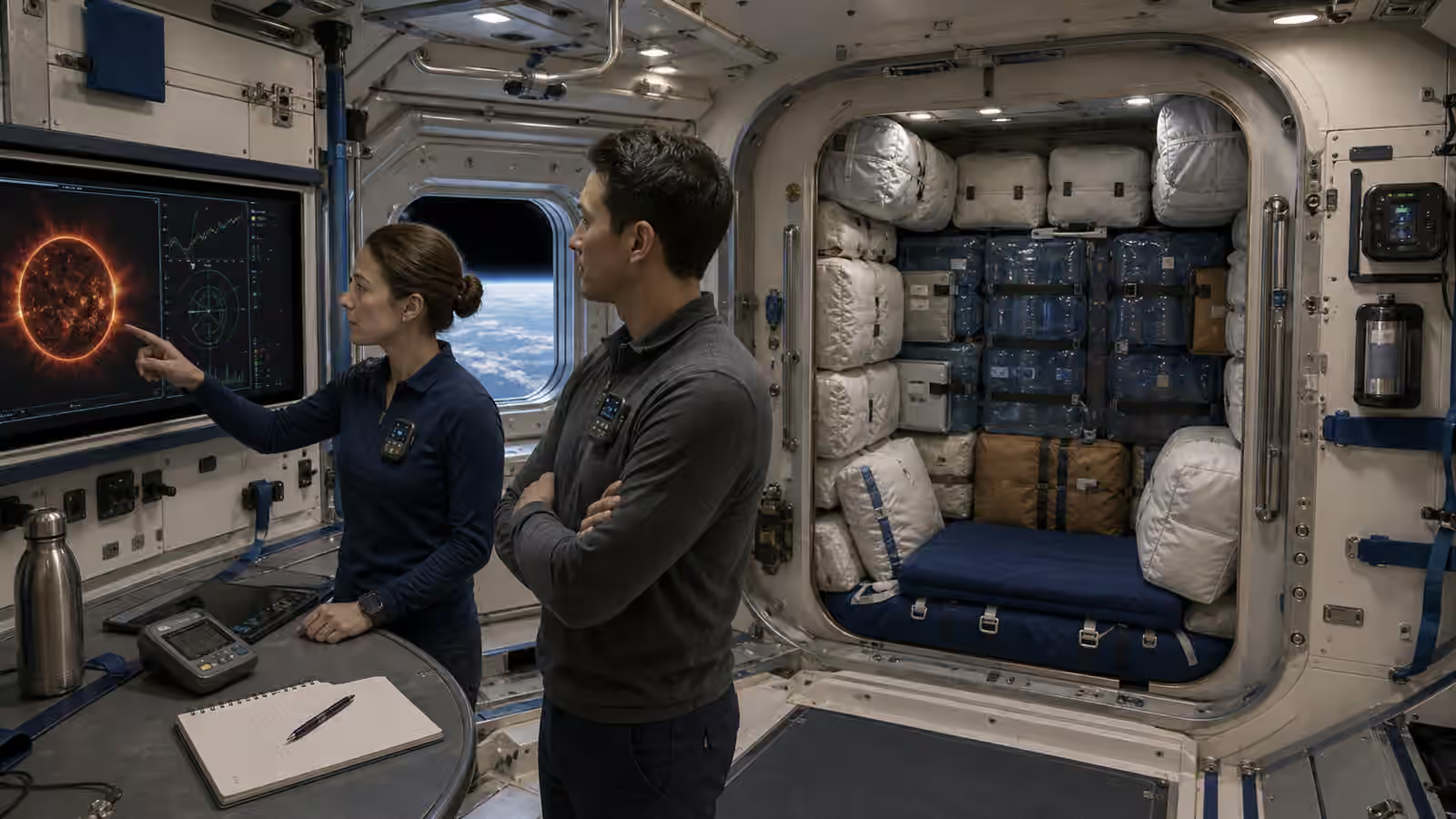
This is why storm shelters often appear in human spaceflight concepts. Instead of shielding the entire habitat to the same level, designers may create a smaller refuge where crew can wait through a solar particle event. The shelter might use water bags, food stores, equipment, or dedicated materials around a compact volume. It is not glamorous, but it is a practical way to concentrate protection where it matters during a short-duration event.
Placement also affects daily life. A shelter that is hard to reach, cramped beyond tolerance, poorly ventilated, or poorly connected to communications and monitoring may be less useful when an event occurs. Radiation protection has to meet human factors. The crew needs to know where to go, what to bring, how long they may need to remain, how to keep systems monitored, and how to resume normal operations afterward.
Space Mission Logistics and Cargo Planning connects here because supplies are not only consumables. On a human mission, the location of water, food, spare clothing, equipment, and waste can change the shielding story. Logistics becomes part of protection when mass has to serve several purposes.
Dosimetry Turns Exposure Into Evidence
Operators cannot manage what they do not measure. Dosimeters and radiation monitors help track the environment and crew exposure. Some devices may be worn by individuals. Others may be mounted in different parts of the vehicle to map how shielding and geometry affect the local environment. The data helps teams compare planned exposure, actual conditions, and operational choices.
Measurement is not a magic answer. Instruments have limits. Data may need interpretation. A dose recorded at one location may not represent another location. A storm may evolve while communications are delayed. Still, dosimetry gives the mission an evidence trail. It helps answer what happened, when it happened, where the crew was, and whether procedures worked as intended.
Payload Calibration and Validation may sound like a science-data topic, but the habit is similar. Measurements become trustworthy through calibration, context, metadata, and records. A radiation reading without location, time, instrument state, or operational context is less useful. Protection depends on data discipline as much as on material.
Operations Shape Exposure
Radiation protection is not only a design problem. Operations matter. A mission may delay an EVA if space weather risk is elevated. A crew may move into a shelter during an event. A vehicle may change attitude to improve protection or preserve systems. A lunar surface team may time activities based on communication windows, power, thermal conditions, dust, and radiation forecasts together. The hazard has to be managed alongside every other constraint.
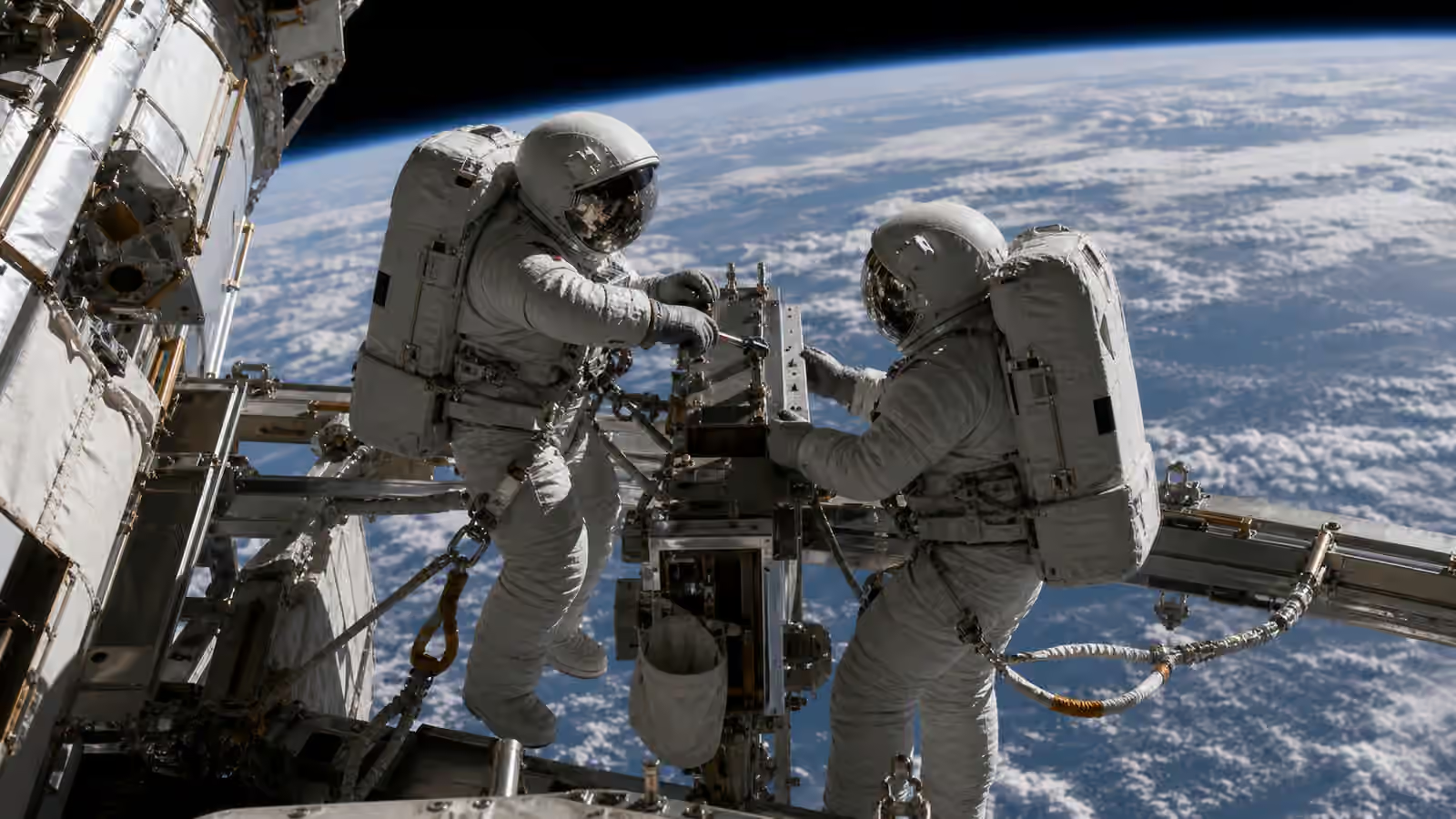
Spacesuits and EVA Operations shows why this is difficult outside the vehicle. A suit is a small spacecraft people wear, but it cannot carry the same shielding as a habitat. EVA planning therefore relies on time limits, monitoring, forecasts, shelter access, communication, and conservative rules. The suit protects against vacuum and thermal extremes, but radiation risk still belongs to mission planning.
Solar events are especially important because they can change the operating picture quickly. Forecasting helps, but uncertainty remains. A responsible system does not depend on perfect warning. It builds procedures that can be executed when information is incomplete. That may mean stopping surface work, returning to a rover or habitat, moving to a shelter, powering down nonessential systems, or preserving communication with mission control.
The Moon Adds Surface-Specific Problems
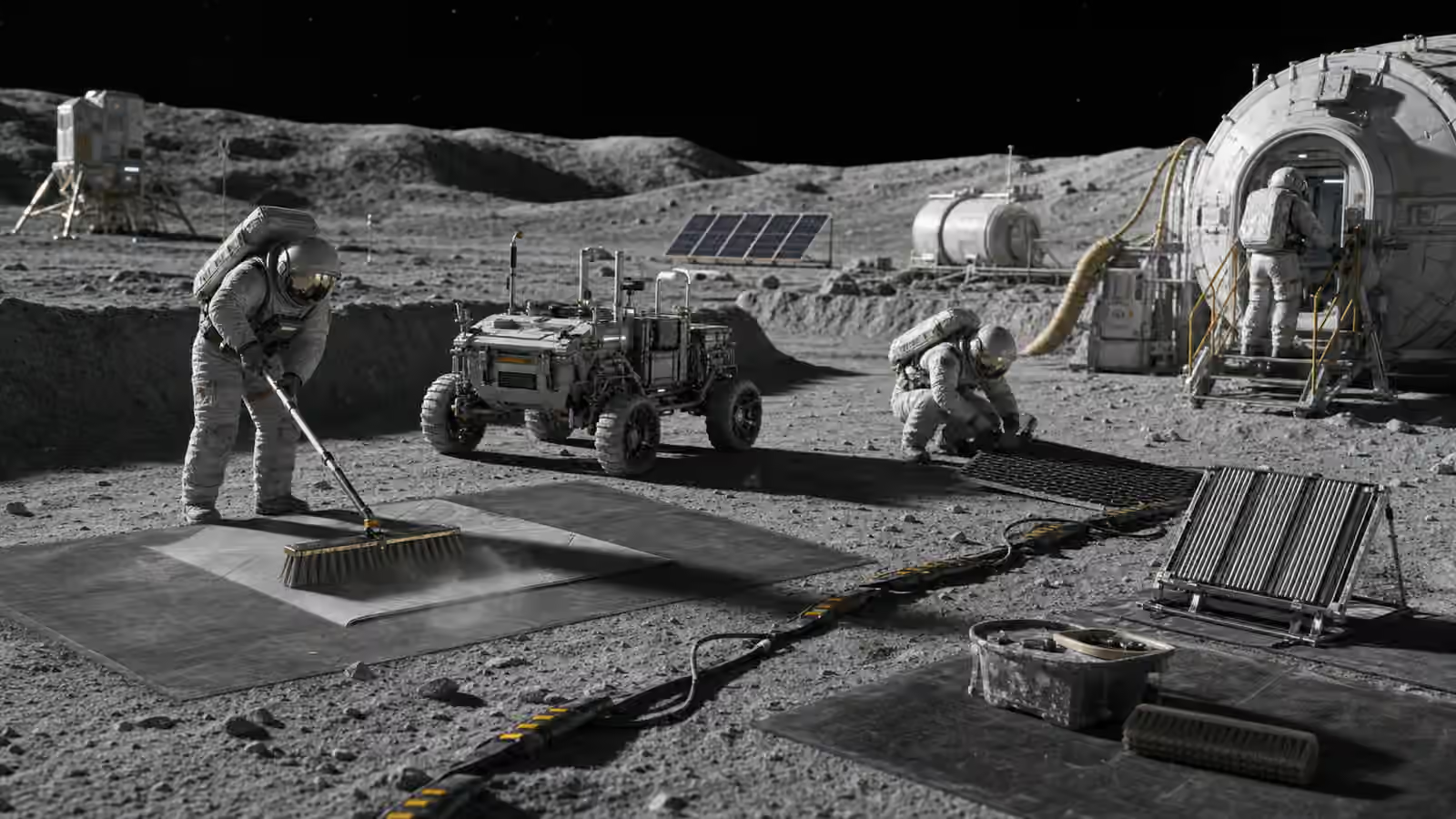
The lunar surface is attractive because it is nearby compared with Mars and useful for repeated missions, but it does not remove the radiation problem. There is no thick atmosphere or global magnetic field like Earth’s. A habitat, rover, suit, or surface shelter has to provide protection through design and operations. Regolith may eventually be used as shielding, but moving, placing, and maintaining it is a construction and dust-control problem, not a simple pile of dirt.
Lunar Infrastructure and Lunar Dust Mitigation both connect to radiation protection. A buried or covered habitat may reduce exposure, but it also changes construction methods, access, thermal behavior, seals, maintenance, and emergency response. A rover that provides a refuge during a traverse needs power, communication, navigation, and enough shielding to matter for its intended role.
Surface planning also has geography. Some sites may offer terrain that helps with shielding or communication. Some may support access to resources. Some may be chosen for science. Radiation protection is one layer in a larger site-selection trade. It has to be considered with power, landing safety, mobility, thermal cycles, and what the crew is actually there to do.
Protection Is a Chain, Not a Promise
No single material, forecast, shelter, suit, or procedure solves human radiation risk. Protection comes from a chain: mission design, shielding placement, monitoring, storm shelter access, operational rules, crew training, communication, logistics, and honest risk acceptance. If one part of the chain is weak, the others have to carry more.
That chain also has to be understandable to the crew. People living in a spacecraft need procedures that can be followed under stress. They need displays that avoid false precision. They need training that explains why a shelter matters even when nothing looks wrong. They need mission rules that let them pause work without treating caution as failure.
The most mature attitude is neither fear nor dismissal. Radiation is part of the space environment, like vacuum, micrometeoroids, thermal cycling, dust, and isolation. It deserves engineering respect. Spacecraft Materials and Contamination Control shows how surface behavior matters for machines. Human radiation protection shows how the invisible environment shapes the living architecture around people.
As human activity moves beyond short visits, the radiation question becomes more central. A brief mission, a lunar outpost, a transit vehicle, and a long-duration surface base will not carry the same risk posture. Each one needs its own evidence and boundaries. The goal is not to pretend space is gentle. It is to design habitats, suits, schedules, shelters, and operations that let crews work with clear eyes inside an environment that does not care whether the danger is visible.