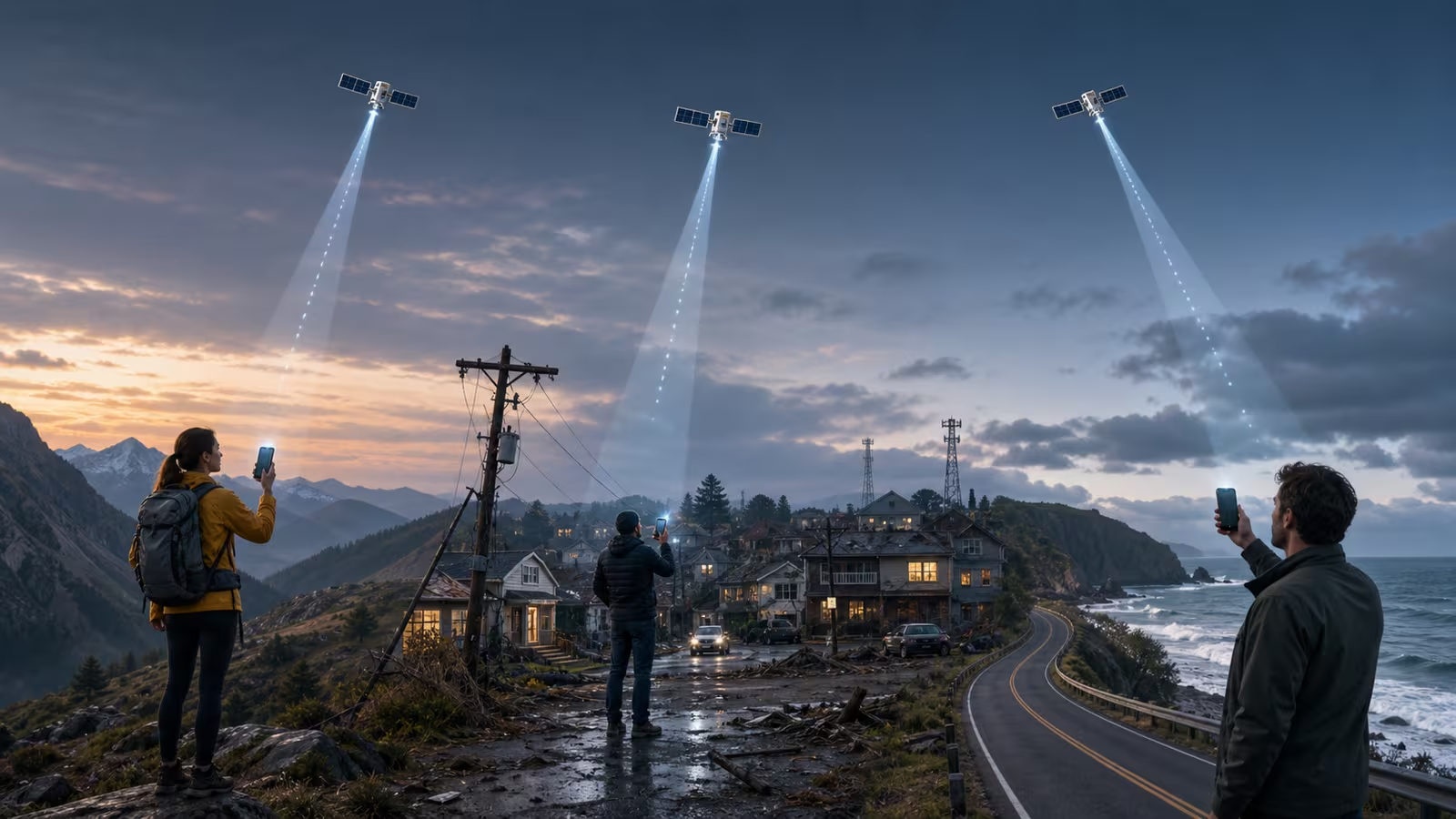
Direct-to-phone satellite service sounds almost magical: your normal phone connects to a satellite when there is no cell tower. The practical version is less magical and more interesting. It is not the same as carrying a full satellite internet dish in your pocket. A phone has a small antenna, limited power, and was designed for towers much closer than satellites. Making that phone talk to orbit requires careful engineering, spectrum coordination, and realistic expectations.
The reason people care is simple. Coverage gaps still matter. Hikers get hurt outside cell range. Roads cross empty regions. Storms knock out towers. Rural communities may have weak service. Ships, farms, mines, and emergency responders operate beyond normal networks. A satellite link to an ordinary phone could turn “no service” into “enough service to ask for help.”
Satellite-to-cell is not normal satellite internet
Satellite internet usually needs a dedicated terminal. That terminal can be larger, more powerful, and better aimed than a phone. Direct-to-phone service tries to connect with the phone you already own. That is convenient, but it limits capacity and data rates. Early services often focus on emergency messages, basic texting, location sharing, or low-bandwidth data rather than full video calls.
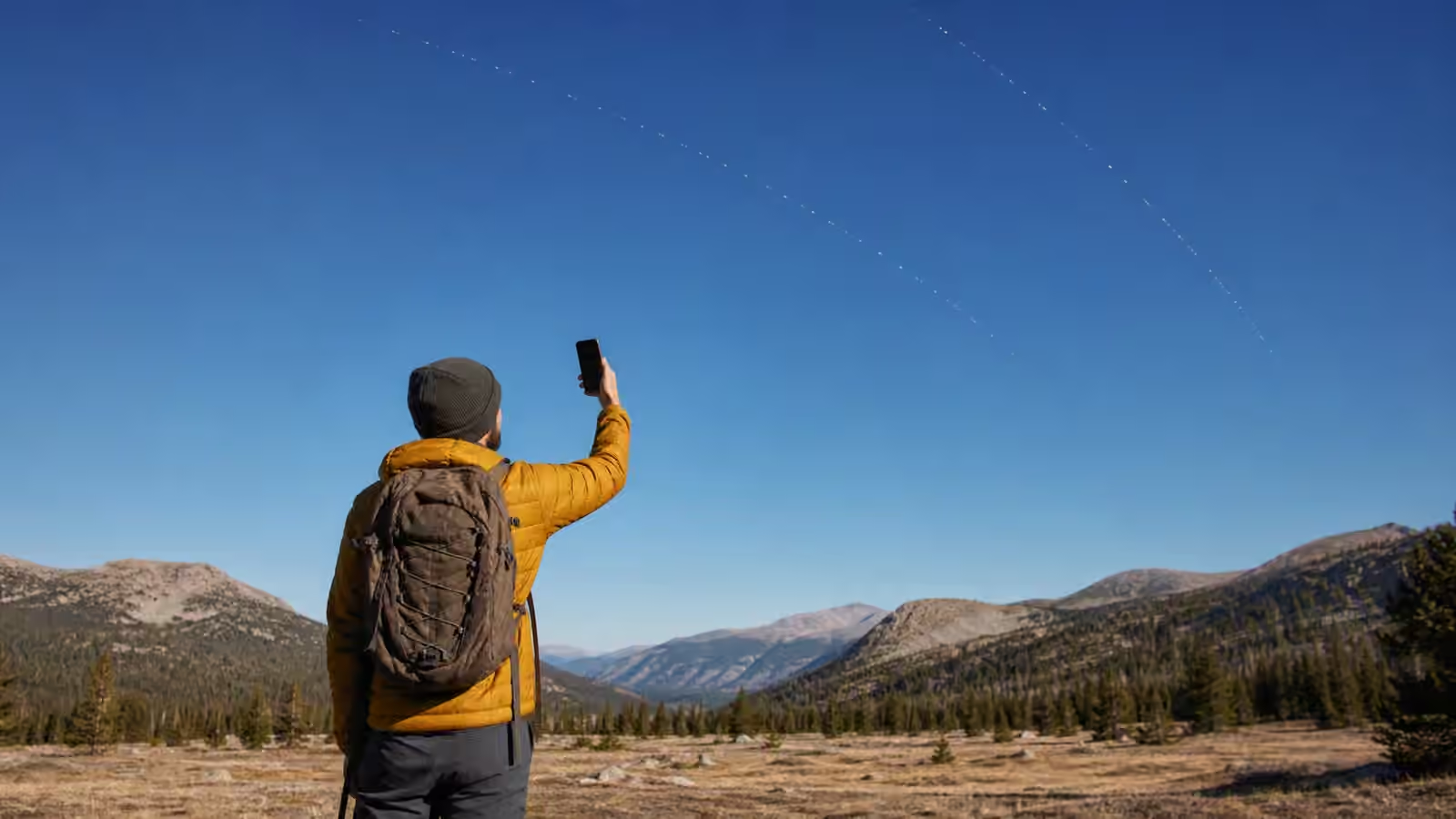
Think of it like a flashlight seen from a hill. A large lantern is easier to spot from far away. A phone is a small flashlight. The satellite has to be designed to hear it, and the service has to use spectrum in a way that does not interfere with ground networks. The achievement is not that your phone becomes a satellite dish. The achievement is that the satellite becomes enough like a distant cell tower to make a basic link possible.
Why low Earth orbit helps
LEO satellites are closer than traditional high-orbit satellites, which helps with signal strength and delay. They still move quickly, so the system needs many satellites and careful handoffs. A phone may need a clear view of the sky. Trees, buildings, mountains, heavy weather, and the way you hold the phone can affect the link. The experience may feel less like normal cellular service and more like patient emergency communication.
This matters for user expectations. Direct-to-phone is not mainly about watching movies in the wilderness. Its first big value is resilience and reach. If it can send a distress message, receive an emergency alert, or let a family member know you are safe after a storm, that is already meaningful infrastructure.
Spectrum and partnerships
Wireless service depends on spectrum, the invisible lanes used for radio communication. Direct-to-phone systems often involve partnerships between satellite operators and mobile carriers because the satellite may use cellular spectrum or coordinate with carrier networks. Regulators care because interference can harm existing services.
This is where space law and telecom law meet. A satellite service is not useful if it disrupts ground networks. A carrier partnership is not useful if the satellite cannot legally and technically use the needed frequencies. Direct-to-phone service is therefore an infrastructure coordination project, not only a satellite design project.
Emergencies are the first clear use
The most human use case is emergency communication. Imagine a hiker with a broken ankle, a driver stranded outside coverage, a family after a hurricane, or a rural worker injured far from a tower. Even a short message can change the outcome. Location plus text can be enough to start help moving.
Governments may also use satellite-to-phone systems for emergency alerts in areas where towers are down. That does not replace hardened terrestrial networks, but it adds a layer. Resilience often comes from layers. A tower is better when it works. A satellite is valuable when the tower is absent or broken.
Capacity will grow slowly
Over time, direct-to-phone services may support richer messaging, voice, and limited data in more places. But capacity will remain precious. A satellite passing over a region has to divide its resources among users. Ordinary phones are not optimized for space links. The network needs enough satellites overhead, enough spectrum, and enough ground integration.
This is why direct-to-phone should be judged by the right job. If it keeps remote people reachable, it is valuable. If it is marketed as a total replacement for towers, be skeptical. Ground networks have far more capacity in dense areas. Space fills gaps and provides backup.
Why this matters
Direct-to-phone satellites matter because they make space infrastructure personal. Satellite internet can feel like a home service. Earth observation can feel like a data product. Direct-to-phone service touches the object in your hand. It changes the meaning of “no bars” in remote or damaged places.
For a normal reader, the practical questions are straightforward. What phones work? What carrier supports it? Is it emergency-only, text, voice, or data? Does it need clear sky? What regions are covered? What happens during disasters when many people try to connect? The promise is real, but the details decide whether it is a lifesaver, a convenience, or a marketing phrase. In the best version, the sky becomes the backup cell tower we hope not to need and are grateful to have.
This is also why direct-to-phone service should be explained honestly. It may begin as a narrow safety feature and become more capable over time. That is not failure. Infrastructure often starts with the most urgent job. A bridge may first reopen for emergency vehicles before normal traffic returns. Satellite-to-cell may first carry small messages before it carries richer communication. The important thing is that it gives ordinary phones one more path out of silence.