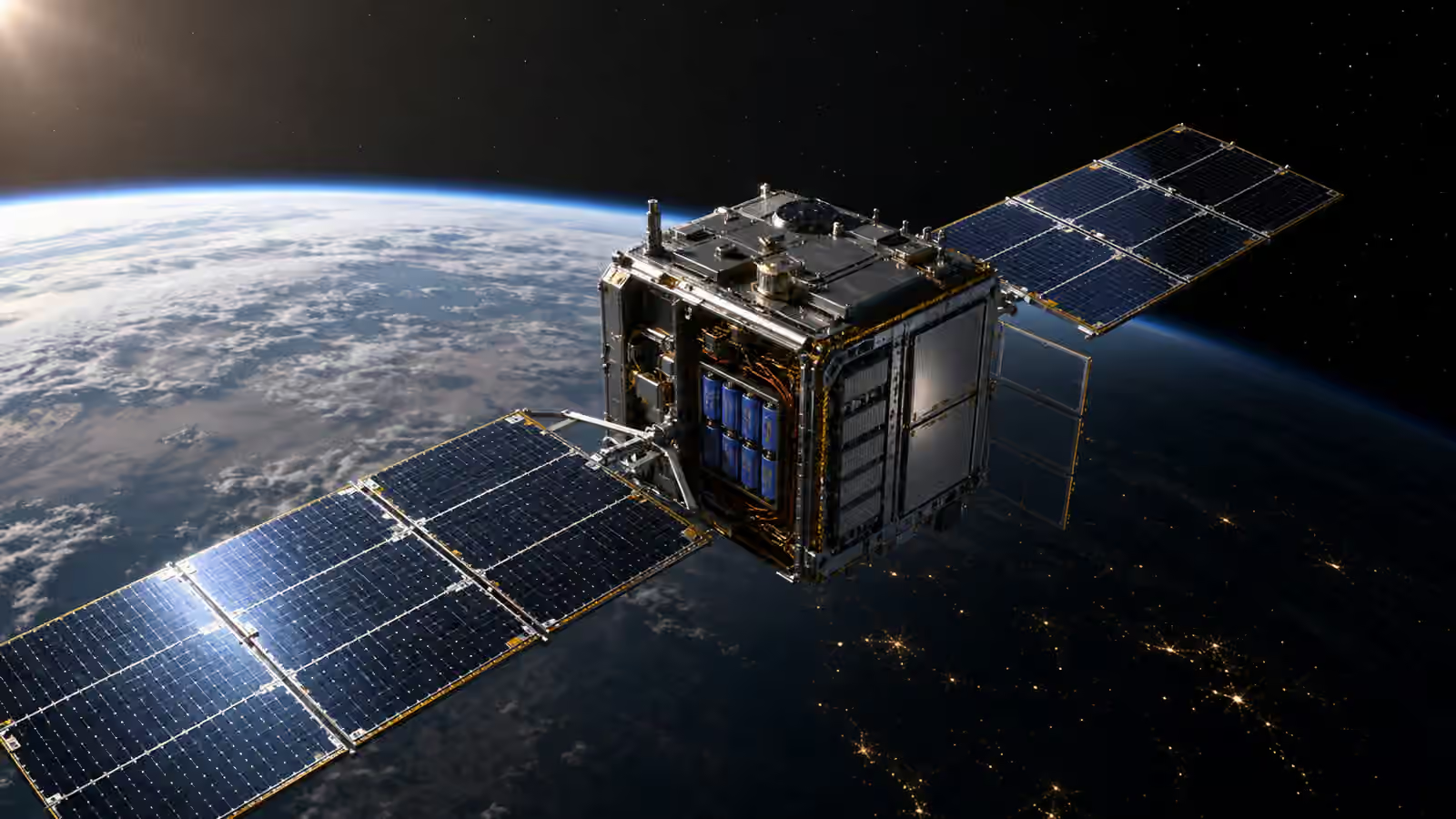
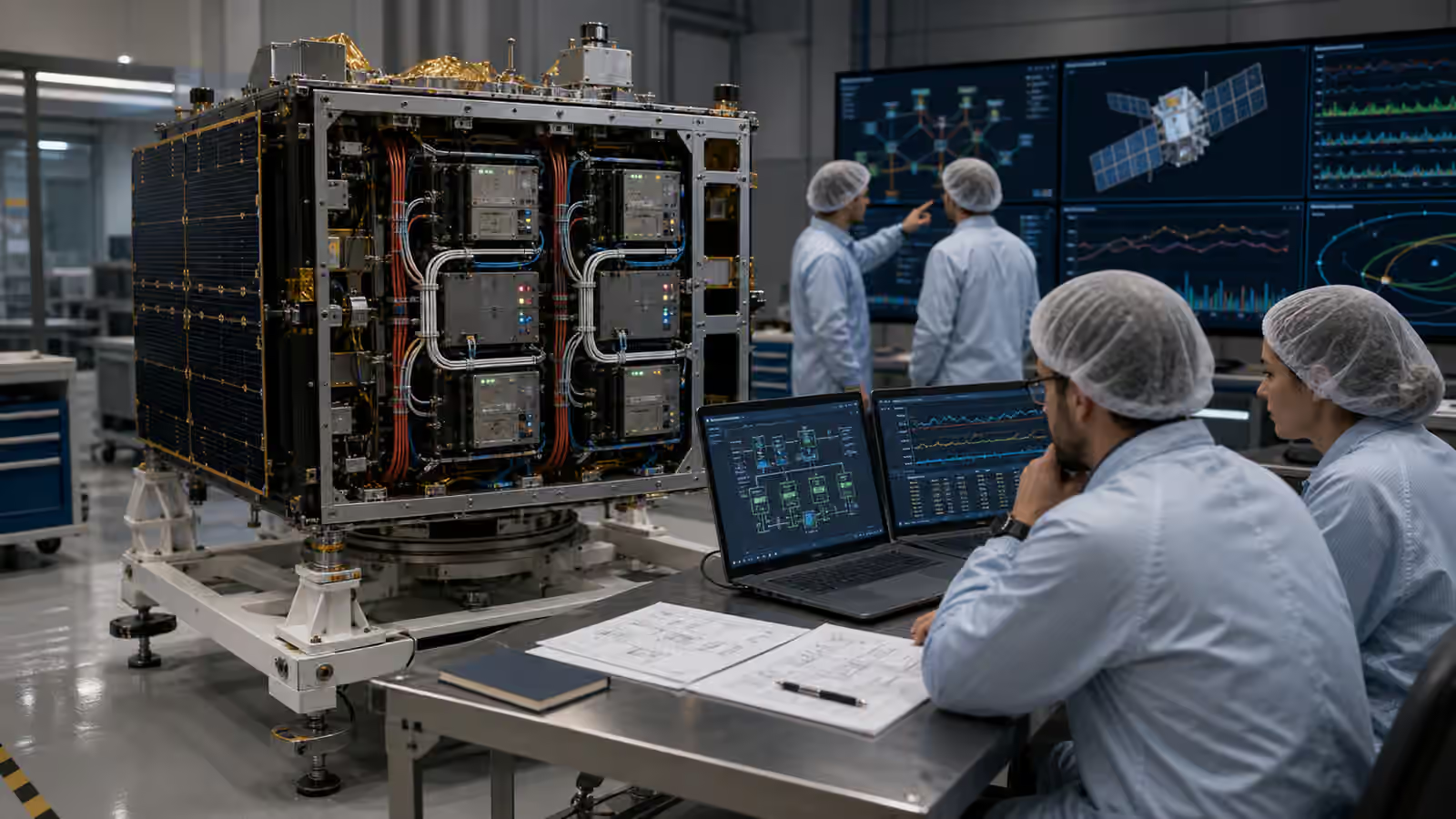
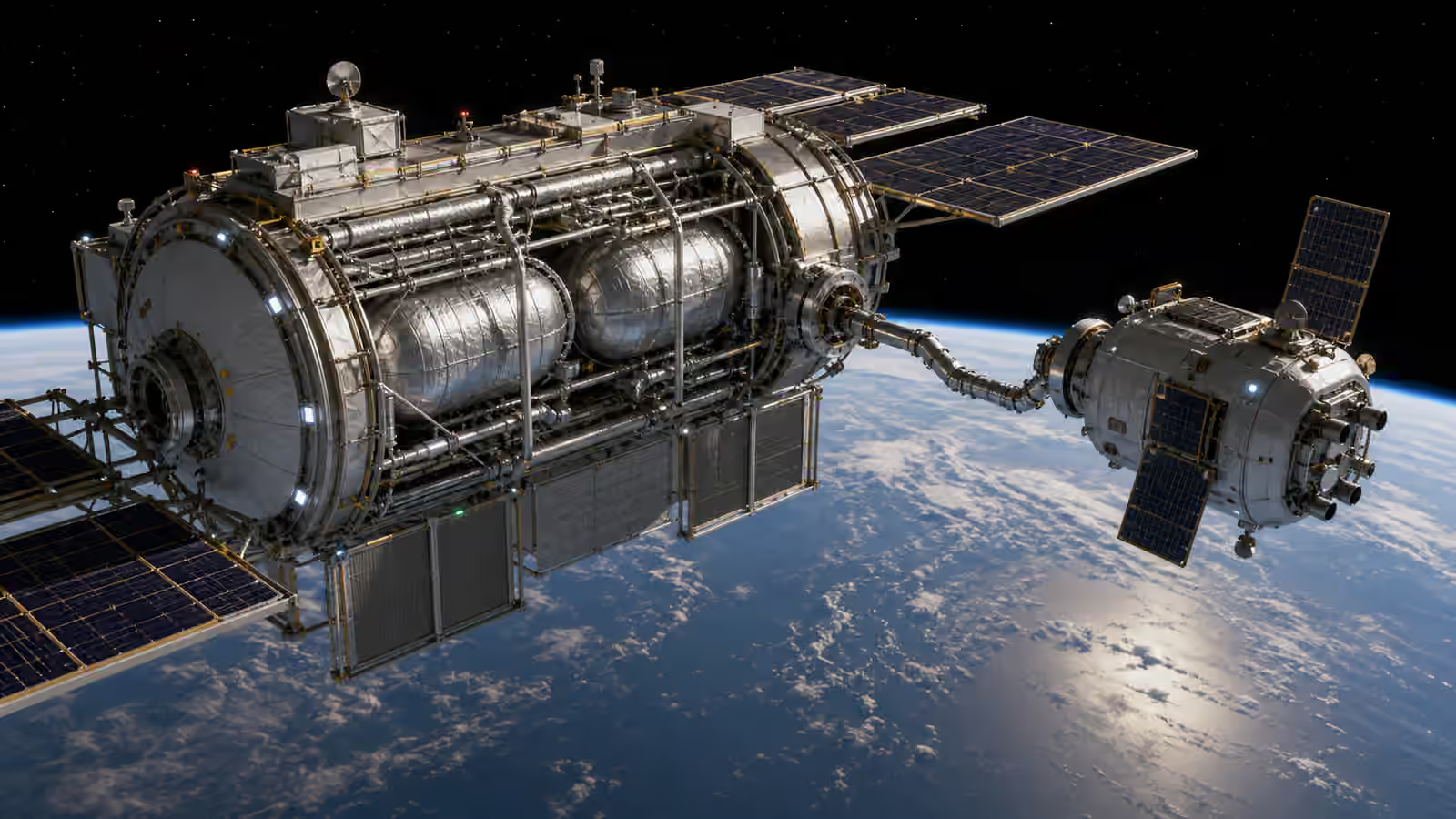
Every spacecraft is limited by power, but deep-space missions make that limit visible. Near Earth, solar arrays can be generous enough that power feels like a subsystem among others. Farther out, sunlight weakens, communication distances grow, heaters matter more, and every watt has to justify its place in the architecture. A mission that cannot produce, store, distribute, and conserve energy is not a mission. It is a silent object on a long trajectory.
Satellite Power Systems explains the familiar spacecraft power story: solar arrays, batteries, eclipse discipline, power budgets, and aging. Deep-space power keeps those ideas but stretches them. The distance from the Sun, the length of communication delays, the cold of shadowed environments, and the scarcity of repair options turn power into one of the first architectural decisions rather than a box filled in after the payload is chosen.
Sunlight Is Not the Same Everywhere
Solar power is attractive because it uses a constant environmental resource, but that resource changes with distance and geometry. A solar array that performs well in Earth orbit receives far less sunlight near Mars and dramatically less in the outer solar system. Dust, pointing constraints, temperature, radiation, launch packaging, deployment reliability, and mission attitude all affect the practical result.
This does not make solar power unsuitable for deep space. Many missions can use it well, especially when designers accept larger arrays, careful power modes, and realistic margins. Solar electric propulsion, orbiters, landers, and relay spacecraft may all depend on large arrays. The question is not whether solar power works in the abstract. The question is whether the mission can carry enough array area, point it well enough, survive the environment, and still operate the payload, heaters, radios, computers, and propulsion system when needed.
Solar power also changes operations. A spacecraft may schedule high-power activities when array geometry is favorable. It may reduce payload use during cruise or after dust accumulation. It may protect batteries by avoiding deep discharge. It may enter conservative modes during storms, eclipses, or surface night. In deep space, a power budget is not only an engineering table. It becomes part of the mission calendar.
Batteries Buy Time, Not Independence
Batteries are essential because many spacecraft need to bridge shadows, peak loads, launch phases, safe modes, and transitions. They can keep avionics alive during an eclipse, support a transmitter burst, or cover a deployment sequence. But batteries do not create energy. They store it, age with use, and impose thermal and operational limits.
This distinction matters when people imagine missions through dramatic events. A lander descending into shadow, a probe surviving a long eclipse, or a rover waking after night may feel like a battery story. It is really a system story. How much energy was available before the event? How warm were the batteries? How much reserve was protected? Which loads were turned off? Which heaters were allowed to run? How much capacity has been lost since launch? What happens if the next communication opportunity is delayed?
Deep-space batteries require respect because replacement is impossible and aging is mission-shaped. A battery cycled gently may support a long mission. A battery repeatedly pushed toward its limits may lose margin faster. This is why power modes, heater rules, and safe-mode behavior are designed with such care. A spacecraft in trouble often has one first duty: preserve enough energy to be recoverable.
Radioisotope Power Trades Fuel for Endurance
Some missions cannot depend on sunlight alone. They may travel too far from the Sun, operate through long dark periods, land in shadowed regions, or require steady heat as well as electricity. Radioisotope power systems answer this problem by using heat from the natural decay of suitable material, converting some of that heat into electricity while also providing thermal support.
The details are highly specialized and handled under strict safety, security, and regulatory controls. For a guidebook reader, the important point is architectural. A radioisotope power system can give a mission steady energy independent of local sunlight, but it is scarce, expensive, carefully governed, and limited in output. It does not make power abundant. It makes certain missions possible that would otherwise be impractical.
Radioisotope heat can also be useful even when the electrical output is modest. Keeping instruments, electronics, or mechanical systems within temperature limits may matter as much as running a payload. In very cold places, heat is not waste. It is survival. This connects power directly to Satellite Thermal Control , where radiators, insulation, heaters, and operating rules decide whether equipment stays inside its allowable range.
Fission Concepts Change the Scale but Not the Discipline
Fission power is often discussed for lunar bases, Mars surface systems, high-power spacecraft, and missions where solar power or radioisotope systems are not enough. At a high level, a fission system uses a controlled nuclear reaction to produce heat, which is then converted into electricity. The concept can offer more power than radioisotope systems, but it also brings mass, thermal rejection, safety, startup, shielding, regulatory, integration, and operational complexity.
It is easy to talk about fission as if it simply solves the power problem. It does not. It changes the problem. A high-power source still needs conversion hardware, radiators, distribution systems, fault management, startup procedures, transport planning, and careful placement relative to crew, payloads, and other equipment. On a lunar surface mission, the system must also deal with dust, deployment, night, terrain, communications, and the logistics of maintenance or isolation.
Lunar Infrastructure becomes more believable when power is treated this way. Landing pads, communications, resource processing, habitats, rovers, and science equipment need energy at different times and levels. A power architecture for the Moon is not a single generator. It is a network of production, storage, cables or beamed transfer, thermal control, spares, operating rules, and priorities during shortages.
Thermal Management Is the Other Half of Power
Power systems produce heat, need heat, or both. Solar arrays behave differently with temperature. Batteries have preferred operating ranges. Electronics reject waste heat. Radioisotope and fission systems begin as heat sources. Instruments may need thermal stability. Deep-space environments can swing between intense sunlight and deep cold depending on location and attitude.
The problem is not merely keeping things warm. Sometimes the spacecraft must get rid of heat without an atmosphere. Radiators need clear views to space. Insulation protects some areas while allowing others to reject energy. Heaters prevent damage but consume power. A power system that looks strong electrically can still fail the mission if its thermal behavior is not manageable.
This is why power and thermal teams cannot work as strangers. A high-power mode may warm a payload and increase radiator needs. A safe mode may turn off equipment that was providing useful heat. A surface system may need to survive a long night with limited stored energy. An orbital mission may move through sunlight and shadow in patterns that stress both batteries and heaters. Energy and temperature form one argument.
Communications Make Power Feel Scarcer
Deep-space communication is expensive in power terms. Distance weakens signals, so spacecraft may need higher transmitter power, larger antennas, better pointing, lower data rates, longer contact times, or help from large ground antennas. The spacecraft also has to power computers, memory, heaters, and attitude control while preparing and sending data.
Cislunar Communications and Navigation describes a nearer version of this challenge. The farther a mission travels, the more communication becomes a power and scheduling problem as well as a radio problem. A probe may collect data faster than it can send it. A lander may need to ration communication sessions around energy availability. A spacecraft may choose between running an instrument and transmitting old data.
The data pipeline begins onboard. Satellite Onboard Computers and Data Handling explains how storage, prioritization, and telemetry shape what comes home. In deep space, those choices often depend on power. Which observations are worth storing? Which can wait? Which housekeeping data must be sent even during a low-energy period? Power scarcity forces the mission to reveal what it values most.
Margins Must Survive the Long Mission
Power margins are easy to spend early and hard to recover later. A payload may need more energy than expected. A heater may run more often. A solar array may produce less after aging or dust. A battery may lose capacity. A transmitter may need longer sessions. A safe mode may consume a reserve intended for operations. A mission that begins with barely enough power may age into a narrow, anxious life.
Good mission design protects margins not because engineers are timid, but because deep-space surprises are difficult to repair. The spacecraft may be light-minutes away. It may have no immediate ground contact. It may pass through a one-time encounter. It may be on a surface where sunlight will not return for days or weeks. When an event arrives, the mission must use the margins it already carried.
Space Mission Architecture and Tradeoffs is the right lens. Power is not chosen after the science is chosen, after the orbit is chosen, and after the payload is bolted on. It trades with mass, launch, thermal design, communications, operations, autonomy, schedule, cost, and risk. A smaller instrument may return better science if it can be powered reliably. A slower data rate may preserve mission life. A heavier power system may be worth the launch cost if it keeps the surface mission alive through night.
Deep-space power is a quiet form of realism. It asks what the mission can do when sunlight is weak, when heat is precious, when batteries are aging, when radios need patience, and when no repair crew is coming. The answer is rarely glamorous. It is a disciplined budget of watts, heat, time, and priority. That discipline is what lets a spacecraft keep speaking from places where ordinary infrastructure has not yet reached.