Propellant in space is not useful just because it reached orbit. It has to remain in the right state, inside the right tank, at the right temperature, with the right pressure, purity, and interface when another vehicle needs it. That is especially true for cryogenic propellants, which are kept extremely cold because they would otherwise warm, boil, vent, or become difficult to manage. In-space fueling is therefore not a simple gas station metaphor. It is a thermal, fluid, docking, measurement, safety, and operations problem.
The topic sits between several existing parts of the spacefront shelf. Satellite Propulsion and Stationkeeping explains why spacecraft need maneuvering capability after launch. Orbital Transfer Vehicles and Space Tugs explains the logistics layer that can move payloads after a rocket’s first drop-off. In-Space Servicing and Refueling explains the larger idea of touching and extending spacecraft after launch. Cryogenic storage and transfer is one of the harder versions of that promise because the commodity itself is impatient.
Cold Is an Active Design Problem
Cryogenic propellants remain useful only inside a controlled thermal environment. Sunlight, reflected Earth light, warm spacecraft structure, pumps, valves, electronics, docking hardware, and even small conductive paths can add heat. Heat causes some liquid to boil into gas. That gas raises pressure. The system can manage pressure in several ways, but none are free. It may vent gas and lose propellant. It may use refrigeration or other active cooling and spend power. It may change attitudes to reduce heating. It may add insulation, sun shields, vapor-cooled structures, or thermal isolation and pay for them in mass and complexity.
Satellite Thermal Control is useful background because the same physical discipline appears here with higher stakes. A communications satellite can often tolerate a gradual thermal trend by changing operations. A cryogenic tank may translate small heat leaks into lost propellant over time. The storage system is not just a container. It is part of the mission clock.
Boiloff is not always a catastrophe. Some missions may accept limited loss because the storage time is short. An upper stage that coasts for hours has a different problem from a depot expected to store propellant for weeks or months. A lunar logistics architecture may accept one set of losses if launch cadence is high and another if every kilogram is precious. The important point is to account for loss honestly. A depot that looks full on paper but vents steadily in reality is not infrastructure; it is a schedule hazard.
Microgravity Makes Fluids Strange
On Earth, liquid settles at the bottom of a tank because gravity gives it a direction. In orbit, fluid behavior is different. Surface tension, tank shape, acceleration, thermal gradients, bubbles, slosh, and vehicle motion decide where liquid and gas collect. A tank may need internal devices to help position liquid near an outlet. A vehicle may use small settling burns before transfer or engine restart. Sensors that are simple in a ground tank may be harder to interpret in microgravity.
This makes measurement part of the architecture. Operators need to know how much propellant is available, what temperature and pressure it has, whether gas is entering a line, and whether the receiving vehicle is getting the expected amount. Propellant gauging in space can use pressure-volume-temperature methods, thermal sensors, mass estimation, bookkeeping, or specialized devices, but each method has assumptions. A fueling system that cannot measure well cannot be scheduled well.
Upper Stages and Orbit Insertion gives one familiar example of this fluid discipline. Restartable upper stages often need propellant settled before ignition, and their coast phases are shaped by thermal and fluid constraints. A long-lived transfer or depot system extends that challenge from a mission phase into an operating business.
Transfer Is More Than Opening a Valve
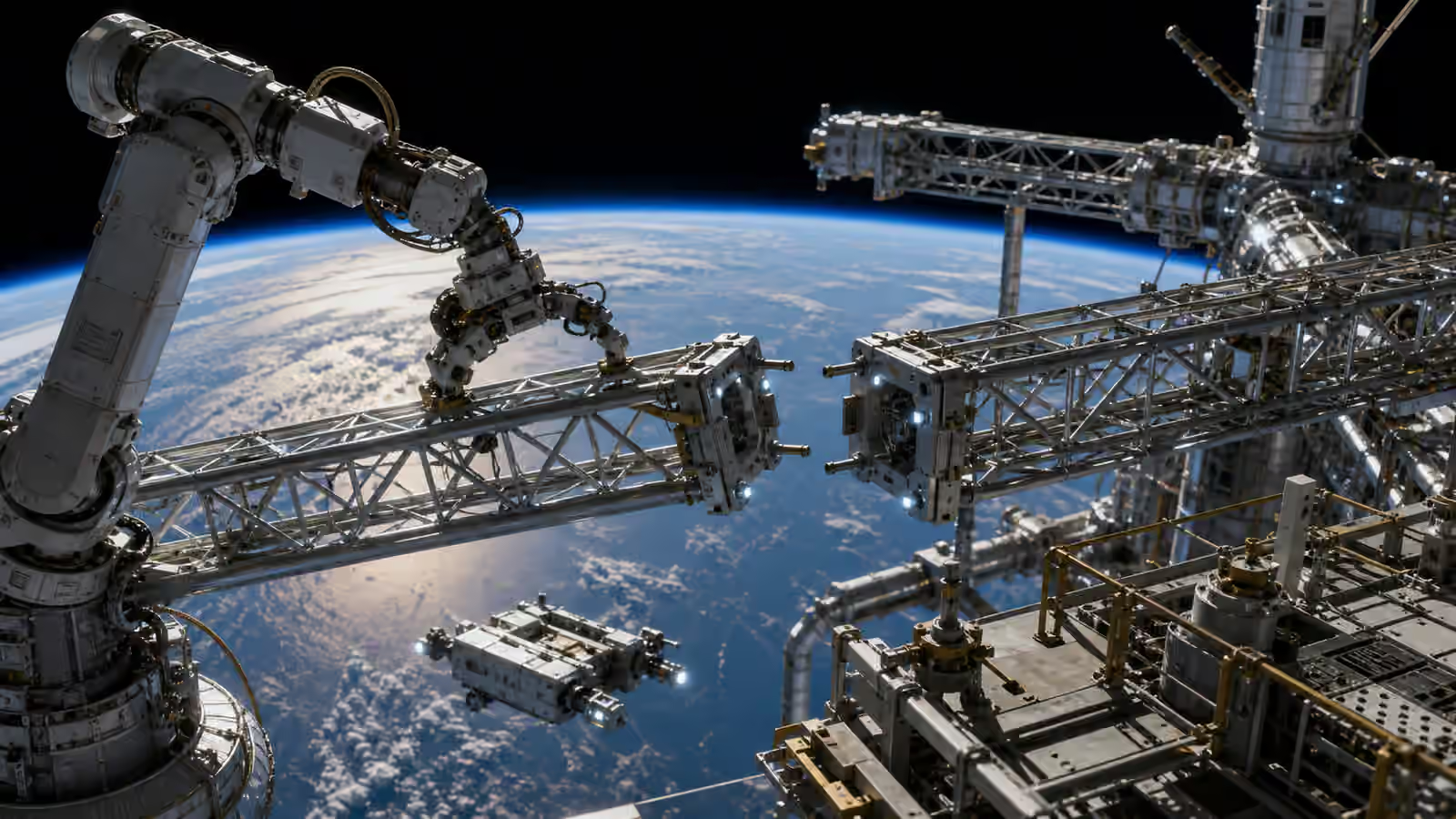
Moving cryogenic propellant from one vehicle to another requires a trustworthy connection. The vehicles must approach, align, dock or berth, seal the interface, manage pressure, cool down transfer lines, avoid contamination, control flow, verify quantity, and then disconnect without leaving dangerous residues or hardware in a bad state. The transfer may be automated, crew-assisted, or robotically managed, but the physics does not care about the label.
Rendezvous, Proximity Operations, and Docking is therefore part of the fueling story. A depot is only useful if customers can approach safely and predictably. The approach corridor, hold points, relative navigation sensors, docking fixtures, consent rules, and abort paths are as important as the tank. In-space refueling fails as infrastructure if every visit feels like a custom experiment.
The interface also has to handle thermal shock and cleanliness. A warm line can flash cryogenic liquid into gas. A contaminant can freeze, clog, react, or damage equipment. A seal that works in one environment may behave differently after repeated cycles. Even the act of disconnecting matters because trapped fluid can create pressure, ice, or unwanted release. The engineering is not only about high flow. It is about controlled flow that can be repeated.
Depots Change Mission Design Only If They Are Dependable
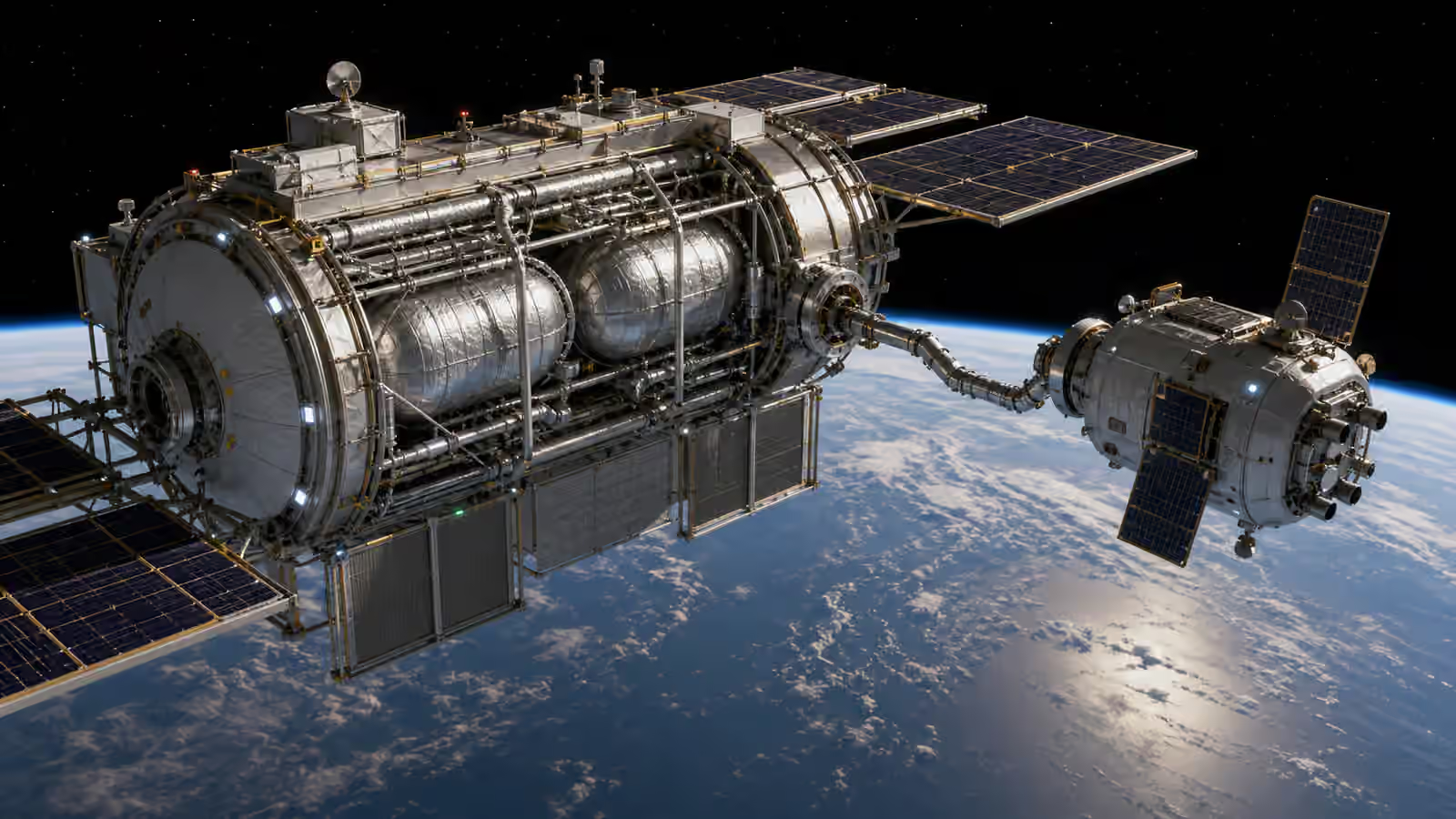
The appeal of orbital propellant depots is easy to understand. A vehicle could launch with less onboard propellant, refuel in orbit, move a heavier payload, support lunar transport, extend a tug’s life, or separate tanker launches from mission launches. That changes architecture. It can turn one huge launch problem into several smaller logistics problems. It can also create new dependencies.
A mission that assumes refueling now depends on tanker cadence, depot health, interface compatibility, traffic coordination, storage losses, transfer reliability, and operations scheduling. If the depot is late, empty, thermally unstable, or incompatible with a customer vehicle, the mission does not merely lose convenience. It may lose its path. Space Mission Logistics and Cargo Planning explains why infrastructure is not a single delivery. It is a rhythm of supplies, interfaces, priorities, and contingency plans.
This is why early depots are likely to be judged by boring evidence: how long they store propellant, how well they measure it, how cleanly they transfer it, how safely visiting vehicles approach, and how repeatable the operation becomes. A spectacular first transfer is valuable, but a service becomes infrastructure when later transfers are less surprising than the first.
Propellant Choice Shapes the Whole System
Different propellants create different storage and transfer problems. Some are storable at ordinary spacecraft temperatures but may be toxic, less efficient, or tied to smaller propulsion systems. Some cryogenic combinations offer high performance but demand more thermal control. Methane, oxygen, hydrogen, and other candidates each bring density, temperature, handling, engine, materials, and safety implications. The best choice is not universal. It depends on the vehicle, destination, storage time, launch cadence, production path, and mission risk.
Lunar planning makes the question more interesting. Lunar Resource Prospecting and ISRU explains why water ice, oxygen, and local processing are attractive but hard. If future missions produce oxygen or other useful fluids away from Earth, storage and transfer become part of the lunar worksite, not only an orbital one. A product is not useful until it can be stored, measured, delivered, and accepted by a vehicle that trusts it.
The same is true for deep-space missions. Deep-Space Power Systems shows how architecture changes far from easy sunlight. Cryogenic storage far from Earth adds thermal and power questions to already difficult communication and logistics problems. A depot near Earth is hard. A fueling architecture beyond the Moon is harder because repair, resupply, and real-time oversight become less forgiving.
Operations Decide Whether the Hardware Matters
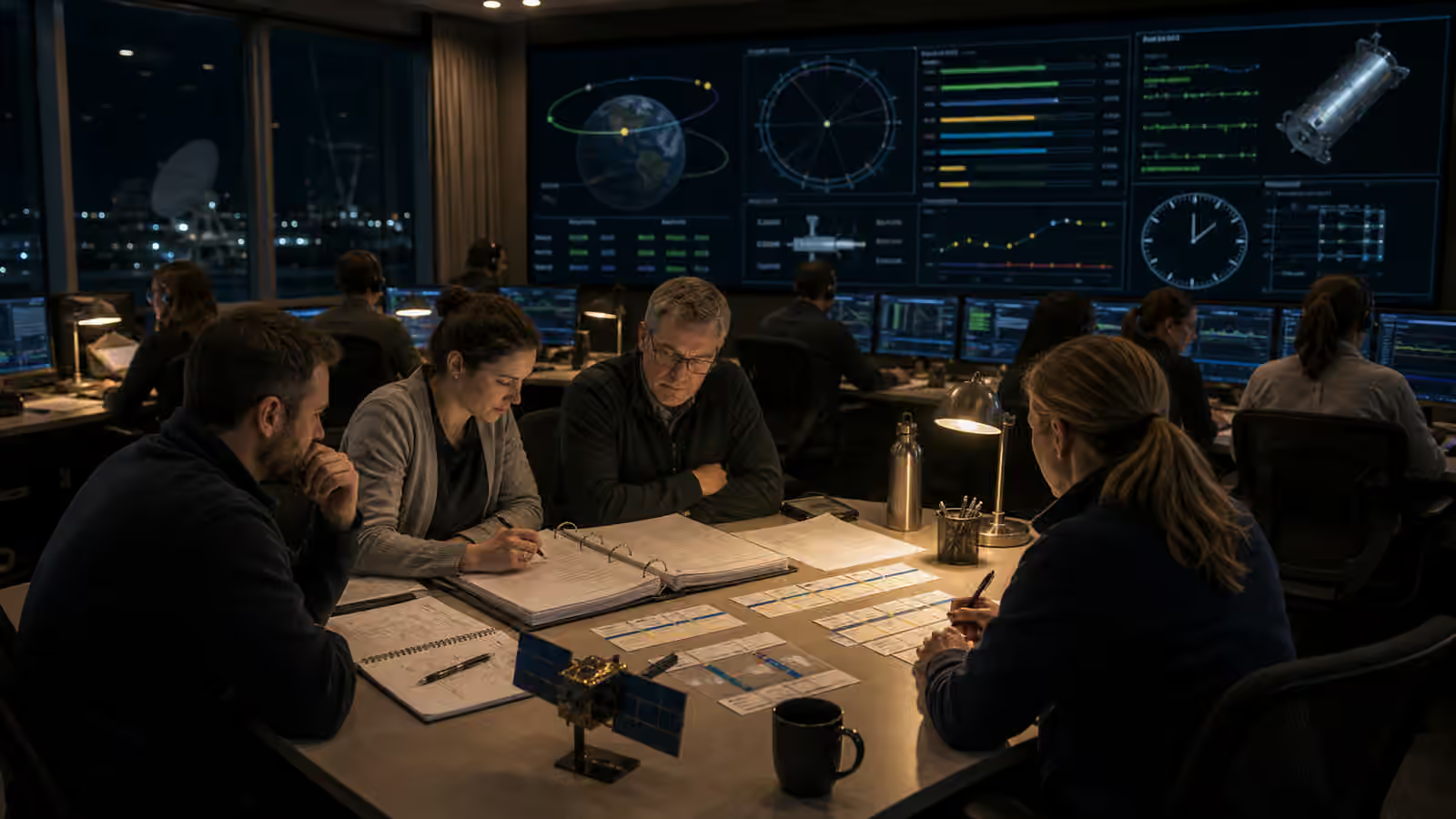
Cryogenic transfer systems need procedures, not just plumbing. Operators have to schedule approach windows, prepare the receiving vehicle, condition lines, monitor temperatures and pressures, watch for leaks, verify quantity, handle aborts, and record what happened. They also need flight rules for when a transfer should stop. A sensor disagreement, unexpected warming, poor alignment, pressure behavior, or incomplete seal may be enough to pause the operation even if the mission schedule is impatient.
Mission Operations Centers and Flight Rules belongs beside this topic because fueling decisions have consequences across vehicles. The depot, tanker, and customer spacecraft may belong to different organizations. They may have different risk tolerances and command authorities. Shared infrastructure needs shared language about readiness, aborts, responsibility, and evidence.
The final question is not whether cryogenic propellant can be moved in space. Demonstrations can prove pieces of the puzzle. The infrastructure question is whether it can be moved often enough, cleanly enough, and predictably enough to become part of mission design. When that happens, propellant stops being only what a rocket carries at launch. It becomes a managed supply chain in orbit, with all the discipline that real supply chains require.