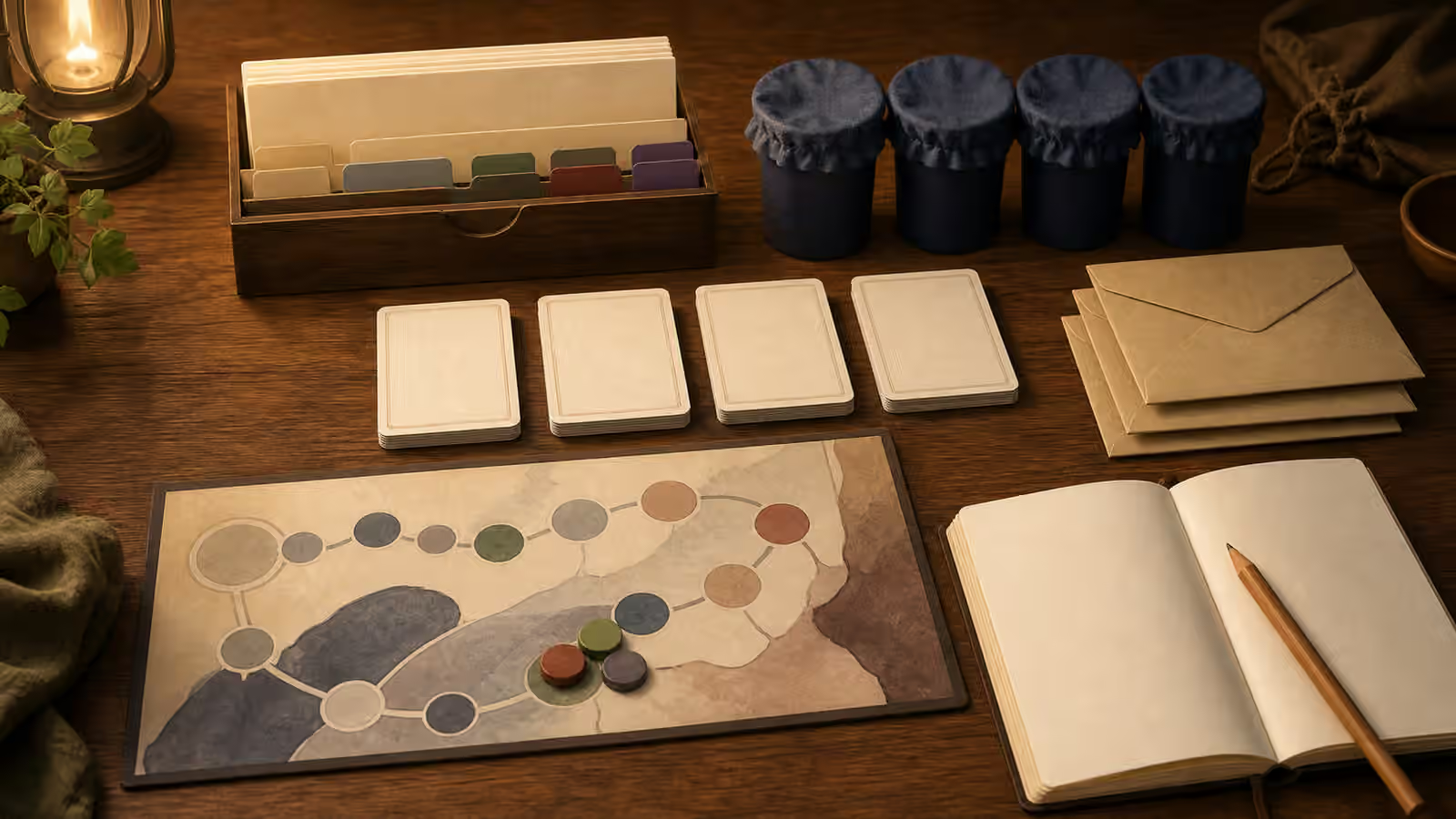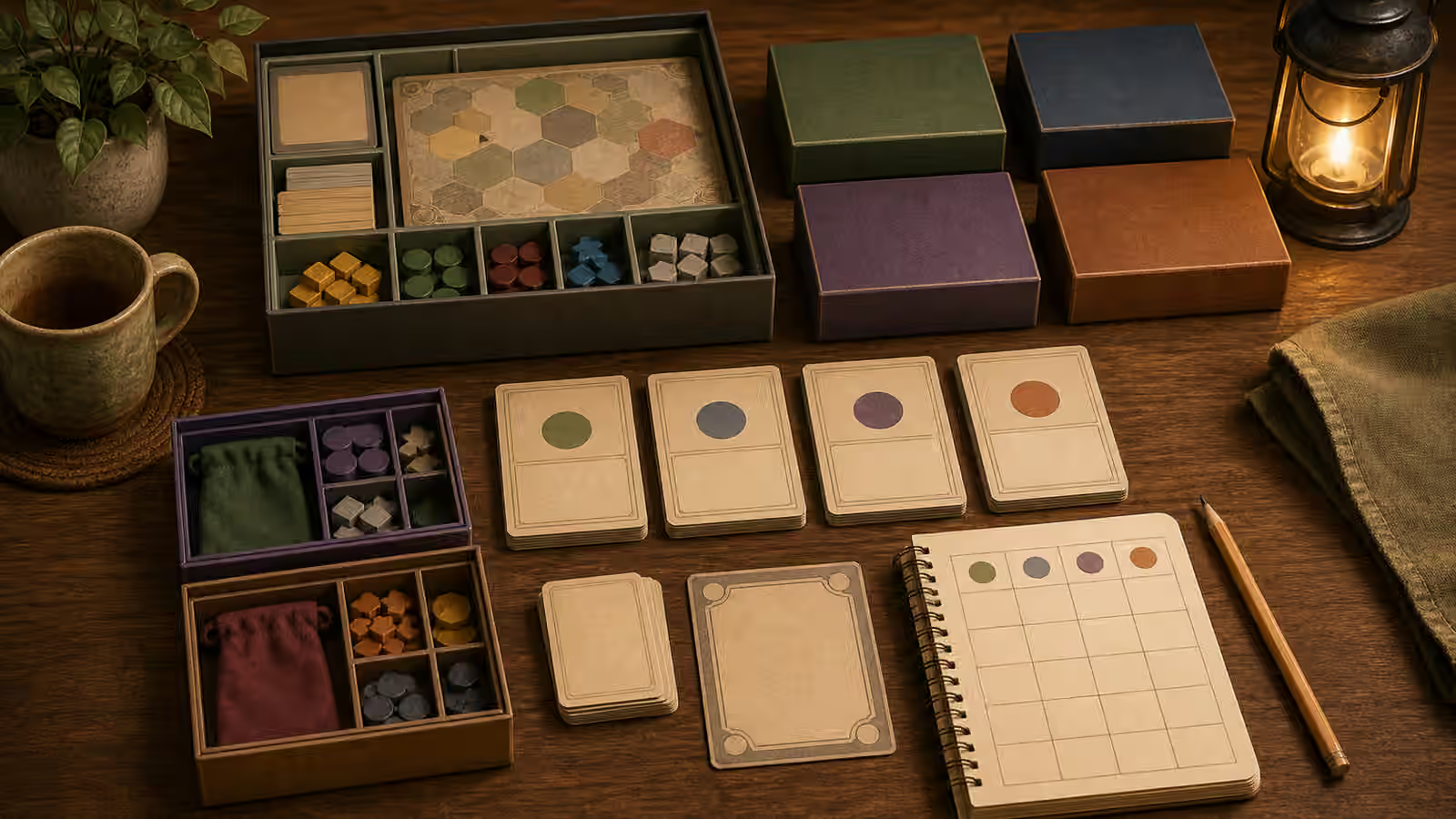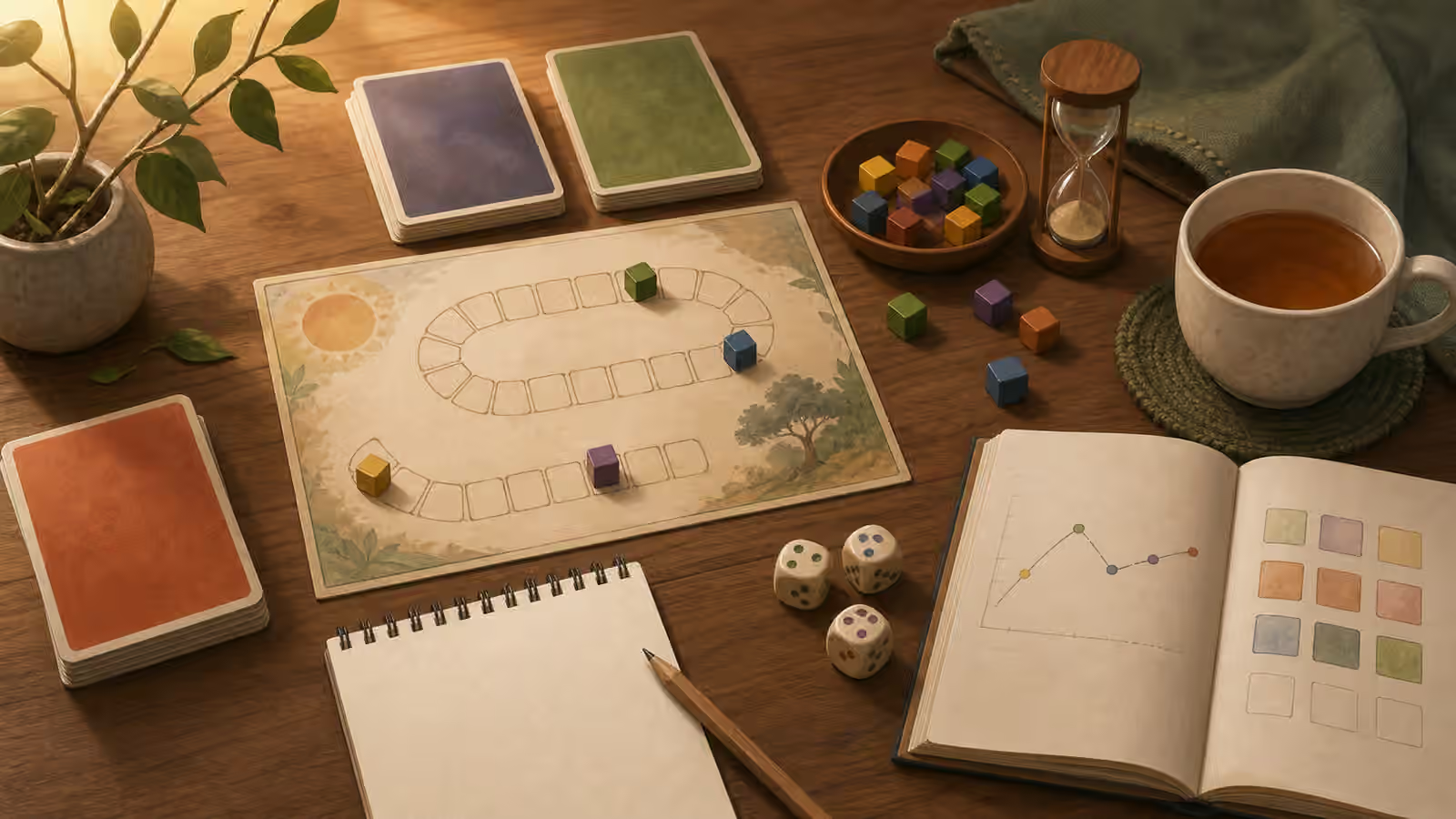
Tiny tables can handle solo play if the layout is honest. You may not have room for every component, open rulebook, campaign notebook, drink, snack, map, dice tray, discard pile, and storage tray at once. That does not mean the session has failed before it starts. It means the table needs a deliberate footprint.
Small-space solo play works best when the table shows only the current decision. Everything else should either stand upright, stack safely, wait off-table, or live in a temporary container. The goal is not a perfect miniature command center. The goal is a surface where the next move is obvious, the pieces are readable, and one elbow does not wipe out the whole evening.
Think of the table as a cockpit, not a warehouse. The active controls stay close. Backup material waits nearby. Anything that is not helping the next turn has to earn its space.
Choose the Active Zones
Use four active zones: decision, reference, randomizer, and memory. Decision is the board, map, or current cards. Reference is the rulebook or player aid. Randomizer is dice, cards, or tokens. Memory is the notebook, log, or save card.
Everything else waits off-table. Put extra decks, unused sheets, and storage trays nearby but not in the active footprint.
The zones do not need equal size. On a tiny table, the decision zone gets the best space because it changes every turn. Reference can stand upright. Randomizer can shrink to a tray. Memory can be one index card instead of an open notebook.
Try this first layout:
| Zone | Best tiny-table form | What to keep out |
|---|---|---|
| Decision | Center mat, board slice, current map, or active card row | Future cards, archived scenes, unused boards |
| Reference | Upright rulebook, folded player aid, or one handwritten turn card | Full rulebook spread, extra examples, old errata printouts |
| Randomizer | Dice tray, small draw deck, coin dish, or token cup | Loose dice pile, every deck, unsorted counters |
| Memory | Notebook corner, log card, or clipboard beside the table | Full campaign binder, loose old notes |
If a component does not fit one of those jobs, move it out of the active footprint. You can still keep it within reach. A chair, shelf, box lid, windowsill, side stool, or second tray can be the reserve area. The tiny table should not have to hold the whole game at once.
Measure the Footprint Before Setup
Before opening the box fully, place your hands on the table and mark the space you can reach without leaning. That reach zone is the real table. Anything beyond it may technically fit, but it will slow the session or invite mistakes.
Then test the largest required item. If the board, map, rulebook, or player mat takes more than half of the reachable surface, you need a compression plan. Do not wait until every deck is open to discover that the discard pile has nowhere to go.
A useful footprint test takes one minute:
- Put the main decision object in the center.
- Add one row for active cards or locations.
- Add a dice tray or randomizer space.
- Add a restart note or small notebook.
- Move everything else outside the footprint.
If the table already feels crowded at step three, choose a smaller scenario, use a side tray, or switch games. This is a practical fit check, not a judgment on the game or the player.
Make the Current Row Sacred
Many solo games sprawl because every possible card row stays visible. A tiny table needs a current row: the places, cards, enemies, prompts, or choices that can actually matter this turn. Put that row in a stable position and protect it.
Future cards can stay stacked. Completed cards can move to a discard tray. Market rows can be narrowed if the game allows it. If the game needs a large market, use overlapping cards so only costs, names, or icons you personally need are visible. For private play, a small handwritten summary can replace repeatedly spreading a card you already understand. Do not publish copied card text or art, but private shorthand is often the difference between playing and packing up.
If you are journaling, the same idea applies. Keep only the current prompt, character note, and map edge open. Archive earlier entries in the notebook. The table is not responsible for displaying the entire campaign history.
Raise or Reduce References
A rulebook stand, clipboard, or propped card can save space. If the reference is too large, rewrite the turn loop in your own words on an index card. Do not copy long protected text into public templates, but private shorthand is practical.
For accessibility, make sure the compact layout does not force awkward reach or low-contrast reading.
Vertical reference is one of the biggest wins on a small surface. A cookbook stand, folded cardboard support, card holder, binder clip, or phone stand can lift a rulebook or player aid without taking the whole table. The reference does not need to look elegant. It needs to stay open without sliding into the decision zone.
Reduce reference when the game allows it. Instead of keeping the full rulebook open, write a private turn loop:
- Refresh.
- Draw.
- Choose action.
- Resolve cost.
- Check response.
- Log state.
That six-line loop may be enough after the first few turns. If a rule is still uncertain, tab the rulebook and keep the tab visible. Do not keep five pages open because one sentence might matter later.
Lighting belongs here too. A reference that fits but cannot be read is not really fitting. If the table is small, glare and shadows get worse because every object sits close together. Test the rulebook angle from your normal seat. If your hand casts a shadow over the current row, move the lamp or rotate the layout before the session grows busy.
The Component Visibility and Table Contrast guide is the deeper companion here: a tiny table has less room for error, so contrast, light, and reach matter more, not less.
Stack by State, Not by Shape
When space is tight, the instinct is to stack similar things together: all cards here, all tokens there, all sheets there. That can look neat and still make the game harder. Stack by state instead.
Use one tray or stack for available, one for spent, one for future, and one for resolved. If the game has only a few components, those states can be marked by position rather than containers. Available cards sit above the board. Spent cards sit sideways below it. Future prompts wait face down on the left. Resolved prompts move to the right.
State-based stacking reduces searching. You are not asking, “Where did I put that kind of card?” You are asking, “Is this thing active, spent, future, or done?” That question is easier to answer when the table is crowded.
Keep the system boring. If sideways means spent, let it mean spent all night. If the left side means future, do not also use it for discarded cards. A tiny table can support only a few meanings before it becomes a puzzle.
Use a Sidecar Surface
The best tiny table layouts often use a sidecar: one off-table surface that holds everything not currently in play. It can be a box lid on a chair, a shallow tray on the floor beside you, a shelf within reach, or the game box insert turned into a temporary dock.
The sidecar should have a job. Do not let it become a second messy table. Use it for reserve decks, unused components, snacks, storage bags, campaign envelopes, and the rulebook when it is not being checked. If you need to reach for the sidecar every turn, the active table may be too small for that game state. If you reach for it every few turns, it is doing its job.
A good sidecar also protects teardown. When the session ends, reserve material is already grouped away from active material. That makes it easier to save the state, clear the room, or switch to a smaller game without sorting the entire box again.
Keep Liquids Outside the Game
Tiny tables invite spills. Put drinks on a different surface or at the back edge away from cards and notebooks. If that is not possible, use a lidded cup and keep paper out of the splash zone.
Treat liquids as outside the active layout, even if the cup technically fits. A cup beside a card row is not free space. It is a risk zone. If you cannot move the drink to another surface, give it the least dangerous corner and draw an invisible splash boundary around it. Paper, sleeved cards, pencils, and notebooks stay outside that boundary.
Snacks have the same issue in a different form. Crumbs and grease can make components harder to handle and harder to read. If food is part of the evening, make a pause ritual: step away, eat, wipe hands, return. The ritual is less romantic than a crowded table, but it keeps the game usable.
Sharp tools deserve the same respect. Scissors, craft knives, and paper trimmers for print-and-play prep should not share the active decision zone with cards and dice. Finish cutting first. Then play.
Plan the Pause Before You Need It
Tiny tables are often shared tables. They may need to become a dinner table, desk, folding table, or nightstand again with little warning. Build a pause plan before the game is fully open.
The pause plan should answer three questions:
- What can stay out for ten minutes?
- What can move as one unit?
- What must be written down before anything shifts?
Use a tray for the current row if the row might need to move. Use an envelope for active cards if the table must clear completely. Use one save card for the next action. The related Save State Between Solo Sessions guide covers full campaign pauses, but a tiny table needs a smaller habit during ordinary play: preserve the next move first.
If interruption is likely, do not spread anything that cannot be moved quickly. A layout that looks efficient only while untouched is not a good tiny-table layout.
Pick Smaller Games When Needed
Some games simply need more space. That is a fit issue, not a personal failure. Use Solo Game Finder to choose a smaller table night when space is the constraint.
Match the game to the surface you have tonight, not the surface you wish you had. A huge campaign box may be wonderful on a free afternoon and miserable on a narrow desk. A small journaling game, compact card puzzle, roll-and-write, print-and-play page, or single-map scene may give you a better session because it fits the room.
Use these warning signs:
- You cannot see the active row without moving other pieces.
- The rulebook blocks the board.
- Dice rolls threaten the map or card row.
- The notebook has no stable writing spot.
- You need to hold components in your hand because the table has no zone for them.
- Teardown feels risky before the first turn starts.
If two or more signs appear, shrink the session. Choose a smaller scenario, reduce optional modules, use a sidecar, or pick a different game. The best solo game tonight is the one that can actually be played in tonight’s room.
End With a Clear Table State
Before stopping, reset the tiny table into a readable shape. Move completed material away, stack future material clearly, write the next action, and put the current decision where it can be seen first. This takes less than a minute and saves the next session from beginning with confusion.
A tiny table rewards closure because it has no spare space for ambiguity. If a card is both active and forgotten, it will block something. If a token has no state, it will become a question. If the rulebook is left open to the wrong page, it will mislead future you.
End by asking: what should my eye see first when I come back? Put that thing in the clearest zone. Then stop.