Survival and travel logs can create meaningful pressure, but pressure should not become punishment math. Food, weather, fatigue, light, and distance matter because they force choices. They should also leave room for rest, help, luck, and care.
Track Few Resources
Choose two or three: food, light, warmth, morale, time, or equipment. Too many tracks can bury the story. Each resource should create a decision: press on, rest, trade, detour, ask for help, or change the goal.
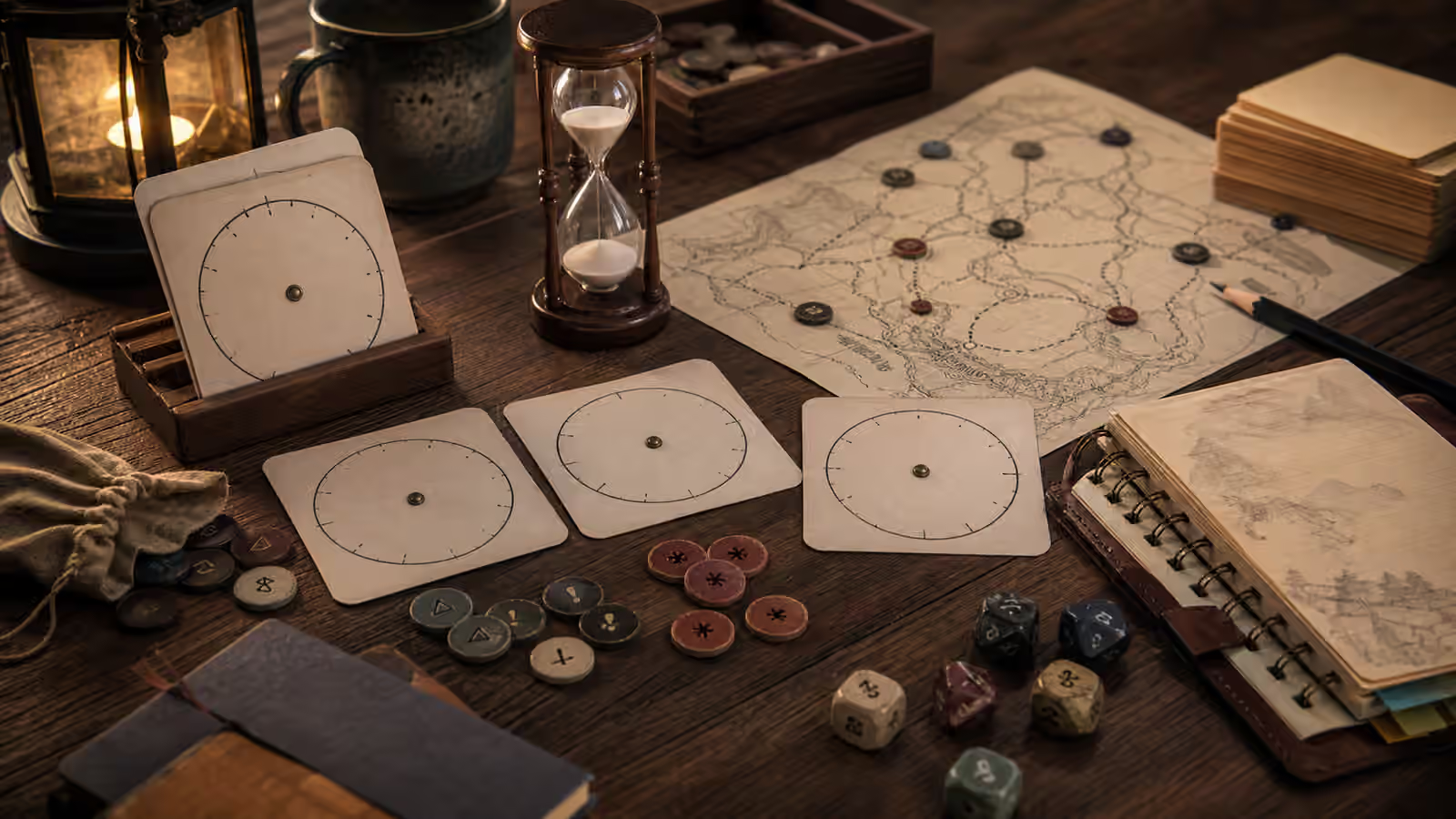
Give each track a visible marker and a simple consequence. Food at zero might mean the next scene must be about finding help. Light at zero might mean travel stops until morning. Morale at zero might mean the character writes a memory before continuing. Avoid penalties that only make future turns slower unless that slowness is the point of the game.
Add Recovery
Every pressure table needs recovery results: shelter, kindness, cached supplies, better weather, repair, memory, or safe road. Without recovery, travel becomes a slow drain.
Put recovery on the same table as danger so mercy is not an afterthought. A storm result can include a dry barn. A lost-road result can include a stranger’s marker. A broken-tool result can create a repair scene. Recovery should not erase consequence, but it should remind the journal that worlds contain more than attrition.
Keep Hardship Bounded
Set content notes before harsh travel. Decide whether injury, starvation, isolation, animal harm, or despair are in scope. Choose human stakes without making misery the whole game.
If a result crosses the line, translate it. Starvation can become running low on supplies. Graphic injury can become a sprain and a slower pace. Hopeless isolation can become missing home and looking for company. The log still has tension, but it stays inside the age rating and emotional boundary you chose.
Log the Journey
Write route, weather, cost, discovery, and next question. That is enough to resume.
A useful travel entry can be five lines: where I started, what blocked me, what I spent, what I found, and what I will decide next. Add a small map mark if it helps. Do not turn the log into accounting for its own sake; write enough to make tomorrow’s first move obvious.