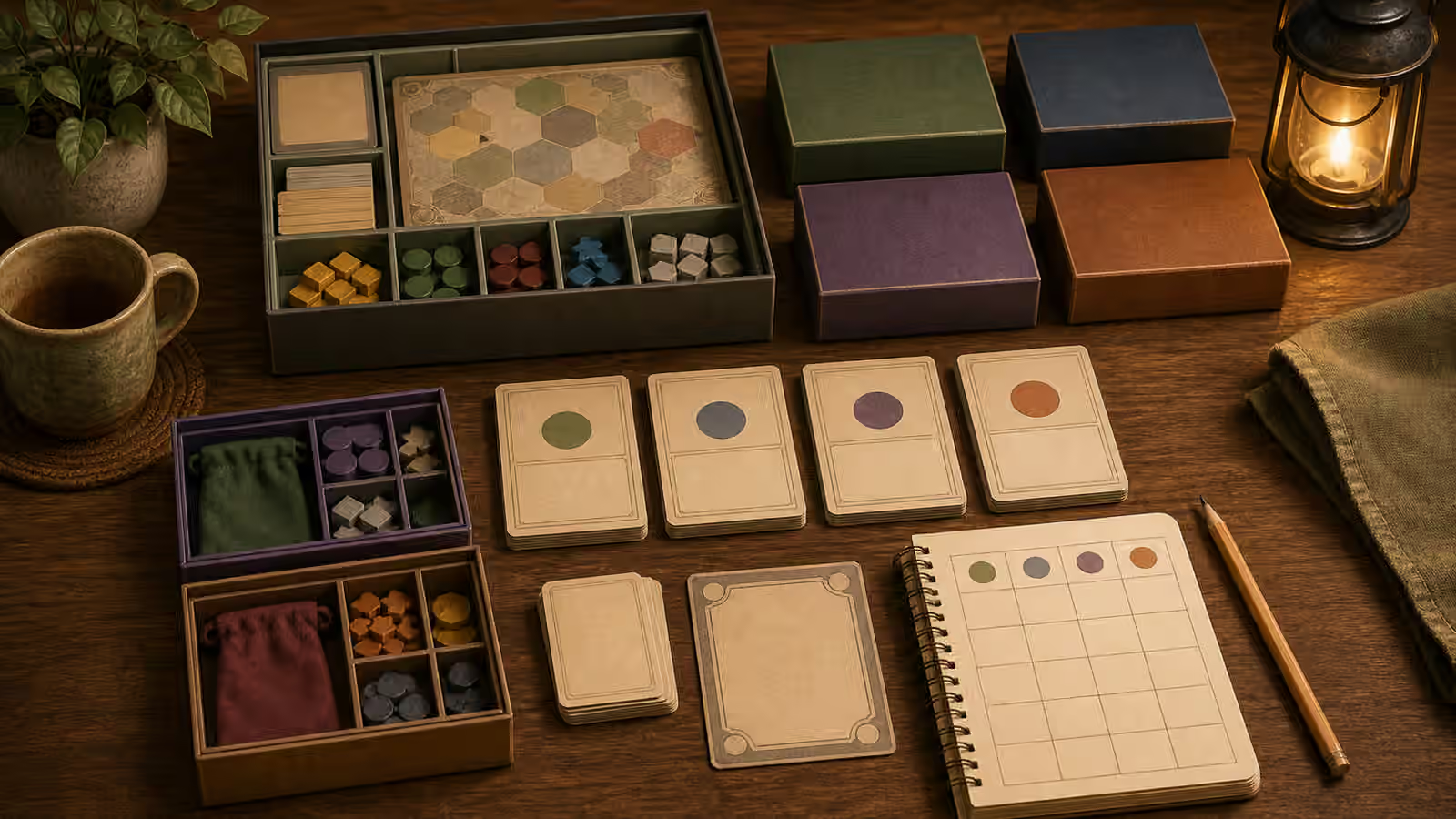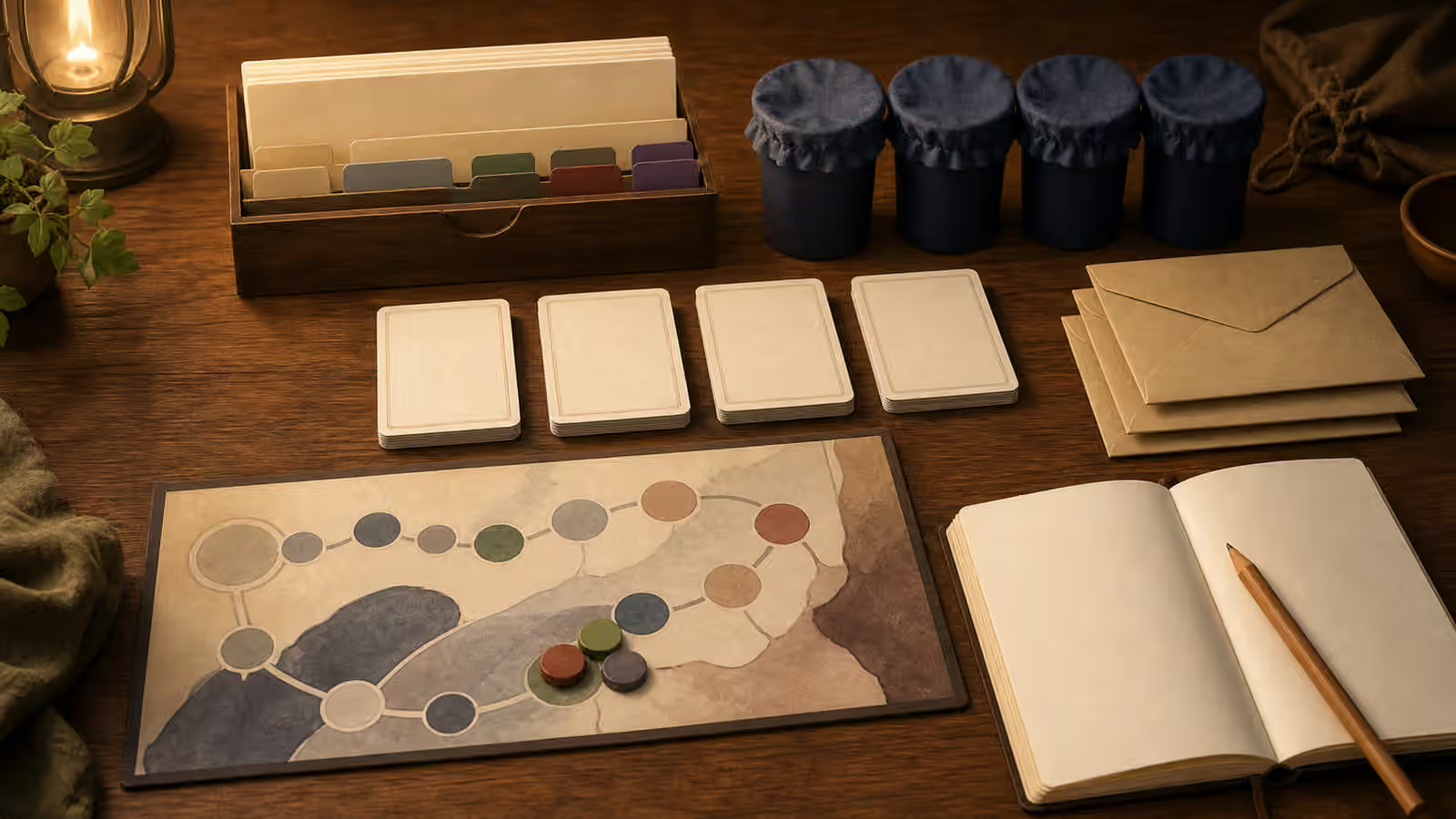
Storage is part of play because it decides what is easy to start. A beautiful shelf that hides the active campaign behind heavy boxes creates friction. A modest shelf with one visible current kit can make a solo session happen on an ordinary night.
Small-space storage is not about making a collection look impressive. It is about reducing the number of decisions between “I have twenty minutes” and “the first turn is on the table.” If the game you most want to continue is buried, if the dice bag is somewhere else, or if the campaign notebook has migrated into a different pile, storage is now part of the rules burden.
The shelf should answer three questions quickly: what can I play tonight, what is already in progress, and what can safely wait? When those answers are visible, the shelf supports play instead of quietly competing with it.
Store by Use, Not Status
Group items by how you play: current campaign, quick solo games, journaling RPG zines, maps and notebooks, dice and randomizers, print-and-play envelopes, and shared games. The current campaign should be easiest to reach. Rarely used boxes can live higher or deeper.
Measure the shelf before buying storage. The Shelf Space Planner can estimate capacity, but real box shapes and weight still matter.
Status storage says the biggest box gets the best shelf, the newest purchase stays visible, and the neatest display wins. Use storage says the game you are actively playing gets the easiest reach, the quick-start games stay near the table, and archive items move out of the way.
Try these zones:
| Zone | What belongs there | Storage goal |
|---|---|---|
| Active kit | Current campaign, current notebook, saved state, next-session card | Reach the table in one trip |
| Quick play | Small solo games, dice games, compact card games, familiar zines | Start in under five minutes |
| Tools | Dice, pencils, tokens, sleeves, trays, index cards, blank maps | Find setup aids without opening game boxes |
| Archive | Finished campaigns, rarely played boxes, spare components | Stay safe without blocking active play |
| Inbox | New purchases, borrowed games, print files, unsorted zines | Stay temporary and reviewed |
The inbox matters. Without one, every new item either lands randomly or forces a full shelf reorganization. Give incoming material a temporary place and a review date. If it stays there too long, it is telling you something about real interest, space, or energy.
Build One Active Kit
The active kit is the heart of small-shelf storage. It is the container or shelf zone that holds the messy middle of current play: saved cards, character sheets, map notes, dice, rule bookmark, unresolved tokens, and the next action. It should be light enough to move and clear enough that you can resume without excavating a box.
Use a shallow tray, lidded photo box, document case, zipper pouch, game box lid, or small bin. The exact container matters less than the rule: current play should not be archived like finished play.
An active kit can include:
- One next-session card.
- Current notebook or log.
- Active map or scenario sheet.
- Small bag of needed tokens.
- Dice or randomizer.
- Bookmarked rules reference.
- Envelope for current cards or printouts.
Keep the kit honest. If it becomes a dumping ground for every possible accessory, it stops being active storage. The kit should hold what makes the next session easier, not everything the campaign might ever use.
This connects directly to Save State Between Solo Sessions : the next move matters more than preserving every object in a perfect display.
Measure Reach, Not Just Capacity
A shelf can technically hold more than it can practically serve. Deep shelves, high shelves, tight cubes, and heavy stacks all create hidden costs. Measure usable space, but also measure reach.
Ask:
- Can I remove this item without moving three others?
- Can I lift it safely when tired?
- Can I see the label from normal standing height?
- Can I return it without repacking the whole shelf?
- Can the active kit reach the table in one trip?
If the answer is no, treat that space as archive space. Archive space is useful, but it should not hold the game you hope to play on a weeknight.
Use the Shelf Space Planner Method for measurement, then add human factors: reach, weight, light, label size, door clearance, and whether a box has to tilt to come out. Tilting can disturb inserts, saved states, and sleeved cards. A box that fits only when angled may not really fit.
Leave Empty Space
Empty space is not wasted. It gives you room to pull out a box, store a campaign in progress, and notice what you own. If every inch is packed, play starts with extraction.
For zines, use a file, tray, magazine holder, or box. For dice, use a small bag or bowl. For print-and-play, use envelopes labeled in your own words without copying game art.
Aim for a visible margin on every active shelf. A full shelf looks efficient only until you want to remove something from the middle. Empty space lets your hand work. It also lets your attention work. When everything is compressed, the shelf becomes visual noise and ownership becomes harder to understand.
Empty space also protects buying decisions. If a new box would erase the last open margin, decide what leaves, moves to archive, or gets played first. This is not punishment. It is how a small shelf stays usable.
For zines, vertical files are usually better than deep stacks. Stacks hide the middle and make fragile booklets curl. A magazine holder, document box, or shallow tray can keep zines visible without turning them into a collapsing pile. Group them by use: quick prompts, campaign systems, reference, and not-yet-read.
For dice and randomizers, avoid scattering duplicates across the shelf. Keep one table-ready set and put extras away. A small bowl near the active kit is useful; five hidden dice bags create searching.
For print-and-play material, use envelopes or flat folders with private labels in your own words. Avoid copying cover art or paid file content onto public templates. The label only needs to help you find the game: title, status, and what is inside.
Label for Tired Future You
Labels are not decoration. They are search reduction. Use large, high-contrast labels that describe use, not only title: “current campaign,” “quick solo,” “blank maps,” “dice and tokens,” “zines to try,” “finished notes.”
If the shelf is shared or visible, blank outer labels can still work. Put the practical label inside the lid or on a removable card. The point is to make retrieval easy without turning the shelf into a public display of every theme or mature-content item.
Good labels are short. If a label needs a paragraph, the container probably holds too many categories. Split it or simplify it.
Use one recurring signal for active material. A colored dot, tab, blank card, or front-facing tray can mark “this is current.” That signal should be visible at a glance. When everything looks equally important, the current game loses its advantage.
Make Storage Accessible
Use large blank labels, high contrast, light containers, and reachable shelves. Heavy campaign boxes should not require awkward lifting. If bending or reaching is hard, keep the active kit at table height.
Storage should also account for children, pets, humidity, sunlight, and small parts.
Accessibility is not a separate storage project. It is the storage project. If a container is too heavy, too tight, too low contrast, or too hard to open, it will reduce play. A perfect-looking system that requires awkward bending or two-handed lifting may fail on exactly the nights when solo play would help most.
Favor:
- Pull handles or open-front trays.
- Clear or high-contrast containers.
- Fewer stacked layers.
- Larger labels.
- Table-height active storage.
- Lightweight boxes for frequently used items.
- Lidded storage for choking hazards, sharp tools, and tiny parts.
Humidity and sunlight matter too. Paper zines, cards, campaign notes, and printed sheets can warp, fade, or curl. Keep them away from windows, damp floors, and drink shelves. If a shelf is near a kitchen or bathroom, use closed containers for paper-heavy material.
If mature-content games or fragile pieces share a room with children or guests, do not rely on a label. Use closed storage, higher shelves, or a separate archive zone. Storage should protect the room as well as the game.
Keep Campaign Notes With the Game
A solo campaign often splits across physical forms: box, notebook, loose map, printed sheet, saved cards, online errata, and a tool result. If those pieces live in different places, restarting becomes a scavenger hunt.
Keep the campaign’s restart material together. If the notebook is too large for the game box, put both in the active kit. If the map is too large, fold it into a document sleeve. If the rule question is unresolved, place it on top rather than burying it inside a notebook.
Use one “return card” for each active campaign:
| Field | Example |
|---|---|
| Where I am | Ridge camp before the storm check |
| Next action | Choose ferry road or quarry path |
| Needed pieces | Map, weather die, three resource beads |
| Rule to check | Travel delay timing |
| Stop reason | Table needed for dinner |
This card makes storage playable. It tells you what the shelf is preserving.
Review Before Buying
When a new game tempts you, ask where it will live and when it will be played. Storage reality is not meant to shame buying. It simply keeps acquisition from crowding out the games you already want to return to.
Use a purchase gate:
- Where will it live?
- Which shelf zone does it join?
- What leaves, moves, or gets finished first?
- When will I play the first session?
- Does it need accessories I do not already have?
If the answer is vague, wait. Desire often becomes clearer after a week. Some games are worth making room for. Others are really a wish for a different evening, group, table size, or energy level.
Borrowed games and library games need a return zone. Keep them separate from owned games so they do not disappear into the shelf. Put due dates in your calendar or on a private card. Good borrowing habits keep low-cost play available.
Do a Shelf Reset Without Drama
Every few months, reset the shelf lightly. Do not turn it into a grand purge unless you want that project. The useful reset is smaller:
- Pull the active kit forward.
- Remove empty bags, old print scraps, and duplicate notes.
- Move finished campaigns to archive.
- Put unplayed inbox items in one place.
- Restore empty margin on the active shelf.
- Choose one game to make easier to start.
The last step matters most. A reset should not only make the shelf cleaner. It should make the next session more likely.
If the shelf keeps filling past its usable limit, choose a boundary: one-in-one-out, one active campaign at a time, one zine tray, one print-and-play box, or one archive bin. Boundaries should protect play, not create guilt.