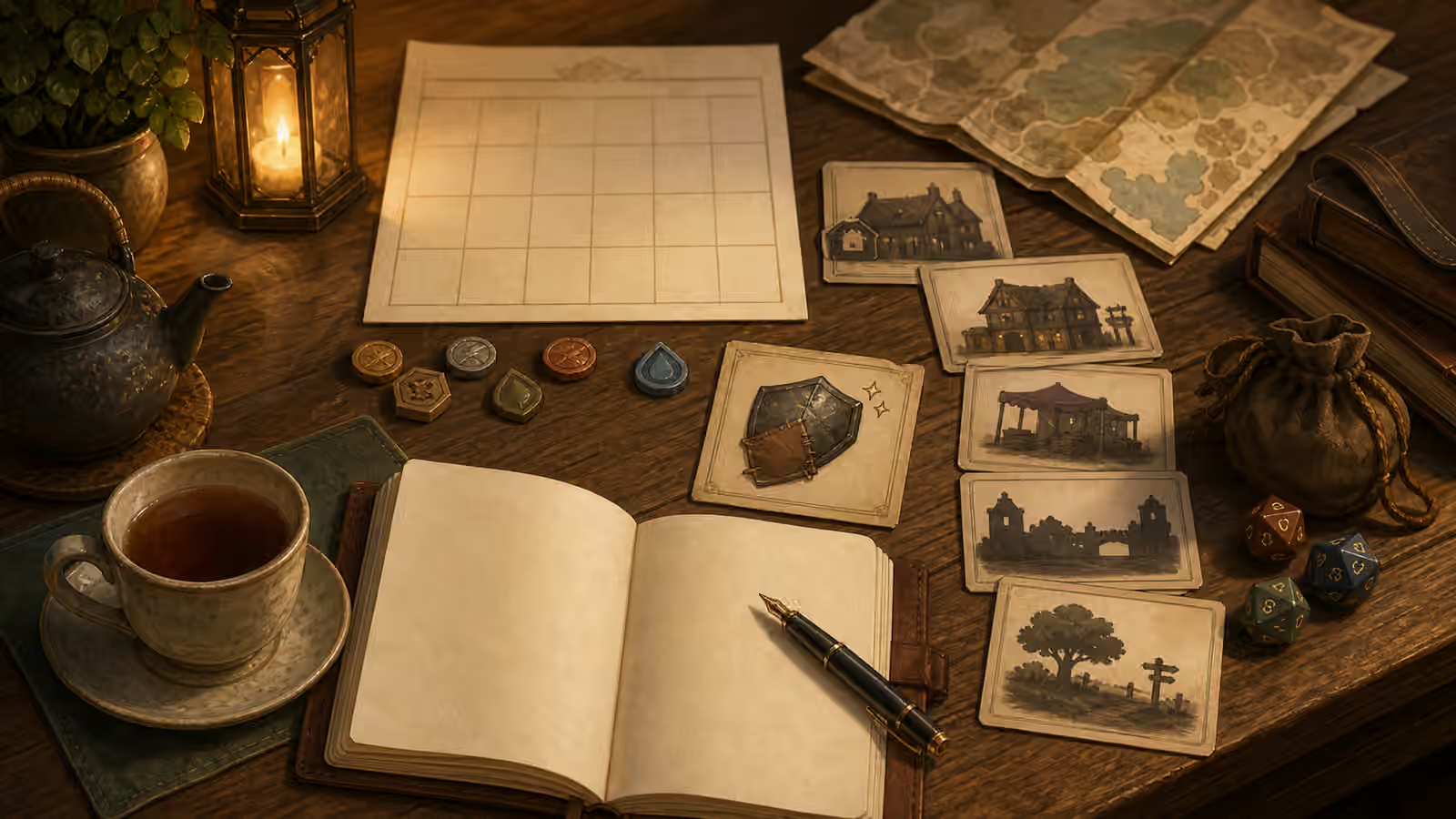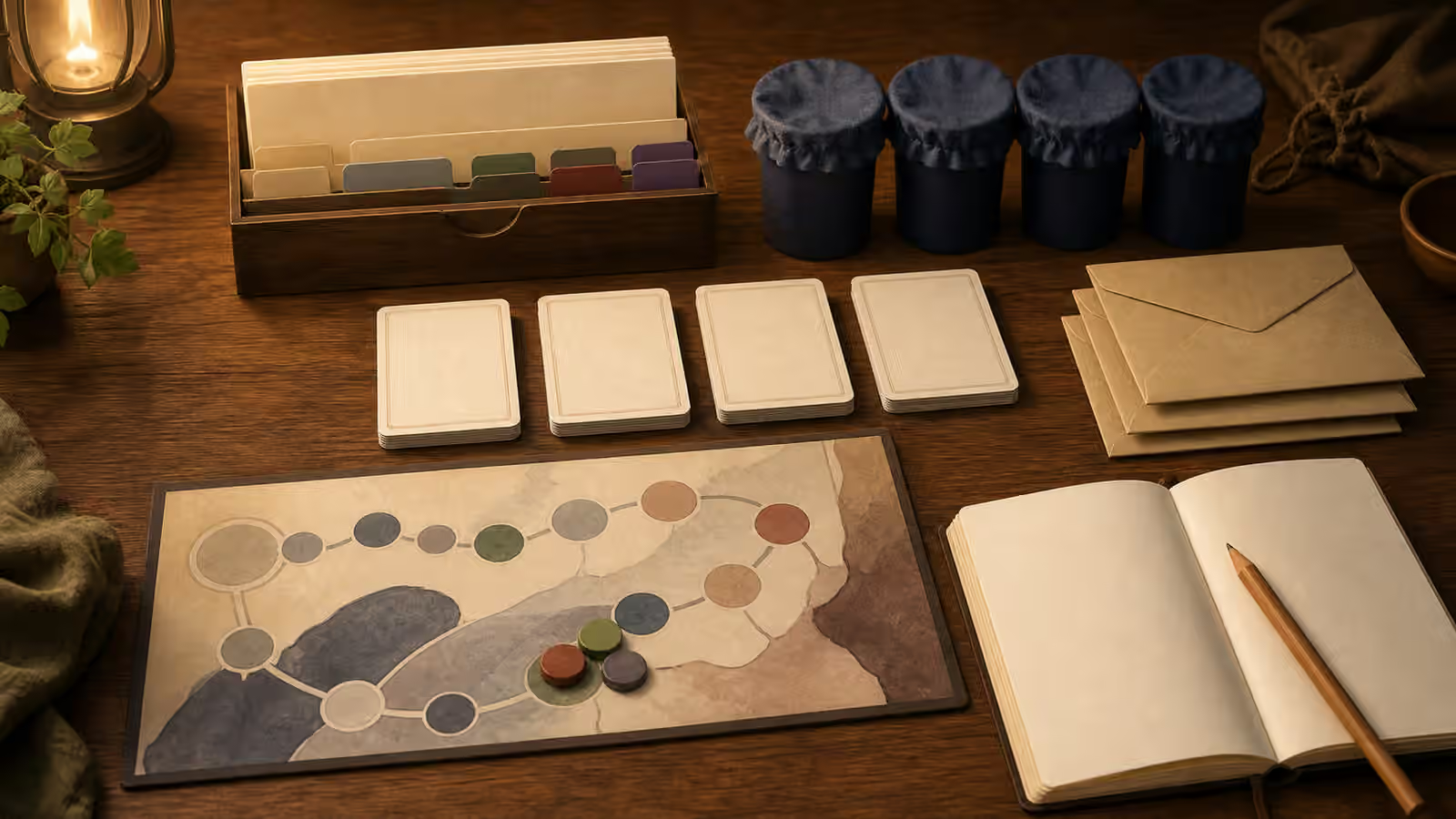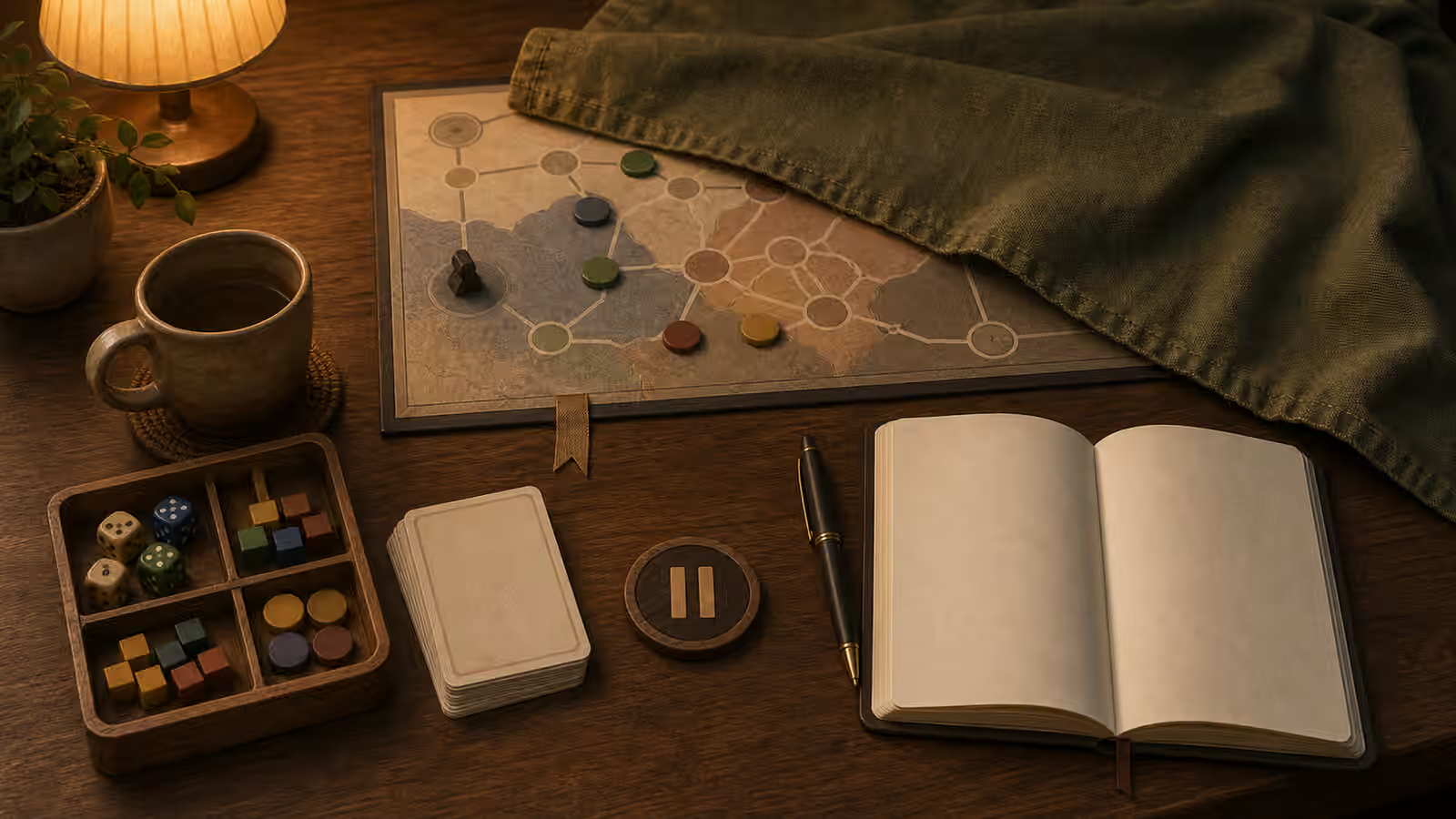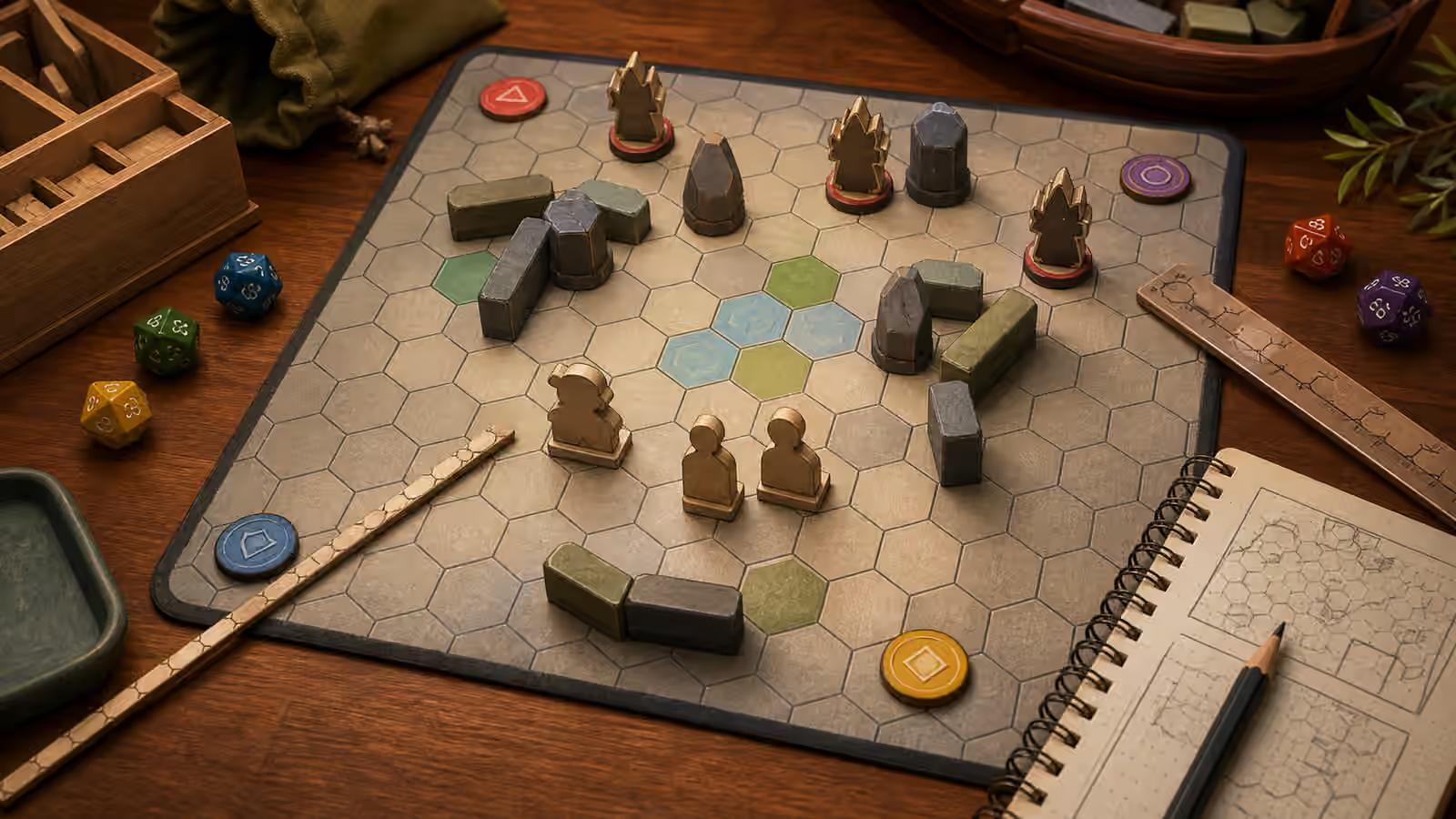
Solo skirmish play can be satisfying on a modest surface. It does not require a showcase table, a painted army, or a cabinet of terrain. The useful promise is smaller: a few pieces, a clear objective, a map that can be read at a glance, and a decision each turn that has consequences. When those parts are present, a tactical puzzle can feel sharp even if the battlefield is a sheet of paper and the enemies are wooden discs.
The main risk is not that the setup looks plain. The main risk is that the setup asks you to run too much. Solo tactical play makes one person manage the scenario, the opposition, the rules timing, the component state, and the player’s own plan. A beautiful layout that hides line of sight, status effects, or objective timing can become worse than a plain layout that keeps every decision visible.
Start With the Objective, Not the Map
A tactical map is easiest to build when the objective is already clear. “Defeat all enemies” can work, but it often makes the whole scenario about attrition. A sharper small-table objective asks for movement, timing, risk, or prioritization. Hold a marker for three rounds. Cross the bridge before the patrol closes. Rescue a token and leave by the same edge. Block a ritual circle long enough to force a retreat. Recover one item while choosing which threat to ignore.
The objective should fit the footprint. If the table holds a six-by-six grid, do not design a chase that needs a road for miles. If the terrain is only three blocks and a doorway, use those features deliberately. A small battlefield becomes interesting when position matters. It becomes cramped when every piece can reach every other piece every turn.
Before placing any figure, say what the player is trying to do and what the scenario will do if the player waits. That pressure can be a round timer, a spreading marker, a closing route, a resource drain, or an opponent behavior card. The exact form matters less than the presence of a clock. Without one, many solo skirmishes turn into cautious cleanup.
Make Piece Roles Readable
Generic pieces work when their roles are clear. A red cube can be a danger marker, a wooden pawn can be a guard, and a coin can be a locked gate if the table remembers the meaning. Confusion starts when five similar objects carry five unrelated meanings. Use shape, color, size, position, or container to keep roles separate.
This is where Miniatures, Standees, and Tokens Without Overspending connects directly to tactics. A proxy is not a compromise if it is readable. A gray standee facing a doorway may communicate more useful state than an elaborate miniature whose pose hides its base. If painting, collecting, or crafting is part of your fun, use it. If the goal is play tonight, choose the pieces that make the next decision obvious.
Status effects deserve extra care. Stunned, wounded, hidden, exhausted, burning, pinned, blessed, and delayed can all become tiny memory traps. Put status markers on a consistent side of the figure or in a small tray beside the enemy card. If the table cannot hold that much state, reduce the number of statuses in the scenario. Tactical richness should come from decisions, not from forgetting which token means what.
Keep the Enemy Procedure Small
The opposition needs a procedure you can run while still thinking as the player. If every enemy evaluates the entire board with a long priority list, the game may be clever but tiring. A solo skirmish often works better when the opposition has a narrow behavior: advance to nearest visible target, guard the objective, retreat when wounded, fire from cover, or swarm the loudest marker.
Behavior can change by enemy type, but each type should have a memorable identity. The guard blocks. The runner flanks. The heavy advances slowly. The scout reveals hidden spaces. When the identities are simple, the board can create complexity through position. When the identities are all complex, the player becomes an exhausted referee.
Dice systems shape this feeling. A swingy die can make a weak enemy suddenly matter. A bell curve can make positioning feel more reliable. A card draw can make the opponent unpredictable without adding arithmetic. Dice Systems: d6, d20, Polyhedral Sets, and When Randomness Helps is useful when the tactical puzzle feels flat or too volatile.
Treat Terrain as Rules Text You Can See
Terrain should tell the hand what it can do. A wall blocks, a crate slows, a doorway narrows, a marker invites, a shadow hides, a bridge commits. If terrain is only scenic, it may not earn its space on a small table. If every terrain piece has a rule exception, the scenario may become a lookup exercise.
Use fewer terrain types with stronger meaning. One blocking line, one slow zone, and one objective space can make a better first skirmish than a crowded village of unclear edges. Mark elevation only when height changes decisions. Mark cover only when cover changes risk. If line of sight is hard to judge, use a ruler, string, laser-safe pointer, or house convention that stays consistent.
Small tables also need spill discipline. Put dice in a tray. Keep the notebook outside the map edge. Leave a drink-safe zone away from paper. Tiny Table Layouts for Solo Board Games and Journaling RPGs applies to skirmish games because a bumped marker can change the whole puzzle.
Bound the Scenario Before It Bloats
A solo skirmish should have a finish condition before the first turn. That finish might be victory, retreat, survival until a timer ends, or a scored outcome after a set number of rounds. Without a finish condition, the scenario can stretch until every enemy is gone and every interesting choice has already passed.
Write a short end rule in your own words. Keep it private if it summarizes a published scenario. If the game provides an official scenario, use that structure first and adapt only the handling friction. If you build your own, start smaller than your ambition. Four figures and one objective teach more than twelve figures and six exceptions that never get resolved.
After play, record one tactical lesson rather than a full battle report. Maybe the map needed a second route. Maybe the enemy behavior was too passive. Maybe the timer made the objective exciting. Maybe the table was too small for measuring. These notes turn the next skirmish into a better design without turning the session into homework.
Tactical solo play is at its best when the table has enough friction to make choices matter and not so much friction that the player disappears into upkeep. Keep the objective visible, the pieces readable, the enemy procedure small, and the finish line honest. The map does not need to impress anyone. It needs to make your next move interesting.