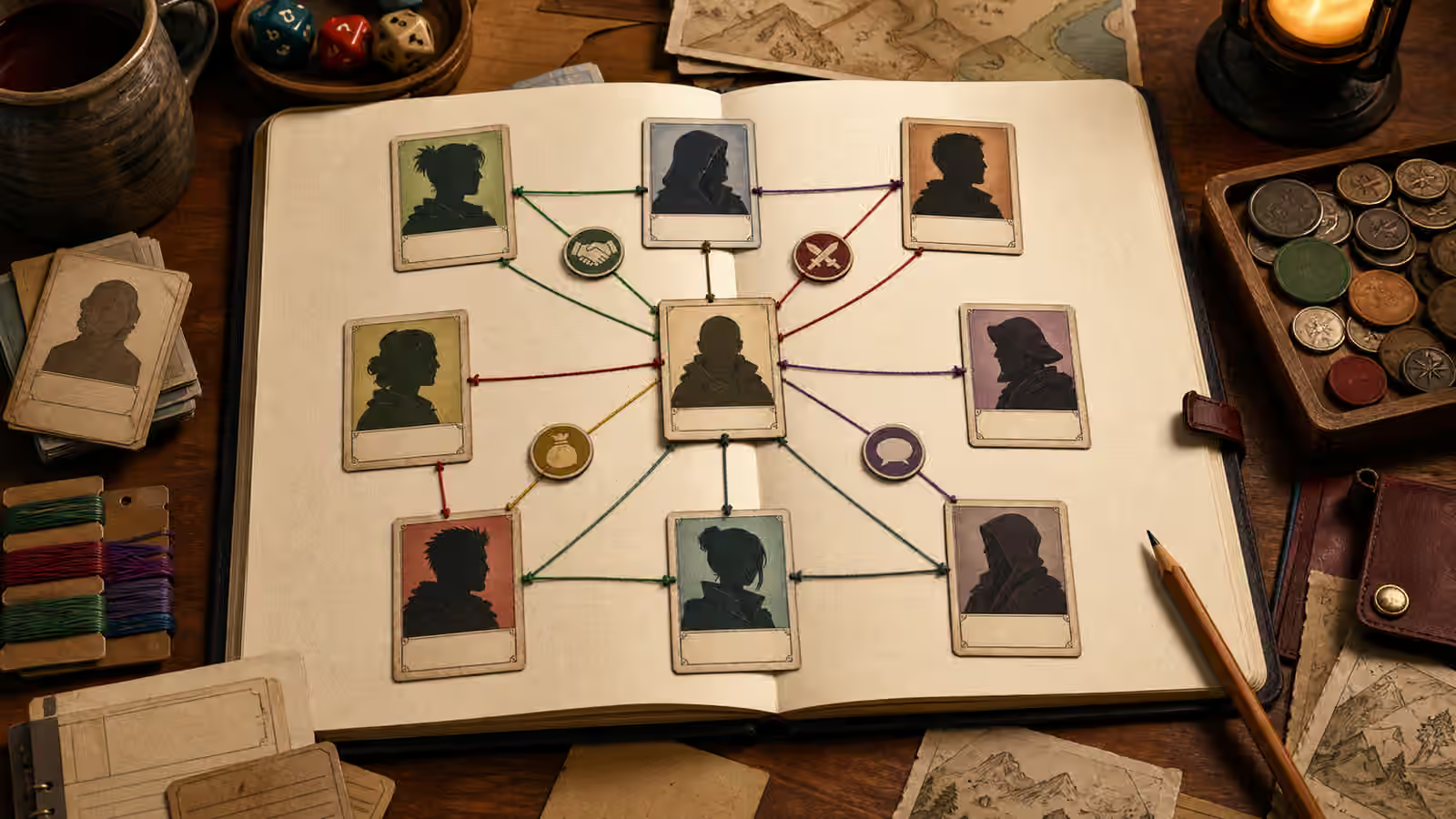
A solo RPG relationship web is not a cast encyclopedia. It is a way to remember who can change the next scene. The useful web does not record every innkeeper, guard, cousin, rumor source, and passing stranger. It records pressure. Who wants something from the protagonist? Who has been helped? Who was embarrassed? Who knows a secret? Who can open a door, close a route, soften a consequence, or make the next oracle answer sharper?
When played alone, a campaign can grow a cast quickly because there is no group memory to challenge or reinforce what matters. One session introduces a shopkeeper, a rival, a witness, a mentor, a missing sibling, and a suspicious official. Two weeks later, the notebook contains names but no motion. A relationship web solves that only if it stays playable. It should help you choose who appears, what they want, and how their connection to the hero has changed.
Start With Active Pressure
Begin with the protagonist in the center, but do not spend long decorating that center. Around them, add only the characters who currently exert pressure. An ally with a favor owed belongs on the web. A rival who can complicate travel belongs. A person who knows the answer to an open mystery belongs. A friendly background figure who has no unfinished business may live in the session log instead.
The line between two characters should mean something. It can mean trust, debt, fear, shared history, mistaken belief, rivalry, protection, romance, suspicion, or obligation. If the connection has no playable meaning, leave it out for now. The web is not less serious because it is sparse. It becomes more useful because every visible line can influence a scene.
Character Keeper Sheets for Solo RPGs already gives the protagonist a place for motives, scars, promises, and inventory. The NPC web should not duplicate that sheet. Let the keeper hold the player’s internal state. Let the web hold external tension.
Give Each Character One Current Want
Solo scenes stall when an NPC is only a name and a mood. Give each important character one current want. It can be modest. They want payment, apology, safety, recognition, access, silence, revenge, proof, company, distance, a repaired tool, a returned letter, or time to think. The want should be clear enough that you can answer a scene question without inventing from nothing.
The want is not a script. It is a direction of travel. If the oracle says the character appears at the wrong moment, their want helps interpret why. If a failed roll creates a complication, their want suggests what kind of cost might make sense. If the protagonist needs help, the want gives that help a price, delay, or condition.
Keep the want current. After a scene resolves, change it, cross it out, or move the character away from the center. A relationship web that never changes becomes wall decoration. A web that changes too much becomes noise. The sweet spot is one visible adjustment after a meaningful encounter.
Use Distance as Meaning
The physical placement of cards can carry information without adding words. Characters close to the protagonist are active. Characters at the edge are known but quiet. Characters clustered together share a faction, household, workplace, crew, neighborhood, or secret. A card turned sideways can mean uncertain status. A small token on a card can mark a debt, wound, promise, clue, or unresolved scene.
Use these marks privately and consistently. They do not need a formal legend if you remember them, but a small legend can help when a campaign pauses. If visual layouts are hard to read, use a plain written version: character, connection, current want, last change. Accessibility should decide the format. A relationship web is a tool, not a required aesthetic.
This approach works especially well with Mystery and Investigation Journaling Without Solving Your Own Spoilers . Suspects, witnesses, and clue holders can move toward or away from the center as pressure changes. The web can show who is relevant without revealing what the answer must be.
Let Absence Matter
NPCs do not need to appear constantly to remain important. In solo play, absence can be stronger than repeated conversation. A mentor does not answer a letter. A rival’s marker appears on a map route. A shop is closed when it should be open. A rumor reaches town before the character does. These absences give the relationship web motion without crowding every scene.
When a session begins, look at one active connection and ask what has changed while the protagonist was busy. Use Solo RPG Oracle Dialogue for small, specific questions. Instead of asking, “What happens with Mara?” ask, “What does Mara now need that she would rather not admit?” or “Who has put pressure on Mara since the last scene?” A narrow question makes the web answerable.
Absence also helps keep the cast from becoming a queue of obligations. Not every character must be visited after every adventure. Some relationships can cool. Some can wait. Some can be retired with a note that says they are safe, distant, lost, busy, or no longer part of this arc.
Prune Without Punishing the Story
Pruning a relationship web is not deleting story. It is clearing the table so the story can move. If a character has not affected play for several sessions, move them to an archive page. Keep one sentence: who they were, what ended, and what could bring them back. That protects memory without keeping every card active.
Be careful with characters borrowed from published adventures or settings. Private notes can summarize what you need for your own play, but do not republish copied descriptions, official stat blocks, maps, or scene text. If you share a recap, use your own words and avoid turning the recap into a substitute for the source.
A playable relationship web gives solo campaigns the feeling that people remember what happened. It does not require a dramatic board, perfect portraits, or novel-length notes. It needs active pressure, current wants, meaningful distance, useful absence, and pruning when the web stops helping. The reward is simple: when the next scene asks who is affected, the table already has an answer.