Solo tabletop advice often talks about starting. It talks about choosing the first game, setting up the first notebook, drawing the first map, and asking the first oracle question. Endings receive less attention, which is strange because ending well is one of the skills that makes a campaign feel worth remembering.
An ending does not have to mean every printed scenario was completed, every clue was solved, or every character reached a grand finale. It means the campaign receives a closing shape. Sometimes that shape is a final scene. Sometimes it is a short archive note. Sometimes it is a decision to retire the game before resentment replaces curiosity. The solo player is allowed to choose a humane finish.
Name the Kind of Ending
Different campaigns ask for different endings. A tactical board game campaign may end with a final score, a boss scenario, or a logged defeat. A journaling RPG may end with a last letter, a return home, a seasonal change, or a quiet image. A map crawl may end when the road reaches a coast, the supplies run out, the mystery becomes clear enough, or the character decides not to continue.
Naming the kind of ending prevents the table from chasing a vague sense of completion. “One final scene” is clearer than “finish the campaign.” “Archive after the next town visit” is kinder than “play until I feel done.” If the game provides an official finale, decide whether you want that structure. If it does not, choose a closing frame that matches the campaign’s size.
This is not lowering standards. It is giving the story a door.
Write an Epilogue That Fits the Campaign
An epilogue can be short. It can be three sentences in the campaign notebook: where the character ends, what remains changed, and what image stays with you. It can be a map mark, a final inventory note, a letter never sent, a winter scene, a shop ledger closing, or a line about what the town remembers. Long prose is allowed, but it should not become the toll required to finish.
For board games, an epilogue may translate mechanical results into memory. The score says one thing. The campaign note says what the run felt like. Did the final loss feel desperate, noble, silly, unfair, or satisfying? Did the strategy teach you something? Would you replay with a different character, difficulty, or rule aid? This small reflection makes even a failed scenario feel less like a loose end.
Avoid copying hidden scenario text into public recaps. If you share an ending, mark spoilers and write in your own words. The private archive can be more specific because it stays with your materials.
Archive the Physical State
Endings have a storage task. Campaign materials need to move from active play to archive, reset, or giveaway. If you keep everything in active reach, the shelf may start asking you to resume a game that is actually complete. That creates quiet clutter.
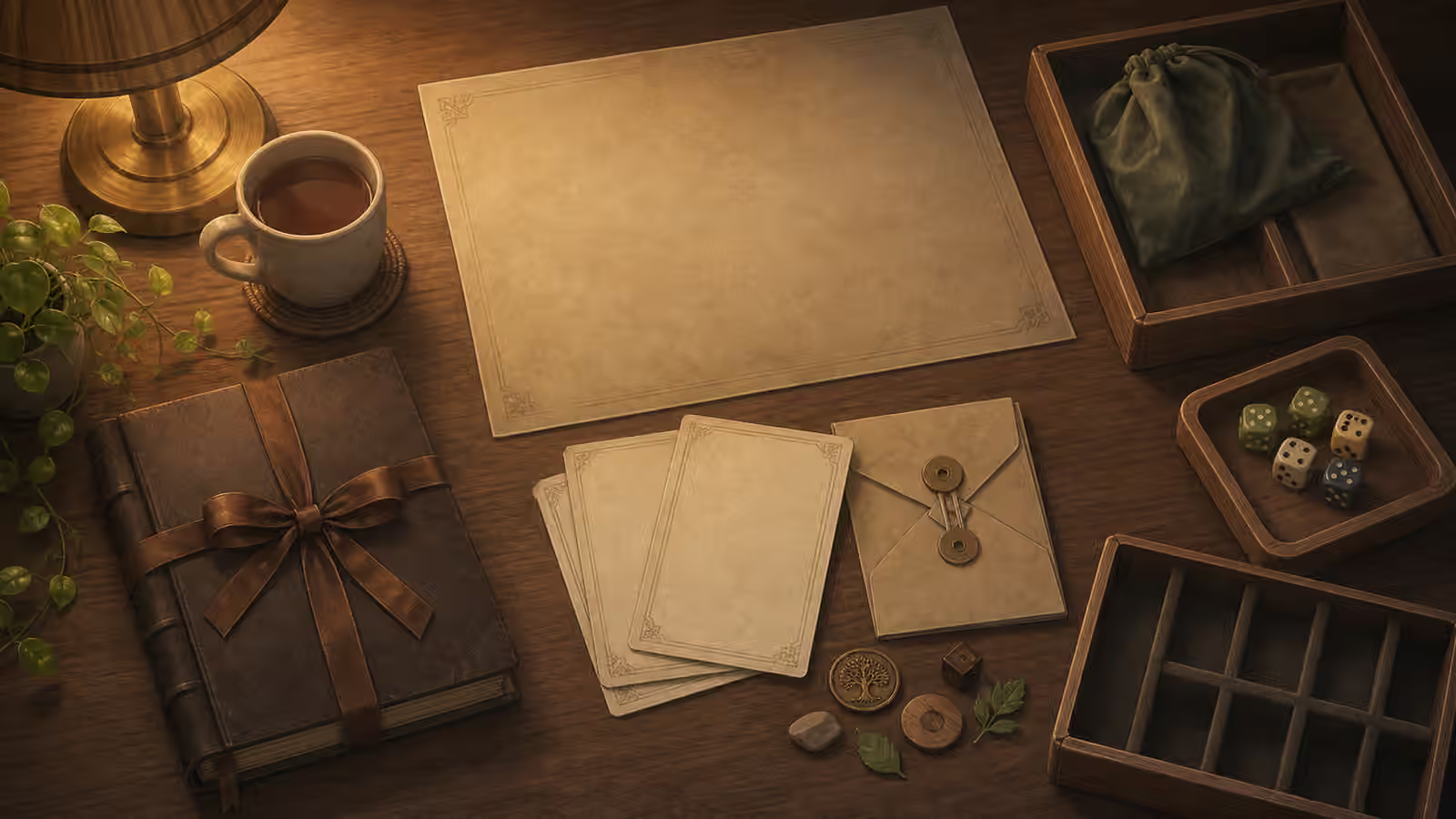
Choose what the campaign becomes. It might return to the main box reset for replay. It might keep an archive envelope with character sheet, final map, and one object card. It might move to a retired campaign bin. It might leave the shelf if you know you will not return and the game can be passed along respectfully.
Building a Personal Solo Tabletop Shelf Slowly treats shelf space as part of play. Endings are where that idea becomes concrete. A finished campaign deserves a place that reflects its status. Active campaigns should be easy to reach. Finished campaigns should not block the next game from beginning.
Let Retired Campaigns Be Real Endings
Some campaigns end because the desire is gone. The theme no longer fits, the rules no longer interest you, the state is too tangled, or the table remembers more obligation than pleasure. Retiring such a campaign can be an ending if you do it deliberately.
Write one closing note: why it stops, what was good, what you learned, and what happens to the materials. That note keeps retirement from feeling like disappearance. It also helps future you distinguish between a campaign worth reviving and a campaign that already gave what it had.
When a Solo Game Stalls offers restart, retire, shrink, or switch as options. Retirement is not the embarrassed option. It is the option that admits the campaign has reached its useful boundary.
Avoid the Perfect Finale Trap
Waiting for the perfect finale can keep a campaign half-alive for months. The final session must be long enough, the mood must be right, the table must be clear, the rules must be relearned, and the ending must honor everything that came before. That pressure can become heavier than the campaign itself.
Lower the ceremony. A final scene can take twenty minutes. A final board game attempt can use the current rules memory and a visible player aid. A final journal entry can be a paragraph. If the campaign has been waiting too long, the kindest ending may be smaller than the one you imagined.
This does not mean rushing. It means letting completion be accessible. The goal is a truthful close, not a performance of importance.
Keep a Return Seed Only When It Helps
Some endings benefit from a return seed: a new rumor, an unopened road, a child of the old hero, a sealed envelope, a note about what would change on replay. Other endings should stay closed. Do not add a sequel hook out of habit. It can weaken the relief of completion.
If you do leave a seed, put it somewhere intentional. A single card in the archive envelope is enough. It should invite future play without demanding it. The campaign can be finished and still leave a door ajar.
Close the Room
After the final note, do the physical close. Put dice away. Clear the map. Return borrowed components. Protect anything that should be kept private. Move the archive to its place. Then let the table become ordinary again.
An ending is part of the creative ritual. It tells the player that attention mattered, even if the campaign was small, improvised, unfinished by official standards, or played in fragments. Solo campaigns do not need applause to be complete. They need a final shape the player can recognize.