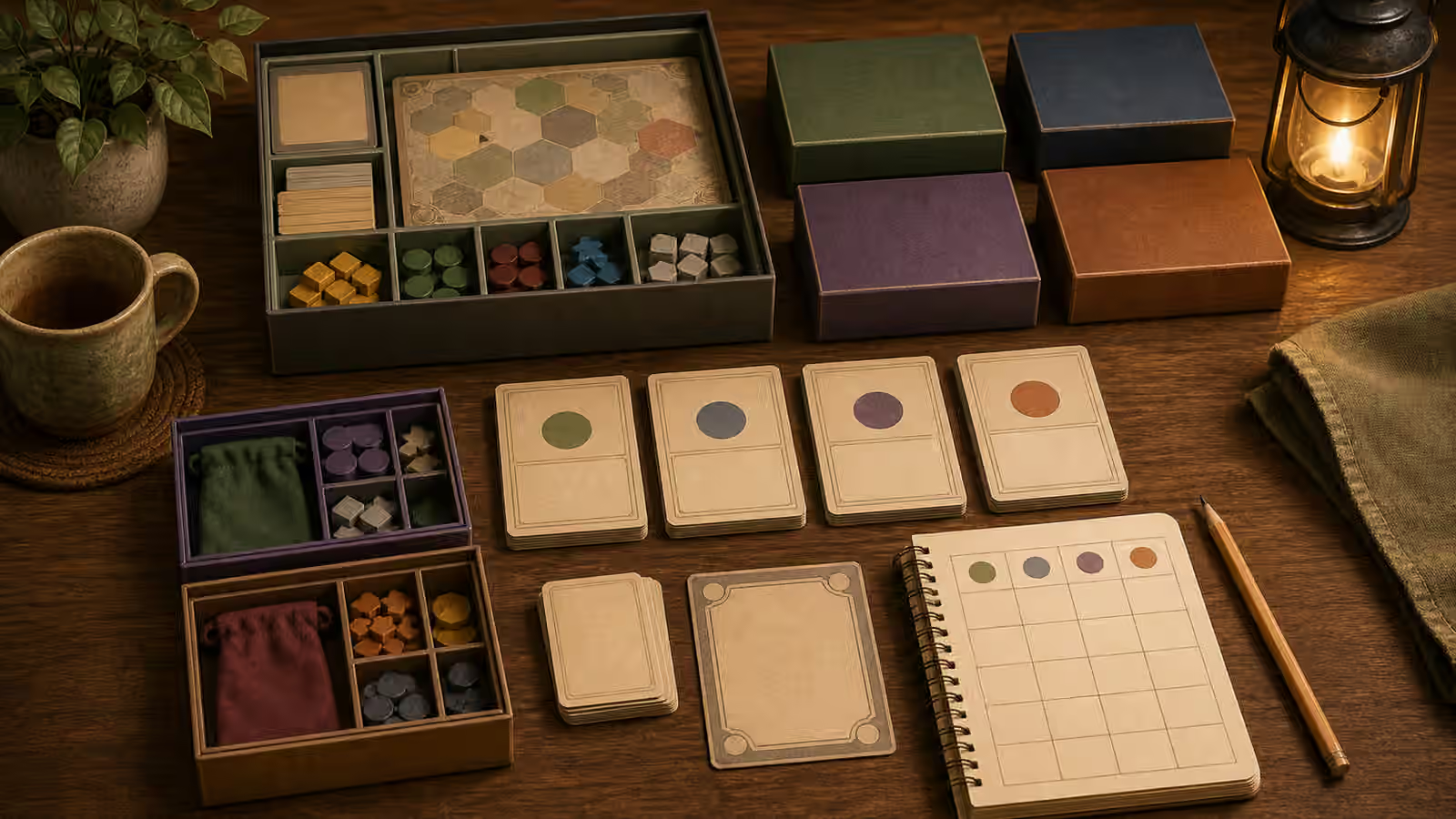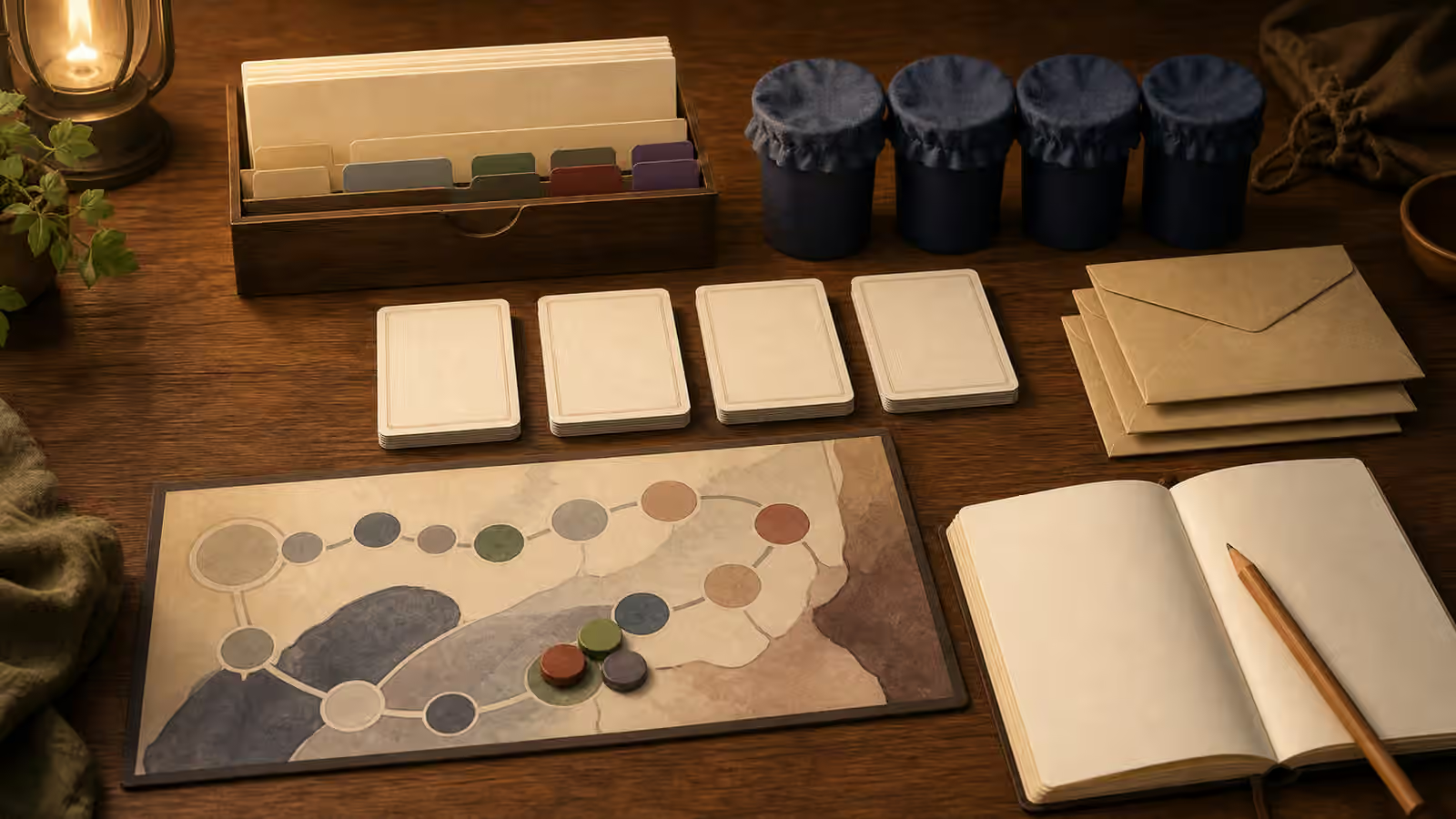
Solo board game campaigns are rewarding because state persists. They are difficult for the same reason. If the save habit is weak, the next session starts with uncertainty: which cards were unlocked, which rule changed, which token was spent, which box tray holds the active deck?
The goal is not to remember everything. The goal is to create a return path strong enough that you can open the box two weeks later and make one confident move. A campaign can survive a busy month, a messy room, or a tired evening if the state is saved in a way that future-you can trust.
Solo play adds a special pressure. There is no other player to remind you why the last choice mattered. There is no group chat preserving the rule question, the risky decision, or the plan for next time. That makes the save habit part of the game. The campaign continues because the box, notebook, tray, and restart cue all agree about what happens next.
Decide Whether This Campaign Gets an Active Slot
Before building a system, be honest about how many campaigns can stay active. Campaign board games are often large, stateful, and emotionally sticky. Starting three of them can feel exciting on the first weekend and heavy by the third setup.
An active slot is not a moral judgment. It is a practical promise that the campaign has a home, a log, a save process, and a realistic chance of returning to the table. If a campaign does not have that, it may still be loved, but it is not active. It is paused, archived, or waiting its turn.
Use three simple categories:
| Status | Meaning | Table habit |
|---|---|---|
| Active | You intend to play again soon | Save state is on top and restart cue is visible |
| Paused | You may return, but not this month | State is complete, dated, and archived clearly |
| Retired | You are done enough | Outcome is recorded and components are reset or stored |
This keeps the shelf honest. A campaign that sits in “active” for months without a restart cue becomes a guilt object. Moving it to paused can be a relief. Retiring it can also be respectful if the game gave you enough.
Follow the Official Save First
Campaign board games often include save sheets, envelopes, logs, deck dividers, stickers, or app support. Use the official process first. Your notebook should add what the game does not capture: why you made a choice, what confused you, what to set up next, and which content note matters.
Do not publish locked content, scenario text, card fronts, or secret material. Spoiler courtesy is part of the campaign social contract.
Official systems exist because many campaign games depend on exact state. If the game tells you to record a number, mark a box, keep a deck order, open a packet, remove a card, or save inside an app, do that before inventing your own shortcut. Your private notes can support the official system, but they should not silently replace it.
This matters most when the game has irreversible changes. Stickers, sealed content, hidden text, legacy-style choices, and branching campaign records can become confusing if your personal notes drift away from the intended process. When in doubt, write a pointer instead of a copy:
- “Official sheet updated through scenario reward.”
- “Deck order preserved in sleeve A.”
- “App saved after cleanup step.”
- “Envelope opened; do not reread contents until setup.”
- “Rule change recorded on official reference card.”
The pointer tells you that the official state is complete without reproducing material you should keep private.
Separate Three Kinds of Memory
A solo board game campaign usually asks you to preserve three different things: rules state, story memory, and box state. They overlap, but they should not live in one tangled paragraph.
Rules state is exact. It includes resources, damage, card order, unlocked content, pending effects, scenario number, turn phase, and modified rules. Story memory is interpretive. It includes why a choice mattered, what outcome felt satisfying, what tension remains, and what you hope happens next. Box state is physical. It includes where the active deck is, which tray holds current pieces, which bag is next, and what should be on top when you reopen.
Use separate lines:
Rules state:
Story memory:
Box state:
Next setup:
This is not extra bureaucracy. It prevents the common problem where a vivid recap hides the one mechanical detail needed to continue. “The final room was dramatic” may be true, but “blue deck unshuffled, wound token remains, draw event before travel” is what restarts the game.
Build a Save Station
Use one tray, envelope, or box section for active campaign state. Keep the rulebook, current scenario, active deck, character state, and unresolved questions together. If the game has many bags, label them in your own shorthand without covering official labels.
Accessibility matters here. Larger labels, component bowls, and fewer setup zones can be the difference between continuing and abandoning a campaign.
The save station can be simple. It does not require custom inserts or expensive storage. A shallow tray, a few envelopes, a zip pouch, an index card, and one notebook page can do the work if each container has a clear job.
Give the station four zones:
- Current: components needed at the very start of the next session.
- Pending: rewards, choices, rules questions, or cleanup steps not yet resolved.
- Archive: completed scenarios, retired cards, old notes, and inactive components.
- Tools: dice, counters, pencils, reference cards, and accessibility aids.
Do not let “current” become a junk drawer. If everything is current, nothing is. The current zone should answer the first setup question quickly: what comes out first?
For a game with many small pieces, use containers that preserve meaning. A bag labeled in your own shorthand is better than a loose pile. A tray compartment for “spent this scenario” can save ten minutes of reconstruction. A card sleeve around the active deck can protect order. A large paper label can help if small printed text is hard to read.
If the table can stay set up between sessions, the save station still matters. Put the log, restart cue, and rules question where they will be visible when you return. A covered table without a written cue can still become hard to read after a few days.
Track Changes Separately
Write a campaign delta after each session: unlocked, removed, upgraded, damaged, rule changed, next setup. The delta is more useful than a full retelling because it tells you what to do with the box.
If you restart or lower difficulty, write why. That note helps future you choose settings honestly instead of treating the campaign as a test.
The campaign delta is the heart of the method. It records what changed since the previous session. It is short, mechanical, and useful.
Use this format:
| Delta field | What to write | Example shape |
|---|---|---|
| Unlocked | New content available | “Unlocked card pack C; keep sealed until setup” |
| Removed | Content no longer used | “Remove two basic event cards” |
| Upgraded | Character, deck, rule, or ability improved | “Upgrade travel action; see official sheet” |
| Damaged | Lasting penalty, scar, loss, or cost | “Carry one injury into next scenario” |
| Rule changed | New exception or campaign rule | “Market refreshes only after chapter end” |
| Next setup | First setup instruction | “Set up chapter 4, start at reward step” |
The wording can be plain. It should not quote hidden card text or copy scenario paragraphs. It should tell you what to do with the campaign materials.
After a session, write the delta before the emotional recap. If you only have energy for one thing, record the delta and the restart cue. You can always write a fuller reflection later. You cannot always reconstruct an unlocked deck or a removed card.
Use a Restart Cue, Not a Recap Wall
A recap explains what happened. A restart cue tells you what to do first. Campaigns stall when those are confused.
Good restart cues begin with a physical or procedural action:
- “Open the notebook to chapter 4 setup.”
- “Place the active deck and injury card beside the player board.”
- “Resolve the pending reward before reading anything new.”
- “Review the rule change card, then begin travel.”
- “Set out the current scenario tiles from envelope A.”
Weak restart cues sound like memory tests:
- “Continue campaign.”
- “Remember the hard choice.”
- “Figure out next scenario.”
- “Check everything.”
The restart cue should sit on top of the campaign state: first notebook page, top card sleeve, tray lid, box insert, or a dedicated index card. If the game lives in a shared space, make the cue private enough to avoid spoilers but visible enough that you will actually see it.
Keep Spoilers and Shareable Notes Apart
Campaign games often hide material for a reason. Solo play can make spoiler discipline feel less urgent because you are the only player, but public sharing still needs care. A private save note can include exact hidden state. A public recap should not expose scenario solutions, locked rewards, card fronts, puzzle answers, or secret text.
Use two layers:
- Private state: exact details needed to continue.
- Public summary: spoiler-safe mood, progress, and personal response.
A private note might say, “Opened envelope 4 and chose the left reward.” A public summary might say, “The campaign branched in a way that made next session feel more dangerous.” The second sentence is still engaging. It just does not take discovery away from another reader.
The same boundary applies to photos. A private setup photo can be useful. A posted photo may accidentally show hidden text or identifiable campaign material. Crop aggressively, blur if needed, or skip the photo. Respecting the creator and future players is part of good campaign stewardship.
Make Difficulty Changes Visible
Solo campaign games can become brittle when difficulty, luck, rules mistakes, and setup gaps collide. If you lower difficulty, repeat a scenario, rewind a mistake, or flatten a messy state, write it down without turning the note into a confession.
The useful question is not “Was this pure?” The useful question is “What version of the campaign am I actually playing?”
Examples:
- “Restarted scenario after setup error; no rewards kept.”
- “Lowered difficulty one step after three failed attempts.”
- “Kept story progress, reset tactical board.”
- “Skipped optional challenge because session time was short.”
- “Applied missed upkeep rule starting next session.”
These notes help future-you make consistent decisions. They also remove the vague shame that can build around a campaign after a rough session. Adjusting difficulty is a table tool. It is not a character verdict.
Plan the Session Boundary Before You Start
Campaign games often invite one more turn, one more room, one more draw, one more cleanup step. That can be wonderful until the stopping point becomes chaotic. Before starting, decide what counts as a clean stop.
Useful stop points include:
- End of a round
- End of a scenario
- Before reading a reward
- After cleanup but before setup
- At a checkpoint named by the game
- After a failed attempt, before choosing upgrades
Stopping before a reveal can be better than stopping after it if the reveal would require new decisions. Stopping after cleanup can be better than stopping mid-round if the board state is fragile. Choose the boundary that makes the next session easier, not the one that sounds most dramatic.
If time is short, start with a smaller goal: “play one round,” “resolve upkeep,” “read the next setup and prepare components,” or “finish the save sheet.” Campaign progress does not always mean completing a full chapter. Sometimes progress means making the next real session frictionless.
Build a Catch-Up Page for Long Pauses
If a campaign has been untouched for more than a month, do not force yourself to reread everything. Make a catch-up page instead. It should be short enough to finish before you lose the desire to play.
Use this structure:
Where the campaign stands:
What changed last time:
What is currently active:
What is unresolved:
What I should do first:
What I can ignore for now:
The last line matters. Campaigns become heavy when every old note feels equally important. Naming what you can ignore clears the table. Maybe old shopping options no longer matter. Maybe a side objective can stay dormant. Maybe a rules question was already settled by the official FAQ or your own house ruling.
If the catch-up page reveals that you no longer care about the campaign, that is useful information. Retire it cleanly. Record the ending you reached, reset what should be reset, and free the shelf.
Store for Return
Before closing the box, set the next session cue on top: scenario card, character sheet, first setup bag, or notebook page. The campaign should open to an action, not a puzzle about past state.
Think about the first thirty seconds after reopening. What should your eyes see? Ideally, the box presents a clear stack:
- Restart cue.
- Current campaign sheet or notebook page.
- Active scenario or setup reference.
- Current deck, bag, or tray.
- Rule question or bookmark if one exists.
This order turns storage into interface design. The box is telling you how to resume.
Keep archive material below or behind the active state. Completed content can be satisfying to preserve, but it should not block setup. If the game includes retired cards, sealed content, or old scenario sheets, keep them grouped away from current decisions.
When shelf space is tight, use the Shelf Space Planner to be honest about the physical footprint. A campaign that needs a permanent dining table may not fit this season. A campaign that can live in one tray and one box might.
Support the Body That Plays
Accessibility is campaign design. The longer a campaign runs, the more small frictions matter: tiny icons, hard-to-open bags, low contrast cards, repeated sorting, long reach across the table, and notes that are too dense to scan.
Adjust the system around the body and room you actually have:
- Use larger private labels when official labels are too small.
- Put frequently handled pieces in easier containers.
- Keep a magnifier, light, or reference card with the campaign.
- Use voice notes if writing hurts.
- Reduce setup zones so fewer items must be moved repeatedly.
- Store heavy boxes where they can be lifted safely.
These changes do not make the campaign less legitimate. They make it playable.
Know When to Archive or Reset
Some campaigns should not be forced forward. If every return feels like homework, choose a clean action: archive, reset, or retire.
Archive when you still care but cannot play soon. Complete the official save, write a date, add a catch-up page, and label the box as paused. Reset when the state is too tangled but the game still appeals. Retire when the campaign has given enough or no longer fits your life.
Retiring can have a satisfying ending:
- “Stopped after chapter 3; loved the exploration, tired of upkeep.”
- “Reset for a future fresh campaign.”
- “Finished enough; keeping favorite character sheet in notebook.”
- “Paused until winter because setup needs a larger table.”
This protects the hobby from becoming a shelf of unfinished obligations. A campaign is a form of play, not a debt.
A Complete Campaign Save Example
Here is a compact end-of-session save that avoids spoilers while preserving return value:
Campaign status: Active
Official save: Sheet updated after reward step
Rules state: Chapter 4 unlocked; active deck sleeved in order; injury carries forward
Story memory: Chose the risky route because supplies were low
Box state: Current components in top tray; archive cards in rear envelope
Delta: Removed two basic events; upgraded travel action; added one rule change card
Rules question: Check timing for recovery before next upkeep
Next setup: Open chapter 4 setup, place active deck beside player board, resolve recovery
Public recap: Safe if chapter number and hidden reward stay vague
This note is not beautiful. It is better than beautiful: it is useful. It names the exact state, the physical storage, the change since last time, and the first action. That is enough to bring the campaign back to life.
Solo board game campaigns do not need perfect memory. They need a box that opens kindly, a notebook that points forward, and a save habit that treats future-you like a real player at the table.